
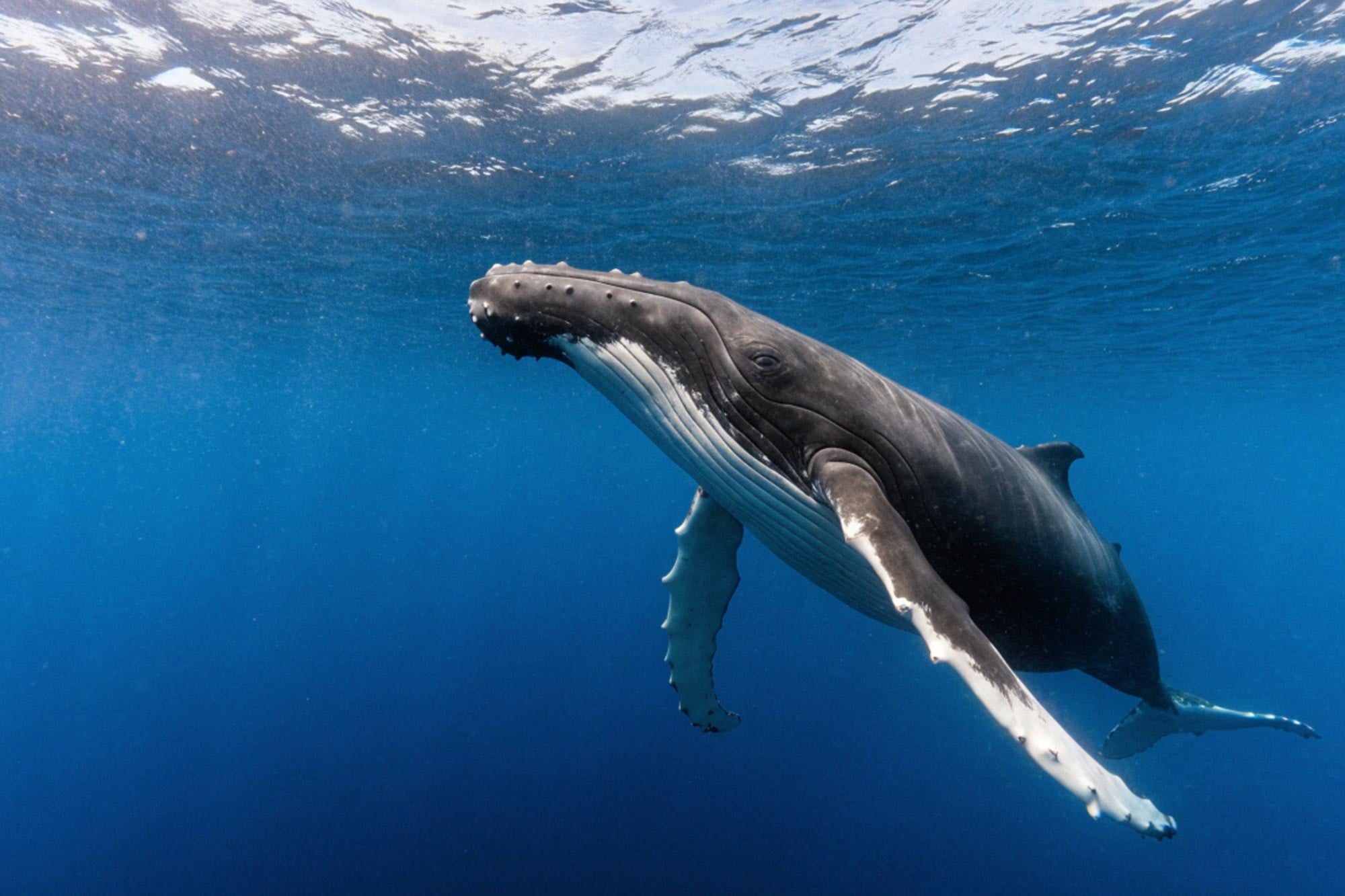
Thousands of enormous whales are turning the waters off East Greenland into an immense feeding ground that barely existed a generation ago.
Fin whales, humpback whales, and common minke whales now gather along a coastline where all three were once rarely seen. Researchers say warmer water, retreating sea ice, and a major relocation of their prey have allowed the whales to expand deep into the Greenland Sea, including waters north of the Arctic Circle.
The spectacle is one of the more dramatic examples of how climate change can reorganize an ecosystem. Although warming is devastating many Arctic species, it can also open new habitats for animals that previously avoided ice-covered waters.
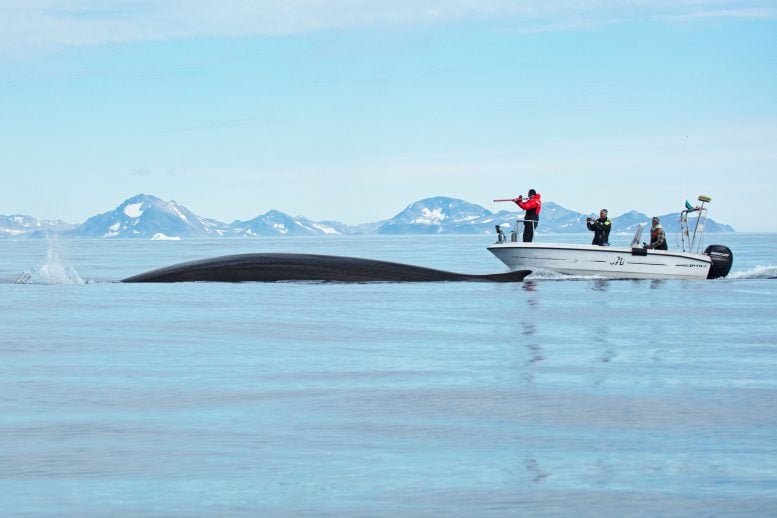
Whales Push Deeper Into the Arctic
“Here we show that rising ocean temperatures and declining sea ice cover have facilitated the widespread occurrence of baleen whales along the East Greenland coast, as far north as 70°N,” said Professor Mads Peter Heide-Jørgensen of the Greenland Institute of Natural Resources. “This has led to regular mixed ‘feeding frenzies’ of fin whales, humpback whales, and common minke whales, species which historically were only rarely observed in coastal East Greenland.”
Heide-Jørgensen and colleagues from Greenland, Denmark, and Iceland documented the transformation in Frontiers in Marine Science. Their findings suggest the arrival of so many large predators could eventually alter relationships across the regional food web.
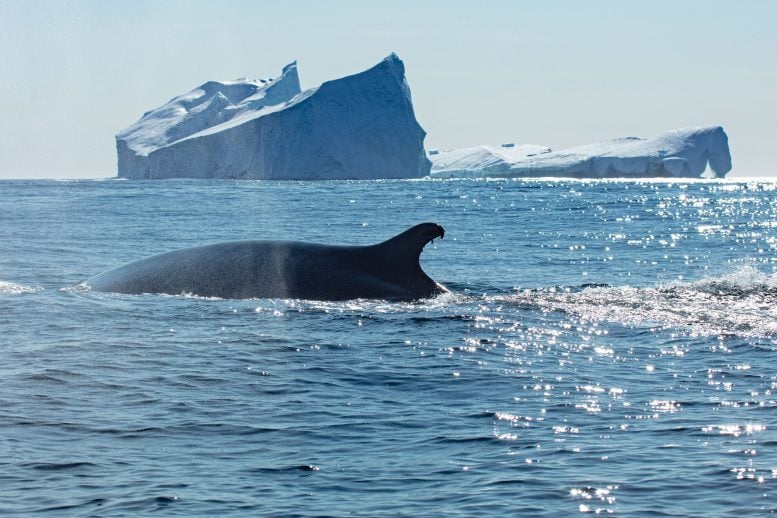
The shift is unfolding in one of the planet’s fastest-warming areas. Except for a puzzling pocket of cooler water south of Greenland known as the “cold blob,” much of the Arctic and North Atlantic is heating rapidly. Sea surface temperatures east of Greenland have risen by about 2°C (3.6°F) since the 1990s.
After the mid-2000s, the summer ice edge also retreated sharply northward. Pack ice that once occupied much of the East Greenland coast became far less extensive, opening waters that baleen whales generally avoided in the past.
Three Decades of Whale Evidence
To determine how dramatically the region had changed, the researchers combined several kinds of evidence spanning nearly four decades. They conducted the first systematic aerial surveys of baleen whales within 50 kilometers (31 miles) of the East Greenland coast in August 2015 and again in 2024.
The team added airborne observations from summer 2022, reports from Inuit hunters collected between 2023 and 2025, and ship records from North Atlantic Sighting Surveys dating to 1987. Movement data from 15 satellite tagged baleen whales tracked at intervals between 2019 and 2025 provided another view of how the animals used the region.
Researchers then built a mathematical model to identify patterns across the combined records. Historical measurements of sea surface temperature, salinity, and pack ice concentration helped them investigate which environmental changes best explained the whales’ growing presence.
Together, the data produced an unusually detailed record of how baleen whale abundance in the Greenland Sea has changed over approximately three decades.
Sightings Rise From Zero to Hundreds
Every major source of evidence pointed in the same direction. Between 1987 and 2024, baleen whales became far more common along the East Greenland coast north of 60°N and west of 29°W.
Ship surveys recorded no humpback whales before 2006. Seven were seen in 2007, followed by 26 by 2015 and more than 150 by 2024. Minke whale encounters remained uncommon until 1995, but vessels regularly recorded between 10 and 20 each year after 2001. Fin whale sightings also climbed sharply over the survey period.
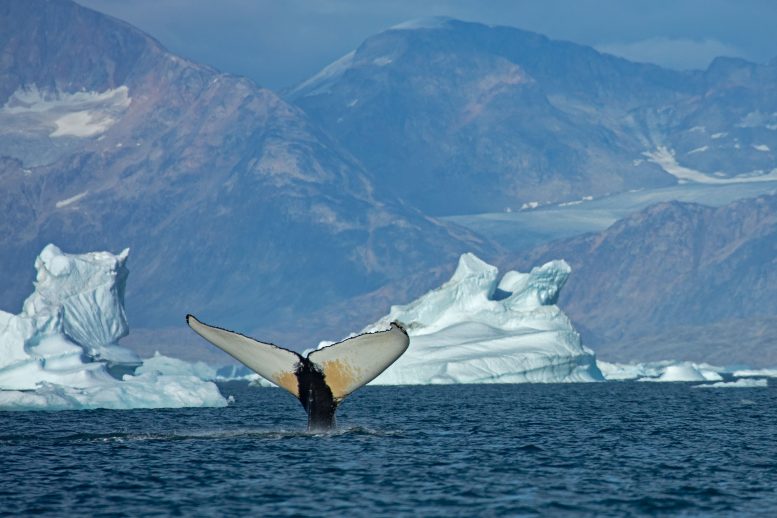
By August 2025, one ship crew encountered extraordinary groups containing as many as 50 baleen whales at once near 69°N, north of the Arctic Circle. Aerial surveys in 2015 and 2024 found all three species spread almost continuously between 60°N and 70°N.
The researchers estimate that at least 4,000 humpback whales, 6,000 fin whales, and 6,000 minke whales entered the Greenland Sea during summer 2024.
Capelin Fuel: An Arctic Feeding Boom
“There is little doubt that the three baleen whale species summering in East Greenland coastal waters do so primarily to feed,” the authors observed.
The main attraction appears to be capelin, a small, cold-adapted fish that forms a crucial link between plankton and large marine predators. Capelin are important prey not only for whales but also for seabirds, seals, and larger fish, meaning a change in their distribution can influence much of the surrounding ecosystem.
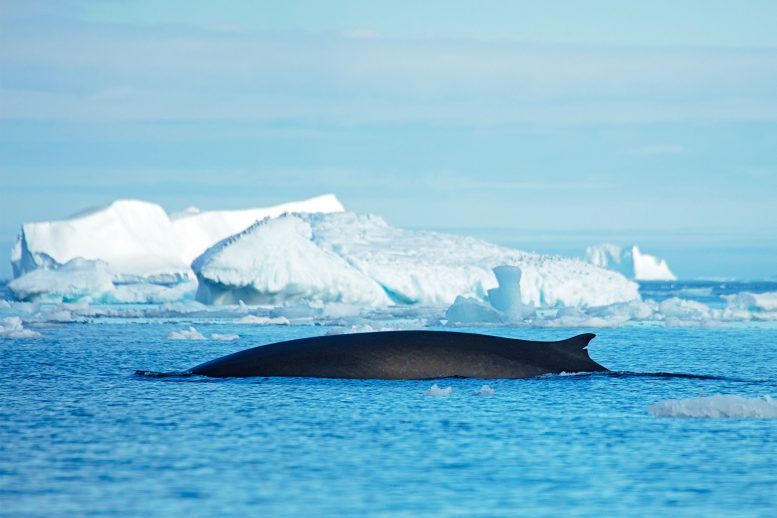
Since the mid-2000s, capelin have shifted their feeding grounds away from the comparatively warmer waters north of Iceland and into the Greenland Sea. The whales appear to have tracked that movement, following a major food source into areas that became more accessible as the ice retreated.
The region has never supported a commercial capelin fishery, so the expanding whale populations are not currently competing with people for the same catch.
A Marine Ecosystem in Transition
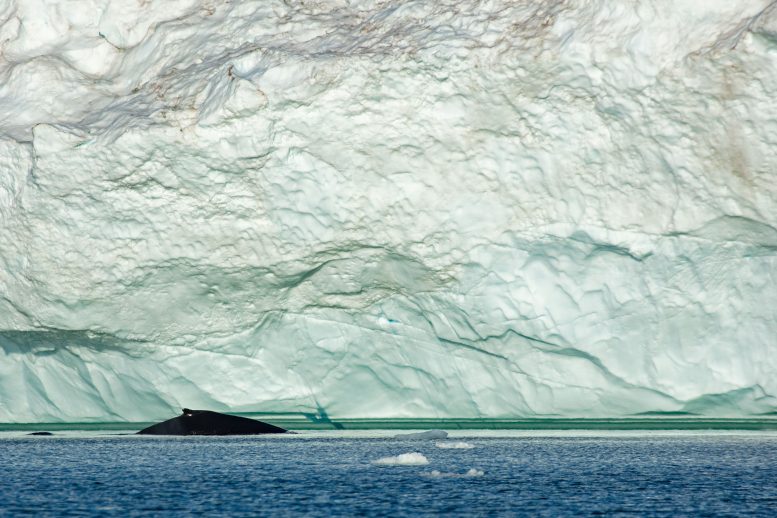
The whales’ arrival may be a feeding success story for now, but it also signals a deeper Arctic transformation. Animals adapted to open water are moving into habitats historically dominated by species closely tied to sea ice.
“East Greenland is undergoing a major ecological regime shift. Ice-associated species such as narwhals are increasingly sharing their habitat with, or being displaced by, temperate baleen whales that generally avoid ice-covered waters,” Heide-Jørgensen concluded. “This marked change in species composition demonstrates how climate-driven changes are reorganizing the East Greenland marine ecosystem, potentially with long-lasting consequences.”
Reference: “Feeding frenzies of baleen whales along East Greenland” by Mads Peter Heide-Jørgensen, Susanne Ditlevsen, Sixten Malte Hüllert, Guðjón Már Sigurðsson, Jonas Teilmann, Fernando Ugarte and Steffen Stormholt, 7 July 2026, Frontiers in Marine Science.
DOI: 10.3389/fmars.2026.1839547
Never miss a breakthrough: Join the SciTechDaily newsletter.
Follow us on Google and Google News.