
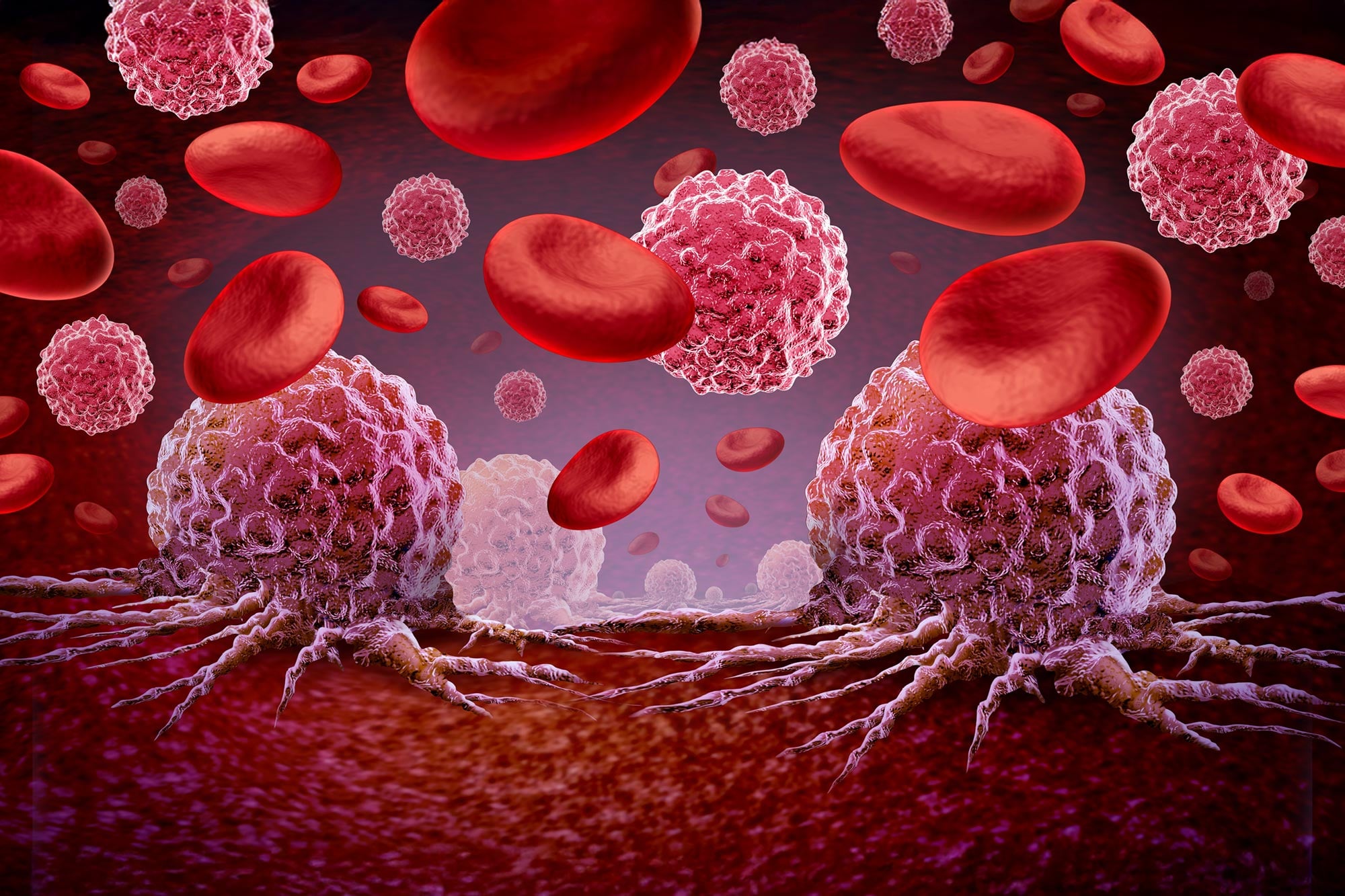
A promising new drug combination exploits a metabolic vulnerability in leukemia cells.
Researchers have discovered a way to kill leukemia cells by forcing them to remain highly active even as their energy supply is disrupted. The experimental treatment has produced promising results in mice and patient-derived cancer cells, including a particularly aggressive form of the disease that often resists treatment.
The approach targets acute myeloid leukemia (AML), a rapidly progressing cancer of the blood and bone marrow that interferes with normal blood cell production. Developed by researchers at the University of Gothenburg in Sweden and Case Western Reserve University in Cleveland, the treatment exploits the energy demands of malignant cells rather than directly attacking their DNA.
Forcing Cancer Cells to Work Without Enough Energy
At the center of the strategy is mTOR, a protein that helps regulate cell growth, metabolism, and activity. Under normal conditions, cells adjust these processes according to their available resources. The researchers designed a molecule called AcTor that blocks a signaling protein involved in controlling mTOR, allowing growth signals to remain active even when cellular energy production is impaired.
AcTor was combined with ixazomib (IXZ), a drug used to inhibit cancer cell proliferation. Together, the treatments disrupt energy production in mitochondria while preventing leukemia cells from slowing their activity. Unable to balance their energy needs with their available resources, the cancer cells experience severe stress and die.

The treatment emerged from a collaboration between biochemist Boaz Tirosh and computational chemist Leif Eriksson, whose expertise helped turn the underlying hypothesis into a potential drug.
“Boaz Tirosh is a biochemist and understands the processes taking place within a cell. It was he who put forward the hypothesis for this treatment. I am a computational chemist and have designed a molecule that enters the cancerous cell and alters it in the way we want,” says Leif Eriksson, Professor of Physical Chemistry at the University of Gothenburg.
Experimental Treatment Targets Aggressive Leukemia
In a study published in Molecular Cancer, the combination of AcTor and ixazomib demonstrated strong activity against AML in laboratory cell lines, primary samples from patients, and animal experiments. It also remained effective against TP53-mutant AML, an especially aggressive form of leukemia associated with poor outcomes and limited treatment options.
The researchers found that the treatment eliminated malignant blood cells as well as leukemic stem cells. These stem cells can survive conventional therapies and regenerate the disease, contributing to relapse. The mouse experiments also suggested that the treatment could avoid the development of drug resistance, although this has not been established in patients.

“It’s a completely new method and does not affect healthy blood cells; furthermore, our studies in mice show that drug resistance is avoided, which can otherwise happen,” says Leif Eriksson.
A Potential Biomarker for Monitoring Treatment
The researchers also detected a biological response that might eventually help doctors assess whether the treatment is working. Cells exposed to the drug combination released a protein called ADM2, which could potentially serve as a measurable indicator of treatment activity.
“We also observed that our treatment triggered the release of a protein (ADM2), which could therefore serve as a biomarker for the treatment’s response. This could guide future translational and clinical studies,” says Leif Eriksson.
The findings remain preclinical, meaning that the combination has not yet been shown to be safe or effective in humans. Further studies will be needed to confirm its activity, evaluate potential side effects, and determine whether it can progress to clinical trials. Patients with relapsed or refractory AML, whose disease has returned or failed to respond to treatment, could be among those who might benefit if the approach eventually proves successful.
Shifting Cancer Research Toward Metabolism
Instead of relying primarily on treatments that damage cancer cell DNA, the research focuses on disrupting the metabolic processes that allow leukemia cells to survive.
“Our study is an example of the shift toward focusing research on cancer metabolism within cells, rather than relying solely on methods that damage DNA. Drug development is very expensive, but we hope that our findings will generate sufficient interest to enable us to continue our research into a cure for this serious disease,” says Leif Eriksson.
Reference: “AcTor, a novel mTOR stimulator, potentiates ixazomib for the treatment of acute myeloid leukemia” by Shakti P Pattanayak, Odai Darawshi, Omid Hajihassani, Jordan M Winter, Nicole Weiler, Melanie Ott, Florian Rothweiler, Jindrich Cinatl Jr., Martin Michaelis, Daniel J Lindner, Thomas D Green, Polina Krassovskaia, Raphael T Aruleba, Kelsey H Fisher-Wellman, Jason A Mears, David Wald, Leif A Eriksson and Boaz Tirosh, 27 May 2026, Molecular Cancer.
DOI: 10.1186/s12943-026-02689-4
Never miss a breakthrough: Join the SciTechDaily newsletter.
Follow us on Google and Google News.