
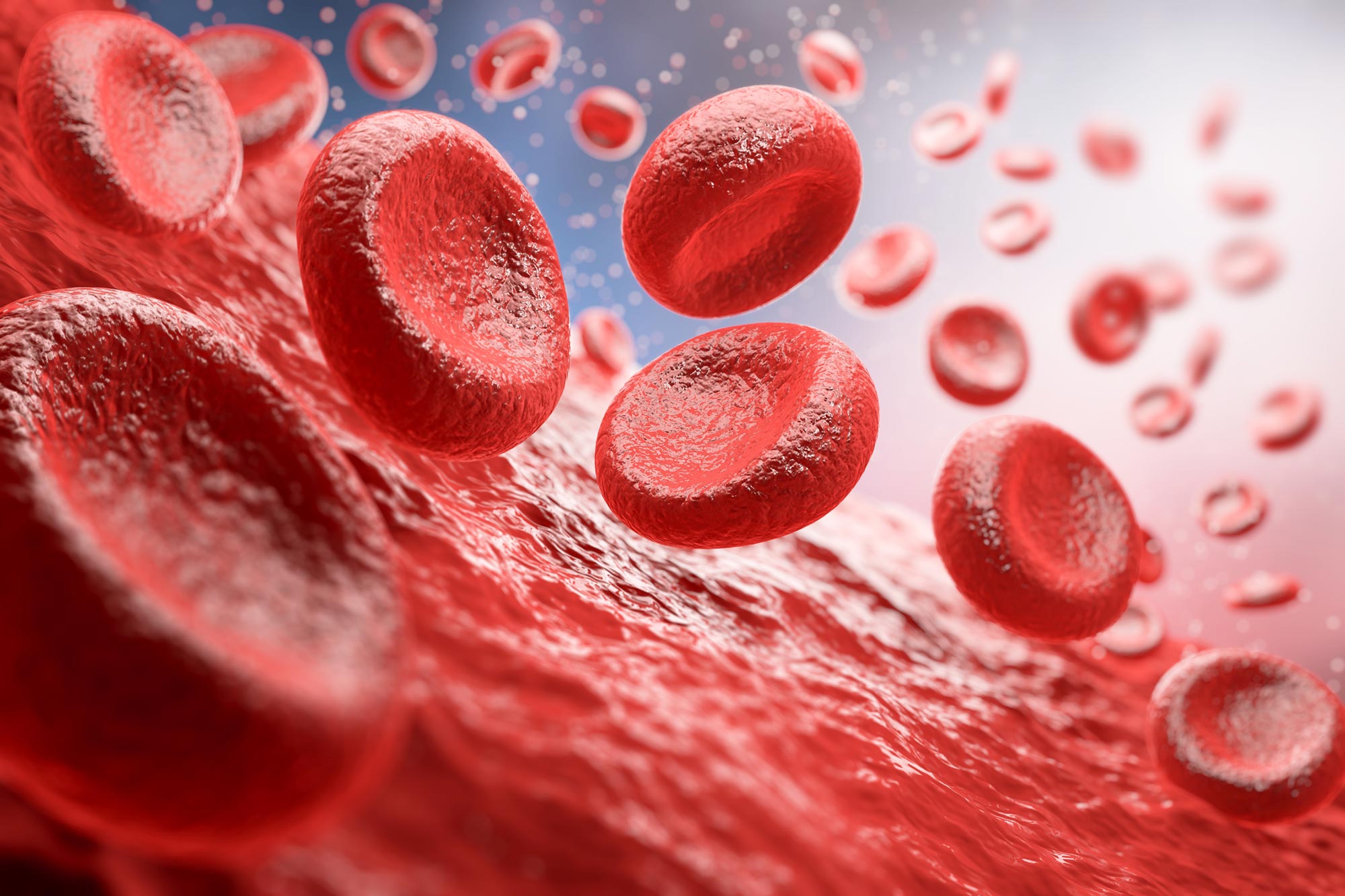
A new study describes a technique that rejuvenates aging blood-forming stem cells and could help reduce the risk of age-related blood disorders.
Researchers at the Icahn School of Medicine at Mount Sinai have identified a way to rejuvenate aging blood-forming stem cells in mice by fixing problems in their lysosomes. Their findings, published in Cell Stem Cell, show that excessive lysosomal activity and damage play a central role in stem cell aging.
By restoring proper lysosomal function and slowing abnormal degradation processes, the team was able to revive older stem cells and improve their ability to regenerate healthy blood.
Lysosomes regulate stem cell health
Lysosomes serve as the cell’s internal recycling centers. They break down proteins, nucleic acids, carbohydrates, and lipids, clearing waste and converting it into raw materials that cells can reuse. They also store nutrients that can be released when energy is needed. Because of these roles, lysosomes are essential regulators of cellular metabolism, balancing catabolism (the breakdown of complex molecules) and anabolism (the construction of new molecules).
The research, led by Saghi Ghaffari, MD, PhD, Professor of Cell, Developmental, and Regenerative Biology at Mount Sinai and a member of the Black Family Stem Cell Institute, focused on hematopoietic stem cells (HSCs). These rare, long-lived cells reside in the bone marrow and are responsible for continuously producing all blood and immune cells throughout life.
Aging undermines blood regeneration
Over time, hematopoietic stem cells lose efficiency. As they age, their ability to self-renew and rebuild the blood system declines, which contributes to weaker immune responses in older adults. Aging is also linked to clonal hematopoiesis, an often symptomless condition in which certain blood cell clones expand abnormally. This state is considered premalignant and increases the likelihood of blood cancers and inflammatory diseases. Its frequency rises sharply with age.
Cancer risk overall increases as people grow older. According to the American Cancer Society, advanced age and smoking are the two strongest factors associated with both relative and absolute five-year cancer risk. Data from the National Cancer Institute’s Surveillance, Epidemiology, and End Results program show that the median age at cancer diagnosis in the United States is 67, underscoring the strong connection between aging and disease.
Hyperactive lysosomes drive decline
Dr. Ghaffari’s team discovered that lysosomes in aged HSCs become hyper-acidic, depleted, damaged, and abnormally activated, disrupting the cells’ metabolic and epigenetic stability. Using single-cell transcriptomics and stringent functional assays, the researchers found that suppressing this hyperactivation with a specific vacuolar ATPase inhibitor restored lysosomal integrity and blood-forming stem cell function.
The old stem cells started acting young and healthy once more. Old stem cells regained their regenerative potential and ability to be transplanted and to produce more healthy stem cells and blood that is balanced in immune cells; they renewed their metabolism and mitochondrial function, improved their epigenome, reduced their inflammation, and stopped sending out “inflammation” signals that can cause damage in the body.
“Our findings reveal that aging in blood stem cells is not an irreversible fate. Old blood stem cells have the capacity to revert to a youthful state; they can bounce back,” said Dr. Ghaffari. “By slowing down the lysosomes and reducing their acidity, stem cells became healthier and could make new balanced blood cells and new stem cells much more effectively. By targeting lysosomal hyperactivity, we were able to reset aged stem cells to a younger, healthier state, improving their ability to regenerate blood and immune cells.”
Ex vivo treatment restores capacity
Remarkably, ex vivo treatment (when cells are removed from the body, modified in a laboratory, and returned to the body) of old stem cells with the lysosomal inhibitor boosted their in vivo blood-forming capacity more than eightfold, demonstrating that correcting lysosomal dysfunction can restore regenerative potential.
This restoration also dampened harmful inflammatory and interferon-driven pathways by improving lysosomal processing of mitochondrial DNA and reducing activation of the cGAS-STING immune signaling pathway, which they find to be a key driver of inflammation and aging of stem cells.
Toward therapies for aging blood
The discovery opens new therapeutic avenues to prevent or reverse age-related blood disorders and improve the success of stem cell transplants in older patients or their conditioning for gene therapy.
“Lysosomal dysfunction emerges as a central driver of stem cell aging,” added Dr. Ghaffari. “Targeting this pathway may one day help maintain healthy blood and immune systems in the elderly, improve their stem cells for transplantation, and reduce the risk of age-associated blood disorders and perhaps have an effect on overall aging.”
Dr. Ghaffari’s team is now exploring how lysosomal dysfunction in old stem cells may contribute to the formation of leukemic stem cells, potentially linking normal stem cell aging to cancer development.
Reference: “Reversing lysosomal dysfunction restores youthful state in aged hematopoietic stem cells” by Tasleem Arif, Jiajing Qiu, Hossein Khademian, Anusree Lohithakshan, Anagha Menon, Vijay Menon, Mary Slavinsky, Maxime Batignes, Miao Lin, Robert Sebra, Kristin G. Beaumont, Deanna L. Benson, Nikolaos Tzavaras, Mickaël M. Ménager and Saghi Ghaffari, 24 November 2025, Cell Stem Cell.
DOI: 10.1016/j.stem.2025.10.012
Never miss a breakthrough: Join the SciTechDaily newsletter.
Follow us on Google and Google News.
2 Comments
I wonder if this new discovery would help people like me with sickle cell. I only have a few years left and I hope they find an easily accessible treatment or cure that could save my life or improve the quality of my life. This disease is absolutely horrible. There are times the pain is so intense that you pray for death. I had one of those extremely bad pain crisis for the first time when I was 5. I remember asking my parents why won’t God go ahead and kill me so I don’t have to suffer like I was anymore. No kid should have to experience that.
Muchas gracias