
Close Menu
    Facebook X (Twitter) Instagram
    SciTechDaily
    • Biology
    • Chemistry
    • Earth
    • Health
    • Physics
    • Science
    • Space
    • Technology
    Facebook X (Twitter) Pinterest YouTube RSS
    SciTechDaily
    Home»Science»A Natural “Varnish” May Explain How 37,000-Year-Old Cave Art Survived
    Science

    A Natural “Varnish” May Explain How 37,000-Year-Old Cave Art Survived

    By American Chemical SocietyNovember 11, 2026No Comments4 Mins Read
    Facebook Twitter Pinterest Telegram LinkedIn WhatsApp Email Reddit
    Share
    Facebook Twitter LinkedIn Pinterest Telegram Email Reddit
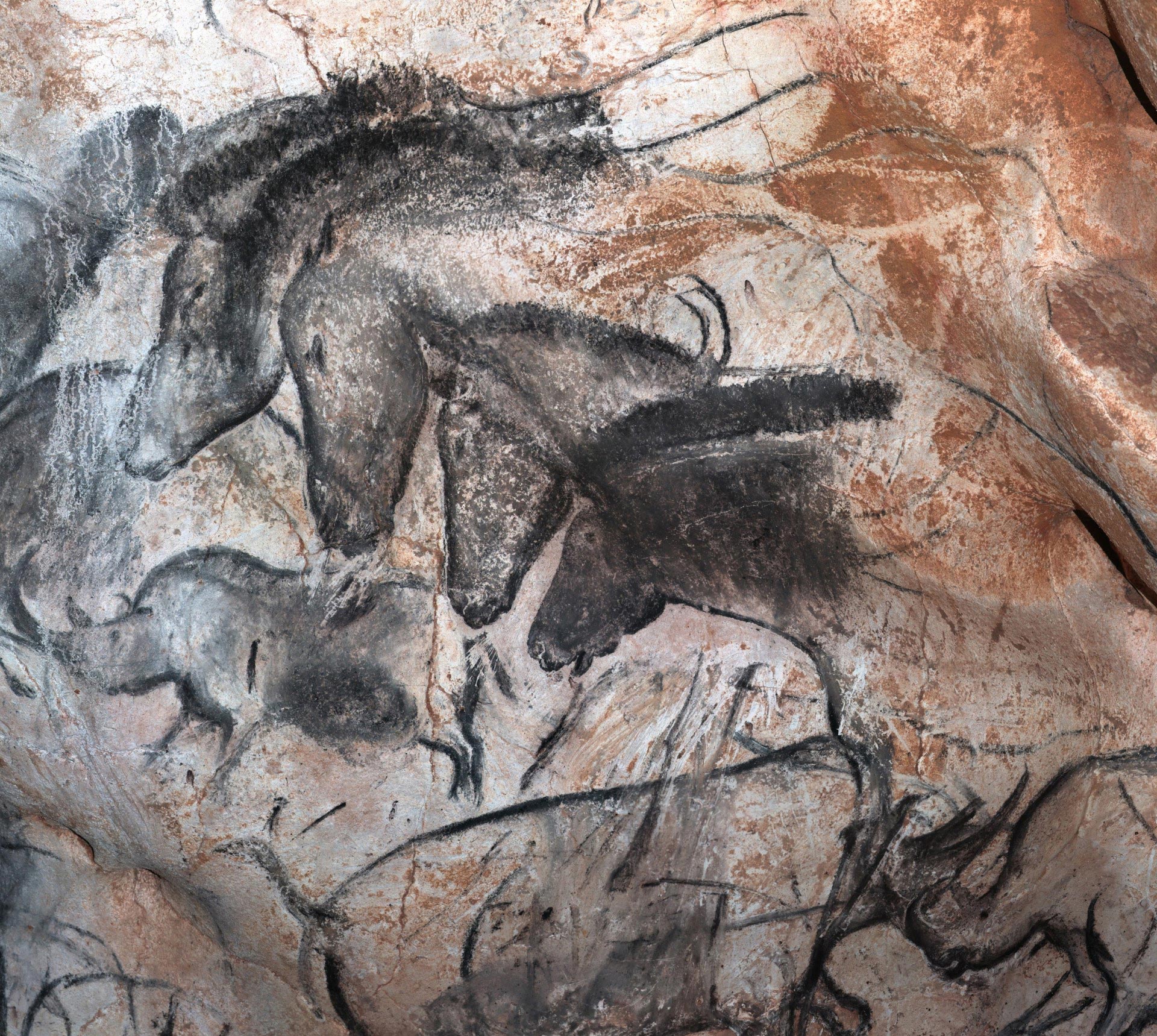
    Prehistoric Animal Paintings in Chauvet Cave
    New analysis reveals that these cave drawings are partially covered by calcite mineral, which has kept them safe for tens of thousands of years. Credit: Adapted from ACS Omega 2026, DOI: 10.1021/acsomega.6c05061

    A new technique uses UV light to reveal a natural mineral varnish that may have helped preserve Chauvet Cave’s 37,000-year-old charcoal drawings.

    About 37,000 years ago, Paleolithic people entered a limestone cave in southeastern France and drew the animals around them, including cave bears, cave lions, bison, and horses. An ancient rockfall later sealed away the artwork, leaving it undiscovered until the 1990s. Today, Chauvet Cave holds some of the oldest artwork in existence, along with clues to how the cave itself helped preserve it.

    Getting close to those clues requires care. The site is so historically important and fragile that its location is kept secret and access is secured behind a huge steel door. Inside, prehistoric footprints lie in front of the artwork. Researchers examining the walls must also protect these traces of the people who once walked through the cave.

    Researcher Philippe Walter describes the purpose of that painstaking work. “We examine every piece of evidence to decode the techniques of prehistoric artists and understand how the paintings have been preserved over time.”
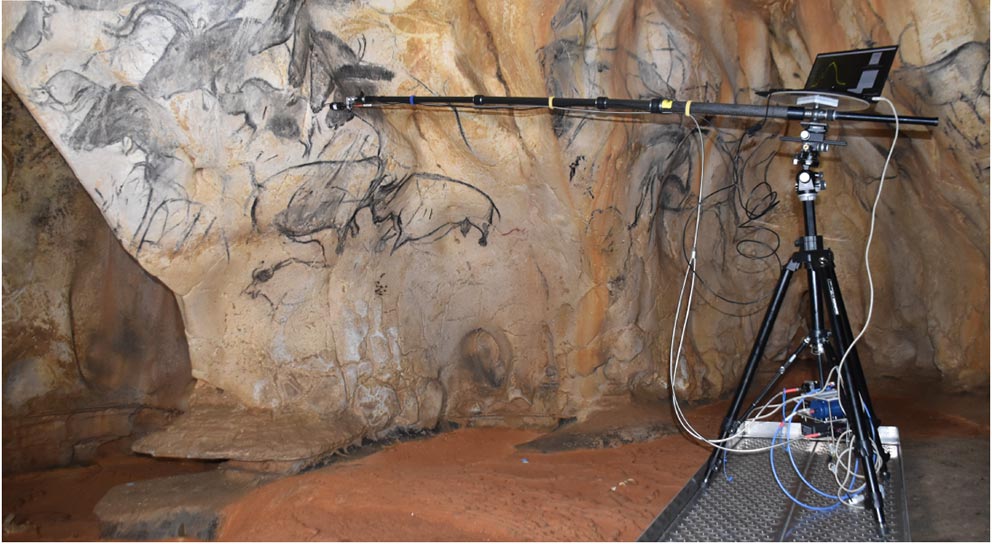
    UV Spectroscopy Equipment Examining Prehistoric Chauvet Cave Art
    Due to the presence of prehistoric soil and footprints immediately in front of the cave walls, researchers had to set up their analysis instruments nearly 8 feet away. Credit: Adapted from ACS Omega 2026, DOI: 10.1021/acsomega.6c05061

    Studying cave art without touching it

    In a study reported in ACS Omega, Walter and his colleagues investigated the charcoal drawings without touching the cave walls. They focused on mineral deposits that had formed over the artwork, looking for evidence of how the drawings were created and how the cave’s geology may have contributed to their preservation.

    To work around the fragile footprints, the team placed a portable spectrometer on a protective walkway about 8 feet (2.5 meters) from the wall. This instrument measures light, allowing the researchers to examine materials from a distance.

    Their approach used ultraviolet, or UV, fluorescence spectroscopy, a technique researchers have used to reveal fluorescent mineral deposits invisible to the naked eye. Certain materials emit light when exposed to UV illumination. By shining a UV beam onto the wall and analyzing the resulting glow, the team could investigate both the mineral deposits and the pigments in the artwork.
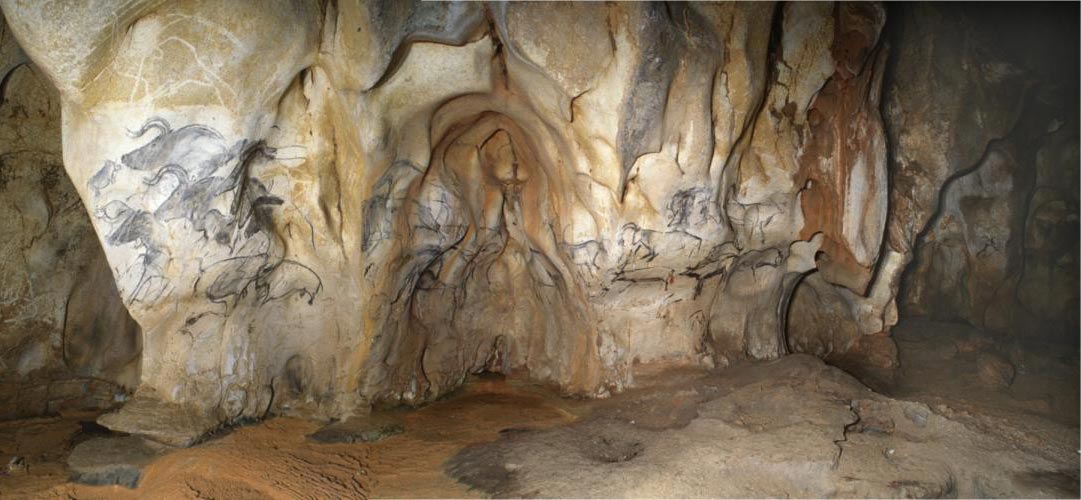
    Three Decorated Panels in Chauvet Cave
    From left to right, the Horses Panel, the Alcove of the Lions, and the Reindeer Panel — three ancient compositions found within Chauvet Cave. Credit: Carole Fritz, CNR

    Natural varnish and possible torch marks

    Two different colors offered clues to what had happened on the cave walls:

    • Thin layers of calcite glowed blue under a blacklight. These mineral layers had been left behind by water flowing over the limestone surface, forming a natural varnish that covered parts of the artwork.
    • Some areas fluoresced orange. That glow could come from hot charcoal or other burning materials, such as a lit torch, rubbed against the wall to create the drawings.

    “Our methodology is much like forensic investigation: We examine every piece of evidence to decode the techniques of prehistoric artists and understand how the paintings have been preserved over time,” says Walter.

    The team anticipates applications beyond cave art, from forensic science to monitoring biofilms aboard the International Space Station. Biofilms are communities of microorganisms that grow on surfaces. A project applying the technique to monitoring them aboard the station is already underway.

    Reference: “In Situ Ultraviolet Fluorescence Spectroscopy for the Characterization of Translucent Calcite Coatings over Prehistoric Cave Art” by Yohan Boulard, Thiéry Guillou, Carole Fritz, Gilles Tosello, Maguy Jaber and Philippe Walter, 29 September 2026, ACS Omega.
    DOI: 10.1021/acsomega.6c05061

    The authors acknowledge funding from the French Ministry of Culture, the French National Centre for Scientific Research (Centre National de la Recherche Scientifique), and Sorbonne University.

    Disclosure: One of the authors is a founder of Lumentis, a company developing imaging instruments for historical artwork analysis.

    Never miss a breakthrough: Join the SciTechDaily newsletter.
    Follow us on Google and Google News.

    American Chemical Society Archaeology Art Culture Spectroscopy
    Share. Facebook Twitter Pinterest LinkedIn Email Reddit

    Related Articles

    Lost Temple of a Vanished Civilization Unearthed in Bolivia

    Rewriting Human History: 110,000-Year-Old Discovery Suggests Neanderthals and Homo sapiens Worked Together

    What Does a Mummy Smell Like? Scientists Uncover Surprising Truth

    Unlocking Roman Secrets: How Modern Science Analyzes Ancient Wood

    Rewriting History: Researchers Unearth Ancient Prehistoric Totem in 35,000-Year-Old Israeli Cave

    Redefining History: New Findings Challenge Traditional Beliefs on Gendered Roles in Prehistoric Hunting

    Copper Artifacts Unearth Centuries of Previously Unknown Connections in Southern Africa

    Archaeologists Discover Innovative Stone-Age Culture in China – Well-Preserved 40,000-Year-Old Paleolithic Site

    Queen Elizabeth I Identified As Author of 16th Century Tacitus’ Annals Translation

    Leave A Reply Cancel Reply

    • Facebook
    • Twitter
    • Pinterest
    • YouTube

    Don't Miss a Discovery

    Subscribe for the Latest in Science & Tech!

    Trending News

    Hidden Brain Signals Could Predict Alzheimer’s Years Before Symptoms Appear

    The Solar System May Have a 6th Dwarf Planet – and It’s Been Hiding in Plain Sight

    New Research Identifies the Hidden Rules That Help Brain Cancer Evade Treatment

    Smiling Isn’t Always Good for You, Scientists Discover

    Scientists Discover Climate Change May Have Stopped Earth’s Next Ice Age

    Quantum Discovery Reveals Why More Powerful Lasers Can Actually Slow Atoms Down

    Einstein Was Right Again: Scientists Discover Chemical Bonds That Defy Textbook Rules

    NASA Space Telescope Meets Fiery End After Nearly 22 Years in Orbit

    Follow SciTechDaily
    • Facebook
    • Twitter
    • YouTube
    • Pinterest
    • Newsletter
    • RSS
    SciTech News
    • Biology News
    • Chemistry News
    • Earth News
    • Health News
    • Physics News
    • Science News
    • Space News
    • Technology News
    Recent Posts
    • A Natural “Varnish” May Explain How 37,000-Year-Old Cave Art Survived
    • Scientists Just Found a Key Ingredient for Superconductivity at Room Temperature
    • Scientists Discover a Hidden Weakness in One of the Deadliest Cancers
    • Could Vitamin B12 Hold the Key to Treating a Rare Genetic Disorder?
    • Scientists Discover That Male and Female Hearts Age in Surprisingly Different Ways
    Copyright © 1998 - 2026 SciTechDaily. All Rights Reserved.
    • Science News
    • About
    • Contact
    • Editorial Board
    • Privacy Policy
    • Terms of Use

    Type above and press Enter to search. Press Esc to cancel.