
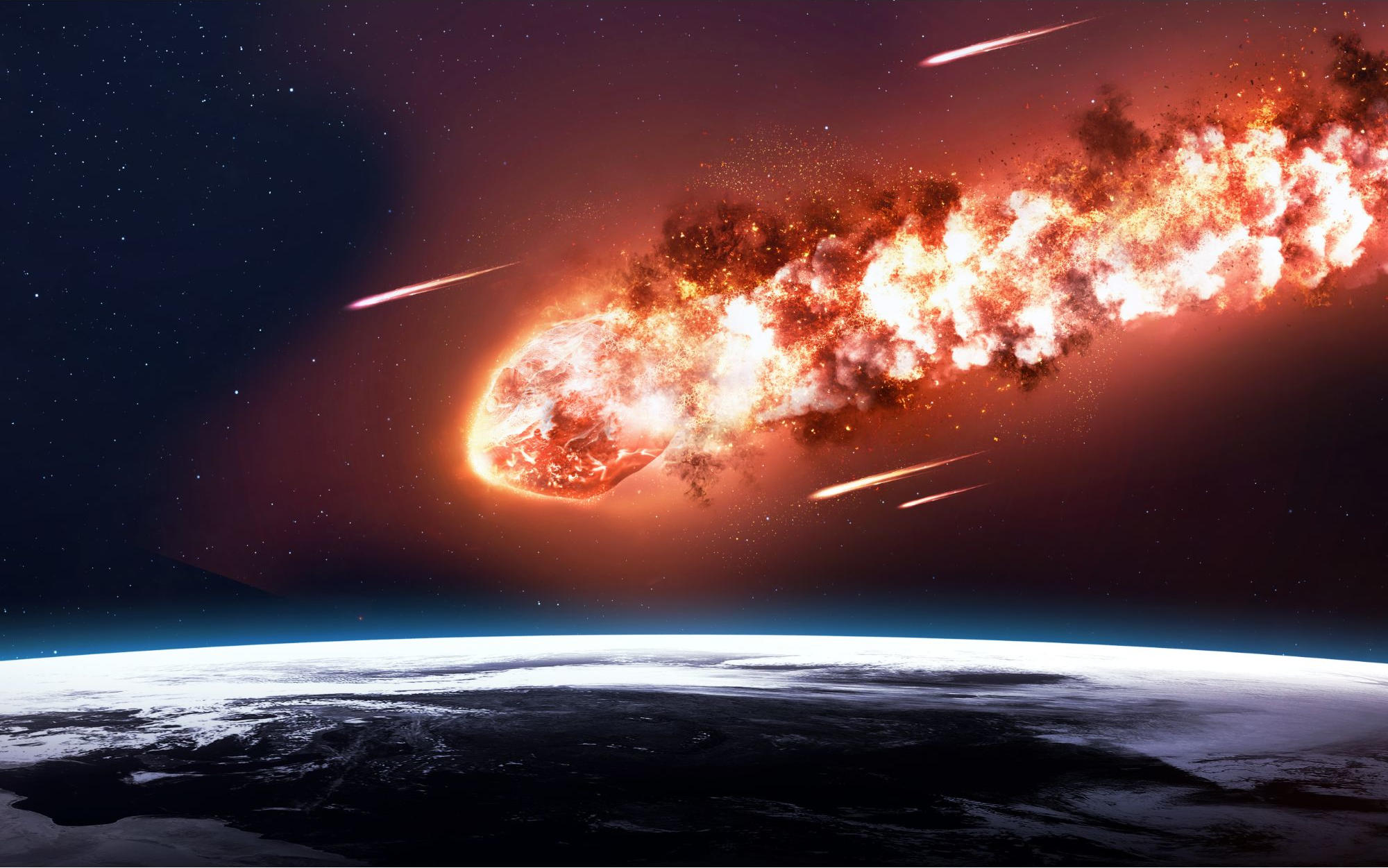
A mysterious 26-million-year pattern in Earth’s extinction history has fueled a controversial theory involving an unseen stellar companion to the Sun.
Scientists have long believed that long-period comets with highly inclined orbits, some capable of causing mass extinctions on Earth, originate in the hypothetical Oort Cloud. This vast, roughly spherical reservoir of icy bodies is thought to contain trillions of objects and extend as far as 1.6 light-years from the Sun.
Richard Muller, a well-known professor emeritus of physics at the University of California, Berkeley, has proposed another explanation for why some of these comets enter the inner solar system. In addition to gravitational disturbances caused by passing stars, he suggests that a low-mass red dwarf star (dubbed Nemesis) could periodically redirect comets toward the Sun. Under this hypothesis, Nemesis and the Sun orbit a shared center of gravity.
According to Muller, Nemesis follows a slightly elongated orbit that periodically brings it into regions of the Oort Cloud, where its gravity could disrupt the paths of billions of comets.
Muller explained in a phone interview that these encounters could trigger comet showers lasting roughly a million years. The greatest number of comets would be redirected into the inner solar system when Nemesis passes through the cloud’s densest regions.
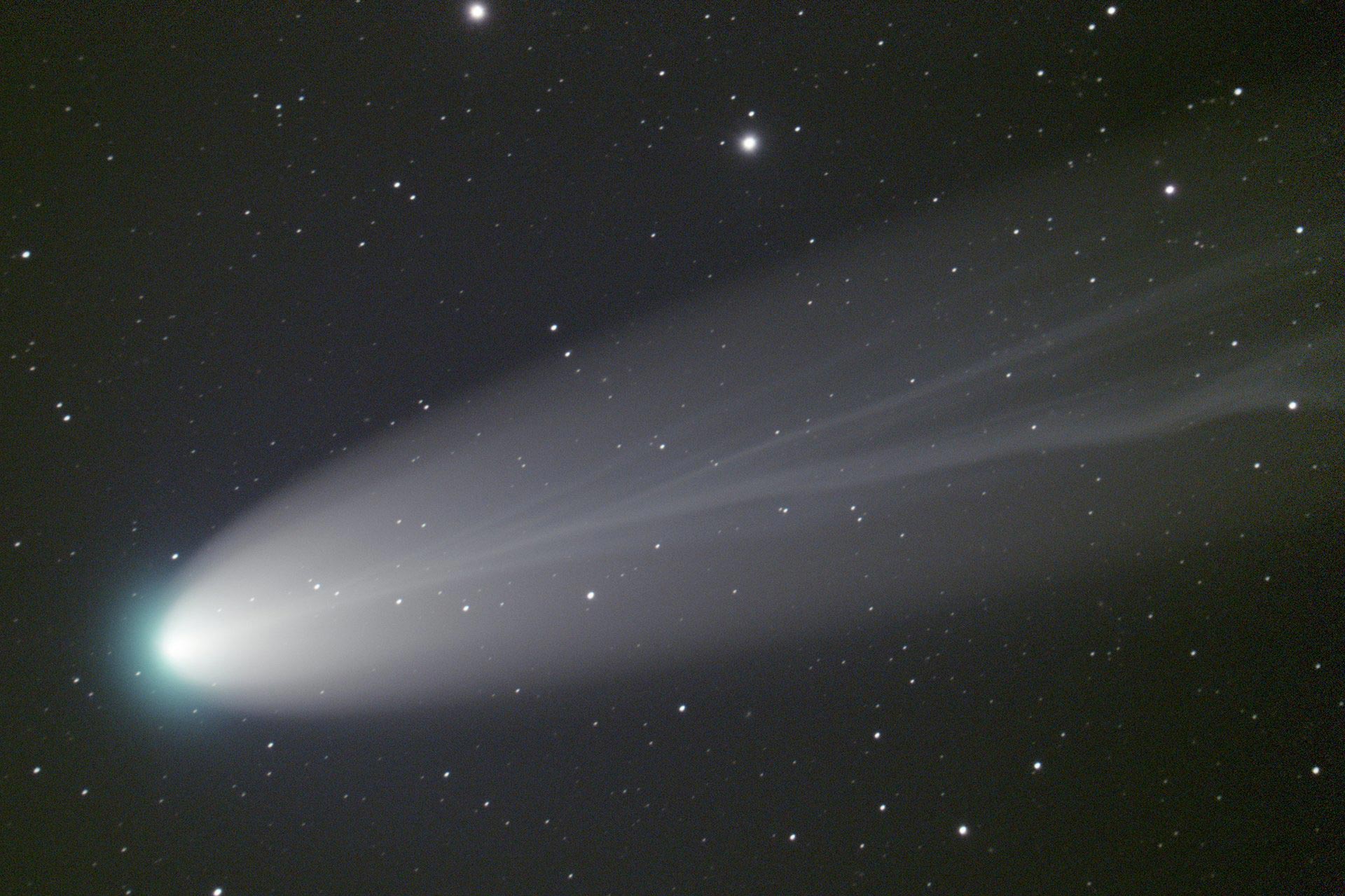
The proposed Nemesis star is not related to the hypothetical Planet X. It also differs from unrelated stars that occasionally pass near the solar system and gravitationally disturb the Oort Cloud, potentially sending numerous comets inward.
Unlike these unpredictable stellar encounters, the Nemesis hypothesis proposes a recurring cycle. Muller believes this mechanism could explain a pattern of impacts on Earth spanning approximately 250 million years.
Muller points to a 1982 study published in the journal Science by paleontologists David Raup and Jack Sepkoski. The researchers compiled an extensive record of marine extinctions that, according to Muller, revealed a striking pattern of extinction events occurring roughly every 26 million years.
One of the peaks was at 66 million years ago, the KT boundary extinction which wiped out the dinosaurs.
The challenge was to come up with an explanation, says Muller. “Well, maybe there’s a companion star that comes close in to the Oort Cloud every 26 million years, and then triggers a comet hitting Earth,” he says.
It’s an idea that Muller still very much supports, although he isn’t sanguine about being able to directly observe Nemesis.
Despite what others seem to think, there is no clear evidence against this hypothesis, says Muller.
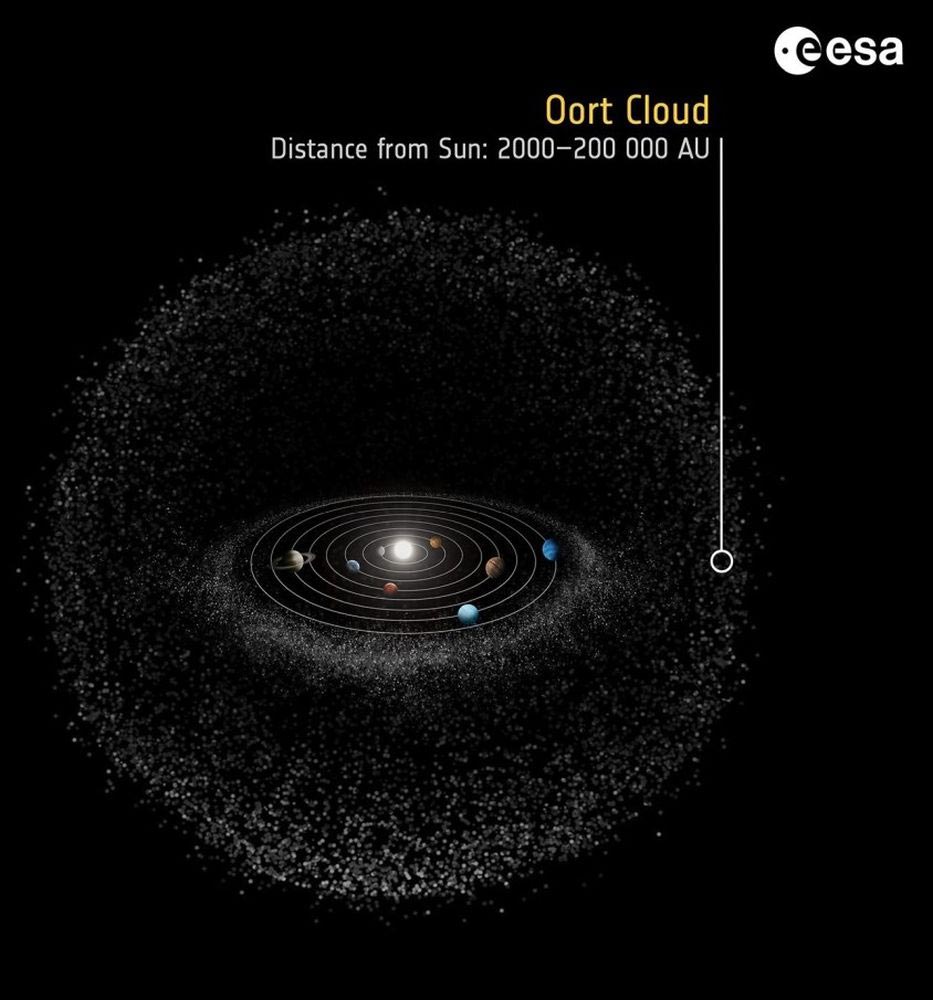
As for the Oort Cloud?
The Oort Cloud, a heretofore unseen, largely spherical cloud of comets and small icy bodies left over from the formation of our solar system some 4.5 billion years ago, very much remains a mystery.
There are three sources for the original material that formed the Oort Cloud, Astrophysicist Sean Raymond, Director of France’s Bordeaux Astrophysical Laboratory, told me via email.
Planetesimals that originated in our Sun’s planet-forming disk; planetesimals that originated around other stars in our Sun’s birth cluster, and interstellar objects that were captured during stellar encounters or by scattering by Jupiter, he says.
Why hasn’t Nemesis already been directly detected?
Many astronomers assume that if Nemesis is an ordinary red dwarf, somebody would have seen it, and the answer is no, because it’s moving with the Sun around the center of gravity. And as a result, Nemesis doesn’t show enough proper motion, or movement across our line of sight, to be detectable.
But it must be big enough to perturb the Oort cloud, which means it’s probably at least five percent the mass of the Sun, says Muller.
The consensus view is the K-T extinction event, which impacted the Yucatan Peninsula some 66 million years ago, was most likely caused by a large asteroid.
Yet the evidence that it’s an asteroid rather than a comet is very weak, so people say asteroid because that’s what Walter Alvarez, a professor of Earth and Planetary Science also at the University of California, Berkeley, said in his initial K-T Boundary paper, Muller notes. But when I asked Alvarez, I said, “You said asteroid. Could it be a comet?”
He responded, “Sure, we couldn’t tell the difference.”
The best near-term chance of characterizing this massive cloud, however, comes from the Rubin Observatory, which is just coming online. Astronomers hope that Rubin will be able to detect more long-period Oort Cloud comets.
The Good News?
The next comet shower that could cause serious damage to Earth should not be for another 12 to 15 million years from now, says Muller.
The Bottom Line?
The bad news is that if it’s out there, Nemesis almost certainly would lie close to the plane of the ecliptic, which means that from our point of view, it would lie coplanar with most of the bodies of the outer solar system. And as a dim 8th or possibly 9th magnitude star, this would make it even more difficult to spot, certainly impossible to see with the naked eye.
So, Nemesis really is probably lost in a field of view that includes a huge number of other stars, says Muller.
References: “Dynamical Population of Comet Reservoirs” by Nathan A. Kaib and Kathryn Volk, May 30, 2022, arXiv.
DOI: 2206.00010
“Measurement of the lunar impact record for the past 3.5 b.y. and implications for the Nemesis theory” by Richard A. Muller, 01 January 2002, Geological Society of America
DOI: 10.1130/0-8137-2356-6.659
“Mass Extinctions in the Marine Fossil Record” by David M. Raup and J. John Sepkoski, Jr., 19 March 1982, Science.
DOI: 10.1126/science.215.4539.1501
Adapted from an article originally published in UniverseToday.
Never miss a breakthrough: Join the SciTechDaily newsletter.
Follow us on Google and Google News.