
A sea turtle population that has declined by more than 90% is showing encouraging nesting success in Ecuador, where cooler ocean conditions coincide with more nests.
When a critically endangered leatherback sea turtle named Bella came ashore in Ecuador in January 2026, her search for a nesting spot took an unexpected turn. Confused by nearby streetlights, she climbed over a rock breakwater at Playa de Crucita and ended up on a sidewalk instead of the sandy beach where she needed to lay her eggs.
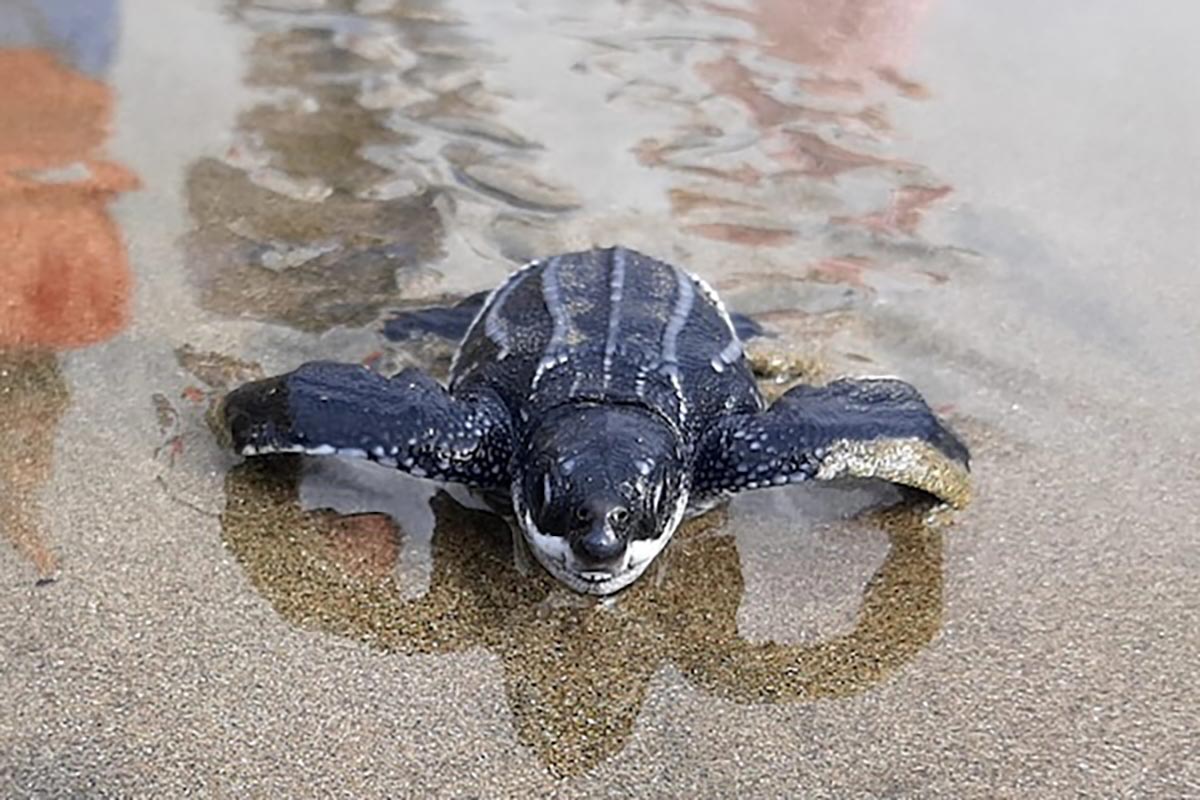
Bella eventually returned to the ocean without nesting, but two nights later, she tried again on a quieter stretch of beach. This time, she successfully buried 47 eggs in the sand. A few weeks later, 44 baby turtles emerged and made their way toward the sea.
Her persistence is part of a potentially hopeful development for the eastern Pacific leatherback, a critically endangered population of the world’s largest sea turtle. During the 2025–2026 nesting season, researchers documented a record number of leatherback nests along several beaches in Ecuador, more than 1,000 miles from the turtles’ traditional nesting grounds in Mexico and Costa Rica.
The findings raise an intriguing possibility. As ocean temperatures change, some leatherbacks may be adjusting where they reproduce, taking advantage of cooler conditions along Ecuador’s coast. Whether this represents a lasting adaptation remains uncertain, but successful nesting in new locations could offer opportunities for a population that has declined dramatically.
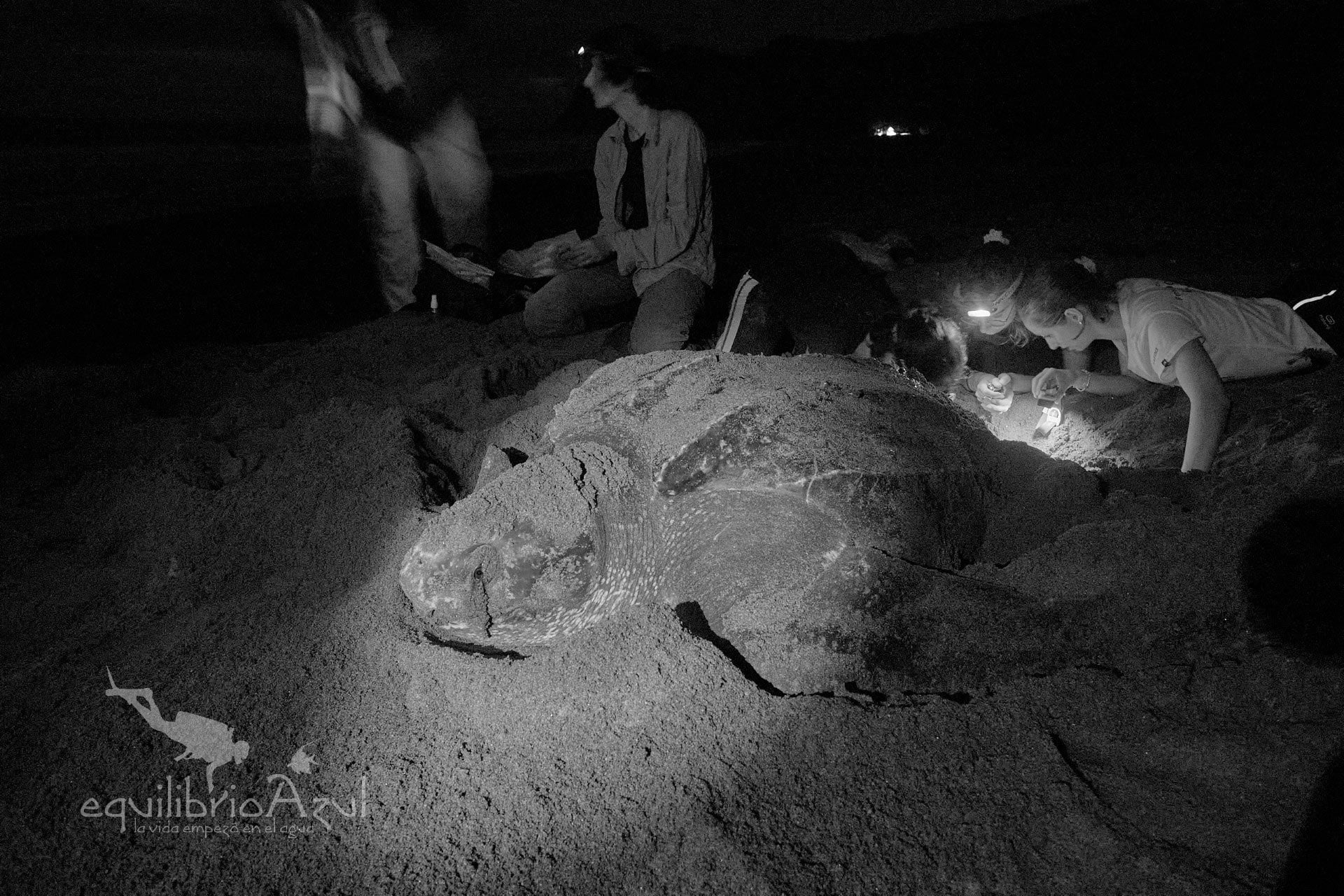
“Historically, observing female Eastern Pacific leatherbacks on Ecuador’s beaches was a rare or unusual event, but our findings suggest they are adapting their reproductive cycle to thrive and survive in coastal Ecuador,” says Juan José Alava, a marine ecotoxicologist, adjunct professor at Simon Fraser University’s School of Resource and Environmental Management, and leading co-author of the study.
Cooler ocean conditions coincide with more nests
In a study published in Chelonian Conservation and Biology, researchers examined more than 45 years of records documenting reproductive-age female turtles, nesting attempts, nests, hatching success, and stranded turtles along Ecuador’s coastline. They compared these observations with El Niño and La Niña events, which bring warmer and cooler ocean conditions.
Over the past decade, the records showed increased leatherback activity and nesting during cooler La Niña periods in the southeastern tropical Pacific. This relationship suggests that ocean temperatures may influence where females lay their eggs, although the findings do not establish that warming waters are directly causing them to move.
The Ecuadorian nests also showed encouraging results. The number of eggs per nest and the proportion that successfully hatched were comparable to those recorded at traditional nesting sites farther north. In some cases, Alava says, Ecuadorian nests produced more hatchlings than usual.
A remarkable traveler facing extinction
Leatherbacks are particularly well suited to life across dramatically different ocean environments. They are the only sea turtles that thrive in both warm and cold conditions, traveling thousands of miles between tropical nesting beaches and subpolar Pacific feeding grounds, where they feast on jellyfish during the summer. Their extensive travels have even brought them to Canada’s west coast, with more than 150 records from British Columbia waters between 1931 and 2024.
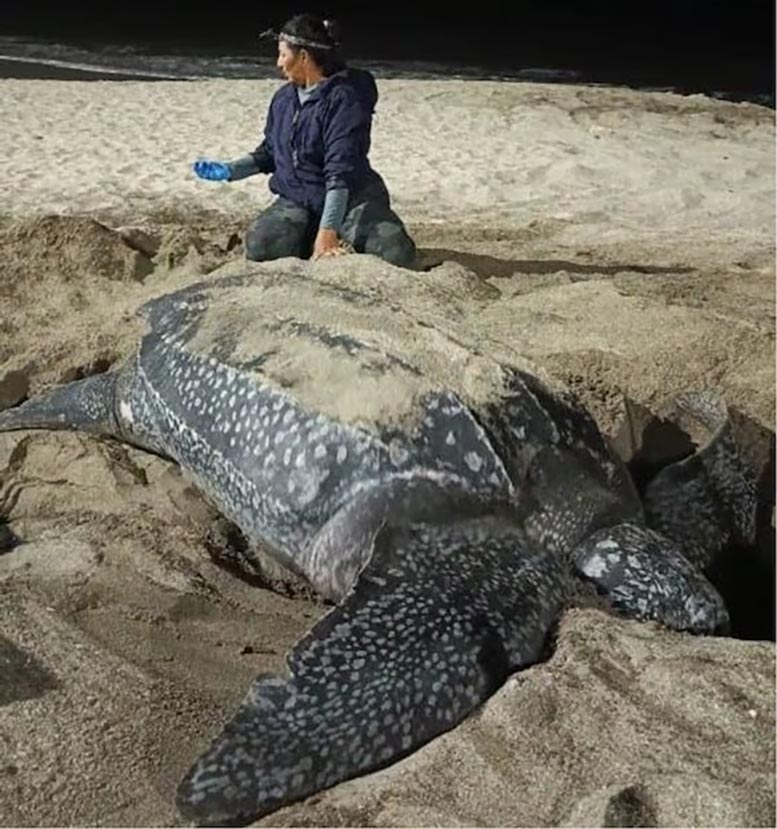
Despite that remarkable flexibility, eastern Pacific leatherbacks have suffered a population decline of more than 90 percent since the 1980s. Their survival is threatened by unusually warm El Niño conditions, which are worsened by human-caused climate change, as well as fishing bycatch, plastic pollution, vessel strikes, egg harvesting, and the loss of nesting habitat.
“It signals new hope for a subspecies of leatherback on track for extinction in the eastern Pacific within 60 years. They are making their way alongside nature against all odds, representing hope for this species and other sea turtle species even as they reach tipping points.”
Bella’s nesting success highlights coastal risks
Bella’s nesting success offers one example of what Ecuador’s beaches could provide. After researchers tagged her during her first unsuccessful attempt, they discovered that she nested four to five times in 2026 alone. One nest was left in its original location, while the others were moved to the San Jacinto hatchery.
Across the season, Bella laid 146 eggs, producing 134 hatchlings for an overall success rate of 91.8 percent.
Yet finding suitable nesting beaches is only part of the challenge. Bella’s encounter with streetlights and a coastal barrier illustrates how human activity can interfere with reproduction, even when turtles reach a promising location.
Alava emphasizes that continued monitoring, efforts to reduce accidental capture in fishing operations, and effective management of Ecuador’s nesting beaches will be essential to protecting the population over the long term. He also stresses the importance of involving coastal communities in conservation decisions.
“Management and conservation efforts should be championed in close consultation and participation with local and traditional ecological knowledge through coastal, community-grounded interventions.”
Reference: “A New Hope: Eastern Pacific Leatherback (Dermochelys coriacea) Nesting and Stranding Observations Amidst a Warming Ocean Show the Value of Ecuador for Species Persistence” by Juan José Alava, Kerly Briones, Cristian Soledispa, Cristina Miranda, Eduardo Espinoza, Johanna Moreira, Jodie J. Darquea, Felipe Vallejo, Juan F. Pesántez-Muñoz, Jacqueline Sócola, Johnny Moreira, Carlos Cruz, Marlon Intriago, Kevin Reyes, Alan Miranda, Raúl Carvajal, Cyntia Mizobe, Pedro Jiménez, Nikita Gaibor, Nastenka Calle and María José Barragán-Paladines, 19 October 2026, Chelonian Conservation and Biology.
DOI: 10.2744/CCB-1686.1
Never miss a breakthrough: Join the SciTechDaily newsletter.
Follow us on Google and Google News.