
Close Menu
    Facebook X (Twitter) Instagram
    SciTechDaily
    • Biology
    • Chemistry
    • Earth
    • Health
    • Physics
    • Science
    • Space
    • Technology
    Facebook X (Twitter) Pinterest YouTube RSS
    SciTechDaily
    Home»Science»Jurassic Period Super-Sized Fleas Had Armored Mouthparts to Attack the Thick Hide of Dinosaurs
    Science

    Jurassic Period Super-Sized Fleas Had Armored Mouthparts to Attack the Thick Hide of Dinosaurs

    By SciTechDailyMarch 5, 2012No Comments2 Mins Read
    Facebook Twitter Pinterest Telegram LinkedIn WhatsApp Email Reddit
    Share
    Facebook Twitter LinkedIn Pinterest Telegram Email Reddit
    jurassic-cretaceous-flea
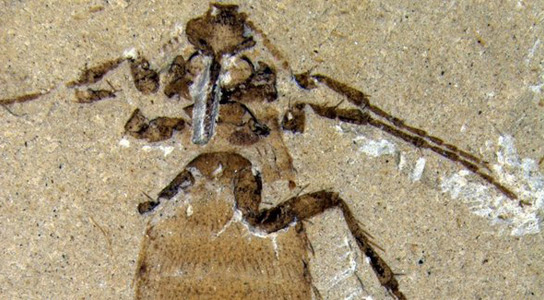
    Jurassic flea fossil 

    The primitive ancestors of modern-day fleas were built to drain the blood of dinosaurs, more than 150 million years ago, during the Jurassic period. This potential host-parasite relationship was recently uncovered thanks to a set of preserved fossils found in China.

    Fleas, insects from the Siphonaptera order, infest all types of mammals and birds, but little is known about their origins. The fossil record consists mostly of modern-looking fleas from the past 65 million years, and possible fleas from the Cretaceous period, though this has been debated by experts. Michael Engel, a paleontologist, from the University of Kansas in Lawrence, and his colleagues have extended the history of these parasites by at least 60 million years. Their findings were published last week in the journal Nature.
    giant-jurassic-flea

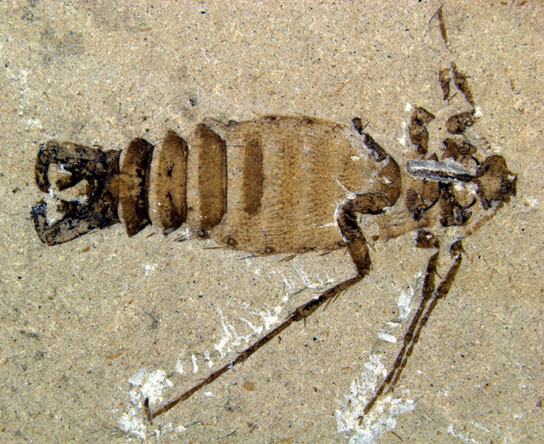
    Engel et al. studied nine flea specimens from two sites. One of them is the 165-million-year-old Jurassic site in Daohugou and the other is the 125-million-year-old Cretaceous strata at Huangbanjigou in China. These prehistoric flea species were between 8 and 21 mm (0.3 to 0.8 in) in length, while today’s fleas range between 1 and 10 mm (0.04 to 0.4 in).

    The Jurassic and Cretaceous fleas lacked the spring-legged, jumping specializations of their more modern cousins, but their mouthparts were armored, studded with saw-like protuberances, unlike the smooth jaws of modern fleas.

    jurassic-cretaceous-flea-comparison

    These traits may indicate that prehistoric fleas were ambush specialists, catching meals by hiding in the periphery and scrambling onto their hosts for a quick meal, before bolting off again. The mouthparts were specialized for working into heavy hides, such as the ones found on dinosaurs.

    The only way to confirm this is to find fossilized fleas caught in the act of feeding on dinosaurs.

    Reference: “Diverse transitional giant fleas from the Mesozoic era of China” by Diying Huang, Michael S. Engel, Chenyang Cai, Hao Wu and André Nel, 29 February 2012, Nature.
    DOI: 10.1038/nature10839

    Never miss a breakthrough: Join the SciTechDaily newsletter.
    Follow us on Google and Google News.

    Adaptation China Cretaceous Period Dinosaurs Entomology Fleas Fossils Insect Jurassic Paleoentomology Paleontology
    Share. Facebook Twitter Pinterest LinkedIn Email Reddit

    Related Articles

    Scientists Discover Bizarre 100-Million-Year-Old Insect With Giant Claws

    Scientists Solve 320-Million-Year Mystery of Reptile Skin Armor

    Scientists Finally Solve the 20-Year Mystery of Strange Tiny Dinosaur Fossils

    Scientists Reconstruct a Giant 31-Foot “Dinosaur-Killer” Crocodile in Unprecedented Detail

    Soaring vs. Flapping: “Remarkable” Fossils Unlock Flight Secrets of Giant Pterosaurs

    Cretaceous Period Sankofa Pyrenaica Fossilized Eggs Are Unusually Shaped

    Feathered Yutyrannus Huali Specimen Found in China, Closely Related to Tyrannosaurus Rex

    Microraptor Feathers Were Black With Iridescent Sheen

    Cretaceous Period Pterosaur Discovered in Northeast China

    Leave A Reply Cancel Reply

    • Facebook
    • Twitter
    • Pinterest
    • YouTube

    Don't Miss a Discovery

    Subscribe for the Latest in Science & Tech!

    Trending News

    Scientists Reversed Autism-Like Symptoms in Adult Mice Within Two Hours

    30-Year-Old Museum Rock May Hide a New Mosasaur Species

    Unzipping the Code of Life: Scientists Pinpoint Where DNA First Opens

    American Heart Association Reveals How Much Coffee Is Safe for Your Heart

    Earth May Be Twice As Vulnerable to Extreme Solar Storms As Scientists Thought

    New Compound Could Help Aging Muscles Repair Themselves

    Scientists Tested an 8-Hour Eating Window and Found a Surprising Brain Benefit

    Killer Whales Filmed Smashing Giant Sunfish Into Thousands of Pieces, Possibly for Fun

    Follow SciTechDaily
    • Facebook
    • Twitter
    • YouTube
    • Pinterest
    • Newsletter
    • RSS
    SciTech News
    • Biology News
    • Chemistry News
    • Earth News
    • Health News
    • Physics News
    • Science News
    • Space News
    • Technology News
    Recent Posts
    • Coffee’s Most Destructive Pest Is Accidentally Helping the Ants That Hunt It
    • Cells Join Forces To Survive Prolonged Mechanical Strain
    • When Gut Bacteria Run Out of Fiber, They May Start Eating You
    • Scientists Discover the Brain May Enter a New Biological Phase Between 50 and 75
    • New Research Reveals Autistic Brains Process Faces Differently
    Copyright © 1998 - 2026 SciTechDaily. All Rights Reserved.
    • Science News
    • About
    • Contact
    • Editorial Board
    • Privacy Policy
    • Terms of Use

    Type above and press Enter to search. Press Esc to cancel.