
Close Menu
    Facebook X (Twitter) Instagram
    SciTechDaily
    • Biology
    • Chemistry
    • Earth
    • Health
    • Physics
    • Science
    • Space
    • Technology
    Facebook X (Twitter) Pinterest YouTube RSS
    SciTechDaily
    Home»Science»Floods in Wagga Wagga Australia Provoke Extremely Wide Spiderwebs
    Science

    Floods in Wagga Wagga Australia Provoke Extremely Wide Spiderwebs

    By SciTechDailyMarch 8, 20121 Comment2 Mins Read
    Facebook Twitter Pinterest Telegram LinkedIn WhatsApp Email Reddit
    Share
    Facebook Twitter LinkedIn Pinterest Telegram Email Reddit
    wagga-wagga-spiderwebs
    Wagga Wagga, New South Wales, Australia

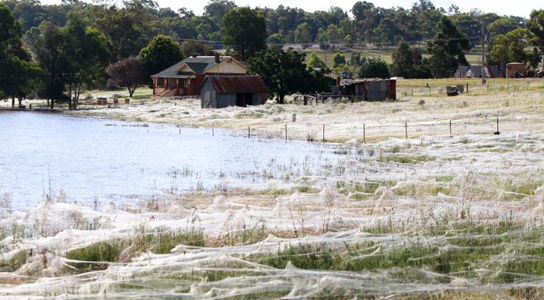
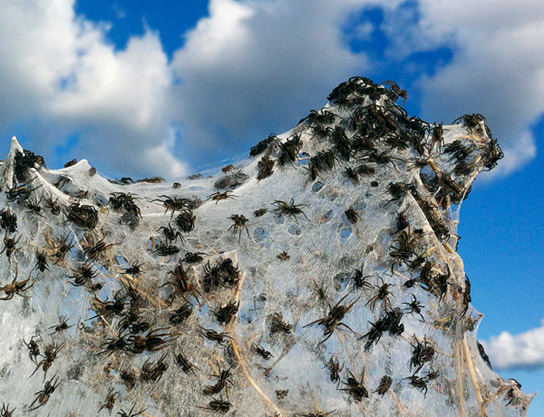
    Escaping spiders are fleeing the floods in Wagga Wagga, New South Wales, Australia, by moving to higher ground and building massive networks of interconnected spiderwebs, raised over sticks and bushes. The spiders have covered entire fields with their webs and the floodwaters show no signs of subsiding. The town has been declared a disaster area.

    The town has experienced its highest rainfall, at 188 mm (7.4 inches) in the week from February 27th, which was 40mm (1.6 inches) higher than the previous record. As a result, 9,000 people have been evacuated. The flood is the worst for Wagga Wagga since 1853. If the rains continue, the flooding will breach the town’s levees.
    wagga-wagga-ballooning-spiderwebs

    Flooding is also widespread in Queensland and Victoria, and it’s been reported that the deluge could continue for more than a month.

    Millions of spiders are trying to escape. Residents state that swarms of arachnids are crossing the town and will crawl up your legs to try and get away from the water. The whole town looks like it’s covered in silver, reminiscent of snow.
    wolf-spider-eyes

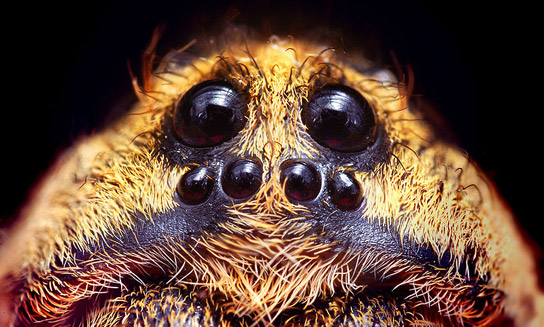
    Scientists think that the small brown spiders are harmless and think that they’re wolf spiders, part of the family Lycosidae, which includes about 2,300 species. It’s not possible to determine the exact species since it’s impossible to obtain samples. They might be juvenile wolf spiders.

    The spiders have woven their webs in what’s called ballooning, which lets out lengths of silk in the hope that the wind will catch them and carry them to another place.

    Never miss a breakthrough: Join the SciTechDaily newsletter.
    Follow us on Google and Google News.

    Arachnids New South Wales Spiders
    Share. Facebook Twitter Pinterest LinkedIn Email Reddit

    Related Articles

    Bioeconomic Potential: Scientists Just Found 140 Reasons to Love Spider Venom

    Fiery New Tarantula Species Discovered in Arizona’s Sky Islands – but It Could Soon Disappear Forever

    Revealing the “Waist-Less” Gene: A Breakthrough in Spider Biology

    “Unlike Any Other Arachnid Known” – Scientists Discover Bizarre 308-Million-Year-Old Creature With Spiny Legs

    Listening Like a Spider: The Future of Sound Technology

    Longstanding Paleontology Mystery Solved – Revolutionary Fossil Find in Morocco Unveils Origins of Spiders and Scorpions

    Master of Disguise: The Ant-Mimicking Spider’s Survival Strategy

    Decoding Mimicry: This Spider’s Almost Perfect Ant Impersonation

    Engineered Bacteria Eat Waste Plastic and Make Spider Silk – “Nature’s Kevlar”

    1 Comment

    1. John Carter on March 9, 2012 1:11 am

      I think the same thing was reported in Pakistan after the devastating floods last year.

      Reply
    Leave A Reply Cancel Reply

    • Facebook
    • Twitter
    • Pinterest
    • YouTube

    Don't Miss a Discovery

    Subscribe for the Latest in Science & Tech!

    Trending News

    A Long-Held Idea About Alzheimer’s Tau May Be Wrong

    Your Favorite Scented Cleaner Could Be Filling the Air With Invisible Pollution

    New Study Reveals a Major Shift Behind Rising ADHD and Autism Diagnoses

    New Treatment Cuts “Bad” Cholesterol in Half for a Full Year

    Astronomers Expected More Tiny Worlds Beyond Neptune – Webb Found Something Else

    Scientists Discover New Compound That Burns Fat Without Killing Your Appetite

    Mount Vesuvius Buried These Scrolls for 2,000 Years – Now Scientists May Read Them

    The Asteroid That Killed the Dinosaurs Was Stranger Than We Thought

    Follow SciTechDaily
    • Facebook
    • Twitter
    • YouTube
    • Pinterest
    • Newsletter
    • RSS
    SciTech News
    • Biology News
    • Chemistry News
    • Earth News
    • Health News
    • Physics News
    • Science News
    • Space News
    • Technology News
    Recent Posts
    • NASA’s Chandra Reveals Galaxies Being Torn Apart, Blasted by Black Holes, and Reborn in Stars
    • Scientists Discover an Unexpected Connection Between Stem Cells and Childhood Brain Tumors
    • AI Detects Hidden Bladder Cancer Warning Signs up to 5 Years Before Diagnosis
    • Ozempic’s Active Ingredient Shows Surprising Anti-Aging Effects
    • Henry VIII’s Lost Castle May Still Be Hiding in Plain Sight
    Copyright © 1998 - 2026 SciTechDaily. All Rights Reserved.
    • Science News
    • About
    • Contact
    • Editorial Board
    • Privacy Policy
    • Terms of Use

    Type above and press Enter to search. Press Esc to cancel.