
Close Menu
    Facebook X (Twitter) Instagram
    SciTechDaily
    • Biology
    • Chemistry
    • Earth
    • Health
    • Physics
    • Science
    • Space
    • Technology
    Facebook X (Twitter) Pinterest YouTube RSS
    SciTechDaily
    Home»Health»Innovative Biosensor Technology for Stem Cells Leads Way to Treatment of Alzheimer’s, Parkinson’s Diseases
    Health

    Innovative Biosensor Technology for Stem Cells Leads Way to Treatment of Alzheimer’s, Parkinson’s Diseases

    By Rutgers UniversityNovember 11, 2019No Comments3 Mins Read
    Facebook Twitter Pinterest Telegram LinkedIn WhatsApp Email Reddit
    Share
    Facebook Twitter LinkedIn Pinterest Telegram Email Reddit
    Biosensor for Stem Cells
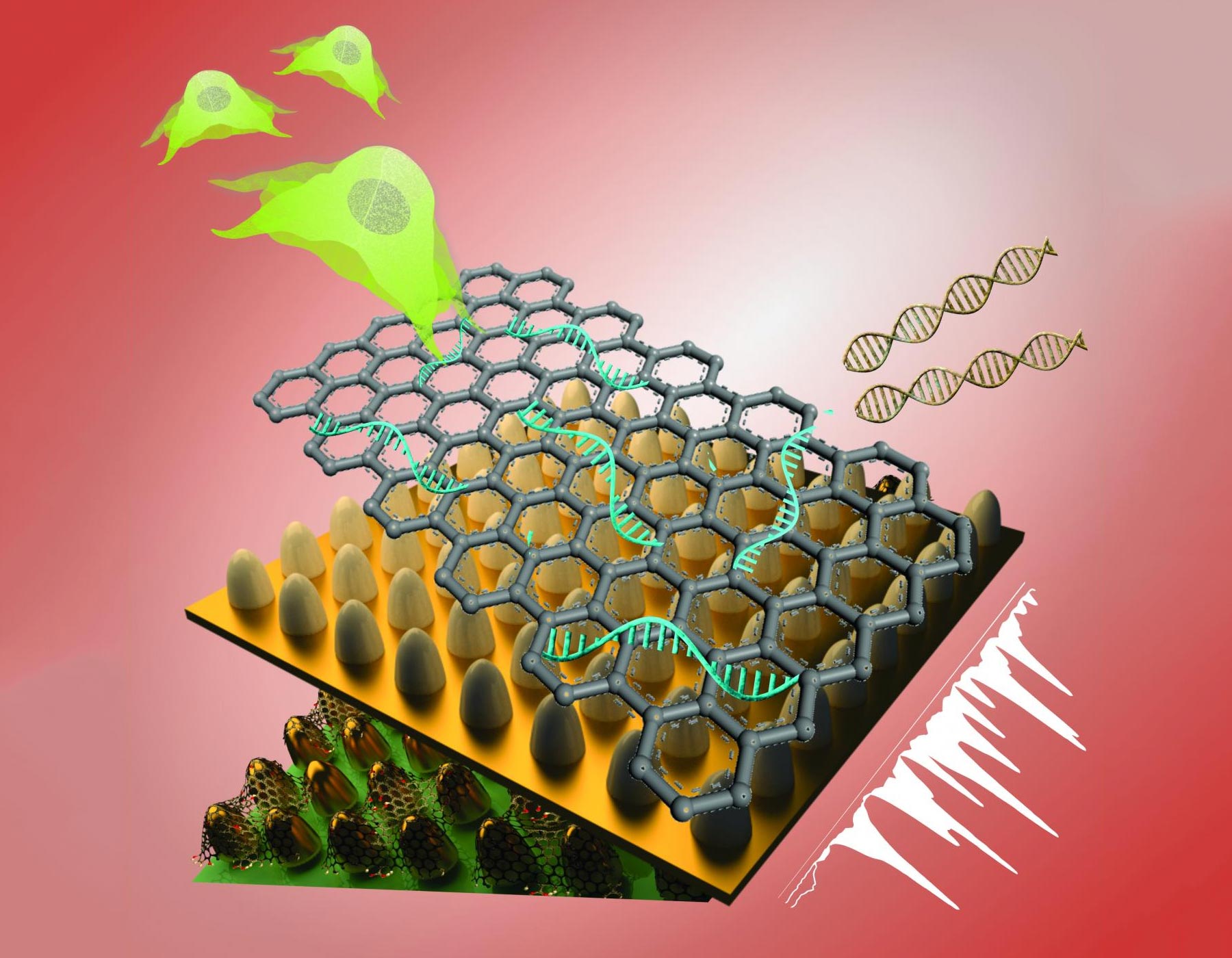
    This unique biosensing platform consists of an array of ultrathin graphene layers and gold nanostructures. The platform, combined with high-tech imaging (Raman spectroscopy), detects genetic material (RNA) and characterizes different kinds of stem cells with greater reliability, selectivity and sensitivity than today’s biosensors. Credit: Letao Yang, KiBum Lee, Jin-Ho Lee and Sy-Tsong (Dean) Chueng

    Rutgers innovation may help guide treatment of Alzheimer’s, Parkinson’s diseases.

    A Rutgers-led team has created better biosensor technology that may help lead to safe stem cell therapies for treating Alzheimer’s and Parkinson’s diseases and other neurological disorders.

    The technology, which features a unique graphene and gold-based platform and high-tech imaging, monitors the fate of stem cells by detecting genetic material (RNA) involved in turning such cells into brain cells (neurons), according to a study in the journal Nano Letters.

    Stem cells can become many different types of cells. As a result, stem cell therapy shows promise for regenerative treatment of neurological disorders such as Alzheimer’s, Parkinson’s, stroke, and spinal cord injury, with diseased cells needing replacement or repair. But characterizing stem cells and controlling their fate must be resolved before they could be used in treatments. The formation of tumors and uncontrolled transformation of stem cells remain key barriers.

    “A critical challenge is ensuring high sensitivity and accuracy in detecting biomarkers — indicators such as modified genes or proteins — within the complex stem cell microenvironment,” said senior author KiBum Lee, a professor in the Department of Chemistry and Chemical Biology in the School of Arts and Sciences at Rutgers University-New Brunswick. “Our technology, which took four years to develop, has demonstrated great potential for analyzing a variety of interactions in stem cells.”

    The team’s unique biosensing platform consists of an array of ultrathin graphene layers and gold nanostructures. The platform, combined with high-tech imaging (Raman spectroscopy), detects genes and characterizes different kinds of stem cells with greater reliability, selectivity, and sensitivity than today’s biosensors.

    The team believes the technology can benefit a range of applications. By developing simple, rapid, and accurate sensing platforms, Lee’s group aims to facilitate the treatment of neurological disorders through stem cell therapy.

    Stem cells may become a renewable source of replacement cells and tissues to treat diseases including macular degeneration, spinal cord injury, stroke, burns, heart disease, diabetes, osteoarthritis, and rheumatoid arthritis, according to the National Institutes of Health.

    ###

    Reference: “Dual-Enhanced Raman Scattering-Based Characterization of Stem Cell Differentiation Using Graphene-Plasmonic Hybrid Nanoarray” by Letao Yang, Jin-Ho Lee, Christopher Rathnam, Yannan Hou, Jeong-Woo Choi and Ki-Bum Lee, 30 October 2019, Nano Letters.
    DOI: 10.1021/acs.nanolett.9b03402

    The study’s co-lead authors are Letao Yang and Jin-Ho Lee, postdoctoral researchers in Lee’s group. Rutgers co-authors include doctoral students Christopher Rathnam and Yannan Hou. A scientist at Sogang University in South Korea contributed to the study.

    Never miss a breakthrough: Join the SciTechDaily newsletter.
    Follow us on Google and Google News.

    Alzheimer's Disease Biosensor Disease Rutgers University Stem Cells
    Share. Facebook Twitter Pinterest LinkedIn Email Reddit

    Related Articles

    FDA Approved Bexarotene Reverses Alzheimer’s Disease Deficits in Mice

    New Imaging Method Detects Alzheimer’s Risk Years before the Disease Strikes

    Vitamin D3 and Omega-3 May Help Fight Alzheimer’s

    Galactic Cosmic Radiation Poses Significant Threat to Astronauts, Could Accelerate the Onset of Alzheimer’s

    Disrupted Sleep Patterns Linked to Alzheimer’s

    Souvenaid Appears to Stimulate Growth of New Synapses in Patients With Early Alzheimer’s

    Engineered Stem Cells Suppress HIV in Living Tissues

    Transplants Without the Need for Lifelong Immunosupression

    Scientists Create Stem-Cell-Derived Neurons from Alzheimer’s Disease

    Leave A Reply Cancel Reply

    • Facebook
    • Twitter
    • Pinterest
    • YouTube

    Don't Miss a Discovery

    Subscribe for the Latest in Science & Tech!

    Trending News

    JWST Finds a “Star” 100 Billion Times Brighter Than Any Star Should Be

    Scientists Find a Hidden Biological Link Across Different Forms of Autism

    Astronomers Discover a Ghostly River of Stars That Could Reveal Dark Matter

    Why Is Colorectal Cancer Rising in People Under 50? New Clues Point to the Environment

    Quantum Fluctuations Break a Crystal’s Symmetry Rules

    Why Does an Irregular Heartbeat Strike 40 Years Early in Some People?

    Scientists Reveal How ADHD Could Fuel Creative Thinking

    Scientists Find Just 3 Minutes of Sprinting Can Transform Blood Chemistry

    Follow SciTechDaily
    • Facebook
    • Twitter
    • YouTube
    • Pinterest
    • Newsletter
    • RSS
    SciTech News
    • Biology News
    • Chemistry News
    • Earth News
    • Health News
    • Physics News
    • Science News
    • Space News
    • Technology News
    Recent Posts
    • Dual Stem Cell Treatment Restores Vision in First Human Trial
    • Your Waist Size May Reveal More About Your Health Than You Think
    • AI Decodes a Hidden DNA Signal Linked to Disease-Causing Mutations
    • Billions of Invasive Fish Have Taken Over the Great Lakes. Scientists Say We Can Still Stop Their Next Invasion
    • Scientists Turn Red Strawberries White With a Single Gene Edit
    Copyright © 1998 - 2026 SciTechDaily. All Rights Reserved.
    • Science News
    • About
    • Contact
    • Editorial Board
    • Privacy Policy
    • Terms of Use

    Type above and press Enter to search. Press Esc to cancel.