
Close Menu
    Facebook X (Twitter) Instagram
    SciTechDaily
    • Biology
    • Chemistry
    • Earth
    • Health
    • Physics
    • Science
    • Space
    • Technology
    Facebook X (Twitter) Pinterest YouTube RSS
    SciTechDaily
    Home»Biology»Supergene Discovery Leads to New Knowledge of Fire Ants & Pest Control Methods
    Biology

    Supergene Discovery Leads to New Knowledge of Fire Ants & Pest Control Methods

    By University of GeorgiaOctober 17, 2020No Comments4 Mins Read
    Facebook Twitter Pinterest Telegram LinkedIn WhatsApp Email Reddit
    Share
    Facebook Twitter LinkedIn Pinterest Telegram Email Reddit
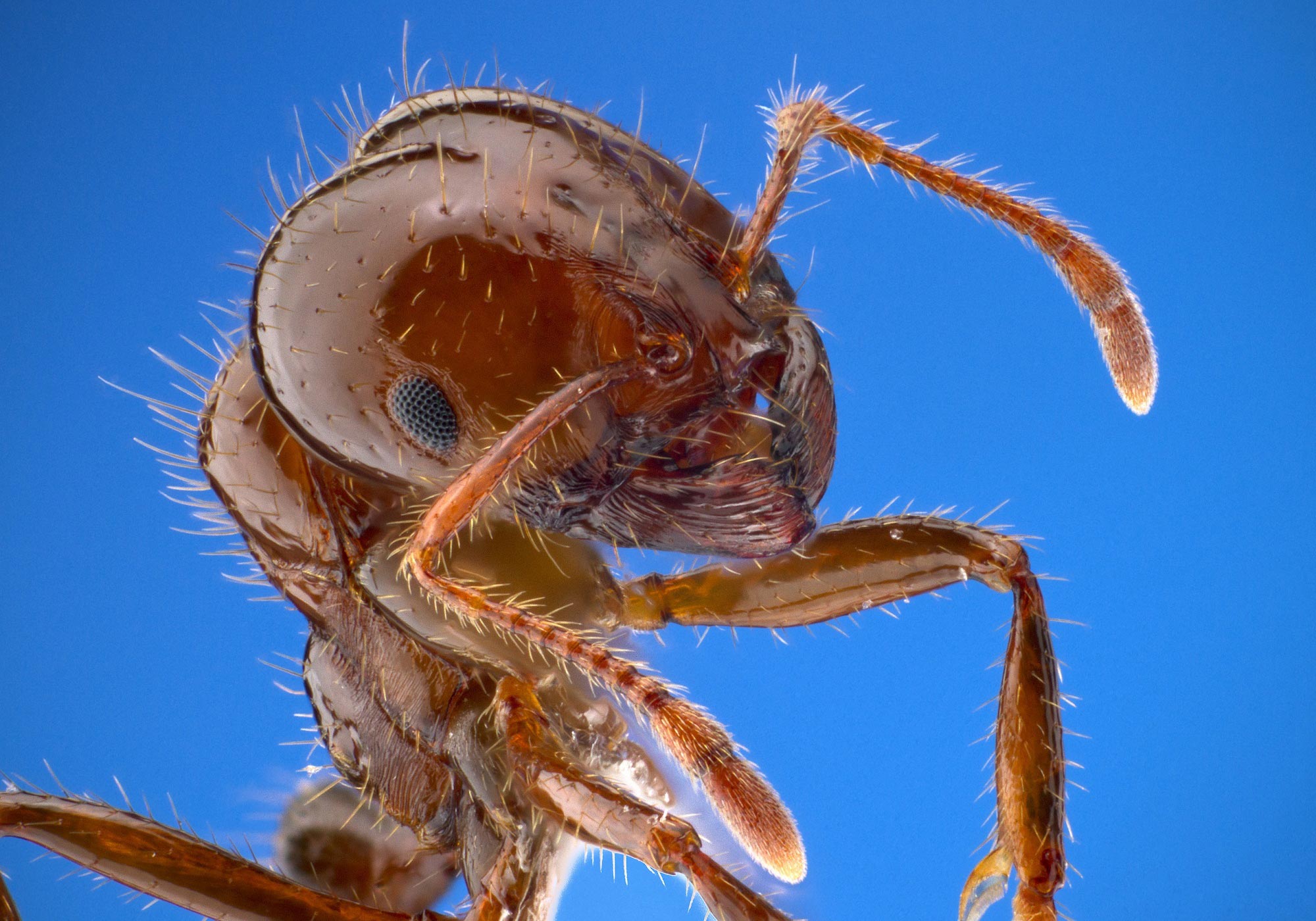
    Fire Ant Macro
    Entomologists identified a special supergene in fire ant colonies that influences whether young queen ants establish new colonies or join existing ones. The study also revealed increased aggression towards non-supergene queens, potentially aiding more efficient pest control methods and pest population management.

    The research could help development of new pest control methods.

    A unique study conducted by University of Georgia entomologists led to the discovery of a distinctive supergene in fire ant colonies that determines whether young queen ants will leave their birth colony to start their own new colony or if they will join one with multiple queens.

    Researchers also found that ants were more aggressive toward queens who don’t possess the supergene, causing main colony workers to kill them. This critical finding opens the door to new pest control methods that may be more efficient in eradicating problematic fire ant colonies.

    “Learning about the way fire ants behave is very important baseline information,” said Ken Ross, a professor of entomology at UGA. “This information is key to helping us manage pest populations and predict what dissimilarities can happen in their environment.”

    Studying social structure

    A supergene is a collection of neighboring genes located on a chromosome that are inherited together due to close genetic linkage. Studying these unique genes is important to understanding the potential causes for differences among the social structure of fire ants, specifically for controlling the species and building on the existing knowledge base.

    Researchers focused on young queen fire ants embarking on nuptial flights. They compared the supergene’s impact on the fire ants’ two primary types of social structures: monogyne, which is reproduction from queens that form a new nest, and pologyne, reproduction from queens that join an existing nest.

    Fire Ant
    A Fire Ant. Credit: UGA

    Ross initially worked alongside colleagues in his lab to discover a remarkable example of genetically encoded differences in social organization within the fire ant species Solenopsis invicta. The next step was to understand how these genetic differences result in complex behavioral and physiological variations among ants from single queen colonies versus colonies with multiple queens. Compounding this knowledge helps scientists further understand patterns of development in the species, increasing alternatives to combat invasive populations.

    Led by a pair of UGA entomology graduate alumni, Joanie King, who earned her master’s degree in 2017, and Samuel Arsenault, who earned his doctoral degree in 2020, the team developed an experimental design that utilized a collection of samples from two fire ant organs — brain and ovarian tissues — and the complete range of social chromosome genotypes and social forms within this fire ant species.
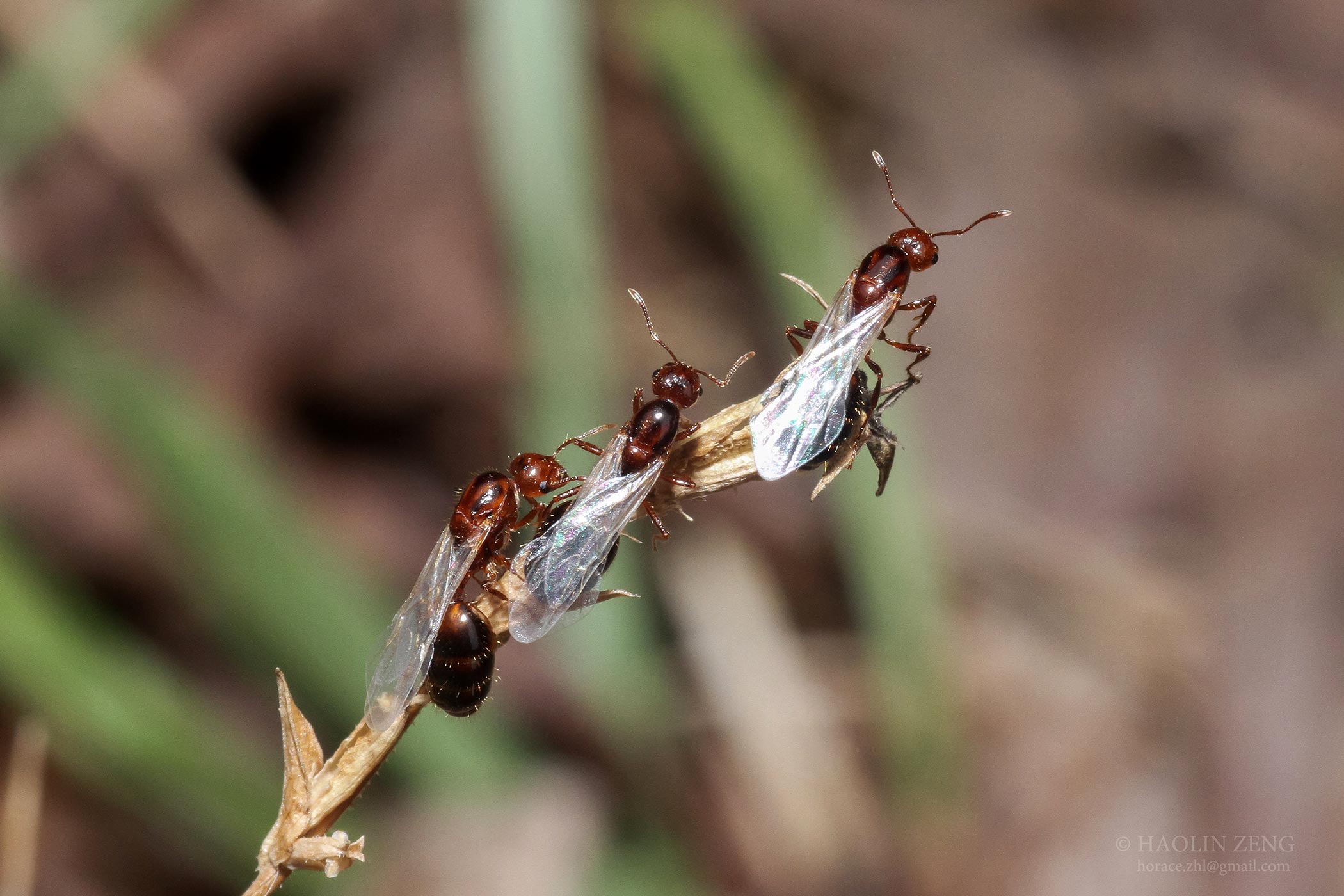
    Winged Fire Ants
    Winged ants are called reproductives. Credit: UGA

    The innovative study incorporated various scientific methods, leading to a collaboration of tools and resources throughout many areas of the institution.

    “UGA was a very supportive environment to conduct this research,” said Brendan Hunt, associate professor of entomology. “We received help preparing samples for RNA sequencing from Dr. Bob Schmitz’s lab in the genetics department, performed the sequencing at the Georgia Genomics and Bioinformatics Core, and utilized computational resources from the Georgia Advanced Computing Resource Center to analyze the data.”

    Hands-on research

    These types of student-led projects give young researchers the chance to grow in a hands-on environment with mentorship and guidance from scientists with proven track records in the field.

    “The graduate students gained experience that helped them transition to the next stages of their careers,” said Hunt. “Both have gone on to continue their studies of ant genetics.”

    After earning their degrees and completing the research at UGA, King began pursuing a doctorate at Texas A&M University to study alongside Edward Vargo, and Arsenault works as a postdoctoral researcher with Harvard University’s Buck Trible Lab.

    Reference: “Simple inheritance, complex regulation: Supergene‐mediated fire ant queen polymorphism” by Samuel V. Arsenault, Joanie T. King, Sasha Kay, Kip D. Lacy, Kenneth G. Ross and Brendan G. Hunt, 4 August 2020, Molecular Ecology.
    DOI: 10.1111/mec.15581

    Never miss a breakthrough: Join the SciTechDaily newsletter.
    Follow us on Google and Google News.

    Ants Cell Biology Ecological Entomology Genetics University of Georgia
    Share. Facebook Twitter Pinterest LinkedIn Email Reddit

    Related Articles

    Environmental DNA (eDNA) Analysis Could Contribute Towards More Effective Pest Control

    How to Become “Ant-I-Social” – Erosion of Ant Genome Tied to Loss of Functional, Behavioral and Social Traits

    Ant Responses to Social Isolation Surprisingly Resemble Those of Humans

    Meta-Analysis Identifies Four New Genetic Risk Factors for Testicular Cancer

    Potential New Therapy Stops Tumor Growth

    Lazarus Project Produces Cloned Embryos of an Extinct Frog

    Key Differences in Seemingly Synonymous Parts of the Genetic Code

    Hyperparasite Fungus Limits the Effects of ‘Zombie-Ant’ Fungus

    DNA Jumps Directly From the Cell’s Chloroplasts Into Its Nucleus

    Leave A Reply Cancel Reply

    • Facebook
    • Twitter
    • Pinterest
    • YouTube

    Don't Miss a Discovery

    Subscribe for the Latest in Science & Tech!

    Trending News

    Breakthrough Bowel Cancer Trial Leaves Patients Cancer-Free for Nearly 3 Years

    Natural Compound Shows Powerful Potential Against Rheumatoid Arthritis

    100,000-Year-Old Neanderthal Fossils in Poland Reveal Unexpected Genetic Connections

    Simple “Gut Reset” May Prevent Weight Gain After Ozempic or Wegovy

    2.8 Days to Disaster: Scientists Warn Low Earth Orbit Could Suddenly Collapse

    Common Food Compound Shows Surprising Power Against Superbugs

    5 Simple Ways To Remember More and Forget Less

    The Atomic Gap That Could Cost the Semiconductor Industry Billions

    Follow SciTechDaily
    • Facebook
    • Twitter
    • YouTube
    • Pinterest
    • Newsletter
    • RSS
    SciTech News
    • Biology News
    • Chemistry News
    • Earth News
    • Health News
    • Physics News
    • Science News
    • Space News
    • Technology News
    Recent Posts
    • After 37 Years, the World’s Longest-Running Soil Warming Experiment Uncovers a Startling Climate Secret
    • NASA Satellite Captures First-Ever High-Res View of Massive Pacific Tsunami
    • ADHD Isn’t Just a Deficit: Study Reveals Powerful Hidden Strengths
    • Scientists Uncover “Astonishing” Hidden Property of Light
    • Scientists Discover Stem Cells That Could Regrow Teeth and Bone
    Copyright © 1998 - 2026 SciTechDaily. All Rights Reserved.
    • Science News
    • About
    • Contact
    • Editorial Board
    • Privacy Policy
    • Terms of Use

    Type above and press Enter to search. Press Esc to cancel.