
A 307-million-year-old fossil reveals that some of Earth’s earliest land animals were already experimenting with a plant-based diet.
Life first emerged in Earth’s oceans. Around 475 million years ago, plants began spreading from water onto land. Animals with backbones followed much later, arriving roughly 100 million years after plants had already taken hold. Even then, the earliest land animals did not eat plants. For tens of millions of years, they survived by preying on other animals.
New research published today (February 10) in Nature Ecology and Evolution now challenges that long-held view. Scientists have identified a 307-million-year-old fossil belonging to one of the earliest known land vertebrates that developed the ability to eat plants.
“This is one of the oldest known four-legged animals to eat its veggies,” says Arjan Mann, assistant curator of fossil fishes and early tetrapods at the Field Museum in Chicago and co-lead author of the study. “It shows that experimentation with herbivory goes all the way back to the earliest terrestrial tetrapods—the ancient relatives of all land vertebrates, including us.”
A Fossil Skull Reveals a Hidden Diet
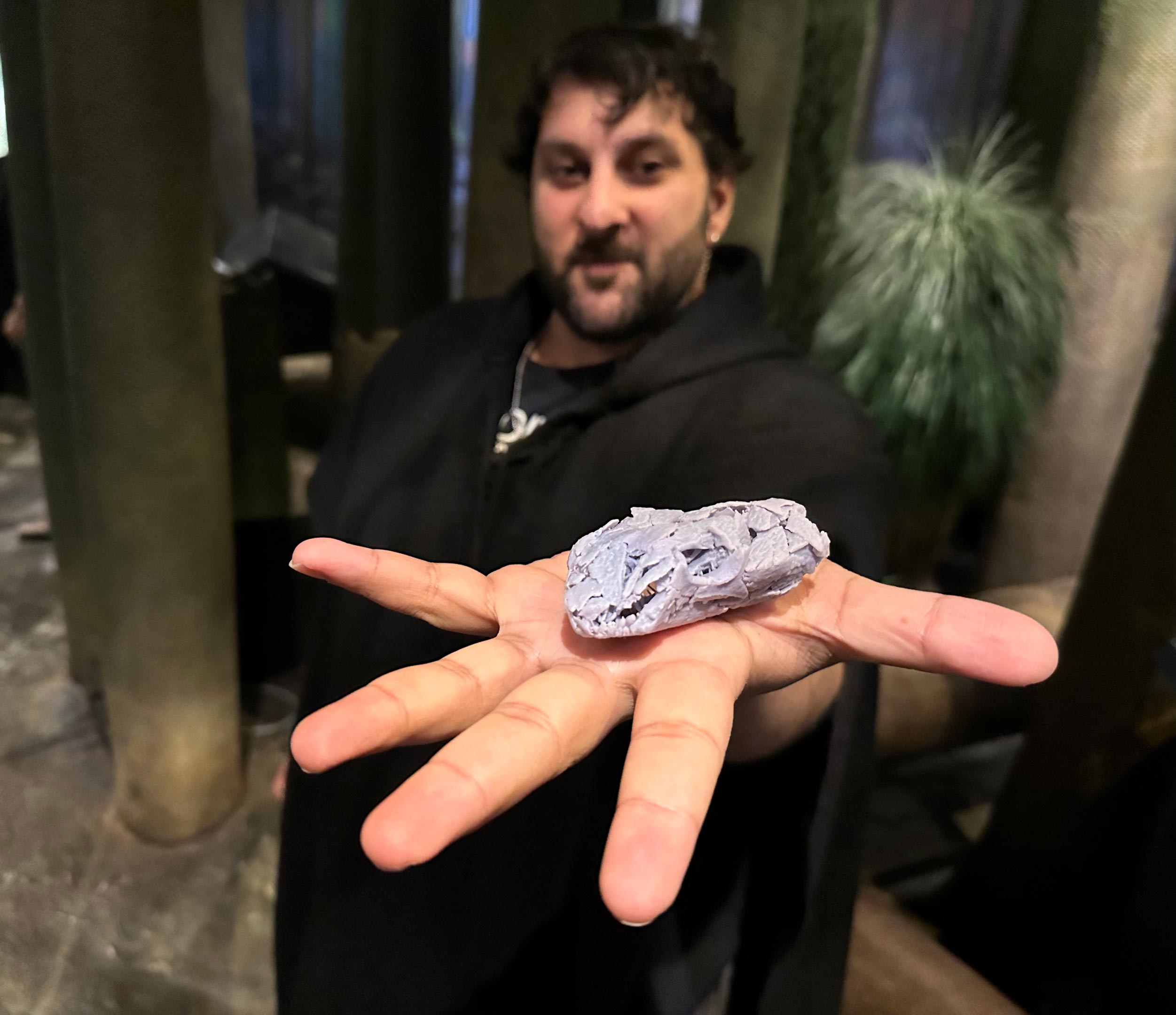
The fossil represents the first detailed three-dimensional reconstruction of its group, offering an unprecedented look inside the animal’s skull.
“The specimen is the first of its group to receive a detailed 3D reconstruction, which allowed us to look inside its skull and reveal its specialized teeth, helping us to trace the origin of terrestrial herbivory,” says Zifang Xiong, a PhD student at the University of Toronto and co-lead author of the paper.
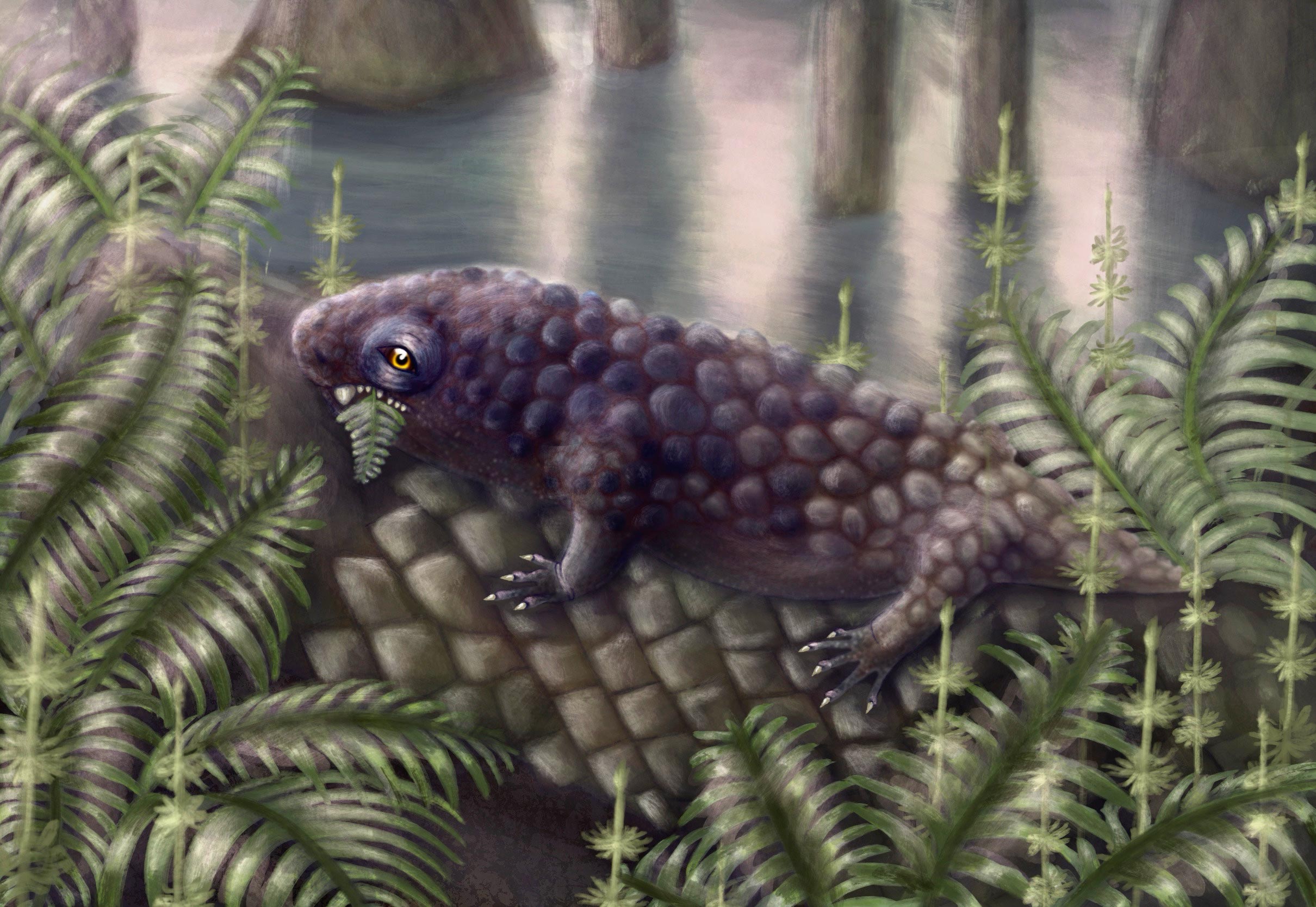
The species has been named Tyrannoroter heberti, which means Hebert’s tyrant digger, honoring its discoverer, Brian Hebert. So far, researchers have only recovered the skull, but comparisons with closely related fossils suggest the animal was a sturdy, four-legged creature measuring about one foot long.
“It was roughly the size and shape of an American football,” says Mann. While that might seem small today, it was among the largest animals living on land at the time. Its appearance may have resembled a lizard, but it lived before the evolutionary split between reptiles and mammals, meaning it was not technically a reptile.
Dangerous Fieldwork Along Nova Scotia’s Coast
The fossil was uncovered on Cape Breton Island in Nova Scotia, where collecting fossils can be both physically demanding and risky.
“Nova Scotia has the highest tides in the world—when we’re working there, we’re racing against the tide, when the ocean comes back in,” says Mann. “It’s very rocky, and the fossils are in cliffs on the shore. Paleontologists hate excavating in cliffs, because the cliff could come down on you.”
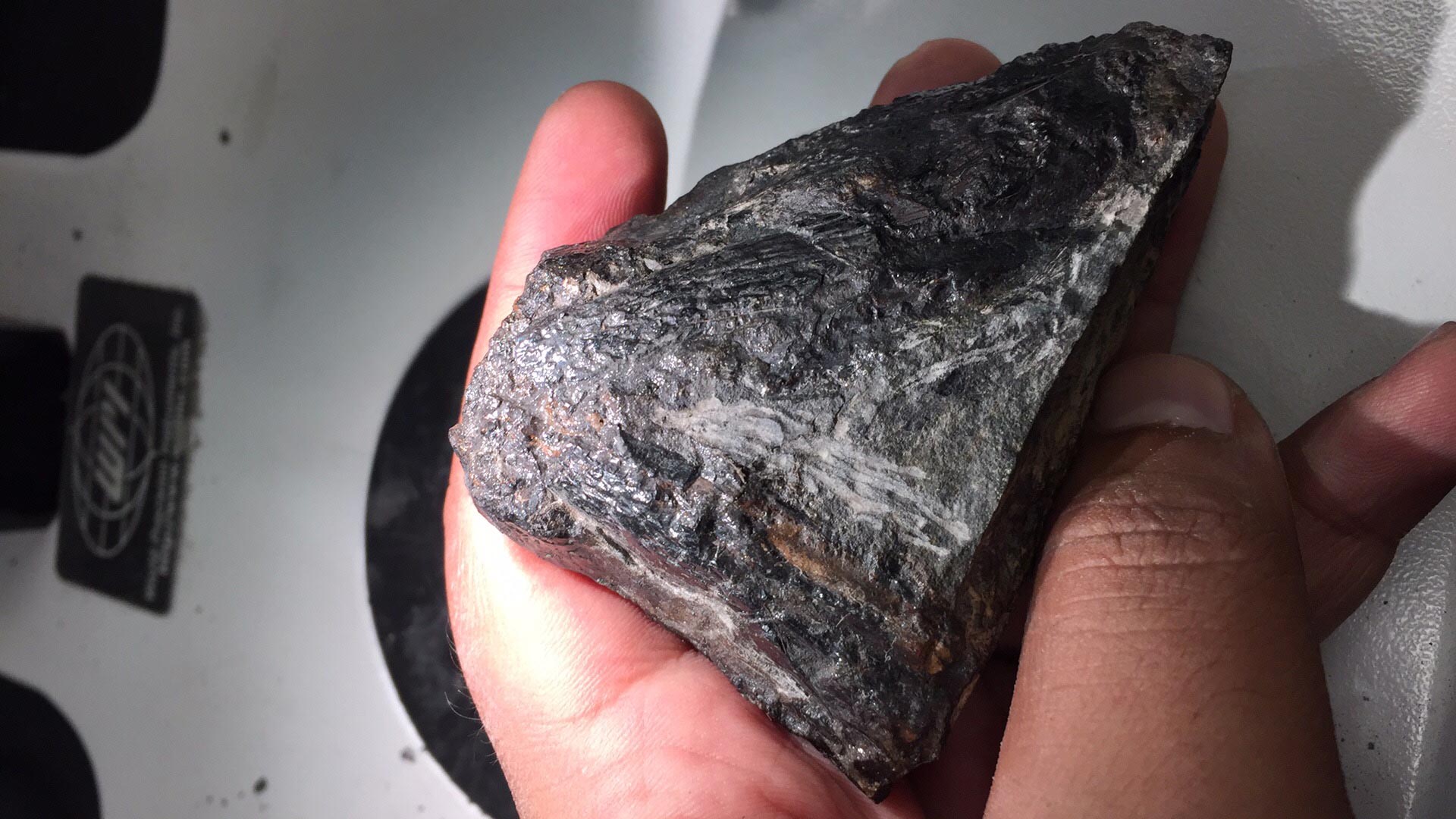
Brian Hebert, an avocational paleontologist from Nova Scotia, found the skull embedded inside a fossilized tree stump during a field season led by Hillary Maddin, a paleontology professor at Carleton University.
“The skull was wide and heart-shaped, really narrow at the snout but really wide at the back,” says Mann. “Within five seconds of looking at it, I was like, ‘Oh, that’s a pantylid microsaur.’”
Early Land Animals and the Rise of Stem Amniotes
Pantylids represent an early stage in the evolution of vertebrates on land. When the first lobe-finned fish evolved limbs capable of supporting movement on land, they still relied heavily on aquatic environments.
“The pantylids are from the second phase of terrestriality, when animals became permanently adapted to life on dry land,” says Mann. These animals are classified as stem amniotes, meaning they are closely related to the lineage that later evolved eggs capable of developing outside water. Over time, stem amniotes gave rise to reptiles and the early ancestors of mammals.
CT Scans Uncover Specialized Teeth
To study the fossil in detail, Mann carefully removed surrounding rock from the skull. However, because the mouth had fossilized shut, key internal features such as the braincase were hidden from view.
The team turned to CT scanning to solve the problem. By combining hundreds of X-ray images, researchers created a three-dimensional model that revealed the skull’s internal structure.
“We were most excited to see what was hidden inside the mouth of this animal once it was scanned—a mouth jam-packed with a whole additional set of teeth for crushing and grinding food, like plants,” says Maddin, the study’s senior author.
Some of these teeth were located on the roof of the mouth, a feature that strongly suggests early plant processing. The discovery indicates that stem amniote relatives began eating vegetation earlier than scientists had assumed.
“Tyrannoroter heberti is of great interest because it was long thought that herbivory was restricted to amniotes. It is a stem amniote but has a specialized dentition that could be used for processing plant fodder,” says Hans Sues, senior research geologist and curator of vertebrate paleontology at the Smithsonian National Museum of Natural History and co-author of the study.
A Mixed Diet and Early Steps Toward Herbivory
Despite its plant-adapted teeth, Tyrannoroter was likely not a strict herbivore.
“That’s not to say that Tyrannoroter ate only plants,” says Mann. “When Hans Sues was my advisor during my post-doctoral fellowship at the Smithsonian, he would always say that just about all herbivores alive today consume at least some animal protein, and that herbivory is best seen as a gradient.”
The animal probably fed on insects and other small animals in addition to plants. Insects may have played a key role in this dietary transition. Crushing insect exoskeletons could have prepared early tetrapods to handle tougher plant material. Eating plant-fed insects may also have helped early land animals acquire the gut microbes needed to digest vegetation.
Ancient Climate Change and Lessons for Today
Beyond reshaping ideas about the origins of herbivory, the fossil may also offer insight into how plant-eating animals respond to environmental disruption.
Tyrannoroter lived near the end of the Carboniferous Period, a time marked by major climate shifts. This era saw the most recent transition from an icehouse climate to a greenhouse climate before the one occurring today.
“At the end of the Carboniferous, the rainforest ecosystems collapsed, and we had a period of global warming,” says Mann. “The lineage of animals that Tyrannoroter belongs to didn’t do very well. This could be a data point in the bigger picture of what happens to plant-eating animals when climate change rapidly alters their ecosystems and the plants that can grow there.”
The discovery highlights how early experiments in plant-based diets were closely tied to environmental stability, a lesson that may still be relevant in a rapidly changing world.
Reference: “Carboniferous recumbirostran elucidates the origins of terrestrial herbivory” by Arjan Mann, Zifang Xiong, Ami S. Calthorpe, Hans-Dieter Sues and Hillary C. Maddin, 10 February 2026, Nature Ecology & Evolution.
DOI: 10.1038/s41559-025-02929-8
Never miss a breakthrough: Join the SciTechDaily newsletter.
Follow us on Google and Google News.