

By fixing how devices connect, researchers may have finally made blockchain fast enough for the real world.
The idea of a fully connected digital world is quickly becoming real through the Internet of Things (IoT). This expanding network includes physical devices such as small sensors, autonomous vehicles, and industrial machines that collect and exchange data online.
Protecting this data from tampering is essential, which has led engineers to explore blockchain as a security solution. Although blockchain is widely known for its role in cryptocurrencies, its core function is as a decentralized digital ledger. Instead of data being controlled by a single organization, information is shared and maintained across many computers.
Why Blockchain Has Trouble Keeping Up
Despite its security benefits, current blockchain systems often struggle to meet the speed demands of real-world IoT applications. Many connected devices must respond almost instantly, but blockchain networks can introduce delays that make this difficult.
Researchers have found that these delays are not caused by the blockchain protocol itself. Instead, the main issue lies in how nodes communicate within peer-to-peer networks. In particular, earlier studies have paid little attention to how the overall structure of these connections, known as network topology, affects performance in IoT blockchain systems.
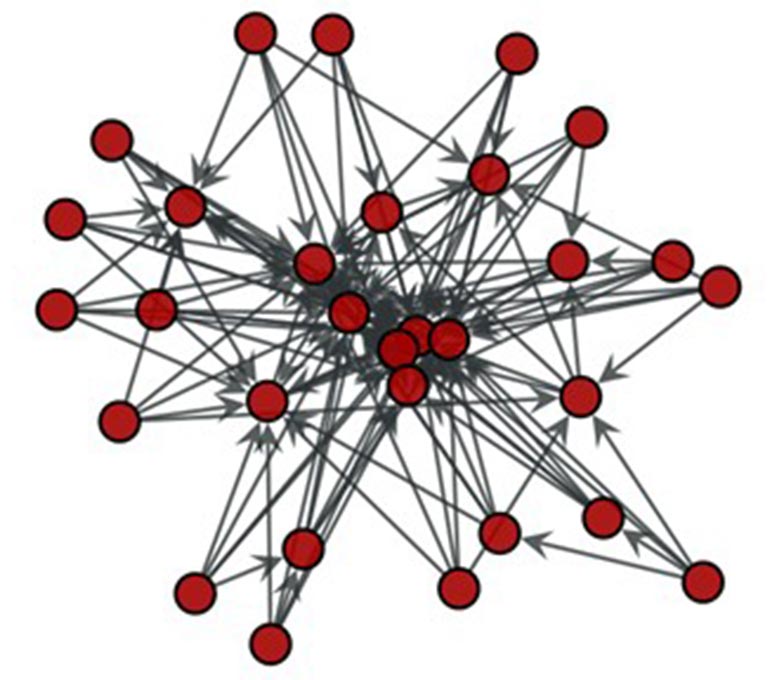
Researchers Examine Network Design and Performance
To better understand this problem, a research team led by Associate Professor Kien Nguyen from the Institute for Advanced Academic Research/Graduate School of Informatics, Chiba University, Japan, explored ways to improve the efficiency of IoT blockchain networks. Their findings were published in IEEE Transactions on Network and Service Management on December 17, 2025. The study analyzes how different network topologies influence system performance and introduces a new approach designed to keep data flowing more efficiently.
“We aimed to bridge the gap between theoretical design and practical deployment of IoT-blockchain systems by identifying the fundamental causes of their high latency and proposing a decentralized solution that is both simple and effective,” says Dr. Nguyen. The study was co-authored by Koki Koshikawa, Yue Su, and Hiroo Sekiya, all from Chiba University.
Duplicate Data Creates Network Congestion
To uncover the source of the delays, the researchers created simulations that connected blockchain clients using a variety of network structures. Their analysis showed that the decentralized nature of IoT networks often leads to repeated transmission of the same data.
Existing methods for sharing transactions (the individual data entries) and blocks (the larger bundles of verified records) can cause the number of data copies to grow rapidly. When networks contain too many overlapping communication paths, this duplication creates congestion and long queues, slowing the entire system.
Dual Perigee Lets Devices Choose Faster Connections
To address this challenge, the team developed a decentralized and lightweight algorithm called “Dual Perigee.” This approach allows each device in the network to make informed decisions about which neighboring devices it should connect with.
Rather than relying on random connections, a device using Dual Perigee evaluates its peers based on how quickly they deliver transactions and full blocks. If a connection consistently performs poorly, the device disconnects and seeks a better alternative. Over time, this process allows the network to reorganize itself into a faster configuration without requiring a central controller.
Testing Shows Major Speed Improvements
In simulations involving a 50-node IoT network, Dual Perigee reduced block-related delays by 48.54% compared to the standard method used by the Ethereum blockchain. The algorithm also exceeded the performance of advanced techniques, including the original Perigee algorithm, by more than 23%.
These improvements were achieved without placing additional computational demands on IoT devices. Dual Perigee relies on passive measurements of data that devices already receive and requires only minimal processing.
Enabling Real-Time and Critical Applications
The findings have wide-reaching implications across multiple technology sectors. By reducing the time needed to confirm and distribute blockchain data, systems become fast enough for applications where timing is critical.
“The proposed decentralized latency-aware peer-selection mechanism can serve as a foundation for future blockchain platforms that support real-time, mission-critical IoT services, ultimately enabling more secure, responsive, and trustworthy digital infrastructures,” explains Dr. Nguyen.
Preparing for the Future of IoT Networks
As IoT systems continue to expand and become more complex, the need for reliable and decentralized communication methods will grow. The research team believes Dual Perigee could play an important role in future technologies.
“Our approach can be applied to emerging IoT-based services that require fast and reliable data sharing, such as smart cities, smart homes, industrial monitoring, healthcare systems, and supply-chain tracking,” says Dr. Nguyen.
Reference: “Impacts of Overlay Topologies and Peer Selection on Latencies in IoT Blockchain” by Koki Koshikawa, Yue Su, Jong-Deok Kim, Won-Joo Hwang, Zhetao Li, Kien Nguyen and Hiroo Sekiya, 17 December 2025, IEEE Transactions on Network and Service Management.
DOI: 10.1109/TNSM.2025.3645139
This research was supported by the Japan Society for the Promotion of Science (JSPS) (Grant Number: 23H03377) and partially by the Japan Science and Technology Agency (JST) through the establishment of university fellowships towards the creation of science and technology innovation (Grant Number: JPMJFS2107).
Never miss a breakthrough: Join the SciTechDaily newsletter.
Follow us on Google and Google News.
1 Comment
Has anyone ever thought that we don’t need such surveillance technology?