
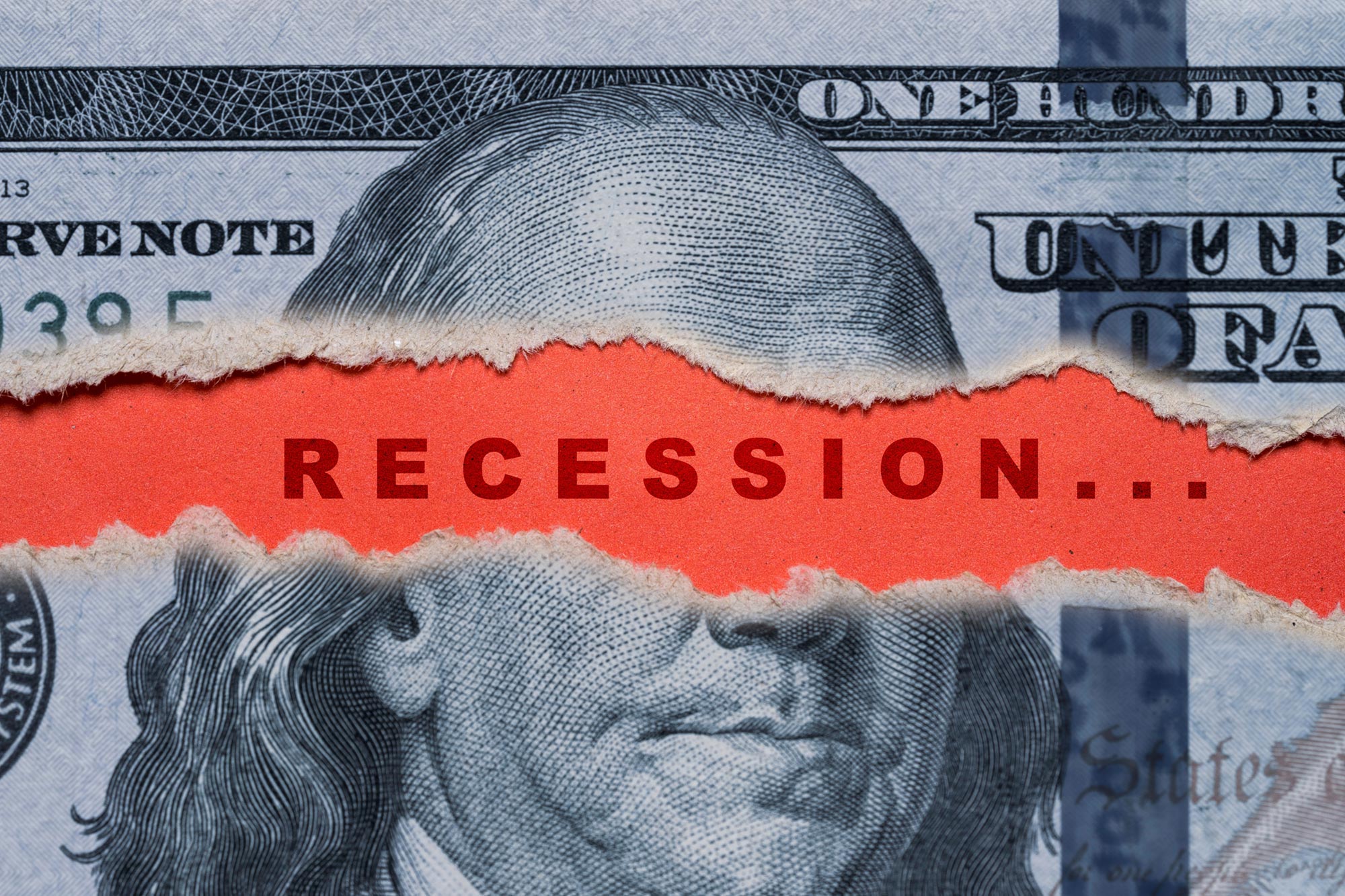
A study finds that the 2008 recession led many people to see themselves as belonging to a lower social class.
Class identity refers to how people perceive their own economic and social standing relative to others, and it shapes a wide range of outcomes, from well-being to political views.
Research has consistently shown that individuals who see themselves as belonging to a higher social class tend to report better physical and mental health, are more likely to support conservative political positions, and often hold a more positive outlook on society as a whole.
When the economy rewrites identity
Despite this, researchers have rarely examined how major economic disruptions influence class identity itself. A new study published in Psychological Science and led by Stephen Antonoplis, an assistant professor of psychology at UC Riverside, suggests that the 2008 financial crisis had a lasting psychological impact. According to the findings, the Great Recession led many people to view themselves as belonging to a lower social class, and this shift persisted well beyond the immediate economic downturn.
These results challenge earlier research suggesting that class identity remains relatively stable over time. Studies that did observe changes typically focused on brief and artificial shifts, often caused by the way participants were prompted to think about their social standing during an experiment.
Antonoplis explained that many of those earlier studies relied on a tool known as the “MacArthur ladder,” which visually represents social status as a ten-rung scale based on factors like income, education, and job quality. Participants are asked to place themselves on the ladder, with the top rung representing the most resources and the bottom the least.
In some experiments, people were shown only the lowest or only the highest rung before making their choice. When compared only to those at the bottom, participants tended to rate themselves slightly higher, while thinking about only the top rung led them to place themselves lower.
However, this effect is transient, said Antonoplis, and can change within just a few minutes. In contrast, his study focused on whether changes in class identity could last longer. His analyses, which utilized four large datasets that tracked the class identity of about 165,000 people over decades, showed that the changes he observed with the Great Recession were indeed long-term, lasting for years.
Why class is more than income
Antonoplis stressed that the study only showed changes in class identity and did not examine how these corresponded to objective measures of losses in people’s resources. He explained that class identity is a self-perception that is highly personal.
“Invariably, there’s someone in a study who reports an income of something like $200,000, yet identifies as lower class,” he said.
In addition to the recession’s material impacts, Antonoplis believes media messaging may have increased people’s tendency to identify with lower classes. He observed that headlines during the era of the Great Recession were highly threatening and suggested that people’s economic positions were falling precipitously and permanently. One example was, “When Greatness Slips Away”; and another was, “As Unemployment Rises, Kids’ Future Dims.” Such headlines were widespread across different news sources, including The New York Times and The Wall Street Journal.
Why perceived status loss matters
Antonoplis said the study identifies an additional pathway through which recessions might harm individuals. In addition to negative economic effects, the Great Recession has been linked to increases in adverse health outcomes for Americans. Perceived loss of status may be one reason for this.
He said future research will explore how changes in people’s class identity have impacted their health, as well as contributed to changes in the U.S. political landscape since the recession. These findings carry global implications since the U.S. Great Recession helped cause recessions in other countries.
Antonoplis said increasing awareness of how historical events, such as recessions, affect people psychologically and impact their lives could help people be more resilient to them.
“Most of the social implications of the study is probably about creating an accurate public memory,” Antonoplis said. “It can be very confusing going through something like a big recession, and sometimes it’s helpful to know that we’ve been through it before and what to expect.”
Antonoplis added that the study might offer insight into the possible harm being caused by the “vibecession,” which is a term that describes the feelings of insecurity many Americans are having right now about the nation’s economy, despite its strong overall performance. He thinks it is possible that issues related to inflation, cost-of-living, and media reporting on these changes could be leading to psychological and physical stress.
Reference: “The 2008 Great Recession Lowered Americans’ Class Identity” by Stephen Antonoplis, Juan Eduardo Garcia-Cardenas, Eileen K. Graham and Daniel K. Mroczek, 19 December 2025, Psychological Science.
DOI: 10.1177/09567976251400
This research was supported by grants from the National Institute on Aging (No. R01-AG018436, No. R01-AG067622, and No. R01-AG064006) and the Claude D. Pepper Older Americans Independence Center (OAIC) at Northwestern University (No. P30AG059988).
Never miss a breakthrough: Join the SciTechDaily newsletter.
Follow us on Google and Google News.
1 Comment
Of course I see myself differently after the Great Recession aka Big Bank Bailout. I’m just an average middle-class taxpayer. I was raised to believe that hard work and some ambition is the key to success and the “American dream.” I have seen our inept government shrug for decades while small towns dried up and big cities reaped the rewards of our thriving economy. While people die from poverty, drugs, lack of health care, and many other preventable things. I have seen politicians get rich while people like me foot the bill.
In 2008 I saw banks recklessly gambling with their depositors money, conning people into terrible investments, and in some cases actively betting against the same investments it sold. I saw the SEC and the federal government allow this and profit from it. When it came crashing down, people lost their houses and their retirement funds with little to no relief from anyone. I saw that same slow, inept federal government leap into action to bail banks out and give bankers millions in bonuses for crashing our economy. Paid for with taxpayer money that we have dutifully paid our government which sat on its hands when we needed help. Then they had the fucking nerve to congratulate themselves on a job well done.
That was the moment I realized that hard work doesn’t get you much in America. It gets you second class citizen status at best, way behind the TBTF banks and businesses that get rich gambling with our money -or- get made whole with our taxes. We don’t have capitalism; we have lemon socialism: socialism for first class citizens and a raw deal for the rest of us.