
Close Menu
    Facebook X (Twitter) Instagram
    SciTechDaily
    • Biology
    • Chemistry
    • Earth
    • Health
    • Physics
    • Science
    • Space
    • Technology
    Facebook X (Twitter) Pinterest YouTube RSS
    SciTechDaily
    Home»Technology»A Future Aircraft Designed Using Advanced Supercomputing at NASA
    Technology

    A Future Aircraft Designed Using Advanced Supercomputing at NASA

    By NASAMarch 15, 20232 Comments3 Mins Read
    Facebook Twitter Pinterest Telegram LinkedIn WhatsApp Email Reddit
    Share
    Facebook Twitter LinkedIn Pinterest Telegram Email Reddit
    NASA Transonic Truss Braced Wing (TTBW) Aircraft Concept
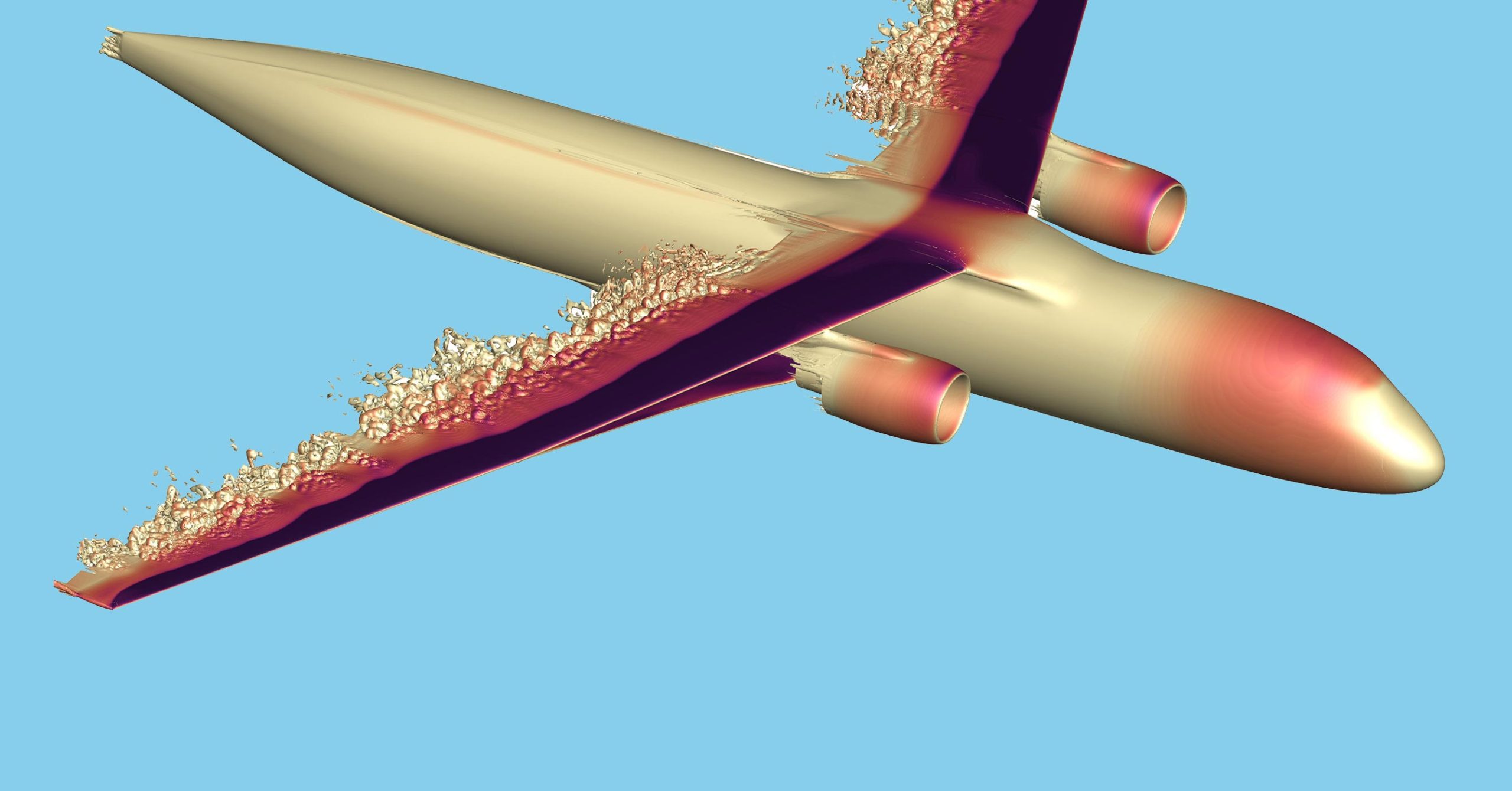
    NASA’s high-performance computers have generated this image that displays a Transonic Truss Braced Wing (TTBW) aircraft concept being tested in a virtual wind tunnel. The image highlights how the aircraft’s wings interact with the surrounding air. Credit: NASA / Oliver Browne

    NASA’s Transonic Truss-Braced Wing (TTBW) concept promises up to 10% greater fuel efficiency for commercial aircraft.

    No, it’s not hypermodern art. This image, generated by NASA’s high-performance computers, shows a Transonic Truss Braced Wing (TTBW) aircraft concept being tested in a virtual wind tunnel, showing how its wings interact with the air around them.

    In this case, the dark red area along the front of the wing represents higher-speed airflow as the TTBW’s wings, which are thinner than those of today’s commercial airliners, pierce the air. The tan-colored area shows the relatively smooth wake generated by the aerodynamic wings.

    A TTBW aircraft produces less drag due to its longer, thinner wings supported by aerodynamic trusses. In flight, it could consume up to 10% less jet fuel than a standard airliner.
    Transonic Truss Braced Wing Aircraft’s Free Air Configuration
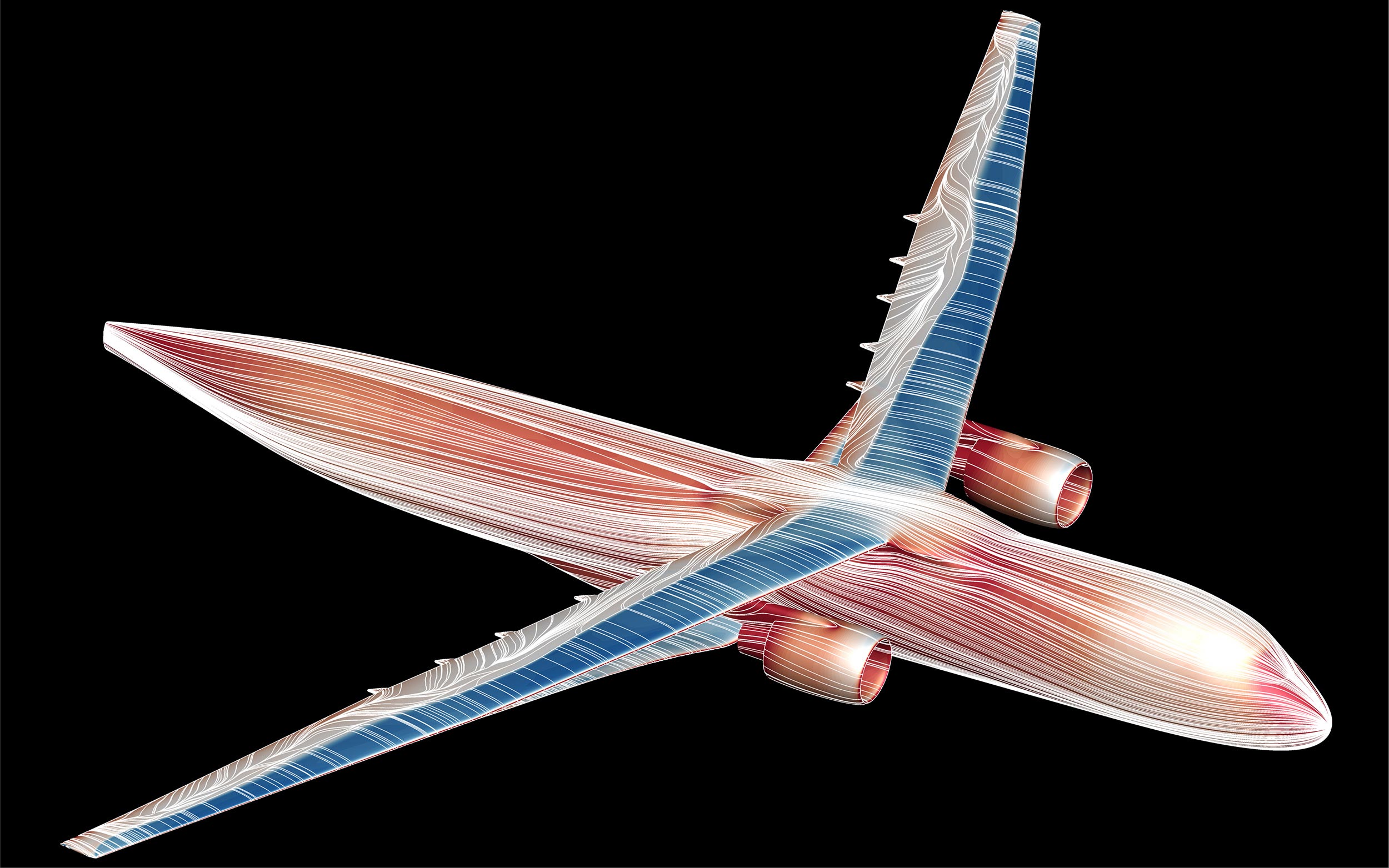
    Visualization of the concept Transonic Truss-Braced Wing aircraft’s free-air configuration showing time-averaged surface pressure coefficient contour (red is high, blue is low) and streamlines defined by surface skin friction. The image shows the shock along the span of the wing, including the spanwise variations of the shock location, and the streamlines highlighting the regions of separated flow downstream of the shock. Oliver Browne, NASA/Ames

    The Advanced Supercomputing Division of NASA’s Ames Research Center in California created this image as part of an effort by the Transformational Tools and Technologies project to develop computational tools for TTBW research.

    In January, NASA selected a TTBW concept from The Boeing Company for its Sustainable Flight Demonstrator project.

    Revolutionizing Commercial Aviation with TTBW

    NASA and Boeing have joined forces to design a Transonic Truss-Braced Wing (TTBW) aircraft, incorporating cutting-edge technology that could significantly enhance the fuel efficiency of commercial aircraft. The TTBW aircraft has a unique structure, featuring a high aspect ratio wing and wing and jury struts, resulting in intricate flow phenomena such as transonic buffet, separated flow, and a turbulent wake. The standard industry practice employs Reynolds-Averaged Navier-Stokes (RANS)-based computational fluid dynamics (CFD) analysis for predicting buffet onset, but accurate forecasting may require more precise scale-resolving CFD simulations to anticipate buffet onset and separated flow development. Therefore, NASA’s Advanced Air Transport Technology Project has initiated a collaborative, multi-center effort to create new simulation techniques to forecast the TTBW’s performance and that of similar truss-braced wing configurations, particularly for predicting transonic buffet onset.

    Never miss a breakthrough: Join the SciTechDaily newsletter.
    Follow us on Google and Google News.

    NASA
    Share. Facebook Twitter Pinterest LinkedIn Email Reddit

    Related Articles

    NASA to Test Jet Engine With a Helping of Cereal and Crayons

    Robonaut 2: A Robotic Space Station Crew Member

    NASA Explores OMEGA System for Alternative Aviation Fuels

    NuSTAR’s 9,000 Mirrors are Only 200 Microns Thick

    NASA Engineers Test J-2X Powerpack

    SCaN Testbed Headed for International Space Station Later This Year

    NASA Searching for Green Propellant Technology

    NASA Mobile Launcher Reacted as Expected During Move to Launch Pad 39B

    NASA Reviews Ideas for Greener Aircraft

    2 Comments

    1. David Thomson on March 15, 2023 3:34 pm

      Does the plane really have no tail and rudder?

      Reply
      • Nah Suh on March 15, 2023 6:13 pm

        Shh, climate change.
        That’s a very nice simulation, and 10% less airplane does save 10% of fuel, thank you NASA. We look forward to real-world tests of the next shuttle’s wind-guidance system.

        (p.s. I like you David. Excellent observation as usual)

        Reply
    Leave A Reply Cancel Reply

    • Facebook
    • Twitter
    • Pinterest
    • YouTube

    Don't Miss a Discovery

    Subscribe for the Latest in Science & Tech!

    Trending News

    The Universe Is Expanding Too Fast and Scientists Can’t Explain Why

    “Like Liquid Metal”: Scientists Create Strange Shape-Shifting Material

    Early Warning Signals of Esophageal Cancer May Be Hiding in Plain Sight

    Common Blood Pressure Drug Shows Surprising Power Against Deadly Antibiotic-Resistant Superbug

    Scientists Uncover Dangerous Connection Between Serotonin and Heart Valve Disease

    Scientists Discover a “Protector” Protein That Could Help Reverse Hair Loss

    Bone-Strengthening Discovery Could Reverse Osteoporosis

    Scientists Uncover Hidden Trigger Behind Stem Cell Aging

    Follow SciTechDaily
    • Facebook
    • Twitter
    • YouTube
    • Pinterest
    • Newsletter
    • RSS
    SciTech News
    • Biology News
    • Chemistry News
    • Earth News
    • Health News
    • Physics News
    • Science News
    • Space News
    • Technology News
    Recent Posts
    • A Common Diabetes Drug May Hold the Key to Stopping HIV From Coming Back
    • Ancient “Syphilis-Like” Disease in Vietnam Challenges Key Scientific Assumptions
    • Drinking Alcohol To Cope in Your 20s Could Damage Your Brain for Life
    • Scientists Crack Alfalfa’s Chromosome Mystery After Decades of Debate
    • Ancient Ant-Plant Alliance Collapses As Predatory Wasps Move In
    Copyright © 1998 - 2026 SciTechDaily. All Rights Reserved.
    • Science News
    • About
    • Contact
    • Editorial Board
    • Privacy Policy
    • Terms of Use

    Type above and press Enter to search. Press Esc to cancel.