
Close Menu
    Facebook X (Twitter) Instagram
    SciTechDaily
    • Biology
    • Chemistry
    • Earth
    • Health
    • Physics
    • Science
    • Space
    • Technology
    Facebook X (Twitter) Pinterest YouTube RSS
    SciTechDaily
    Home»Science»A Giant Asteroid Struck Australia 11 Million Years Ago. So Where Is the Crater?
    Science

    A Giant Asteroid Struck Australia 11 Million Years Ago. So Where Is the Crater?

    By Curtin UniversityOctober 2, 2025No Comments3 Mins Read
    Facebook Twitter Pinterest Telegram LinkedIn WhatsApp Email Reddit
    Share
    Facebook Twitter LinkedIn Pinterest Telegram Email Reddit
    Asteroid Striking Earth Explosion
    Scientists have discovered a new field of rare glass fragments in Australia, created by a massive asteroid impact millions of years ago. (Artist’s concept). Credit: Stock

    Scientists have discovered a previously unknown asteroid impact hidden in tiny glass fragments scattered across South Australia.

    Curtin University scientists have contributed to the discovery of evidence for a massive and previously unknown asteroid strike, revealed not by a crater but by tiny fragments of glass found only in Australia.

    These fragments are tektites, a rare type of natural glass that forms when an asteroid collides with Earth, heating and melting surface rocks before launching them across vast distances. This newly identified variety of tektites has so far been discovered only in a region largely within South Australia.

    According to co-author Professor Fred Jourdan from Curtin’s School of Earth and Planetary Sciences, uncovering a new tektite field is like opening a new chapter in the planet’s dramatic geological history.
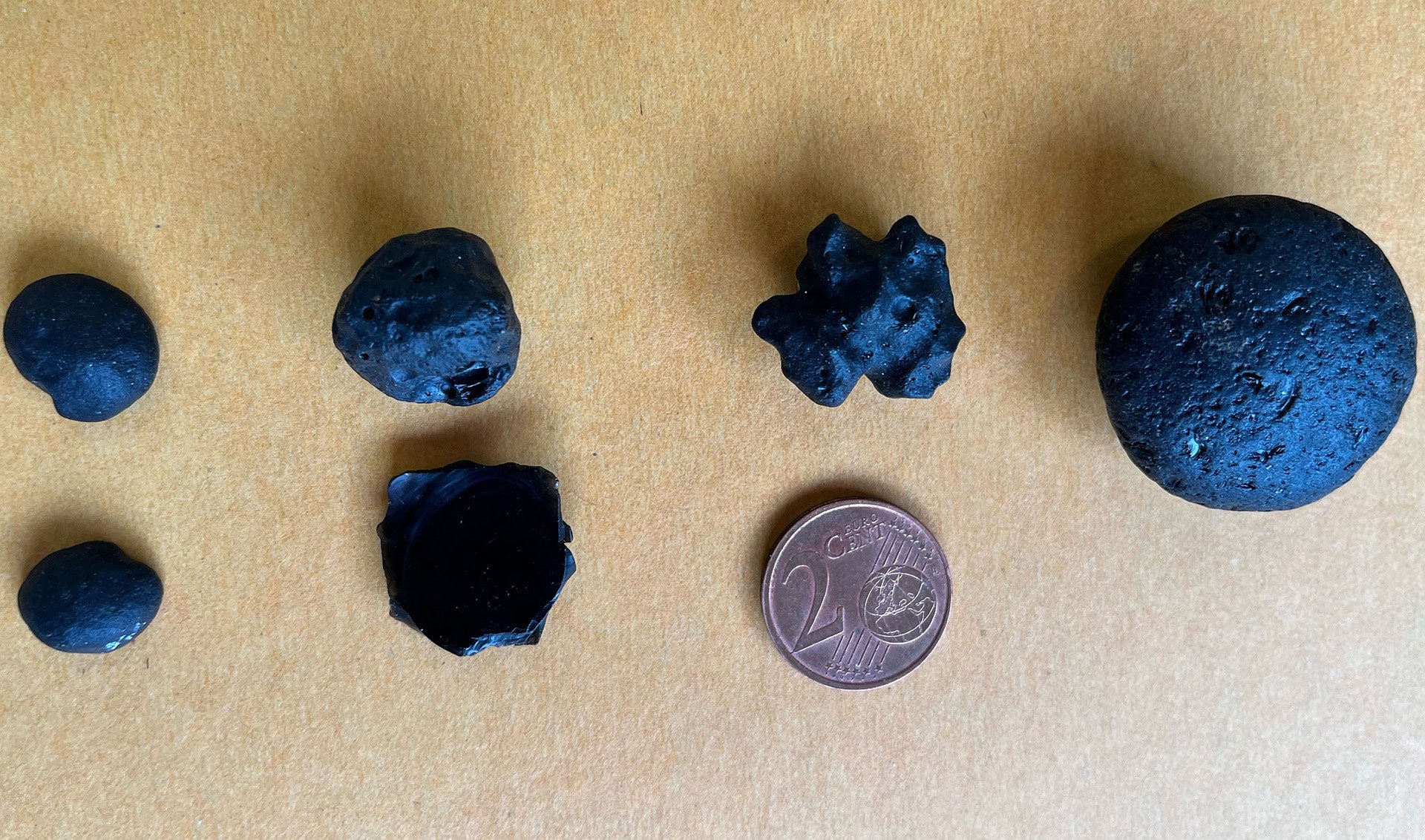
    Tektites or Cosmic Glass
    The newly discovered tektites or ‘cosmic glass’. Credit: Earth and Planetary Science Letters

    “These glasses are unique to Australia and have recorded an ancient impact event we did not even know about,” Professor Jourdan said.

    “They formed when an asteroid slammed into Earth, melting surface rock and scattering debris for thousands of kilometers. These tiny pieces of glass are like little time capsules from deep in our planet’s history.

    “What makes the discovery even more intriguing is that, although the impact must have been immense, scientists are yet to locate the crater.

    “Understanding when and how often large asteroids have struck Earth also helps us assess the risk of future impacts, which is important for planetary defense.”

    Unusual Chemistry and Age

    Lead author Anna Musolino, a PhD student at Aix-Marseille University, said the glasses were distinct from all other known tektites.

    “These tektites are unique because of their unusual chemistry and their age, which is about 11 million years,” Ms Musolino said.

    “They record a completely separate impact event from the famous Australasian tektite-strewn field.

    “While the Australasian tektites formed about 780,000 years ago and are spread across half the globe, these tektites are much older, and their discovery suggests a previously unrecognized giant impact.”

    The study was part of a larger research project led by Emeritus Professor Pierre Rochette from Aix-Marseille University and highlights both the destructive power of past impacts and the importance of studying them.

    Reference: “A new tektite strewn field in Australia ejected from a volcanic arc impact crater 11 Myr ago” by Anna Musolino, Pierre Rochette, Jean-Alix Barrat, Fred Jourdan, Bruno Reynard, Bertrand Devouard, Valerie Andrieu, Jérôme Gattacceca and Vladimir Vidal, 29 August 2025, Earth and Planetary Science Letters.
    DOI: 10.1016/j.epsl.2025.119600

    Never miss a breakthrough: Join the SciTechDaily newsletter.
    Follow us on Google and Google News.

    Asteroid Curtin University Geology Planetary Science
    Share. Facebook Twitter Pinterest LinkedIn Email Reddit

    Related Articles

    A Massive Meteorite Hit Scotland Much More Recently Than Scientists Thought

    Challenging Century-Old Beliefs: Scientists Unravel Mysterious Origin of Stonehenge’s Altar Stone

    A Potential Goldmine: “Fool’s Gold” Contains a Newly Discovered Type of Real Gold

    Yale Study Reveals Parts of Ancient Antarctica Were as Warm as Today’s California Coast

    Study Reveals Ancient Impact of Massive Asteroid

    Martian Meteorite Almost 4 Billion Years Younger Than Previously Thought

    “Hidden Flux” of Material May Help Explain Earth’s Origins

    Volcanic Activity Triggered the End-Triassic Extinction

    Asteroid Collision Led to the Mass Extinction of Lizards and Snakes

    Leave A Reply Cancel Reply

    • Facebook
    • Twitter
    • Pinterest
    • YouTube

    Don't Miss a Discovery

    Subscribe for the Latest in Science & Tech!

    Trending News

    Artificial Sweeteners May Harm Future Generations, Study Suggests

    Splashdown! NASA Artemis II Returns From Record-Breaking Moon Mission

    What If Consciousness Exists Beyond Your Brain

    Scientists Finally Crack the 100-Million-Year Evolutionary Mystery of Squid and Cuttlefish

    Beyond “Safe Levels”: Study Challenges What We Know About Pesticides and Cancer

    Researchers Have Found a Dietary Compound That Increases Longevity

    Scientists Baffled by Bizarre “Living Fossil” From 275 Million Years Ago

    Your IQ at 23 Could Predict Your Wealth at 27, Study Finds

    Follow SciTechDaily
    • Facebook
    • Twitter
    • YouTube
    • Pinterest
    • Newsletter
    • RSS
    SciTech News
    • Biology News
    • Chemistry News
    • Earth News
    • Health News
    • Physics News
    • Science News
    • Space News
    • Technology News
    Recent Posts
    • What if Dark Matter Has Two Forms? Bold New Hypothesis Could Explain a Cosmic Mystery
    • Researchers Expose Hidden Chemistry of “Ore-Forming” Elements in Biology
    • Geologists Reveal the Americas Collided Earlier Than We Thought
    • 20x Difference: Study Reveals True Source of Airborne Microplastics
    • Scientists Uncover Hidden Force Powering Yellowstone’s Supervolcano
    Copyright © 1998 - 2026 SciTechDaily. All Rights Reserved.
    • Science News
    • About
    • Contact
    • Editorial Board
    • Privacy Policy
    • Terms of Use

    Type above and press Enter to search. Press Esc to cancel.