
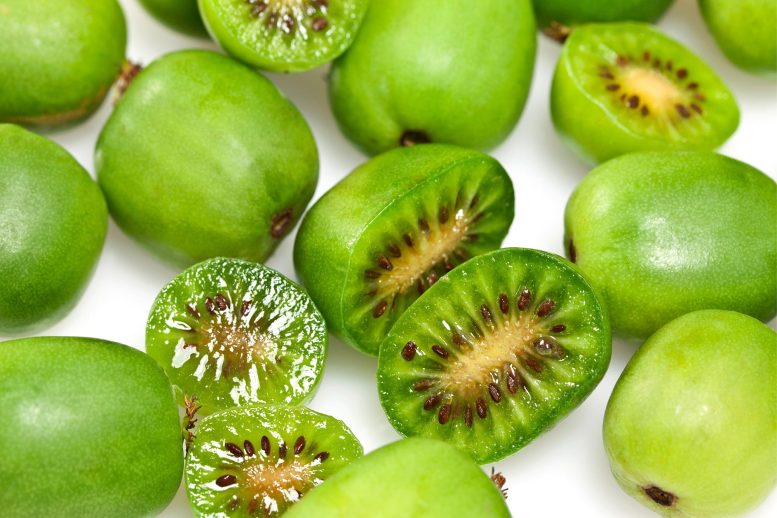
Using a mouse model, Japanese researchers unleash the likely mechanism of action of Actinidia arguta (sarunashi) juice on lung cancer development.
Lung cancer is a leading cause of death in Japan and across the globe. Among all the cancers, lung cancer has one of the lowest five-year survival rates. Smoking tobacco and using tobacco-based products are known to heavily contribute to the development of lung cancer. It is a clinically established fact that the active ingredients in various fruits minimize the risk of chronic diseases including cancer. “Sarunashi” (Actinidia arguta) is an edible fruit cultivated in Japan’s Okayama Prefecture.
Using a mouse model, researchers from Okayama University led by Dr. Sakae Arimoto-Kobayashi, Associate Professor in the Faculty of Pharmaceutical Sciences, Okayama University, have shown that Sarunashi juice and its constituting component isoquercetin (isoQ) help prevent and reduce lung cancer.
A. arguta is one of the richest sources of polyphenols and vitamin C. Previously, the researchers had demonstrated the inhibitory effect of Sarunashi juice (sar-j) on mutagenesis, inflammation, and mouse skin tumorigenesis. They had identified the components of A. arguta responsible for the anti-mutagenic effects as water-soluble and heat-sensitive phenolic compounds. Subsequently, the researchers proposed the polyphenolic compound isoQ as a constituting component with anticarcinogenic potential.
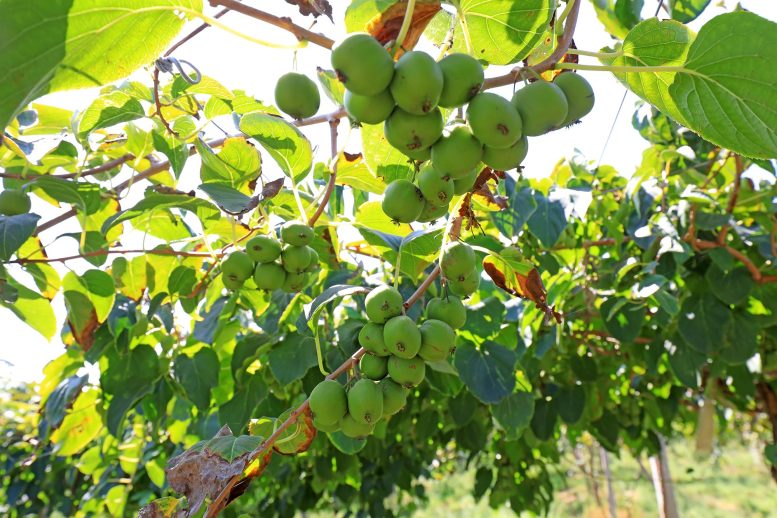
Dr. Arimoto-Kobayashi explains, “In this study, we sought to investigate the chemo-preventive effects of A. arguta juice and its constituting component isoQ on 4-(methylnitrosamino)-1-(3-pyridyl)-1-butanone (NNK)-induced lung tumorigenesis in A/J mice, and identify the possible mechanisms underlying the anti-tumorigenic effects of A. arguta.”
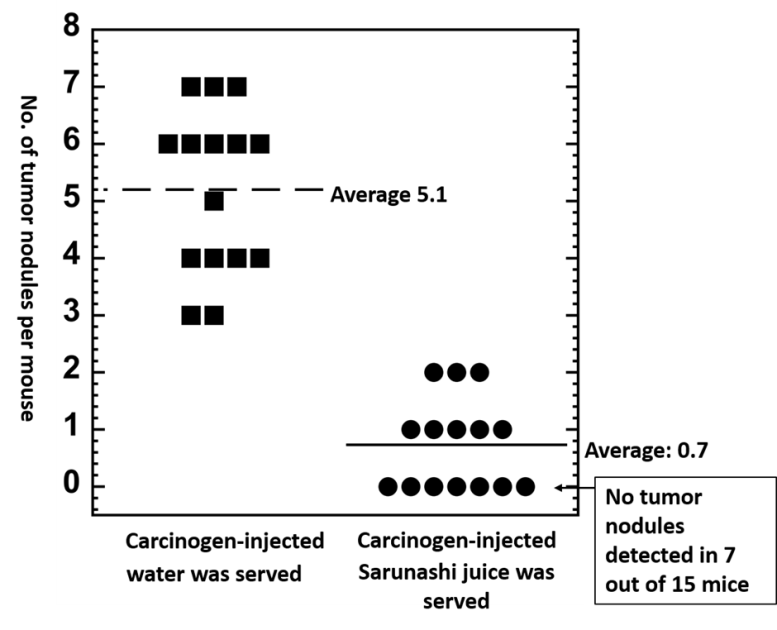
To this end, the team induced tumor growth in mice using NNK, a known cancer-causing compound present in tobacco products. Using a series of experiments and controls, the team studied the effects of sar-j and isoQ on lung tumorigenesis in mice.
The results were encouraging: The number of tumor nodules per mouse lung in the group that received NNK injections and oral doses of A. arguta juice was significantly lower than that in the group injected with NNK only. Moreover, the oral administration of isoQ also reduced the number of nodules in the mouse lungs.
Next, the team broke ground by discovering the likely mechanism of action. NNK and 1-methyl-3-nitro-1-nitrosoguanidine or “MNNG” are known mutagens—agents that trigger DNA mutations. The team, therefore, designed a series of experiments to study the effect of sar-j and isoQ on NNK- and MNNG-mediated mutagenesis using Salmonella typhimurium TA1535—a bacterial strain commonly used for detecting DNA mutations. As expected, the mutagenicity of NNK and MNNG detected using S. typhimurium TA1535 decreased in the presence of sar-j. However, when similar tests were conducted using S. typhimurium YG7108, a strain lacking key enzymes responsible for DNA repair, sar-j was unable to decrease the mutagenic effects of NNK and MNNG. Based on this critical observation, the researchers concluded that sar-j seems to mediate its antimutagenic effect by accelerating DNA repair.
Suppression of Cancer Signaling Pathways
Finally, using cell-based experiments, the team also showed that sar-j suppressed the action of “Akt,” a key protein involved in cancer signaling. It is a known fact that Akt and an associated protein called “PI3k,” get over-activated in several human cancers.
Co-author Katsuyuki Kiura, a Professor in the Department of Allergy and Respiratory Medicine, Okayama University Hospital, muses, “Sar-j and isoQ reduced NNK-induced lung tumorigenesis. Sar-j targets both the initiation and growth or progression steps during carcinogenesis, specifically via anti-mutagenesis, stimulation of alkyl DNA adduct repair, and suppression of Akt-mediated growth signaling. IsoQ might contribute in part to the biological effects of sar-j via suppression of Akt phosphorylation, but it may not be the main active ingredient.”
Their findings were published on December 9, 2022, in Genes and Environment.
In summary, the study shows that lung tumorigenesis in mice was suppressed following the oral intake of sar-j. Although clinical trials are warranted, the constituting components of sar-j, including isoQ, seem to be attractive candidates for chemoprevention.
Reference: “Chemopreventive effects and anti-tumorigenic mechanisms of Actinidia arguta, known as sarunashi in Japan toward 4-(methylnitrosamino)-1-(3-pyridyl)-1-butanone (NNK)- induced lung tumorigenesis in a/J mouse” by Jun Takata, Naoko Miyake, Yusuke Saiki, Misako Tada, Kensuke Sasaki, Toshio Kubo, Katsuyuki Kiura and Sakae Arimoto-Kobayashi, 9 December 2022, Genes and Environment.
DOI: 10.1186/s41021-022-00255-0
About Dr. Sakae Arimoto–Kobayashi from Okayama University, Japan
Dr. Sakae Arimoto-Kobayashi works as an Associate Professor at Okayama University’s Faculty of Pharmaceutical Sciences. Dr. Arimoto-Kobayashi has multiple publications to her credit. Her research group primarily conducts studies on mutations and DNA damage induced by N-nitrosamino acids and near-ultraviolet irradiation, analysis of oxidative and alkylative DNA damage caused by the genotoxic agents, anti-carcinogenesis/anti-mutagenesis, and the chemopreventive effect of active ingredients in fruits and drinks.
About Okayama University, Japan
As one of the leading universities in Japan, Okayama University aims to create and establish a new paradigm for the sustainable development of the world. Okayama University offers a wide range of academic fields, which become the basis of the integrated graduate schools. This not only allows us to conduct the most advanced and up-to-date research, but also provides an enriching educational experience.
Never miss a breakthrough: Join the SciTechDaily newsletter.
Follow us on Google and Google News.
8 Comments
Yes
Perhaps juice is similar to Nomi juice where a univ. Hawaii phase 2 trial showed helped with ptostate cancer.
No phase 3 for some unknown reason.
These findings further support the work that Dr Linus Pauling was doing many decades ago
Vitamin C – is the link 😉
How can I get this juice? They had some MRIs come back that were suggesting that I have a lung disease in which I was supposed to go back for a biopsy and never did figured it was my death sentence. Then I get a message from my girlfriend that stumbled upon this
Where can I get some of this juice I was told at my doctor’s appointment that I had nodules on my lungs and then I went back and they said that I want to know those disappeared so I really would like to give this juice a try if you could please tell me how I can get some thank you Jim
I would like to give this a try . I was told I have nodules on my lungs . I try anything if there is a chance to be here longer .
Where can I get the juice? Or ca. I make it myself with kiwi
Where can I buy this juice?