
Close Menu
    Facebook X (Twitter) Instagram
    SciTechDaily
    • Biology
    • Chemistry
    • Earth
    • Health
    • Physics
    • Science
    • Space
    • Technology
    Facebook X (Twitter) Pinterest YouTube RSS
    SciTechDaily
    Home»Earth»A Mysterious Jurassic Crocodile Fossil Was Found 250 Years Ago – Now They Finally Have Answers
    Earth

    A Mysterious Jurassic Crocodile Fossil Was Found 250 Years Ago – Now They Finally Have Answers

    By Corin Campbell, University of EdinburghSeptember 12, 2019No Comments3 Mins Read
    Facebook Twitter Pinterest Telegram LinkedIn WhatsApp Email Reddit
    Share
    Facebook Twitter LinkedIn Pinterest Telegram Email Reddit
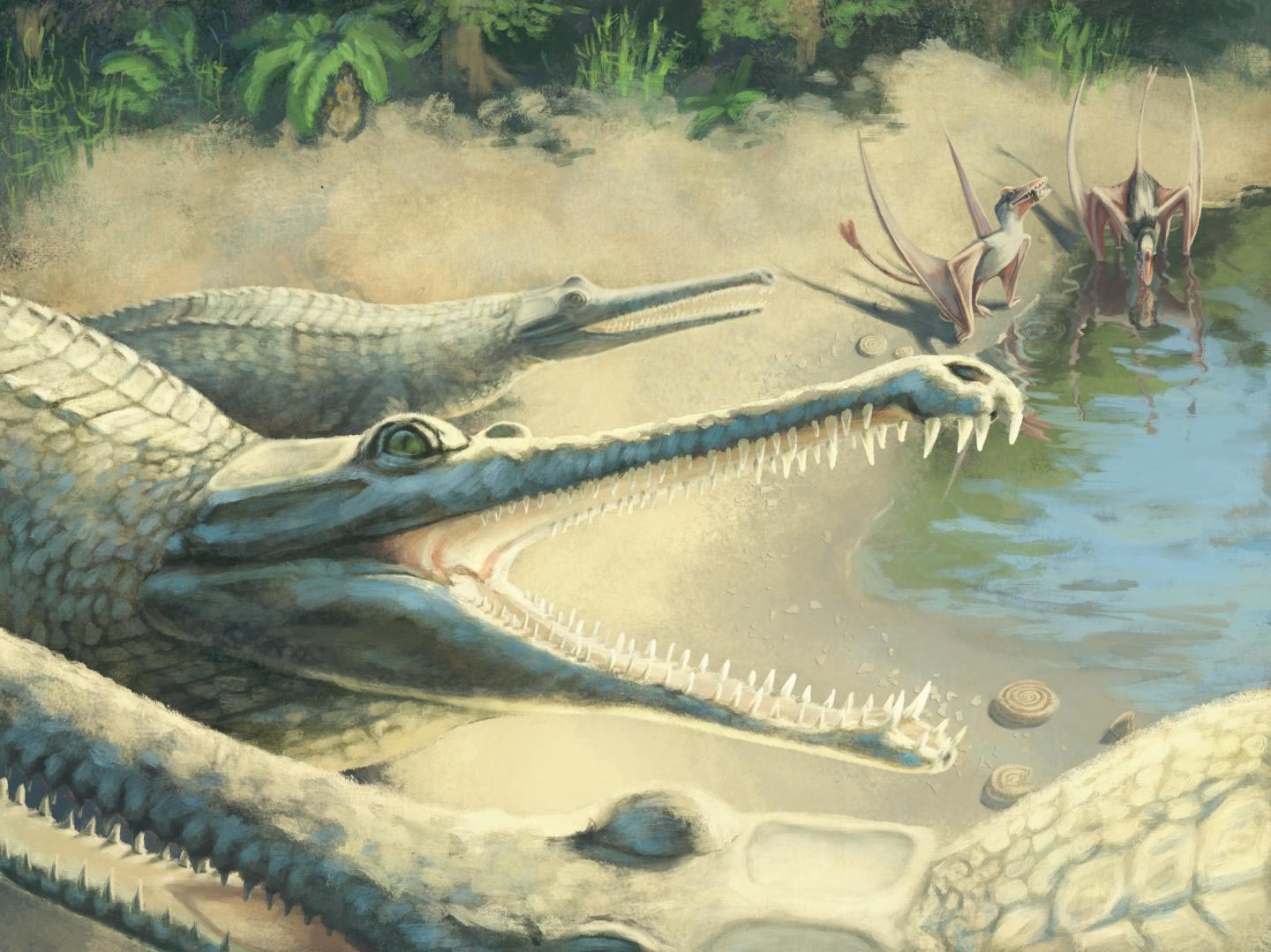
    Artist Impression Mystriosaurus
    Life reconstruction of Mystriosaurus. Credit: Julia Beier

    A prehistoric crocodile that lived around 180 million years ago has been identified — almost 250 years after the discovery of its fossil remains.

    A fossil skull found in a Bavarian town in the 1770s has been recognized as the now-extinct species Mystriosaurus laurillardi, which lived in tropical waters during the Jurassic Period.

    For the past 60 years, it was thought the animal was part of a similar species, known as Steneosaurus bollensis, which existed around the same time, researchers say.
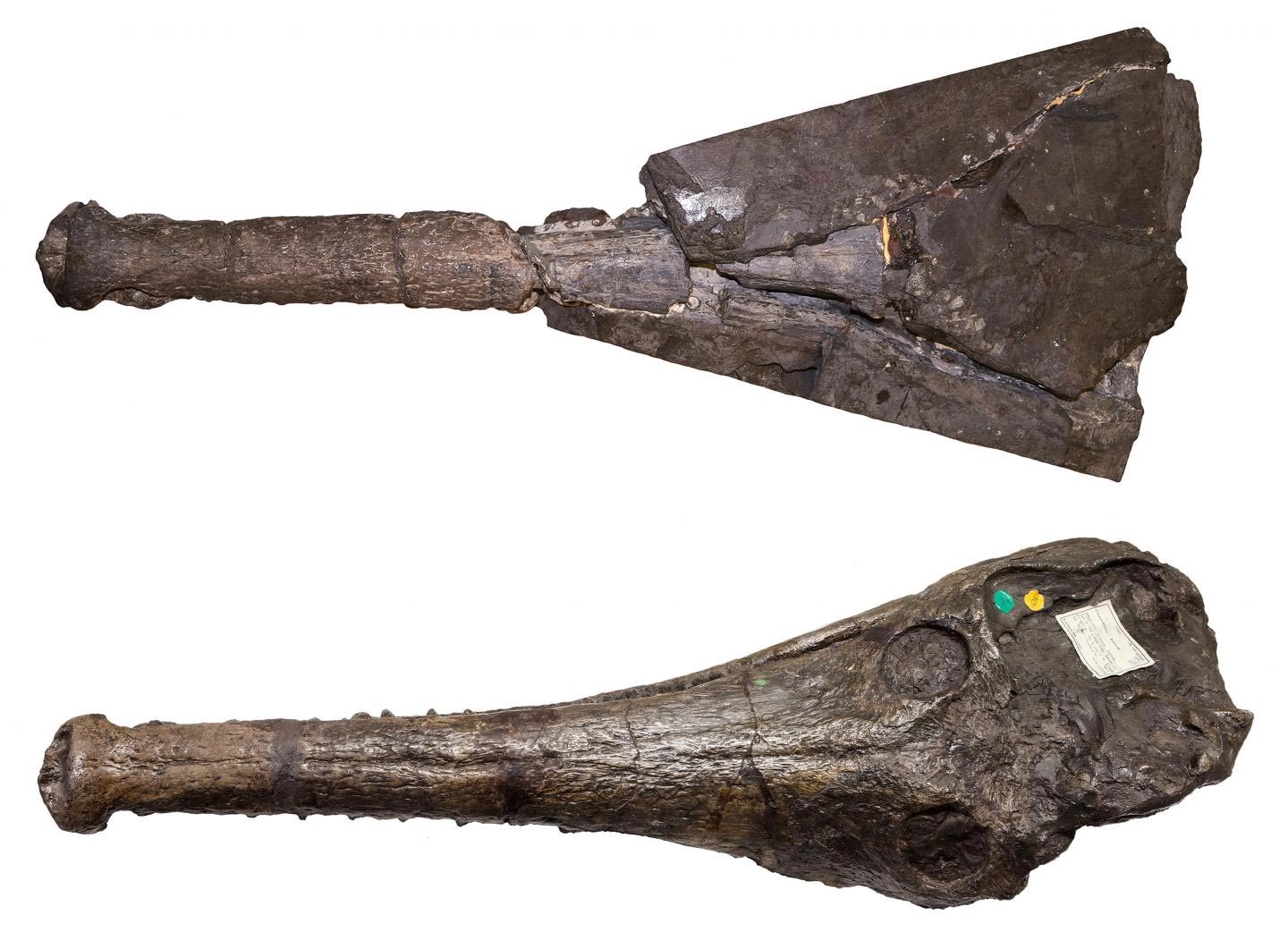
    Mystriosaurus Skull Fossil
    Mystriosaurus skull from above. Credit: Sven Sachs and Michela Johnson

    Paleontologists identified the animal by analyzing fossils unearthed in the UK and Germany.

    The team, which included scientists from the University of Edinburgh, also revealed that another skull, discovered in Yorkshire in the 1800s, belongs to Mystriosaurus laurillardi.

    The marine predator — which was more than four meters in length — had a long snout and pointed teeth, and preyed on fish, the team says. It lived in warm seas alongside other animals including ammonites and large marine reptiles, called ichthyosaurs.

    The discovery of fossils in present-day Germany and the UK shows that the species could easily swim between islands, much like modern saltwater crocodiles, researchers say.

    The study, led by Naturkunde-Museum Bielefeld in Germany, is published in the journal Acta Palaeontologica Polonica, It was supported by the Palaeontographical Society, Leverhulme Trust and the Natural Sciences and Engineering Research Council of Canada.
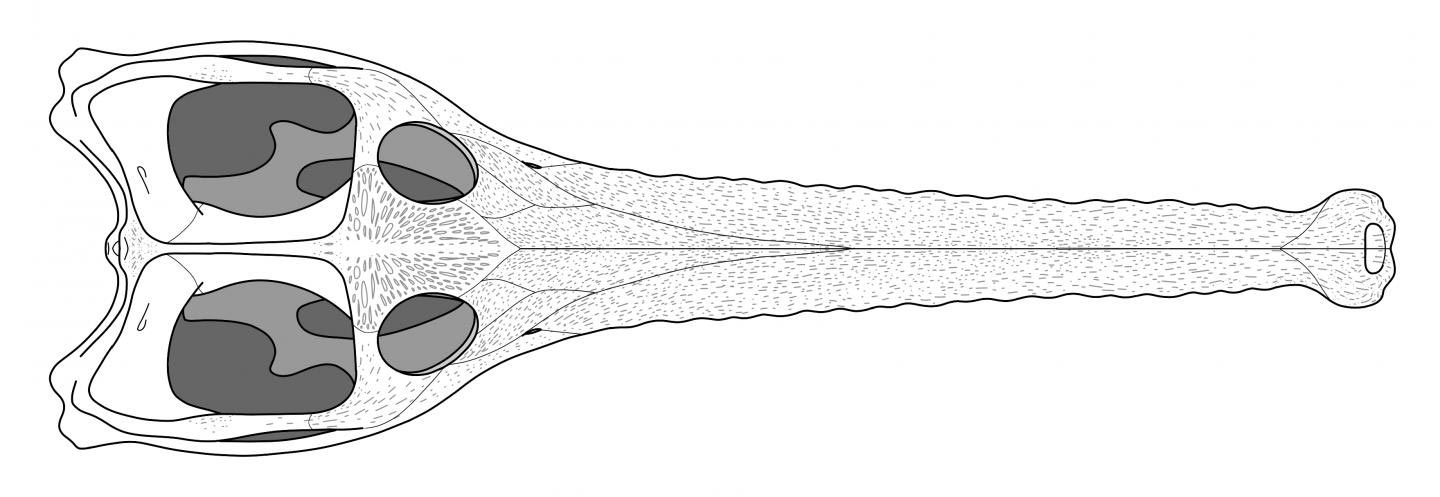
    Mystriosaurus Skull Reconstruction
    Reconstruction of Mystriosaurus skull from above. Credit: Julia Beier

    Sven Sachs, of the Naturkunde-Museum Bielefeld, who led the study, said: “Mystriosaurus looked like a gharial but it had a shorter snout with its nasal opening facing forwards, whereas in nearly all other fossil and living crocodiles the nasal opening is placed on top of the snout.”

    Dr Mark Young, of the University of Edinburgh’s School of GeoSciences, who was involved in the study, said: “Unravelling the complex history and anatomy of fossils like Mystriosaurus is necessary if we are to understand the diversification of crocodiles during the Jurassic. Their rapid increase in biodiversity between 200 and 180 million years ago is still poorly understood.”

    Reference: “The mystery of Mystriosaurus: Redescribing the poorly known Early Jurassic teleosauroid thalattosuchians Mystriosaurus laurillardi and Steneosaurus brevior” by Sven Sachs, Michela M. Johnson, Mark T. Young and Pascal Abel, September 2019, Acta Palaeontologica Polonica.
    DOI: 10.4202/app.00557.2018

    Never miss a breakthrough: Join the SciTechDaily newsletter.
    Follow us on Google and Google News.

    Crocodiles Fossils Jurassic Paleontology University of Edinburgh
    Share. Facebook Twitter Pinterest LinkedIn Email Reddit

    Related Articles

    252-Million-Year-Old Fossils Reveal Secrets of Triassic Life

    Jurassic Fossil Links Ancient Crocodiles With Dolphin-Like Animals

    New Discovery Changes Perceptions of the Evolution of Earth’s Biosphere

    Mongolian Microfossils Shed Light on the Rise of Animals

    Turtles Share a Recent Common Ancestor with Birds and Crocodiles

    Zhenyuanlong Suni – The Newly Discovered Feathered Cousin of the Velociraptor

    Carnufex Carolinensis – North America’s Top Predator Before Dinosaurs?

    27-Foot Long Crocodylus Thorbjarnarsoni Roamed Kenya

    Jurassic Period Super-Sized Fleas Had Armored Mouthparts to Attack the Thick Hide of Dinosaurs

    Leave A Reply Cancel Reply

    • Facebook
    • Twitter
    • Pinterest
    • YouTube

    Don't Miss a Discovery

    Subscribe for the Latest in Science & Tech!

    Trending News

    Popular Sugar-Free Sweetener Linked to Liver Disease, Study Warns

    What Is Hantavirus? The Deadly Disease Raising Alarm Worldwide

    Scientists Just Discovered How the Universe Builds Monster Black Holes

    Scientists Unveil New Treatment Strategy That Could Outsmart Cancer

    A Simple Vitamin May Hold the Key to Treating Rare Genetic Diseases

    Scientists Think the Real Fountain of Youth May Be Hiding in Your Gut

    Ravens Don’t Follow Wolves, They Predict Them

    This Common Knee Surgery May Be Doing More Harm Than Good

    Follow SciTechDaily
    • Facebook
    • Twitter
    • YouTube
    • Pinterest
    • Newsletter
    • RSS
    SciTech News
    • Biology News
    • Chemistry News
    • Earth News
    • Health News
    • Physics News
    • Science News
    • Space News
    • Technology News
    Recent Posts
    • You May Have a Dangerous Type of Cholesterol Even if Your Tests Look Normal
    • Study Reveals Dangerous Flaw in AI Symptom Checkers
    • New MRI Breakthrough Captures Stunningly Clear Images of the Eye and Brain
    • Scientists Warn Sitting Too Much Can Harm Your Body in Surprising Ways
    • Your Blood Pressure Reading Could Be Wrong Because of One Simple Mistake
    Copyright © 1998 - 2026 SciTechDaily. All Rights Reserved.
    • Science News
    • About
    • Contact
    • Editorial Board
    • Privacy Policy
    • Terms of Use

    Type above and press Enter to search. Press Esc to cancel.