

Close Menu
    Facebook X (Twitter) Instagram
    SciTechDaily
    • Biology
    • Chemistry
    • Earth
    • Health
    • Physics
    • Science
    • Space
    • Technology
    Facebook X (Twitter) Pinterest YouTube RSS
    SciTechDaily
    Home»Health»A New Crocodile Hypothesis Could Help People With Hearing Loss
    Health

    A New Crocodile Hypothesis Could Help People With Hearing Loss

    By Uppsala UniversityAugust 20, 2022No Comments4 Mins Read
    Facebook Twitter Pinterest Telegram LinkedIn WhatsApp Email Reddit
    Share
    Facebook Twitter LinkedIn Pinterest Telegram Email Reddit
    Hearing Imparied
    Hearing loss can reduce your opportunities, cause social withdrawal, and result in emotional problems. 

    A New Hypothesis About Crocodile Ears

    Over 1.2 billion individuals worldwide have hearing loss. Crocodiles, on the other hand, have excellent hearing for their whole lives and can live up to 70 years. One reason is that crocodiles can create new hair cells, and an Uppsala University research team is currently investigating why. Hopefully, understanding crocodile biology can benefit those who have hearing loss.
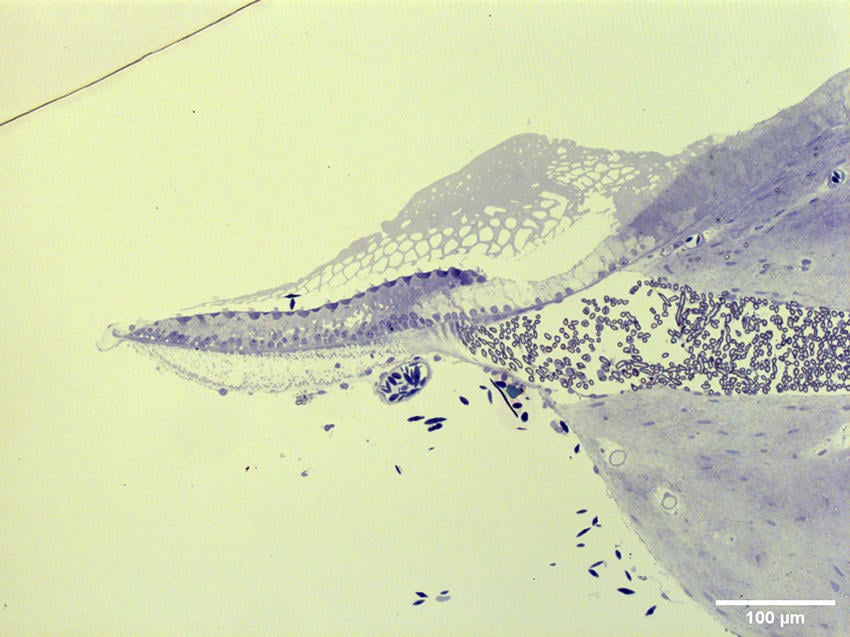
    Crocodile Auditory Organ
    Light microscopic image showing the auditory organ in the crocodile. The wedge-like structure contains thousands of sensory cells with hair-like processes projecting into a porous membrane to which they are rubbed against. (Note that its shape is similar to a crocodile head.) Credit: Uppsala University

    “We can see that new hair cells seem to be formed from the activation of so-called support cells, which is connected to crocodiles having certain cell structures that humans appear to lack. Our hypothesis is that nerves that carry impulses from the brain, so-called efferent nerves, trigger that regrowth,” says Helge Rask-Andersen, professor of experimental otology at Uppsala University and one of the researchers behind the study, which was recently published in the journal Frontiers in Cell and Developmental Biology.

    Hair Cell Regeneration: Key to Crocodiles’ Lifelong Hearing

    More than a billion people worldwide have hearing loss, which causes significant difficulties for individuals and often lowers the perceived quality of life. The most common cause of hearing loss is the failure of receptors in the ears, and these receptors cannot be regenerated in humans. They may, however, be in non-mammal creatures such as crocodiles, which maintain strong hearing throughout their lives despite living up to 70 years.
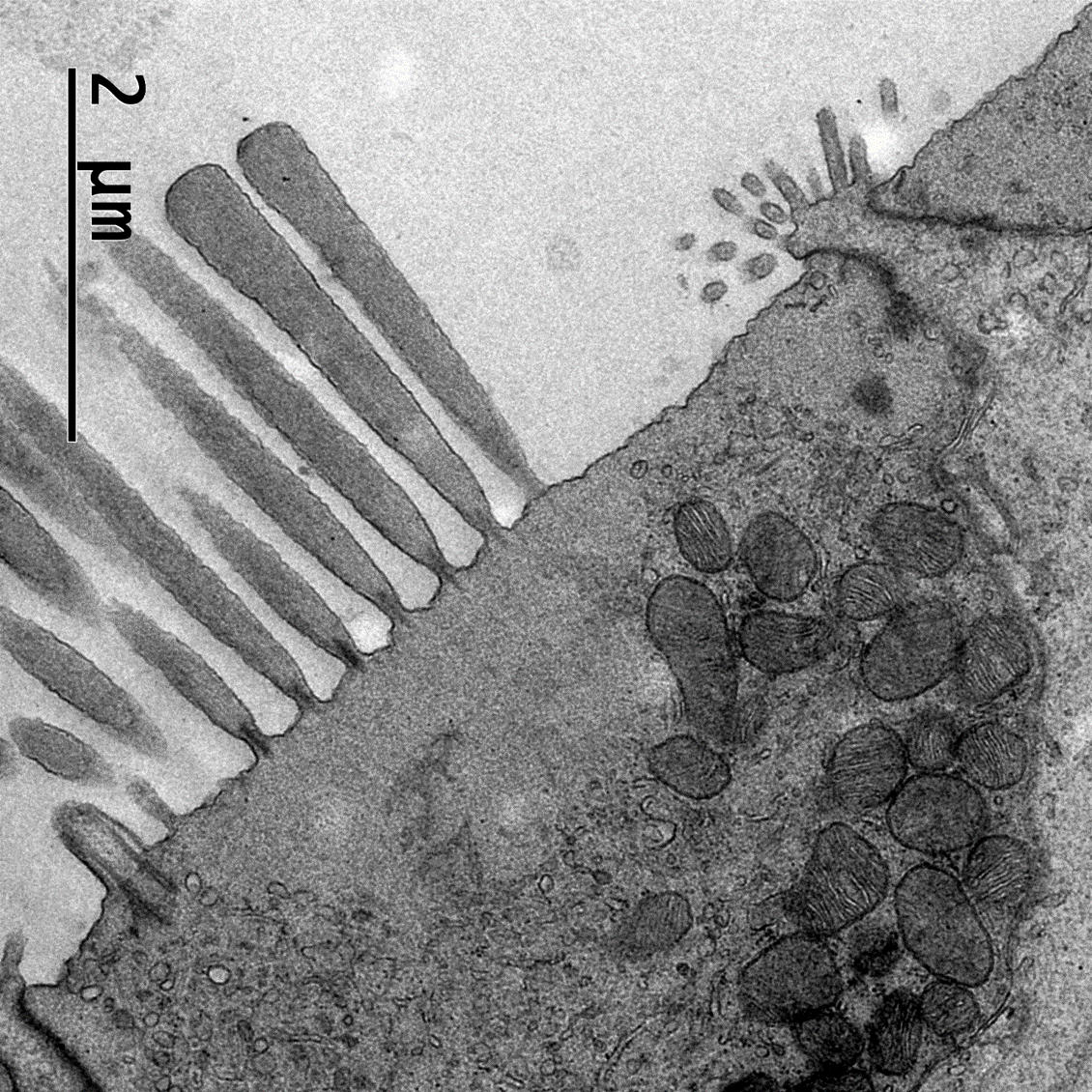
    Hair Cell Crocodile
    This image shows the hair cell of a crocodile magnified around 5000 times. Many hairs (or cilia) project against the porous membrane. Credit: Uppsala University

    It is known that animals can quickly regenerate the hair cells in their ears if they are damaged. But it is not really known how. Crocodiles have excellent hearing that is adapted for being on land and underwater. One distinctive characteristic is that the receptors’ sensitivity to different pitches is affected by external temperature, making it perfect for different kinds of dangers in different environments during evolution.

    The crocodile ear has been examined in a new study by ear researchers at Uppsala University Hospital together with researchers at Uppsala University. Few research groups in the world have studied the inner ear of the crocodile, and the researchers in this study have used electron microscopy and molecular technologies.

    Hair Cells Regenerating
    The image shows regenerating hair cells (green) moving from the lower supporting cells up to the sensory surface. The sensory cells are of two types. Credit: Uppsala University

    Discovery of Exosomes and Their Role in Hearing

    One interesting discovery was that small cell particles are secreted in the crocodile’s ear. The particles resemble exosomes and can secrete enzymes that break down or form the membrane against which the cilia in the ear rub as sound comes in. The exosomes form small alveoli, cavities, that make it easier for the cilia to bend when sound vibrations reach the ear.

    “One hypothesis is that this increases sensitivity to sound and hearing improves. Our hope is to learn how crocodiles regenerate their hair cells and to eventually be able to use that on people in the future,” says Helge Rask-Andersen.

    Reference: “Regeneration in the Auditory Organ in Cuban and African Dwarf Crocodiles (Crocodylus rhombifer and Osteolaemus tetraspis) Can We Learn From the Crocodile How to Restore Our Hearing?” by Hao Li, Karin Staxäng, Monika Hodik, Karl-Gunnar Melkersson, Mathias Rask-Andersen and Helge Rask-Andersen, 4 July 2022, Frontiers in Cell and Developmental Biology.
    DOI: 10.3389/fcell.2022.934571

    Never miss a breakthrough: Join the SciTechDaily newsletter.
    Follow us on Google and Google News.

    Deafness Hearing Uppsala University
    Share. Facebook Twitter Pinterest LinkedIn Email Reddit

    Related Articles

    A Common Drug Might Help Reverse Genetic Hearing Loss, Scientists Say

    This Surprising Health Duo Is Quietly Destroying Your Memory

    Hearing Aids Could Help You Live Longer and Feel Less Lonely

    A Shot of Sound: Gene Therapy Reverses Deafness in Just Weeks

    Dementia Dangers: How Hearing Loss Rewires the Brain

    New Findings Pave the Way for Hearing Loss Therapies

    Decoding Deafness: USC Scientists Tune Into Hearing Regeneration

    Restoring Hearing: New Tool To Create Ear Hair Cells Lost Due to Aging or Noise

    First 3D Sound-Frequency Map for Inner Ear Created With Advanced X-ray Technology

    Leave A Reply Cancel Reply

    • Facebook
    • Twitter
    • Pinterest
    • YouTube

    Don't Miss a Discovery

    Subscribe for the Latest in Science & Tech!

    Trending News

    Millions Take These IBS Drugs, But a New Study Finds Serious Risks

    Scientists Unlock Hidden Secrets of 2,300-Year-Old Mummies Using Cutting-Edge CT Scanner

    Bread Might Be Making You Gain Weight Even Without Eating More Calories

    Scientists Discover Massive Magma Reservoir Beneath Tuscany

    Europe’s Most Active Volcano Just Got Stranger – Here’s Why Scientists Are Rethinking It

    Alzheimer’s Symptoms May Start Outside the Brain, Study Finds

    Millions Take This Popular Supplement – Scientists Discover a Concerning Link to Heart Failure

    The Universe Is Expanding Too Fast and Scientists Can’t Explain Why

    Follow SciTechDaily
    • Facebook
    • Twitter
    • YouTube
    • Pinterest
    • Newsletter
    • RSS
    SciTech News
    • Biology News
    • Chemistry News
    • Earth News
    • Health News
    • Physics News
    • Science News
    • Space News
    • Technology News
    Recent Posts
    • Simple Blood Test May Predict Alzheimer’s Years Before Brain Scans Show Signs
    • Scientists Say Adding This Unusual Seafood to Your Diet Could Reverse Signs of Aging
    • U.S. Waste Holds $5.7 Billion Worth of Crop Nutrients
    • Scientists Say a Hidden Structure May Exist Inside Earth’s Core
    • Doctors Surprised by the Power of a Simple Drug Against Colon Cancer
    Copyright © 1998 - 2026 SciTechDaily. All Rights Reserved.
    • Science News
    • About
    • Contact
    • Editorial Board
    • Privacy Policy
    • Terms of Use

    Type above and press Enter to search. Press Esc to cancel.