
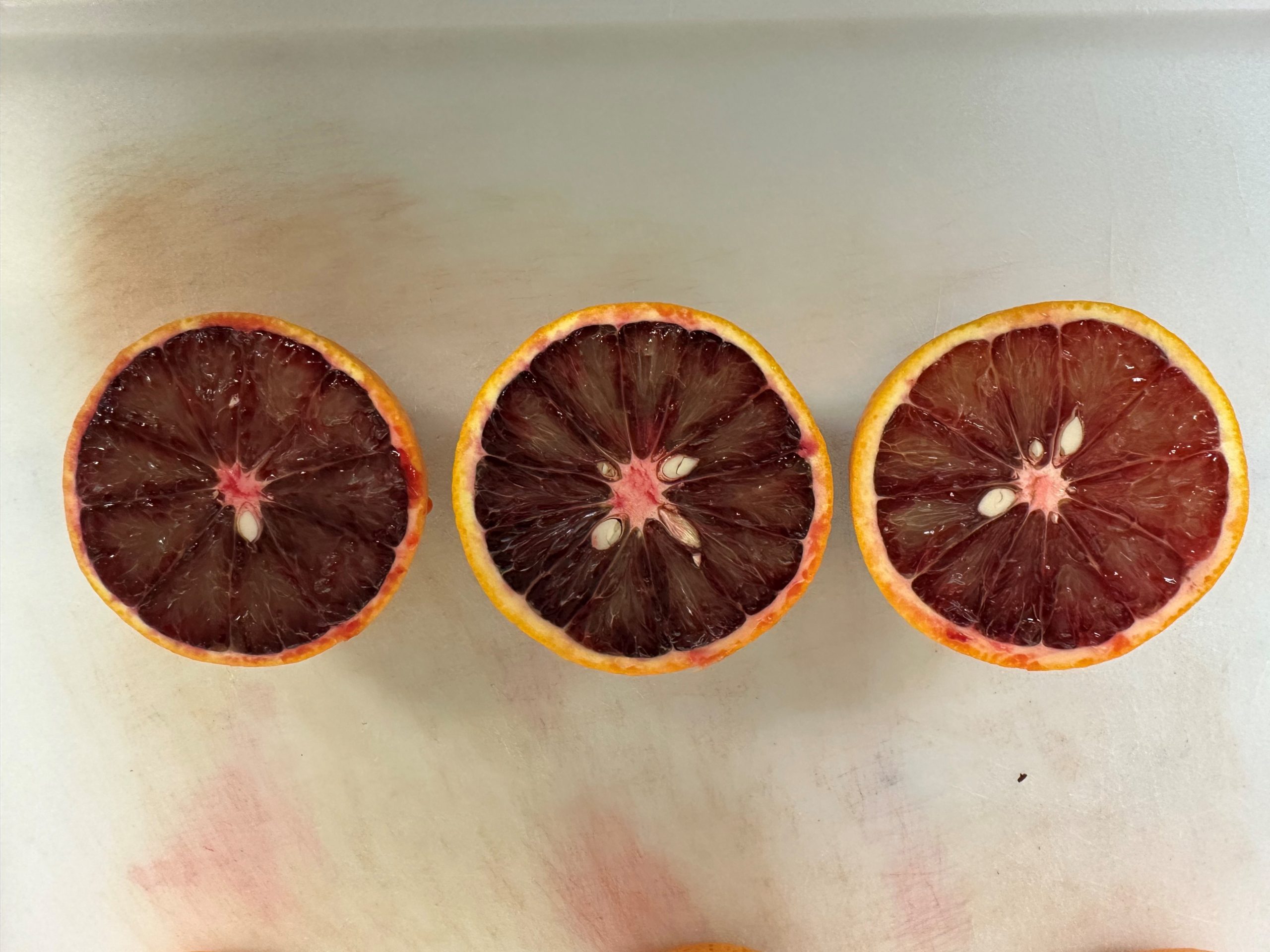
A University of Florida study suggests that storing blood oranges at cool temperatures enhances their health benefits and market value, but further research is needed to determine their commercial viability in Florida.
A new study from the University of Florida reveals that storing oranges at cool temperatures can enhance their antioxidant properties and other health benefits, offering potential advantages for both consumers and citrus growers.
However, it’s too early to determine whether these so-called “blood oranges” are a feasible addition to the Florida citrus industry, according to Ali Sarkhosh, a UF/IFAS associate professor of horticultural sciences.
“Although blood oranges typically command higher prices than other common varieties, such as navel or Valencia oranges, it is unclear if farmers could substantially increase their per-acre income by adding them to their crop selection and then storing them for internal color development,” said Habibi, lead author of the study. “Improved fruit quality from the storage method presents a promising opportunity for the Florida citrus industry. However, further study is needed before recommending anything to growers.”
The fruit is rich in anthocyanins, which have been linked to various health benefits, including anti-inflammatory and antioxidant properties. They also contain other beneficial phytochemicals such as vitamin C, flavonoids, and dietary fiber.
Anthocyanins
Anthocyanins are a type of flavonoid pigment found in plants, responsible for the red, purple, and blue colors in many fruits and vegetables, such as berries, grapes, and eggplants. These water-soluble pigments play a crucial role in plant defense against UV radiation and pathogens. Beyond their role in plants, anthocyanins have attracted significant attention for their potential health benefits in humans. They possess antioxidant properties, which help in neutralizing free radicals, and studies suggest they may offer protective effects against cardiovascular diseases, certain cancers, and age-related cognitive decline. Due to their vibrant colors and health-promoting properties, anthocyanins are also used as natural food colorants in the food industry.
Storage Conditions and Fruit Quality
“Fruit can also develop internal color under similar conditions at home. However, the fruit in the supermarket should have a good internal color and be ready for consumption,” Sarkhosh said.
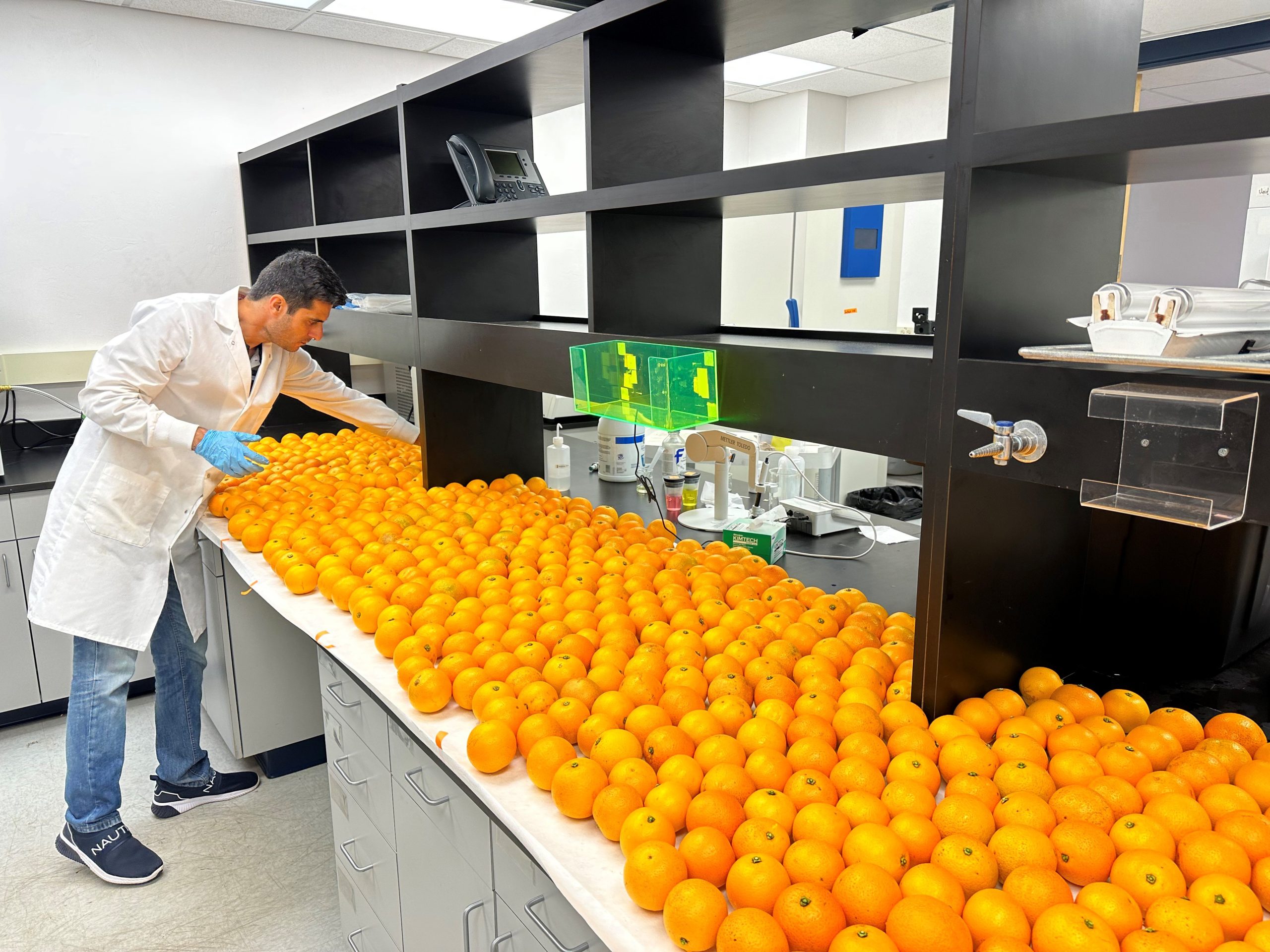
For this research, scientists harvested fruit from a research plot at the UF/IFAS North Florida Research and Education Center in Quincy.
Scientists found that storing the blood oranges at 40 to 53 degrees enhances anthocyanin, phenolic content, and antioxidants. When they lowered the temperatures 43 to 46 degrees, they also preserved fruit firmness, weight loss, and sugar content.
“Attributes such as firmness are crucial for maintaining the overall quality, texture, and taste of the blood oranges during storage,” said Habibi.
Blood oranges get their name from their deep red flesh. Their skin contains a type of antioxidant pigment. The fruit is commonly grown in countries like Italy and Spain, which have the Mediterranean climate – cold, but above 32 degrees – that helps them grow. In the United States, blood oranges grow primarily in California, but are not grown commercially yet in Florida.
Anthocyanin develops when the fruit is exposed to cold temperatures between 46 and 59 degrees for at least 20 days. Such conditions are rare in Florida’s subtropical climate.
Reference: “Postharvest storage temperature strategies affect anthocyanin levels, total phenolic content, antioxidant activity, chemical attributes of juice, and physical qualities of blood orange fruit” by Fariborz Habibi, Muhammad A. Shahid, Robert Logan Spicer, Cătălin Voiniciuc, Jeongim Kim, Frederick G. Gmitter Jr., Jeffrey K. Brecht and Ali Sarkhosh, 8 May 2024, Food Chemistry Advances.
DOI: 10.1016/j.focha.2024.100722
Never miss a breakthrough: Join the SciTechDaily newsletter.
Follow us on Google and Google News.
1 Comment
I literally became anaphylactic to these overnight. Are they GMO?