
Close Menu
    Facebook X (Twitter) Instagram
    SciTechDaily
    • Biology
    • Chemistry
    • Earth
    • Health
    • Physics
    • Science
    • Space
    • Technology
    Facebook X (Twitter) Pinterest YouTube RSS
    SciTechDaily
    Home»Science»A Shock to the PPE System: New Method for Recharging N95 Masks to Meet COVID Demand
    Science

    A Shock to the PPE System: New Method for Recharging N95 Masks to Meet COVID Demand

    By Institute of Industrial Science, University of TokyoDecember 17, 20202 Comments3 Mins Read
    Facebook Twitter Pinterest Telegram LinkedIn WhatsApp Email Reddit
    Share
    Facebook Twitter LinkedIn Pinterest Telegram Email Reddit
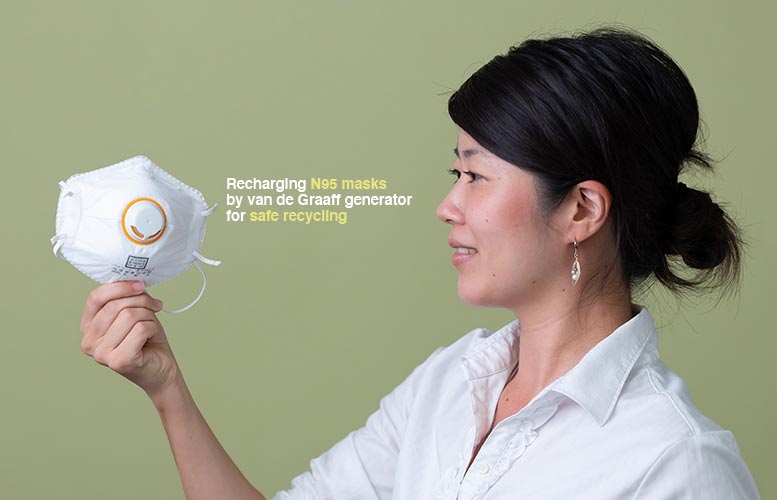
    Recharging N95 Masks
    A researcher at The University of Tokyo develops a method for recharging used N95 masks with a van de Graaff generator, which may greatly alleviate the lack of high-quality personal protective equipment during the COVID-19 pandemic. Credit: Institute of Industrial Science, the University of Tokyo

    A researcher from the Institute of Industrial Science at The University of Tokyo has demonstrated a novel method for recharging sterilized N95 masks so that they can be reused. By exposing the masks to 100 kilovolts for 3 minutes after sterilization in hot water or an autoclave, they regained their static charge. This work can be rapidly applied to help meet the huge demand for protective equipment that can prevent the spread of the COVID-19 virus.

    During the current COVID pandemic, N95 masks have been indispensable for keeping health care workers and first responders safe. The name comes from the fact that these masks can filter more than 95% of airborne particles, even though they have pore sizes ten times larger than the small aerosol particles that can carry the virus. The trick is that the N95 masks are made of electrospun polypropylene fibers, which retain a static electric charge that can attract and trap the charged aerosols. However, this static charge cannot withstand normal sterilization procedures, such as washing in hot water or autoclaving. Even the moisture in the wearer’s breath can degrade the effectiveness of the electric attraction. For this reason, the masks are often discarded after a single use, which greatly increases the gap between the number of N95 masks needed and the number available.

    Now, a researcher at The University of Tokyo has shown that sterilized masks can be returned to use after being recharged using a van de Graaff generator. These devices, familiar to many science museum visitors, use the friction from a spinning belt to generate very high voltages between two metal conductors. “Making use of the high voltage provided by the van de Graaff generator, this method is much faster than alternative methods,” study author Kaori Sugihara says. To regenerate a mask that had been previously sterilized, it was attached to the larger metallic sphere, while the smaller sphere was placed several centimeters away for 3 minutes. The regenerated masks were tested and shown to be comparable in filtering ability to unused masks.

    “Hopefully, this method will allow many more people to have access to N95 masks each day, which is our best line of defense against COVID transmission,” Sugihara says. Because van de Graaff generators are much cheaper and safer to use than other high voltage sources, this method can be implemented easily in hospitals and other locations where N95 masks are most needed. The work is published in Soft Matter as “Recharging N95 masks by van de Graaff generator for safe recycling.”

    Reference: “Recharging N95 masks using a van de Graaff generator for safe recycling” by K. Sugihara, 17 December 2020, Soft Matter.
    DOI: 10.1039/d0sm02004d

    Never miss a breakthrough: Join the SciTechDaily newsletter.
    Follow us on Google and Google News.

    Biomedical Engineering COVID-19 Infectious Diseases Materials Science University of Tokyo
    Share. Facebook Twitter Pinterest LinkedIn Email Reddit

    Related Articles

    Amazing New Material Combines Wood Fibers and Spider Silk

    Graphene Spikes Kill Bacteria on Implants and Stop Infection

    Silk Fibers May Represent Natural Metamaterials, Capable of light Confinement

    Advanced Chemical Oscillator Offers New Level of Molecular Control

    Reconstituted Silk Can Be Several Times Stronger Than The Natural Fiber

    Cell-Squeezing Device Opens New Possibilities for Cell-Based Vaccines

    Synthetic Silicate Nanoplatelets Stimulate Stem Cells Into Bone Cells

    Researchers Increase the Stiffness of Silicone Liquid Crystal by 90 Percent

    PGClear Uses a Palladium-Gold Catalyst to Break Down Hazardous Compounds

    2 Comments

    1. Sophy Wonder on December 17, 2020 10:53 am

      Why not provide PAPRS for all nurses and any other health care providers? You can recharge the N95s all you want – they’re still just N95s, not the N100 of a PAPR, and they’re not going to FIT over time. Just a few uses more than the one use they’re intended for, and the fit is off, making them N<95s.

      Reply
    2. Curious on December 18, 2020 6:15 pm

      The mask shown allows particular matter exhausted out port. What’s the point?

      Reply
    Leave A Reply Cancel Reply

    • Facebook
    • Twitter
    • Pinterest
    • YouTube

    Don't Miss a Discovery

    Subscribe for the Latest in Science & Tech!

    Trending News

    New Pill Lowers Stubborn Blood Pressure and Protects the Kidneys

    Humans May Have Hidden Regenerative Powers, New Study Suggests

    Scientists Just Solved the Mystery of Why Crabs Walk Sideways

    Doctors Are Surprised by What This Vaccine Is Doing to the Heart

    This Popular Supplement May Boost Your Brain, Not Just Your Muscles

    Scientists Say This Simple Supplement May Actually Reverse Heart Disease

    Warming Oceans Could Trigger a Dangerous Methane Surge

    This Simple Movement Could Be Secretly Cleaning Your Brain

    Follow SciTechDaily
    • Facebook
    • Twitter
    • YouTube
    • Pinterest
    • Newsletter
    • RSS
    SciTech News
    • Biology News
    • Chemistry News
    • Earth News
    • Health News
    • Physics News
    • Science News
    • Space News
    • Technology News
    Recent Posts
    • Researchers Discover Efficient New Way To Split Hydrogen From Water for Energy
    • This Korean Skincare Ingredient Could Help Fight Deadly Superbugs
    • Giant Squid Detected off Western Australia in Stunning Deep-Sea Discovery
    • Popular Sugar-Free Sweetener Linked to Liver Disease, Study Warns
    • Why Weight Loss Isn’t Enough for Everyone at Risk of Diabetes
    Copyright © 1998 - 2026 SciTechDaily. All Rights Reserved.
    • Science News
    • About
    • Contact
    • Editorial Board
    • Privacy Policy
    • Terms of Use

    Type above and press Enter to search. Press Esc to cancel.