
The study found a link between at least 150 minutes of physical activity each week and lower birth weight, with less risk of childhood obesity and diabetes
A Brazilian study supports the benefits and safety of physical exercise during pregnancy, even for those who are socially vulnerable. Researchers found that the World Health Organization’s (WHO) recommendation of at least 150 minutes of exercise per week was associated with a decrease in the baby’s birth weight, which is beneficial in preventing childhood obesity and diabetes, without increasing the risk of the baby being born with less weight than would be expected based on gestational age.
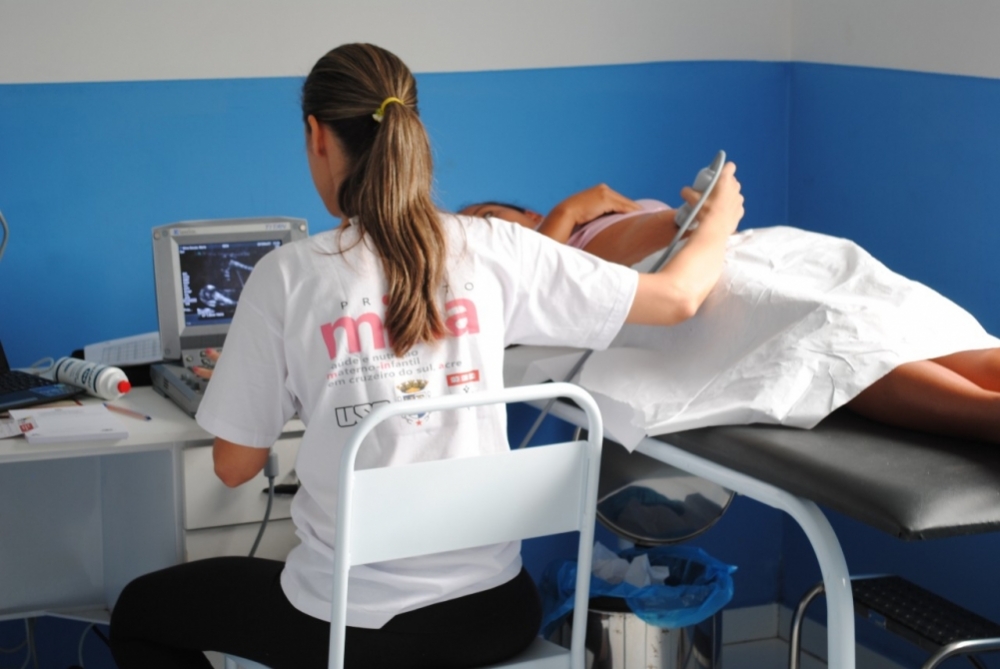
The findings were published recently in the journal PLoS ONE. Researchers from the School of Public Health of the University of São Paulo (FSP-USP) conducted the study as a part of the “Maternal and Child Health in Acre: Birth Cohort in the Western Brazilian Amazon (MINA Brazil)” project, which has been ongoing since 2015 with funding from FAPESP.
“Previous studies investigated how leisure-time physical activity during pregnancy affects birth weight and other outcomes, but there was a lack of prospective research on the topic in low- and middle-income countries,” said Marly Augusto Cardoso, a professor in the Nutrition Department at FSP-USP and principal investigator for the project.
Cardoso claims that racial disparities could affect the results. In contrast to earlier research, nearly 80% of individuals in this one classified themselves as something other than White. Additionally, some characteristics of disadvantaged areas could have a role. For instance, in wealthy nations, concern about newborn weight is solely focused on overweight infants, which is merely one extreme, but in low-income areas, mother and child malnutrition is the main concern and can contribute to low birth weight. Additionally, women in underdeveloped areas often engage in greater physical activity at work or at home. “In this context, does leisure-time physical activity increase the proportion of small-for-gestational-age babies?” Cardoso questioned.
She went on to explain that the MINA Brazil research sample showed both extremes, being both underweight and overweight at birth. As stated in the article, this is the first prospective research to look at the impact of leisure-time physical exercise on birth weight in a middle-income nation with a majority of non-white women.
Data Collection
The population studied by the FSP-USP group lives in Cruzeiro do Sul, which has some 88,000 inhabitants and is in Acre state. Pregnant women in the town were monitored between February 2015 and January 2016, and the babies born to them were also assessed with the consent of their families. The participants were examined and answered questionnaires on a range of topics from lifestyle, child nutrition, and gut microbiota to infection by malaria. “We want to address different questions with this cohort,” Cardoso said.
For this article specifically, the researchers focused on data regarding leisure-time physical activity for 500 volunteers covered by the project. The women reported the amount of activity undertaken in the second and third trimesters of pregnancy and were then weighed and categorized according to whether they had reached the recommended minimum of 150 minutes of exercise per week. Babies were weighed at birth.
The recommended minimum of leisure-time activity was performed by only 7.3% of the women in the first trimester and 9.5% in the second. Before pregnancy, the proportion was 42%. “Unfortunately, this isn’t peculiar to Cruzeiro do Sul. Even now many physicians recommend rest during pregnancy, especially in the first trimester,” said Maíra Malta, the first author of the article. Malta is a professor in the program of graduate studies in collective health at the Catholic University of Santos (UNISANTOS) in São Paulo state. “However, we have strong and solid evidence of the benefits of leisure-time physical activity during pregnancy for both mother and baby.”
Adequate Weight
The habit of performing at least 150 minutes of physical activity per week in the third trimester of pregnancy correlated with an average reduction of 137.9 g (6.1 oz) in birth weight. However, the proportion of low-weight babies born to these women did not rise as a result. “This may mean physical activity lowers the risk of excess birth weight without leading to the opposite extreme,” Malta surmised.
The article also concludes that this effect was partly mediated by the mothers’ excessive weight gain during pregnancy. In other words, the result obtained was probably due to some extent to the fact that exercise helps prevent pregnant women become overweight or obese. Because women who put on more weight during pregnancy tend to give birth to larger babies, adequate management of maternal weight by means of physical activity may explain part – but not all – of the babies’ reduced birth weight.
“It was a small mediating effect,” Malta explained. Previous research showed that the correlation remained significant after adjustment for maternal body mass index (BMI), suggesting that the effect of physical activity on birth weight is only partly mediated by maternal weight.
The findings were different for women who did perform the recommended amount of leisure-time physical activity during the second trimester of pregnancy. “Our study underscores the need for health workers to advise pregnant women to get exercise, especially if they show a tendency to put on weight during the period,” Cardoso said. “Of course, an antenatal obstetric assessment is essential, as rest is indeed required in some cases, but we must reduce the proportion of pregnant women who are sedentary.”
Limitations and Future Plans
MINA Brazil is part of an international collaboration called The Gestational Weight Gain (GWG) Pooling Project Consortium, which is supported by the Bill & Melinda Gates Foundation. It investigates the impact of GWG on maternal and child health in low- and middle-income countries.
Few pregnant women in the cohort performed the recommended 150 minutes of physical activity per week, so it was not possible to evaluate the effect of exercise on birth weight or other outcomes. For the same reason, the researchers were also unable to find out exactly how the time devoted to physical activity correlates with its benefits.
In addition, the study sample did not include pregnant women living in rural areas, who could have presented other peculiarities. Future research should be conducted in these directions, the researchers say in the article. They will continue to follow these women and their children to measure the medium- to long-term effects of physical activity. In parallel, the project will investigate different aspects of health and lifestyle, such as recurring exposure to malaria, which previous studies have shown to increase the risk of anemia in the baby’s early years.
The study was funded by the São Paulo Research Foundation.
Reference: “Leisure-time physical activity in Amazonian pregnant women and offspring birth weight: A prospective cohort study” by Maíra B. Malta, Paulo A. R. Neves, Bárbara H. Lourenço, Maria Helena D. A. Benício, Guilherme L. Werneck, Marcia C. Castro, Marly A. Cardoso and the MINA-Brazil Study Working Group, 16 March 2022, PLoS ONE.
DOI: 10.1371/journal.pone.0265164
Never miss a breakthrough: Join the SciTechDaily newsletter.
Follow us on Google and Google News.