
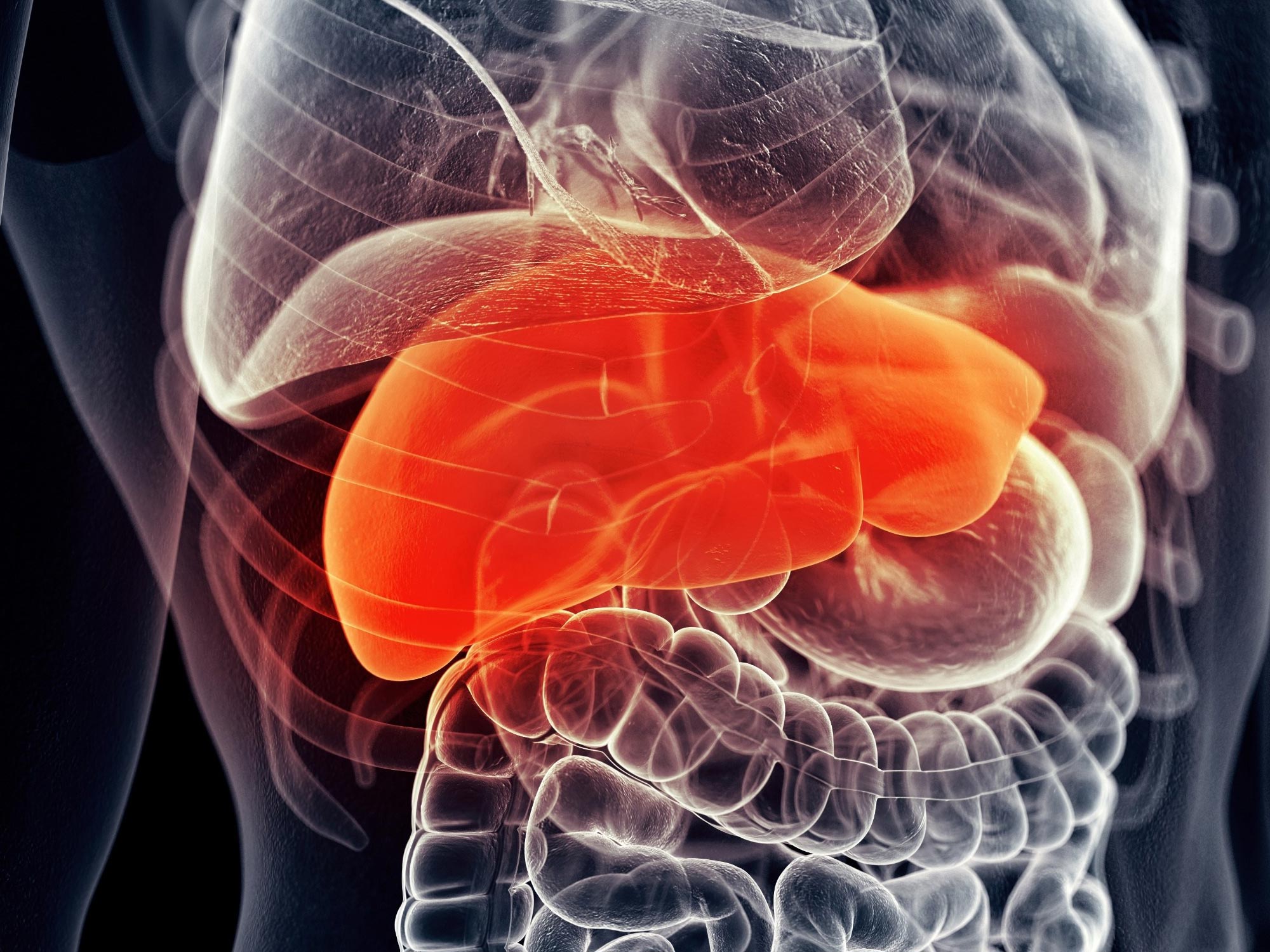
New research shows that reducing dietary protein may significantly lower liver cancer risk or slow its progression in people with impaired liver function
For people living with liver damage, food choices can matter in ways that go beyond weight or cholesterol. A Rutgers-led team reports that dialing back protein intake could potentially lower the odds of liver cancer or slow it after it starts, at least in early testing.
In Science Advances, the researchers found that mice on a low-protein diet developed liver tumors more slowly and were less likely to die from the disease. The study adds to a growing idea in cancer research: when an organ’s normal chemistry is disrupted, the byproducts that build up can reshape the environment tumors grow in.
That possibility matters because liver cancer is notoriously hard to treat and often detected late. In the United States, the five-year survival rate is about 22%, and the American Cancer Society estimates there were 42,240 new cases in 2025 and 30,090 deaths.
Widespread Liver Disease Raises Stakes
The group of people facing elevated risk is far larger than those already diagnosed with liver cancer. Roughly one in four U.S. adults has fatty liver disease, a condition that can progress to cirrhosis and cancer. Viral hepatitis and heavy alcohol use also significantly raise these risks.
“If you have liver disease or damage that prevents your liver from functioning correctly, you should seriously consider reducing your protein intake to lower the risk of developing liver cancer,” said the study’s senior author, Wei-Xing Zong, a distinguished professor at the Rutgers Ernest Mario School of Pharmacy and a member of the Cancer Metabolism and Immunology Program at Rutgers Cancer Institute, the state’s only NCI-designated Comprehensive Cancer Center.
Ammonia Processing: A Hidden Cancer Driver
When people eat protein, the nitrogen it contains can be converted into ammonia, a substance that is toxic to the body and especially harmful to the brain. In a healthy liver, ammonia is converted into urea and safely eliminated through urine.
“The clinical observation that the liver’s ammonia-handling machinery is usually impaired in liver cancer patients is decades old,” Zong said. “The question that has remained unanswered until now is whether this impairment and the resulting ammonia buildup are a consequence of the cancer or a driver of the tumor growth.”
Mouse Experiments Reveal Tumor Mechanism
To test whether impaired ammonia processing drives cancer or is simply a byproduct, Zong’s team utilized a technique to induce liver tumors in mice without crippling the ammonia-disposal system. The researchers then used gene-editing tools to disable ammonia-processing enzymes in some, but not all, of those animals and compared outcomes.
The results were striking: mice with disabled enzymes and higher ammonia levels developed heavier tumor burdens and experienced a much faster rate of mortality than those with functioning systems.
Next, the team followed the trail of the extra ammonia and found something unexpected. It was not just accumulating as waste. It was being rerouted into raw materials cancer cells need to multiply.
“The ammonia goes into amino acids and nucleotides, both of which tumor cells depend on for growth,” said Zong.
Dietary Protein Reduction Slows Tumor Growth
With that mechanism in place, the researchers tested a practical lever: less protein in the diet. Mice fed low-protein food showed much slower tumor growth and lived significantly longer than mice given standard protein levels.
Individuals with healthy livers need not worry, as their systems can handle robust protein intake. However, these findings have implications for the many people living with liver cancer, fatty liver disease, viral hepatitis, or other liver impairments.
Zong also cautioned against self-prescribing a low-protein diet. Cancer care often emphasizes higher protein to preserve muscle and strength during treatment, and overly strict restriction can backfire by worsening frailty. The best target likely depends on the diagnosis, overall nutrition, and how well the liver is clearing ammonia, he said, but protein reduction may make sense for people with elevated ammonia.
“Reducing the protein consumption may be the easiest way to get ammonia levels down,” Zong said.
Reference: “Impaired nitrogenous waste clearance promotes hepatocellular carcinoma” by Xinlu Han, Jianliang Shen, Junrong Yan, Rahul Tacke, Weiwei Dai, Qingqing Mao, Heineken Queen Daguplo, Shuyang Liu, Ariful Islam, Tong Liu, Mark C. Koch, Richard Z. Lin, Hong Li, Tracy Anthony, Ping Xie, Lanjing Zhang, Shenglan Gao, M. Celeste Simon, Xin Chen, Jiekun Yang, Xiaoyang Su and Wei-Xing Zong, 9 January 2026, Science Advances.
DOI: 10.1126/sciadv.aec0766
Never miss a breakthrough: Join the SciTechDaily newsletter.
Follow us on Google and Google News.
5 Comments
Any study that suggests protein is not good for you, and you should limit/stop eating it, gets an automatic “propaganda” label from me.
Starve your body of one of its most crucial building blocks and needs.
No mentions of what to replace the protein deficit with either.
Rutgers. (Rolls eyes.) And if I’m reading this correctly, this doctor is a doctor of pharmacology, studying to become a medical doctor. So, take this article with a grain of salt because, to me anyway, it smacks of conventional “wisdom”. As my grandmother used to say about healthy eating, “Everything in moderation.” <– People these days have forgotten how to eat real food and moderate their intake of it.
Liver cancer is often detected late as stated in the article. High protein foods include salmon, tuna, nuts and seeds, yogurt, beans like lima and lentil etc. The very foods we are told should be primary in our diet. So if those foods encourage the problem but the problem isn’t detected until later stages, damned if you do, damned if you don’t. Maybe as “Concerned” suggests this is propaganda. Maybe the potato chip or bacon industry? (kidding)
Do people that drink 3 drinks of liquor in their late 40’s and eat high protein have a high rate of liver cancer please respond
As this article has stated, Yes! Both Alcohol and high protein diets are at the heart of high risk for liver cancer.