
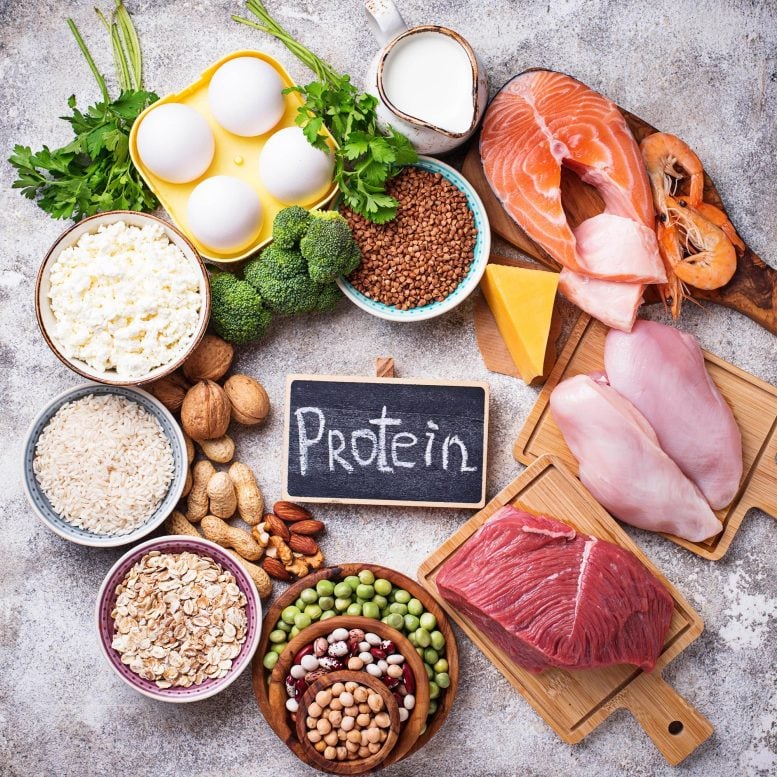
Rutgers researchers found that a slight increase in protein during dieting enhances food choices and reduces lean body mass loss, suggesting a higher-protein diet supports healthier eating habits.
According to a Rutgers University study, eating more protein when dieting improves food choices and prevents the loss of lean body mass.
The quality of the person’s food choices is significantly impacted by even a little increase in protein consumption, from 18% to 20% of their total caloric intake, according to a review of pooled data from many weight-loss trials conducted at Rutgers. The research was published in the medical journal Obesity.
“It’s somewhat remarkable that a self-selected, slightly higher protein intake during dieting is accompanied by higher intake of green vegetables, and reduced intake of refined grains and added sugar,” said Sue Shapses, author of the study and a professor of nutritional sciences at the Rutgers School of Environmental and Biological Sciences (SEBS). “But that’s precisely what we found.”
The researchers also discovered that the dieters saw a lower loss of lean body mass, which is often connected with weight loss, when their protein consumption was moderately increased.
Diet Quality and Micronutrient Deficiency
Dieters who follow calorie-restricted weight-loss plans often cut down on the consumption of nutritious meals that include micronutrients like iron and zinc. Higher protein intake is often linked to healthier outcomes, but the relationship between protein consumption and diet quality is not well known, according to researchers.
“The impact of self-selected dietary protein on diet quality has not been examined before, to our knowledge, like this,” said Anna Ogilvie, co-author of the study and a doctoral student in the Department of Nutritional Sciences at Rutgers SEBS. “Exploring the connection between protein intake and diet quality is important because diet quality is often suboptimal in the U.S., and higher-protein weight loss diets are popular.”
The data was gathered from more than 200 men and women who took part in clinical studies at Rutgers financed by the National Institutes of Health during the last two decades. The Washington, D.C.-based Institute for the Advancement of Food and Nutrition Sciences provided funding for the study’s investigation of food records and diet quality.
Participants’ body mass indexes indicated that they were either overweight or obese, and their ages ranged from 24 to 75. Over a six-month period, all participants attended frequent meetings for nutrition counseling and support while being pushed to lose weight by following a diet that was 500 calories deficient.
The participants were given nutrition advice based on the guidelines of the Academy of Nutrition and Dietetics and the American Diabetes Association. They were encouraged to allot 18 percent of their caloric intake to lean protein, such as poultry, unprocessed red meat, fish, legumes, and dairy, and to expend the balance of their calories on fruits, vegetables, and whole grains. They were discouraged from ingesting saturated fats, refined grains, sugar, and salt.
Participants kept detailed food records, which researchers analyzed for diet quality, specific categories of foods consumed and ratios, and specific sources of protein.
The participants who self-selected their protein intake were then characterized by researchers into a lower-protein approach with 18 percent of overall calories coming from protein or a higher-protein approach with 20 percent of the overall food intake coming from protein.
The study concludes:
- Both low- and high-protein groups lost the same amount of weight – about five percent of their body weight over six months
- Higher-protein groups individuals chose a mix of healthier foods to eat overall
- Higher-protein group individuals specifically increased their intake of green vegetables and cut back on sugar and refined grains
- Higher-protein group individuals were better able to retain their lean muscle mass
Reference: “Higher protein intake during caloric restriction improves diet quality and attenuates loss of lean body mass” by Anna R. Ogilvie, Yvette Schlussel, Deeptha Sukumar, Lingqiong Meng and Sue A. Shapses, 11 May 2022, Obesity.
DOI: 10.1002/oby.23428
The study was funded by the Institute for the Advancements of Food and Nutrition Sciences and the NIH/National Institutes of Health.
Never miss a breakthrough: Join the SciTechDaily newsletter.
Follow us on Google and Google News.