
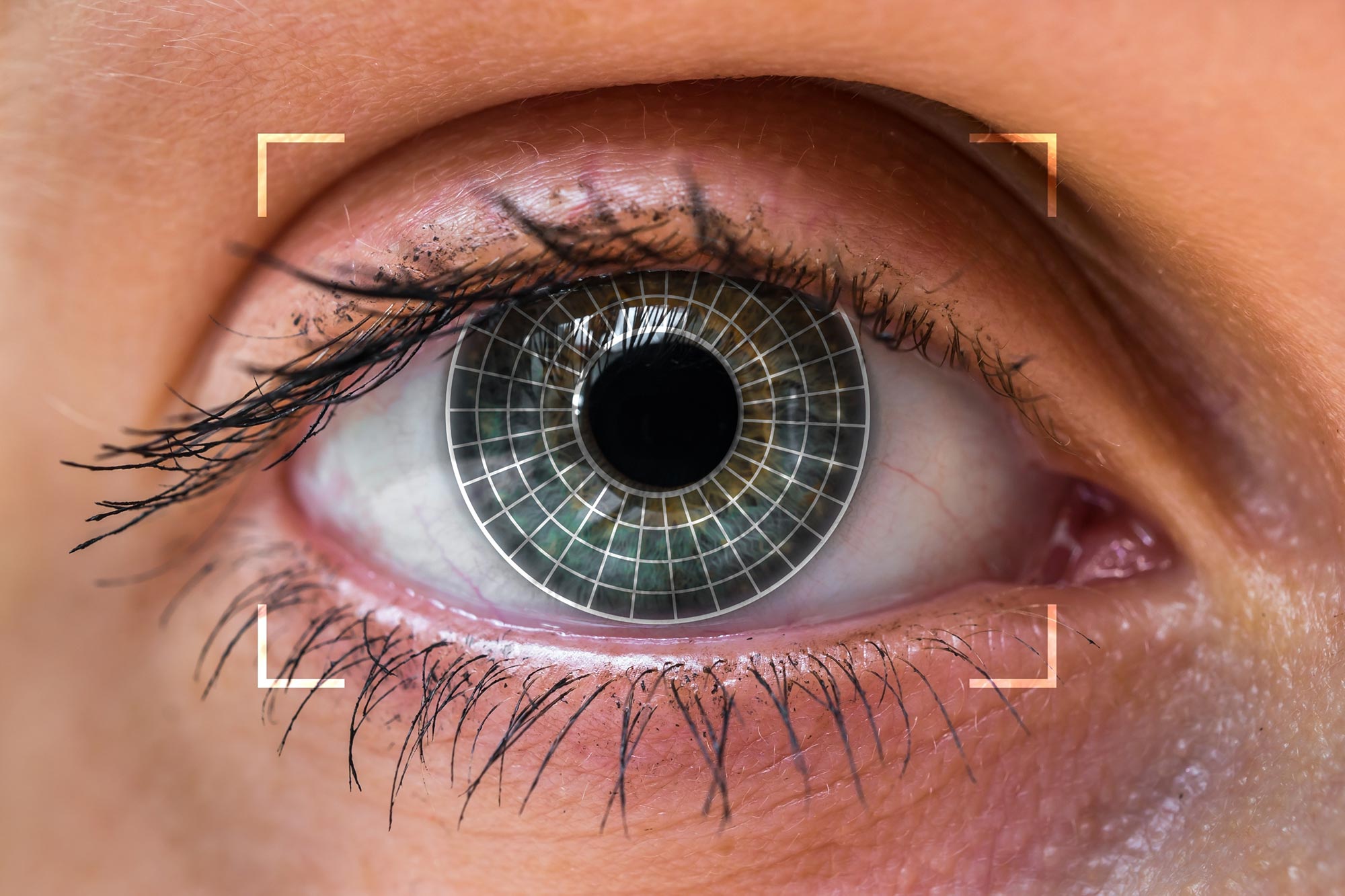
Genetic risk for schizophrenia is tied to thinner retinas, suggesting retinal scans could aid early detection and treatment.
The retina is part of the central nervous system and functions as a direct extension of the brain. This anatomical connection means that changes occurring in the brain may also be reflected in the eyes. A team of international researchers, led by the University of Zurich and the University Hospital of Psychiatry Zurich, set out to explore this connection more closely.
Their study investigated whether alterations in neural connectivity are associated with genetic risk factors for schizophrenia, a disorder marked by disrupted processing of neural information.
Earlier research has indicated that schizophrenia may reduce gray matter volume in the brain and lead to thinning of retinal tissue. However, it remains unclear whether these changes are a cause of the disorder or a result of it. Retinal alterations could also be influenced by factors related to schizophrenia itself, including antipsychotic medications, lifestyle choices, or coexisting conditions such as diabetes.
Extensive use of data from healthy individuals
“To investigate whether the risk of developing schizophrenia has an effect on the central nervous system, we examined tens of thousands of healthy individuals,” says Finn Rabe, first author of the study and postdoc at the University of Zurich. “We then calculated polygenic risk scores for each individual.”
The researchers were able to use extensive genetic and retinal data taken from the UK Biobank, a large biomedical database containing data from over half a million people. “You could say that the scale of the UK Biobank’s data has revolutionized biomedical research,” the researcher adds.
Thin retina, elevated risk
The study shows that higher genetic susceptibility to schizophrenia is indeed associated with thinner retinas. However, the effects are small and can only be reliably demonstrated in large-scale studies. One of the study’s findings is that, unlike changes in the brain, changes in the retina are easy to detect using non-invasive and inexpensive retinal measurements. Thanks to optical coherence tomography, which can be described as a kind of ultrasound for the eye, retinal thickness can be measured within a matter of minutes.
This offers a promising outlook for prevention. “Our study shows the potential of using optical coherence tomography in clinical practice. But large-scale longitudinal studies are needed to examine how useful it will be for prevention,” says Finn Rabe.
Perspectives for new therapies
Another key finding of the study concerns genetic variants associated with inflammatory processes in the brain. These may also contribute to structural changes in the retina. The study thus offers further support for the inflammation hypothesis of schizophrenia, i.e., the idea that inflammatory processes contribute to the development or progression of the disorder.
“If this hypothesis is confirmed, inflammation could be interrupted by medication, potentially enabling us to improve treatment possibilities in the future,” says Rabe.
Reference: “Genetic susceptibility to schizophrenia through neuroinflammatory pathways associated with retinal thinness” by Finn Rabe, Lukasz Smigielski, Foivos Georgiadis, Nils Kallen, Wolfgang Omlor, Victoria Edkins, Matthias Kirschner, Flurin Cathomas, Edna Grünblatt, Steven Silverstein, Brittany Blose, Daniel Barthelmes, Karen Schaal, Jose Rubio, Todd Lencz and Philipp Homan, 21 April 2025, Nature Mental Health.
DOI: 10.1038/s44220-025-00414-6
Never miss a breakthrough: Join the SciTechDaily newsletter.
Follow us on Google and Google News.
2 Comments
This is an advertisement for a new kind of technology. “Thanks to optical coherence tomography, which can be described as a kind of ultrasound for the eye, retinal thickness can be measured within a matter of minutes.” Opthalmologists would love to get paid to do these tests. But for diagnosing schizophrenia? You can do that by behavior. To detect inflammation? Lots of ways to do that besides looking at the retina. There is no compelling case for using this technology for mental illness. This is just an attempt to promote optical coherence tomography.
Not the first I’ve read about determining brain health through an eye exam but it is the first I’ve read about diagnosing genetically inherited schizophrenia thusly. The real problem, as I see it, is that using extensive genetic and retinal data taken from the UK Biobank is inherently flawed and failed. Agreed, “You could ‘accurately’ [added by me] say that the scale of the UK Biobank’s data has revolutionized biomedical research…” but, sadly, the ‘scale’ of the data has little to do with the ‘relevance’ of the data. I know from other research and my own family/medical history that chronic nearly subclinical non-IgE-mediated food (minimally) allergy reactions (Dr. Arthur F. Coca by 1935) cause chronic inflammation which can result in acidic blood and free radicals, which are more likely to adversely impact the eyes (e.g., myopia), in which the blood vessels are the most concentrated. Simply put, more acidic blood flow, more tissue damage. I consider eyeglasses for myopia to be the third most ‘obvious’ common ‘symptom’ of my kind of chronic food allergy reactions aggravated (or not) with FDA approved food poisoning, behind only obesity and so-called “male-pattern-baldness, with TBHQ and MSG being the most relevant agonistic offenders. Wearing eyeglasses for myopia since age eleven, I’ve been supplementing for mild cataracts and AMD with targeted nutrients with limited successes into my early 80s, now, while dietary quality in the US continues to decline. An ‘ounce of prevention is still worth a pound of cure.’