
A simple tweak in the nervous system can completely reshape the love life of male butterflies.
Researchers found that a single neural change alters their attraction to specific wing colors, a crucial factor in their survival. By linking genetic variants to mate choice, scientists uncovered a fast track for behavioral evolution—offering fresh insight into how species adapt rapidly to environmental pressures.
Tropical Butterflies and Mating Preferences
A small neural change can significantly influence male butterflies’ mating preferences, driving rapid behavioral evolution, according to a study by Nicholas VanKuren, Nathan Buerkle, and colleagues at the University of Chicago. Their findings, published today (March 11) in PLOS Biology, provide new insights into the sensory and genetic mechanisms behind butterfly mate selection.
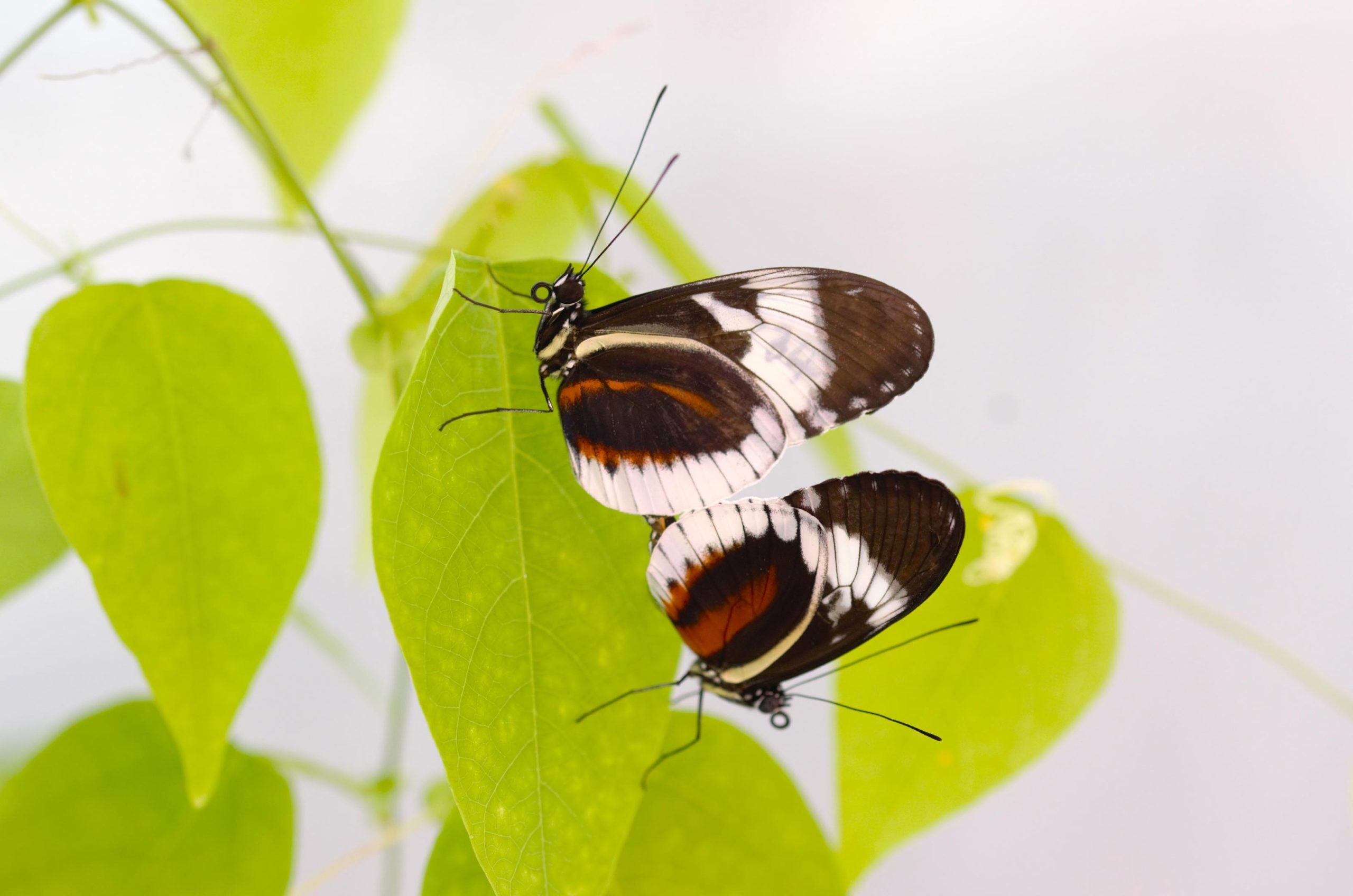
Heliconius butterflies are known for their strikingly diverse wing patterns and colors, which serve as a warning to predators. Since wing coloration is crucial for survival, male butterflies have evolved a preference for females with matching wing colors. However, the sensory and neurological processes shaping these preferences have remained largely unclear.
Investigating the Genetic Basis of Mate Choice
To explore this, researchers studied two subspecies of Heliconius cydno butterflies, which have either yellow or white wing patches. They identified four genomic regions associated with both wing color and mate preference, including the K locus, a key genetic region previously linked to these traits in other Heliconius species. By analyzing gene expression in the retina, optic lobe, and brain at different developmental stages, they pinpointed seven genetic variants that were not only located in mate preference-related genomic regions but were also expressed at significantly different levels in yellow- and white-winged males.
To understand how males perceive wing colors, the researchers examined the butterflies’ photoreceptors and their neural activity. They discovered that green-sensitive photoreceptors inhibited the activity of most UV-sensitive photoreceptors in males that preferred yellow-winged females but had a much weaker effect in other butterflies. This relatively simple neural adjustment in the peripheral nervous system appears to influence how males perceive and respond to different wing colors, providing a physiological foundation for shifts in mating preferences.
Neural Changes and Behavioral Evolution
The results show that the butterflies’ mate preferences result from differences in how sensory information is processed. This suggests that male Heliconius cydno butterflies find females with a matching wing color more attractive, not just easier to see. Inhibitory relationships between photoreceptors are easily evolvable, which may facilitate rapid behavioral evolution, the authors say.
A Window into Evolutionary Adaptation
The authors add, “Our work generated a striking picture of how a critical visual behavior – mate choice – is controlled, from variation in the connections between neurons in the eye down to genetic variation across the genome.”
Reference: “Genetic, developmental, and neural changes underlying the evolution of butterfly mate preference” by Nicholas W. VanKuren, Nathan P. Buerkle, Wei Lu, Erica L. Westerman, Alexandria K. Im, Darli Massardo, Laura Southcott, Stephanie E. Palmer and Marcus R. Kronforst, 11 March 2025, PLOS Biology.
DOI: 10.1371/journal.pbio.3002989
Never miss a breakthrough: Join the SciTechDaily newsletter.
Follow us on Google and Google News.