
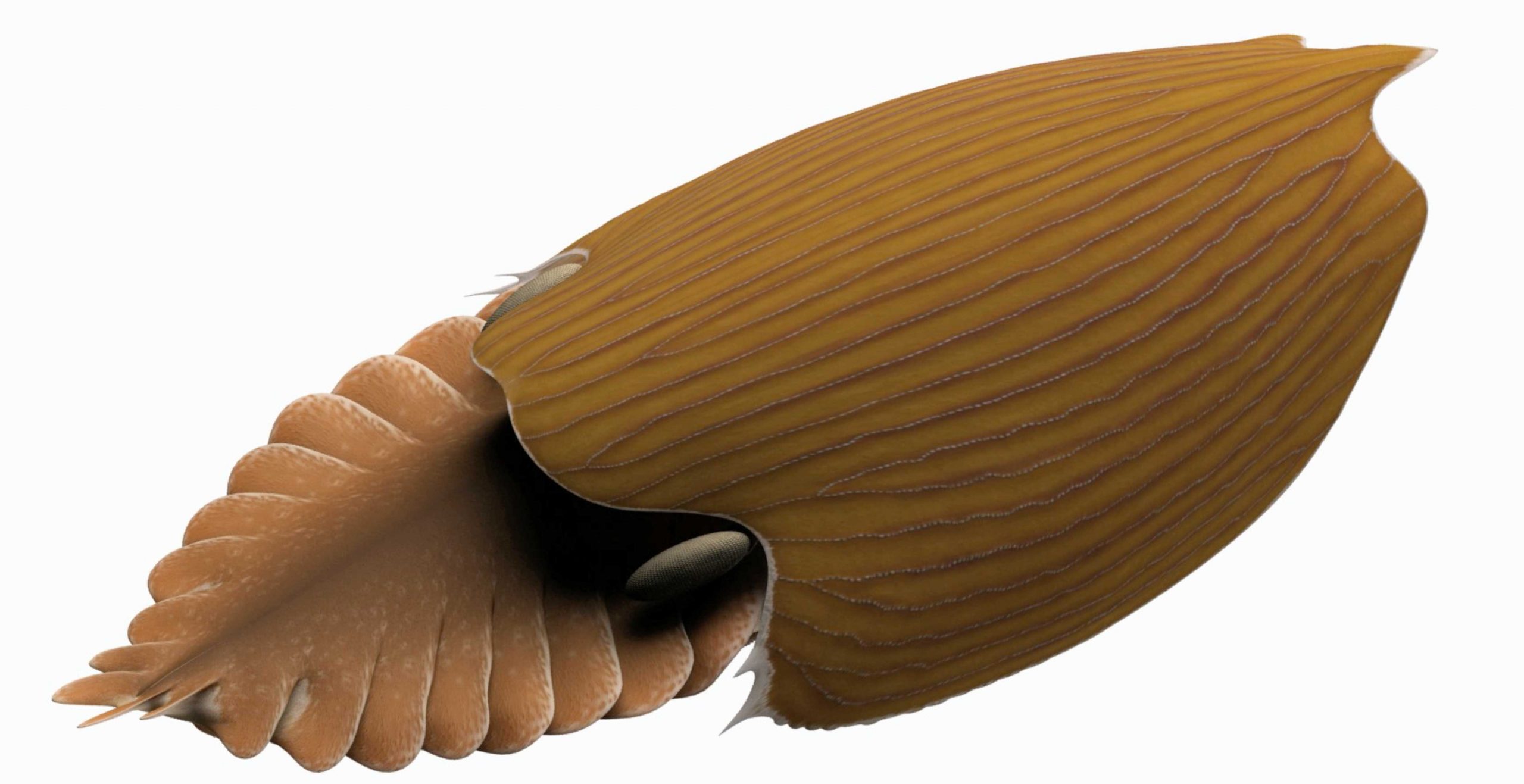
Royal Ontario Museum paleontologists unearth one of the largest radiodonts of the Cambrian explosion.
Paleontologists at the Royal Ontario Museum (ROM) have uncovered the remains of a huge new fossil species belonging to an extinct animal group in half-a-billion-year-old Cambrian rocks from Kootenay National Park in the Canadian Rockies. The findings were announced on September 8, 2021, in a study published in Royal Society Open Science.
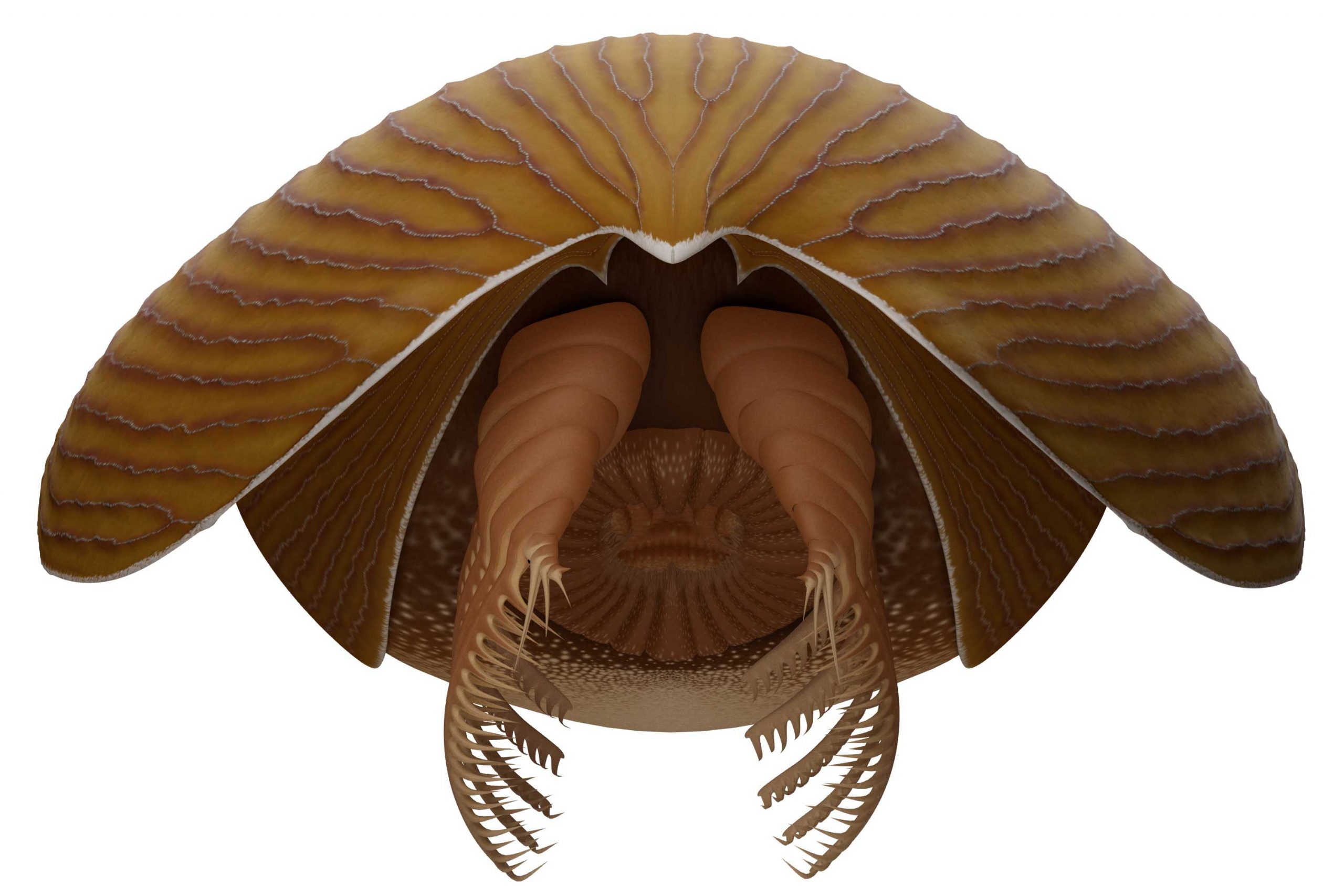
Named Titanokorys gainesi, this new species is remarkable for its size. With an estimated total length of half a meter, Titanokorys was a giant compared to most animals that lived in the seas at that time, most of which barely reached the size of a pinky finger.
“The sheer size of this animal is absolutely mind-boggling, this is one of the biggest animals from the Cambrian period ever found,” says Jean-Bernard Caron, ROM’s Richard M. Ivey Curator of Invertebrate Palaeontology.
The video shows a Cambroraster falcatus and then the even larger Titanokorys gainesi swimming along. Credit: Animation by Lars Fields, © Royal Ontario Museum
Evolutionarily speaking, Titanokorys belongs to a group of primitive arthropods called radiodonts. The most iconic representative of this group is the streamlined predator Anomalocaris, which may itself have approached a meter in length. Like all radiodonts, Titanokorys had multifaceted eyes, a pineapple slice-shaped, tooth-lined mouth, a pair of spiny claws below its head to capture prey, and a body with a series of flaps for swimming. Within this group, some species also possessed large, conspicuous head carapaces, with Titanokorys being one of the largest ever known.
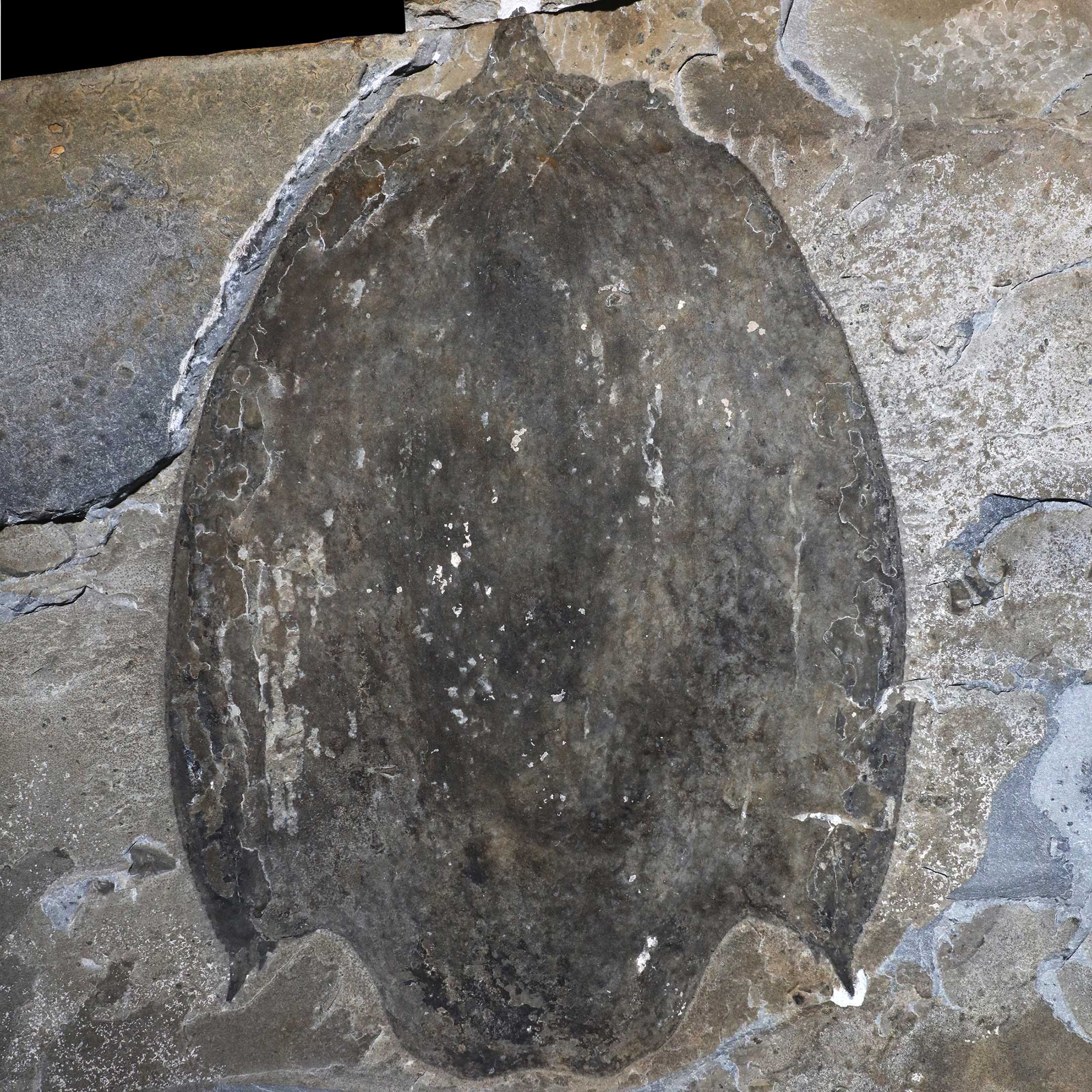
“Titanokorys is part of a subgroup of radiodonts, called hurdiids, characterized by an incredibly long head covered by a three-part carapace that took on myriad shapes. The head is so long relative to the body that these animals are really little more than swimming heads,” added Joe Moysiuk, co-author of the study, and a ROM-based Ph.D. student in Ecology & Evolutionary Biology at the University of Toronto.

Why some radiodonts evolved such a bewildering array of head carapace shapes and sizes is still poorly understood and was likely driven by a variety of factors, but the broad flattened carapace form in Titanokorys suggests this species was adapted to life near the seafloor.
“These enigmatic animals certainly had a big impact on Cambrian seafloor ecosystems. Their limbs at the front looked like multiple stacked rakes and would have been very efficient at bringing anything they captured in their tiny spines towards the mouth. The huge dorsal carapace might have functioned like a plow,” added Dr. Caron, who is also an Associate Professor in Ecology & Evolutionary Biology and Earth Sciences at the University of Toronto, and Moysiuk’s Ph.D. advisor.
All fossils in this study were collected around Marble Canyon in northern Kootenay National Park by successive ROM expeditions. Discovered less than a decade ago, this area has yielded a great variety of Burgess Shale animals dating back to the Cambrian period, including a smaller, more abundant relative of Titanokorys named Cambroraster falcatus in reference to its Millennium Falcon-shaped head carapace. According to the authors, the two species might have competed for similar bottom-dwelling prey.

The Burgess Shale fossil sites are located within Yoho and Kootenay National Parks and are managed by Parks Canada. Parks Canada is proud to work with leading scientific researchers to expand knowledge and understanding of this key period of earth history and to share these sites with the world through award-winning guided hikes. The Burgess Shale was designated a UNESCO World Heritage Site in 1980 due to its outstanding universal value and is now part of the larger Canadian Rocky Mountain Parks World Heritage Site.
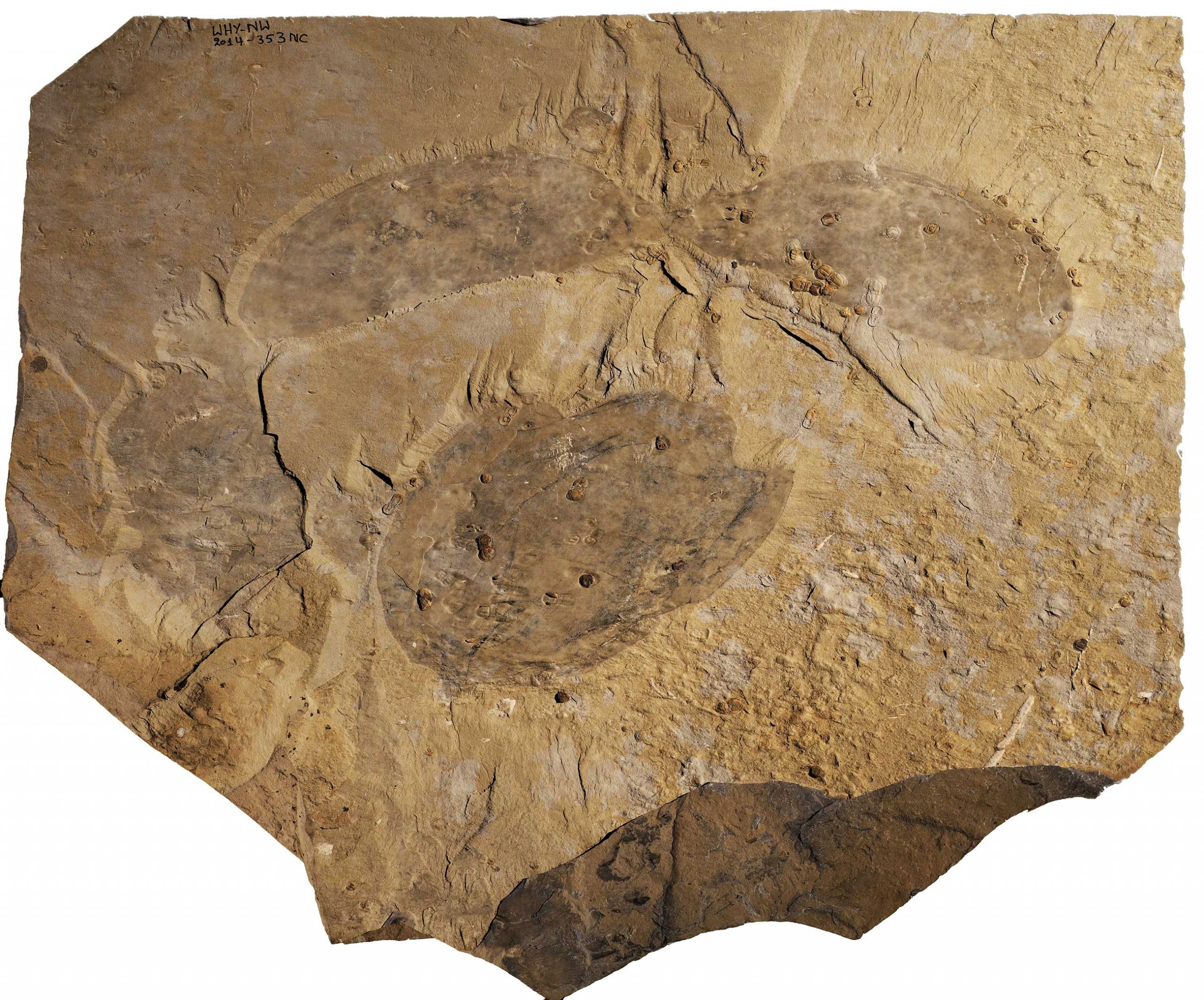
The discovery of Titanokorys gainesi was profiled in the CBC’s The Nature of Things episode “First Animals.” These and other Burgess Shale specimens will be showcased in a new gallery at ROM, the Willner Madge Gallery, Dawn of Life, opening in December 2021.
Reference: “A giant nektobenthic radiodont from the Burgess Shale and the significance of hurdiid carapace diversity” by J.-B. Caron and J. Moysiuk, 8 September 2021, Royal Society Open Science.
DOI: 10.1098/rsos.210664
Major funding support for the research and fieldwork came from the Polk Milstein Family, ROM, the National Geographic Society (#9475-14 to JBC), the Swedish Research Council (to Michael Streng), the National Science Foundation (NSF-EAR-1556226, 1554897) and Pomona College (to Robert R. Gaines). This research is also supported by a National Science and Engineering Research Council (NSERC) Discovery grant to J.-B.C and a Vanier Canada Graduate Scholarship through the University of Toronto (Dept. of Ecology and Evolution) to J.M.
Never miss a breakthrough: Join the SciTechDaily newsletter.
Follow us on Google and Google News.
17 Comments
“Titanokorys gainesi……..I f*cked it.”
“OH!”
Multifacited eyes make it similar to other very common Cambrian arthropod fossils…the trilobites. What’s interesting is these fossils were found in oxidized portions of shale slabs that in other parts of the Burgess Shale are reducing…black shales. Shale slabs mean lots of preferred orientation of flat mica-like clays in the Burgess deposits. What’s mind-boggling is how all this concentration of high biological diversity of very strange animals was done at all, never mind at one time.
Everything you said is bullsh*t
Andrew Dice you are an idiot
Fake News!!!
That would make you a titan f*cker!
So… How big is it? After reading the article, I have no idea. The picture of the guy seated above the fossil didn’t help me.
I don’t believe a single word. Scientists think they are so smart and everyone else is stupid and will swallow whatever is fed to them. The only one who know how old that fossil is, is God.
God? hahahahahahahaha yeah, stick with that.. hahahahaha
In the article it makes a big deal about its half-meter size. Shortly after it mentions another similar fossil that is a meter long. Sometimes I think these guys are like Star Trek fans meeting William Shatner. They just lose it when they find something different.
Yo!Dice!that fossil has a smile on her face and prehistoric dollar bills in her shell-i knew it was you
I’ll wait for Matt and Cally to tell me about it on Eons.
In the begining,God created everything seen
& unseen. If you deny this, you are in for the surprise of your life!
Wouldn’t it be the surprise of my death? If some supernatural being has provided definitive evidence of itself to the living it somehow missed being reliably documented.
For back then its humongous, everything was simply extremely small, it was a.monster in its day,
Doesn’t look very edible.
HaShem made the EARTH BILLIONS OF YEARS AGO. DON’T FALL FOR THE EVANGELICAL CHRISTIAN VIEW. ITS A LIE….IN FACT IT’S THE BIGGEST LIE EVER TOLD.
Like a giant cockroach…