
Close Menu
    Facebook X (Twitter) Instagram
    SciTechDaily
    • Biology
    • Chemistry
    • Earth
    • Health
    • Physics
    • Science
    • Space
    • Technology
    Facebook X (Twitter) Pinterest YouTube RSS
    SciTechDaily
    Home»Biology»Bacteria Engineered To Make Key Chemical Offers a Renewable Source of Synthetic Rubber
    Biology

    Bacteria Engineered To Make Key Chemical Offers a Renewable Source of Synthetic Rubber

    By RIKENSeptember 8, 2021No Comments3 Mins Read
    Facebook Twitter Pinterest Telegram LinkedIn WhatsApp Email Reddit
    Share
    Facebook Twitter LinkedIn Pinterest Telegram Email Reddit
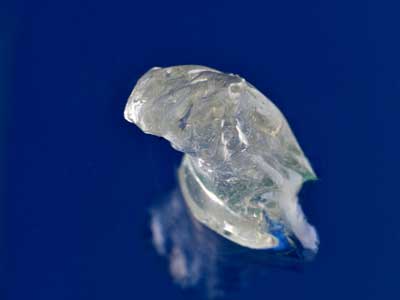
    Bacteria Produced Synthetic Rubber
    Figure 1: A photo showing 1,3-butadiene produced from bacteria. Credit: © 2021 Yokohama Rubber

    Microbes Are Engineered To Convert Sugar Into a Chemical Found in Tires

    The future environmental footprint of the tire industry could be substantially shrunk thanks to a new ecofriendly way found by four RIKEN researchers that harnesses bacteria to make a chemical used in synthetic rubber.

    Each year, factories around the world churn out more than 12 million metric tons of the organic chemical 1,3-butadiene, which is used in tires, adhesives, sealants, and other plastic and rubber products. They produce it by an energy-intensive process that relies on petroleum, which contributes to climate change.
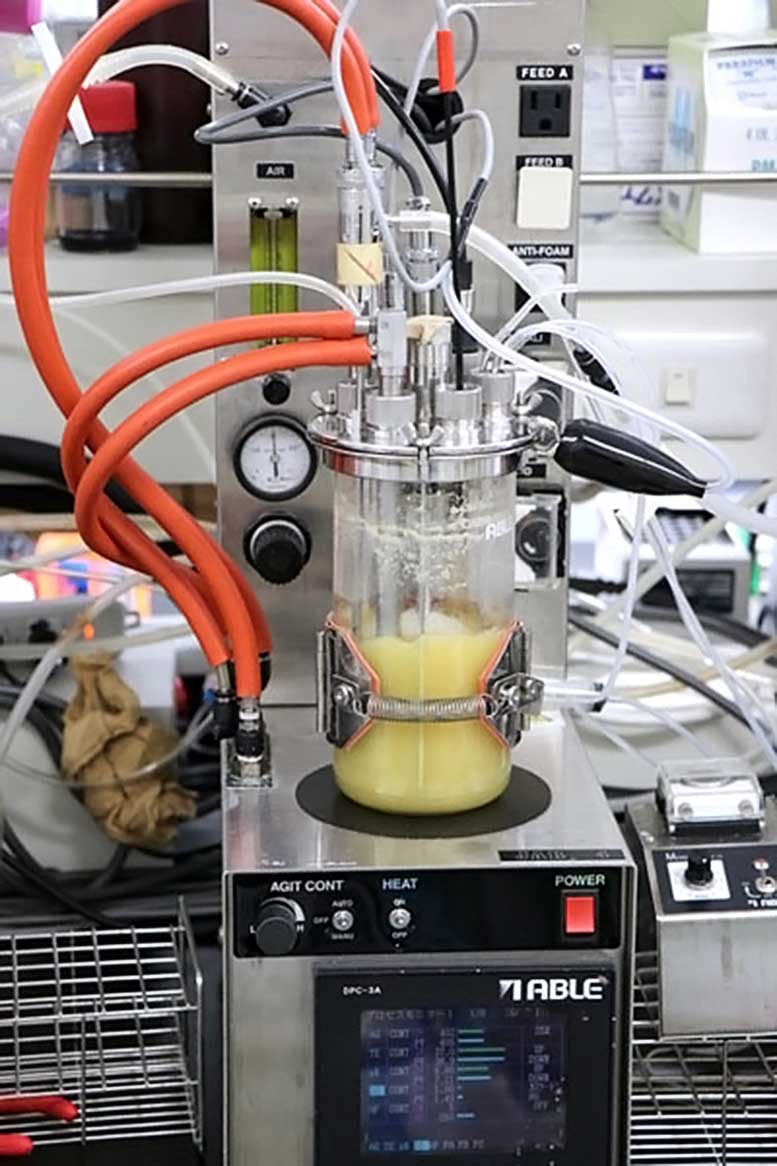
    Engineered Microbes Synthetic Rubber
    Researchers from the RIKEN Center for Sustainable Resource Science have engineered microbes to convert sugar into a chemical found in synthetic rubber. Credit: © 2021 RIKEN Center for Sustainable Resource Science

    Scientists have tried for many years to create 1,3-butadiene from more environmentally friendly starting materials by using specially designed microbes. But no one had previously succeeded in transforming a simple sugar such as glucose into the chemical in one easy step.

    Now, by engineering bacteria to convert glucose into 1,3-butadiene, Yutaro Mori and his three co-workers, all at the RIKEN Center for Sustainable Resource Science, have devised a sustainable approach to rubber and plastic production.

    “We constructed a novel artificial metabolic pathway and produced 1,3-butadiene directly from a renewable source—glucose,” says Mori.

    Engineering the Pathway: Enzymes and E. coli

    The RIKEN team succeeded in this long-sought goal by focusing on two parts of the biomanufacturing process. They first engineered a bacterial enzyme that could convert a biological compound that can be developed from glucose into 1,3-butadiene (Figure 1). The researchers then modified a strain of the bacterium Escherichia coli to use this enzyme and produce the chemical. Since 1,3-butadiene is a gas at room temperature, it can be easily captured as the bacteria continue to divide and grow.

    The technique still has a little way to go before it is ready for industrial primetime. The RIKEN team managed to synthesize only about 2 grams of 1,3-butadiene per liter of microbial brew. Much larger amounts will be needed for the method to be cost competitive with petroleum-based production.

    But with some additional engineering and optimization, Mori believes his team will get there. They are now further tweaking the bacterium’s metabolic pathways and enhancing the enzyme’s efficiency. In collaboration with the companies Yokohama Rubber and Zeon Corporation, the RIKEN team is also scaling up the protocol to work with larger volumes of microbes.

    Toward a Low-Carbon, Bio-Based Future

    The researchers are also exploring ways of harnessing the power of microbes to produce other chemicals from renewable resources. “After doing additional research into enzyme engineering and metabolic engineering, I hope we will be able to make a substantial contribution to realizing a low-carbon society and a sustainable bioeconomy in the not-so-distant future,” says Mori.

    Reference: “Direct 1,3-butadiene biosynthesis in Escherichia coli via a tailored ferulic acid decarboxylase mutant” by Yutaro Mori, Shuhei Noda, Tomokazu Shirai and Akihiko Kondo, 13 April 2021, Nature Communications.
    DOI: 10.1038/s41467-021-22504-6

    Never miss a breakthrough: Join the SciTechDaily newsletter.
    Follow us on Google and Google News.

    Bacteria Biochemistry Biotechnology Microbiology RIKEN
    Share. Facebook Twitter Pinterest LinkedIn Email Reddit

    Related Articles

    Alien Microorganism Research Shows Humans and Other Mammals Could Struggle to Fight Space Germs

    Viral Dark Matter Exposed in Pioneering Research

    Researchers Have Found a Way to Control Bacteria to Transport Microscopic Cargo

    A Small Answer to One of the Biggest Problems on the Planet

    Incredible Images Reveal How Bacteria Form Communities on the Human Tongue

    Bioluminescent Bacteria Kill Rivals and Establish Symbiosis in Squid Using Genetic Regulatory Factors

    New Light-Activated Coating Kills Bacteria in Low Intensity, Ambient Light

    MIT Uses Artificial Intelligence to Identify Powerful New Antibiotic

    ‘Poison Arrows’ Launched by Warring Bacteria Could Lead to New Antibiotics

    Leave A Reply Cancel Reply

    • Facebook
    • Twitter
    • Pinterest
    • YouTube

    Don't Miss a Discovery

    Subscribe for the Latest in Science & Tech!

    Trending News

    Scientists Discover Cheap, Natural Remedy for High Blood Pressure

    Earth’s Upper Atmosphere Is Cooling Fast and Scientists Finally Know Why

    32,000 Olympic Pools of Magma Nearly Erupted Beneath Atlantic Island

    Exercise Changes the Heart in a Way Researchers Never Expected

    Too Much Sleep May Age Your Body Faster, New Study Warns

    Scientists Uncover Promising New Strategy To Stop Parkinson’s in Its Tracks

    Experts Reveal the Surprising Cancer Link Behind a Common Vitamin

    This Strange “Golden Orb” Found 2 Miles Deep Stumped Scientists for Years

    Follow SciTechDaily
    • Facebook
    • Twitter
    • YouTube
    • Pinterest
    • Newsletter
    • RSS
    SciTech News
    • Biology News
    • Chemistry News
    • Earth News
    • Health News
    • Physics News
    • Science News
    • Space News
    • Technology News
    Recent Posts
    • Scientists Finally Solve the Mystery of “Clockwork” Earthquakes
    • Your Immune System Remembers Obesity for up to a Decade, Study Finds
    • Breakthrough Parkinson’s Drug Targets Disease at Its Genetic Roots
    • 10-Cent Pill Could Transform Heart Failure Treatment Worldwide
    • Just 4 Weeks of Simple Diet Changes Reversed Signs of Aging in Older Adults
    Copyright © 1998 - 2026 SciTechDaily. All Rights Reserved.
    • Science News
    • About
    • Contact
    • Editorial Board
    • Privacy Policy
    • Terms of Use

    Type above and press Enter to search. Press Esc to cancel.