
Advancements in nuclear physics may soon enable the creation of stable, superheavy nuclei, paving the way for new materials and insights into atomic stability.
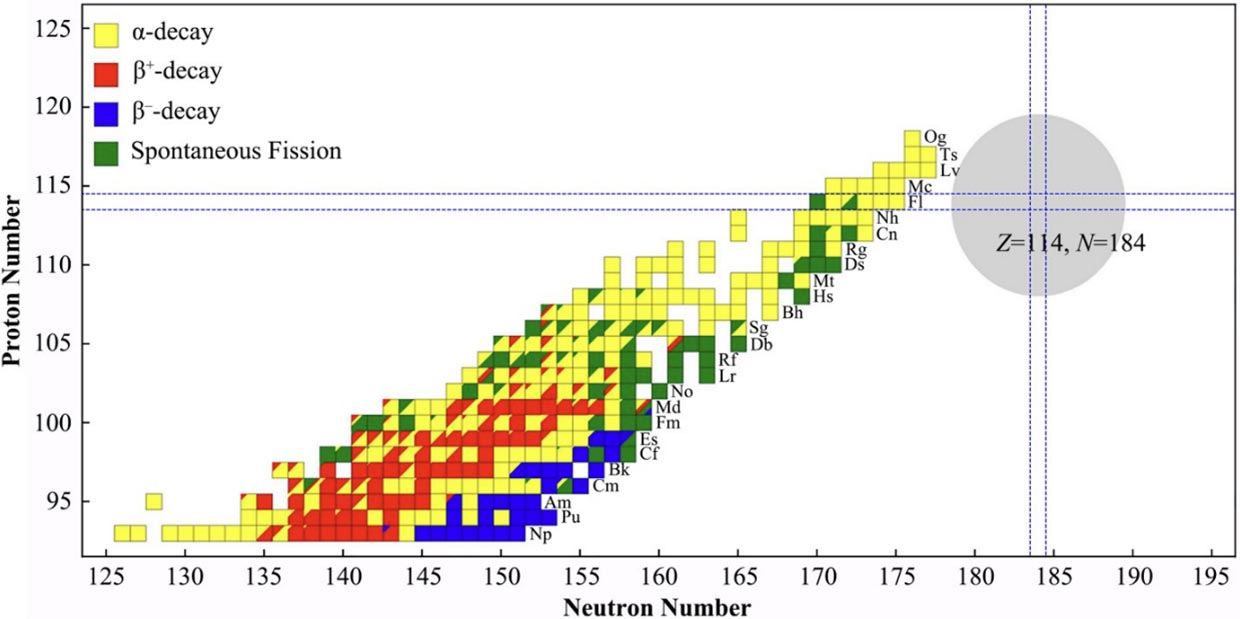
A team of scientists has made significant advancements in the quest to create new, long-lasting superheavy nuclei. These double magic nuclei, which have a precise number of protons and neutrons that form a highly stable configuration, are exceptionally resistant to decay. Their research could deepen our understanding of the forces that bind atoms and pave the way for the development of new materials with unique properties. This work brings us a step closer to the so-called “Island of Stability,” a theoretical region in the nuclei chart where it’s believed some nuclei could exist far longer than those created so far.
Key Findings in the Search for “Island of Stability”
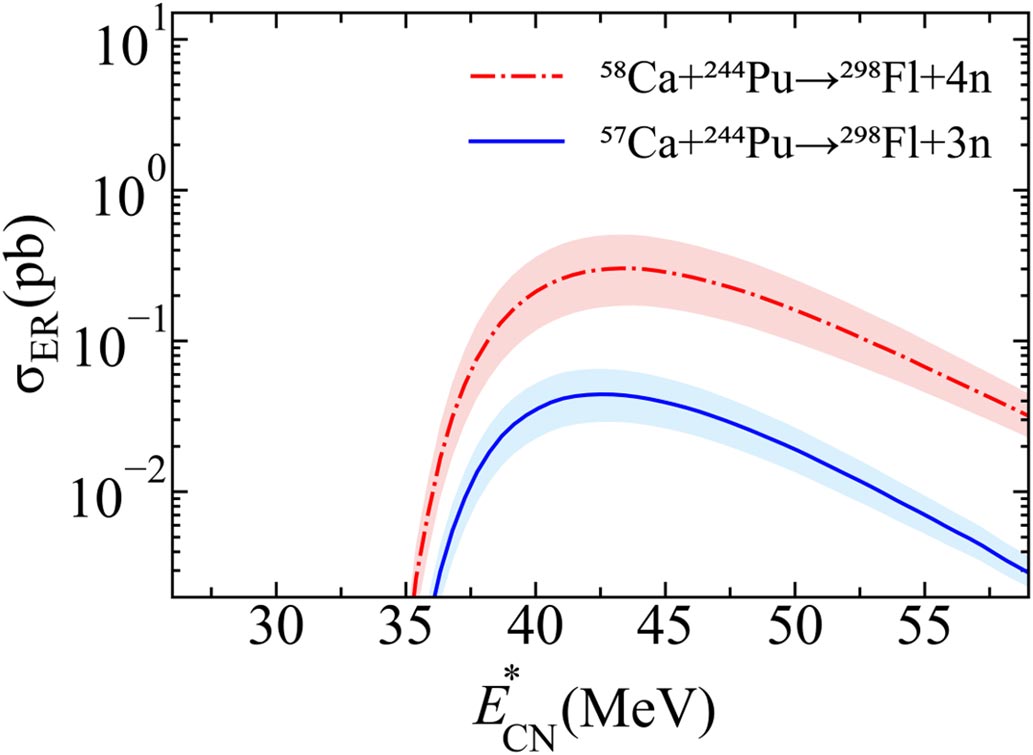
The study, led by Professor Feng-Shou Zhang, has predicted promising reactions between different elements that could be used in experiments to create double magic nuclei. One key discovery involves a reaction between a special type of radioactive calcium isotope and a plutonium target, which could produce the predicted double magic nuclei 298Fl. Another potential double magic nuclei, 304120, could be created by combining vanadium and berkelium, although this reaction is currently less likely to succeed.

Exploring New Paths in Nuclear Science
The idea of creating these superheavy nuclei is exciting because they could offer new insights into atomic structure and possibly lead to the development of advanced materials. If these elements can be made and remain stable, they might have unique properties that could be useful in various scientific fields.

Innovative Techniques Lead the Way
To make these discoveries, the research team used advanced theoretical models designed to study heavy ion collisions. By carefully choosing the right combinations of projectiles and targets, the scientists have laid out a clear path for future experiments that could bring us closer to achieving these goals.
Challenges and Future Directions
Despite the progress, there are still challenges ahead, such as improving the efficiency of these reactions. However, this research brings us closer to understanding the “Island of Stability” and the intriguing possibilities it holds. The work not only advances the field of nuclear physics but also sets the stage for future discoveries that could have wide-ranging impacts on science and technology.
This research was conducted in collaboration with Beijing Normal University, Beijing Academy of Science and Technology, Guangxi University, and the National Laboratory of Heavy Ion Accelerator of Lanzhou.
Reference: “Possibility of reaching the predicted center of the “island of stability” via the radioactive beam-induced fusion reactions” by Ming-Hao Zhang, Ying Zou, Mei-Chen Wang, Gen Zhang, Qing-Lin Niu and Feng-Shou Zhang, 4 September 2024, Nuclear Science and Techniques.
DOI: 10.1007/s41365-024-01542-x
Never miss a breakthrough: Join the SciTechDaily newsletter.
Follow us on Google and Google News.
2 Comments
Great name for a theme park ride – “Double Magic Island of Stability”
“It took the team 22 days of operations at Berkeley Lab’s 88-inch cyclotron, which accelerates the heavy ions of titanium into a beam powerful enough to fuse with its target. After all that, it yielded just two measly atoms of livermorium.
Creating unbinilium with this method, by aiming the beam at californium-249, will be much faster than previous routes could offer, but it’s still going to be a slog.
“We think it will take about 10 times longer to make 120 than 116,” says Berkeley Lab nuclear physicist Reiner Kruecken.
This marks a return to the superheavy element race for the US Department of Energy’s Berkeley Lab, a leader in elemental discovery during the 20th century.
Scientists around the world have been on a race to produce unbinilium since at least 2006, when a Russian team at the Joint Institute for Nuclear Research made a first attempt. Scientists at the GSI Helmholtz Centre for Heavy Ion Research in Germany made several attempts between 2007 and 2012, but no dice.
Now, with researchers from the US, China, and Russia throwing their hats in the ring, one has to wonder what exactly the future applications might be.”
https://www.sciencealert.com/scientists-just-got-closer-to-creating-the-heaviest-element-ever