
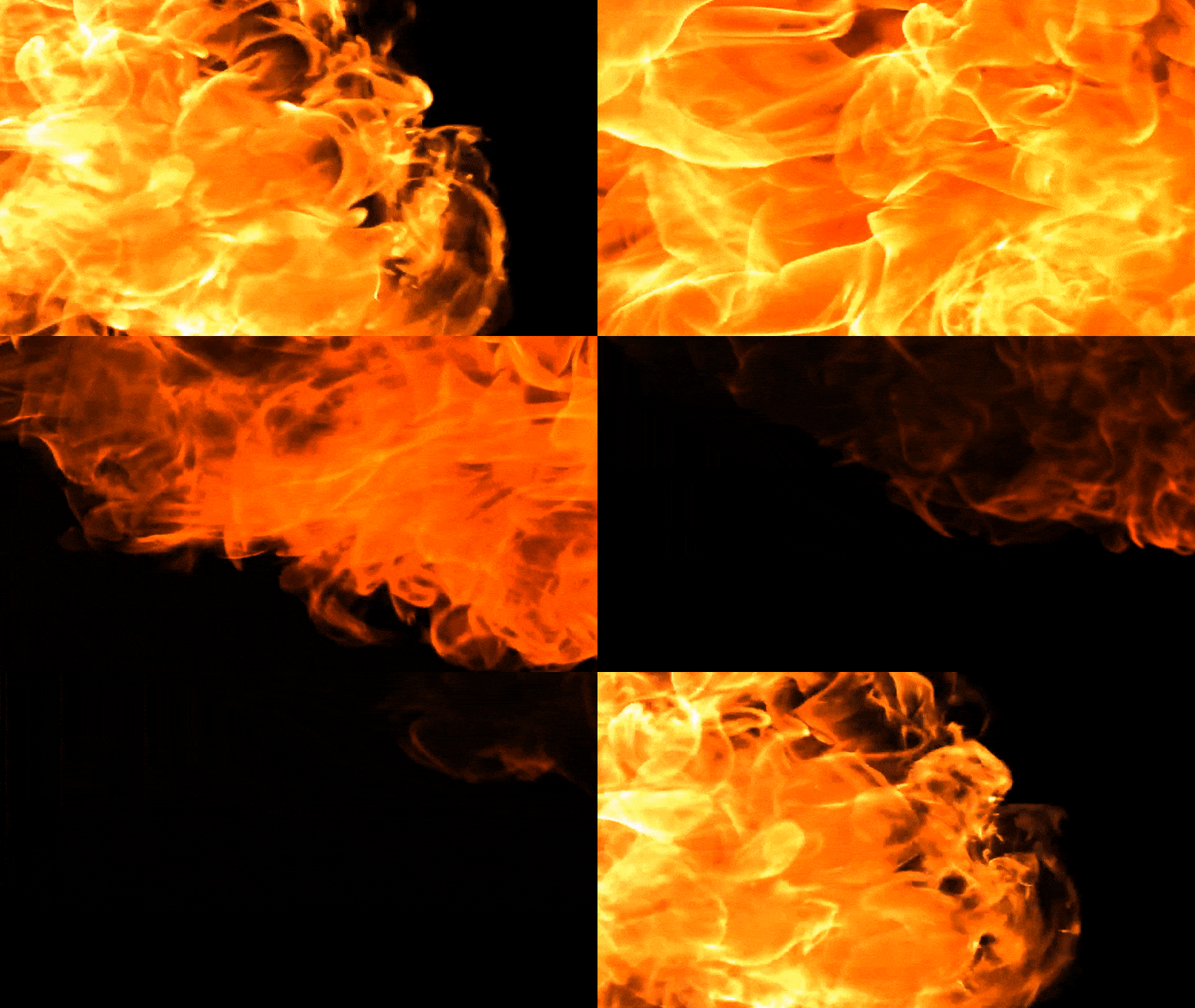
NASA’s ACME project explored flame behavior in microgravity, yielding key insights for improving combustion systems on Earth. The experiments generated important findings in cool and spherical flames.
Fire was not only important to human life in antiquity but still remains integral to our modern lives. It heats our homes and water, cooks our food, generates electricity, and propels our vehicles, among other things. Yet, given its great complexity, there is still much we don’t know about the complexities of flame behavior.
A team of researchers from academia, NASA’s Glenn Research Center, the agency’s Biological and Physical Sciences Division, and other organizations recently completed a series of investigations on the International Space Station to obtain a better understanding of combustion phenomena. The Advanced Combustion via Microgravity Experiments, or ACME, project’s in-orbit testing began in 2017 and comprised six successful investigations of non-premixed flames of gaseous fuel.

Non-premixed flames, like candle flames, are ones in which the fuel and oxidizer stay separate before reaction or ignition. Premixed flames occur in many of the above-mentioned everyday use scenarios, when the fuel and oxidizer are mixed prior to reaction.
Microgravity and the Study of Flames
“A microgravity environment enables researchers to explore flame behavior without the influence of gravity, so they can investigate the underlying physics behind flame structure and behavior,” said Dennis Stocker, ACME Project Scientist at NASA Glenn. “That knowledge can help designers and engineers here on Earth develop furnaces, power plants, boilers, and other combustion systems that are more efficient, less polluting, and safer.”
The six ACME experiments were:
- Burning Rate Emulator (BRE) – demonstrated materials can burn for minutes in the absence of air flow in crew vehicle atmospheres being considered for future missions.
- Coflow Laminar Diffusion Flame (CLD Flame) – yielded benchmark data at sooty and highly-diluted extremes to improve computational models.
- Cool Flames Investigation with Gases (CFI-G) – resulted in non-premixed cool flames of gaseous fuels without enhancements, such as heated reactants, pulsed plasmas, or ozone addition, that have been required in ground testing.
- Electric-Field Effects on Laminar Diffusion Flames (E-FIELD Flames) – demonstrated the potential use of electric fields to reduce emissions from non-premixed flames.
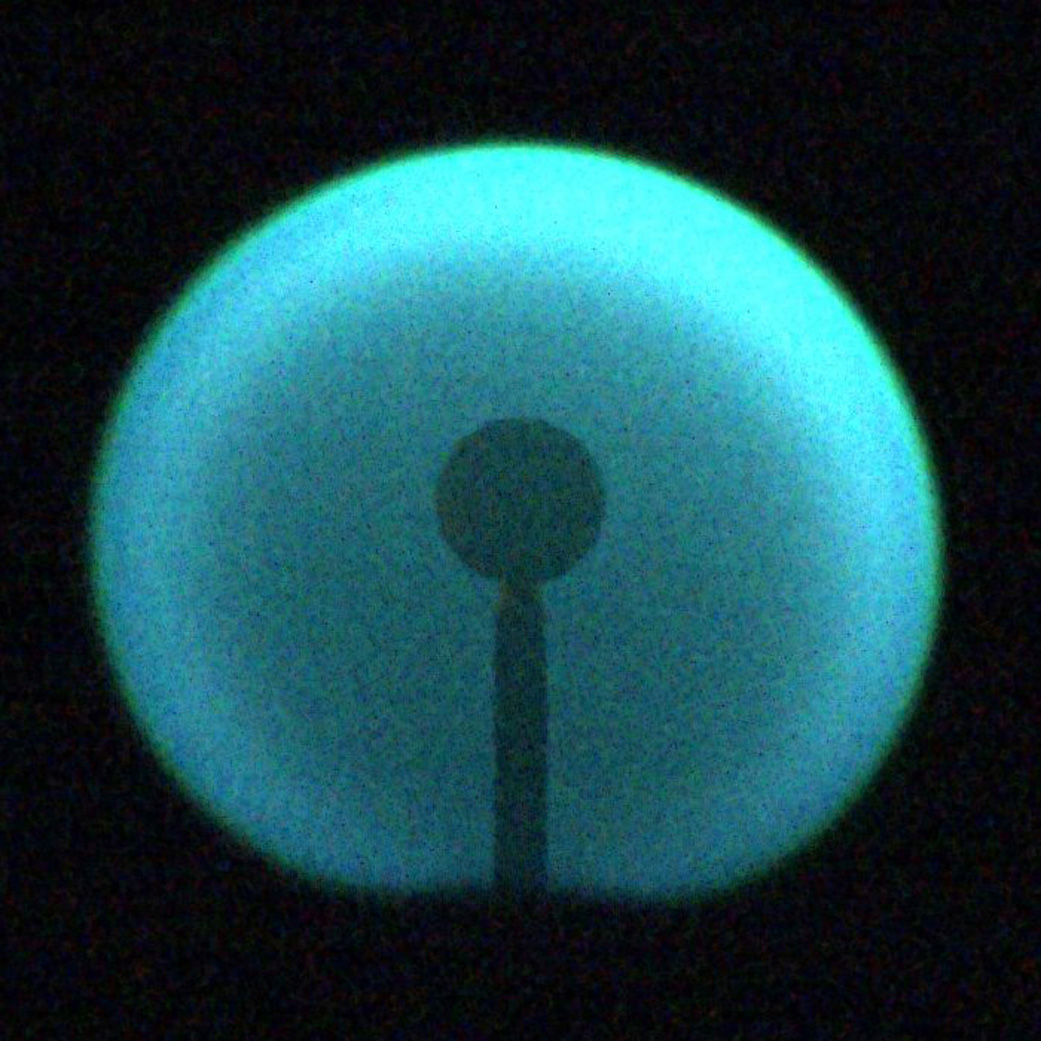
- Flame Design – demonstrated, for the first time, quasi-steady non-premixed spherical flames, and radiative heat loss leading to extinction for larger flames.
- Structure and Response of Spherical Diffusion Flames (s-Flame) – provided data on flame growth and extinction for the improvement of computational models.
The experiments were conducted with a single modular set of hardware in the space station’s Combustion Integrated Rack (CIR). The tests were remotely commanded from NASA’s Glenn ISS Payload Operations Center in Cleveland.
Significant Findings from ACME Investigations
“Over 1,500 flames were ignited, more than three times the number originally planned,” said Stocker. “Several ‘firsts’ were also achieved, perhaps most notably in the areas of cool and spherical flames.”
Stocker said about 50 personnel from NASA Glenn, academia, and ZIN Technologies, Inc. supported ACME during four and a half years of in-orbit operations. In addition, more than 30 crew members from six countries played an essential role in setting up the hardware for each investigation and replacing gas bottles, igniter tips, and other experiment-specific hardware as needed.
The ACME hardware has been removed from the CIR to make room for the Solid Fuel Ignition and Extinction, or SoFIE, hardware that launched in February 2022, which is the next step in NASA’s in-orbit combustion research. The ACME hardware is scheduled to return to Earth in the coming months with the intent to launch again to the space station with future experiments.
Never miss a breakthrough: Join the SciTechDaily newsletter.
Follow us on Google and Google News.
1 Comment
Interesting.
How about the flame within biological systems Captain Planet!
What has fascinated me is the tale of Prometheus stealing Fire from the Gods! Also, recent tale of Rudyard Kipling and Mowgli in the Jungle Book using Fire to fight off Shere-Kahn!!!
Seriously,
Fire is an anomaly. It is anti gravity in its very nature. Fire always flows upwards. In Microgravity what is the behavior of fire as far as this property of fire?
We have made explosives like Dynamite and place it in appropriate holes , and shout “Fire in the hole” and press the detonator. The force with which the explosion tends upwards is quite an interesting phenomenon. I wonder if such a force can be used to propel future rocket ships travelling to the ends of the universe , once we master and are able to control Fire in the micro gravity of Space.
Flame can take on many different hues and Colors. Like the blue fame along with Copper compounds , the orange and green and other colored flame etc. Always wondered about its connection with the colors of the light when split vide a prism and the colors of the rainbow which is fascinating.
Coming to the Cool Flames. Really “Cool”. Always wondered about Camphor we use during Prayers in the temple.
Really neat experiments. Physics, Chemistry and biology are all interconnected and originate from the mother Hen (Science). Engineering is applied Science.
The Pandemics best Learning was exactly this.Te neck is connected to the head and also the body!
Views are personal and not binding on anyone,