
Close Menu
    Facebook X (Twitter) Instagram
    SciTechDaily
    • Biology
    • Chemistry
    • Earth
    • Health
    • Physics
    • Science
    • Space
    • Technology
    Facebook X (Twitter) Pinterest YouTube RSS
    SciTechDaily
    Home»Space»Across Time and Space: Mysterious Star’s Epic Journey to Heart of Milky Way
    Space

    Across Time and Space: Mysterious Star’s Epic Journey to Heart of Milky Way

    By National Institutes of Natural SciencesDecember 6, 2023No Comments3 Mins Read
    Facebook Twitter Pinterest Telegram LinkedIn WhatsApp Email Reddit
    Share
    Facebook Twitter LinkedIn Pinterest Telegram Email Reddit
    Star Journey Galaxy Black Hole
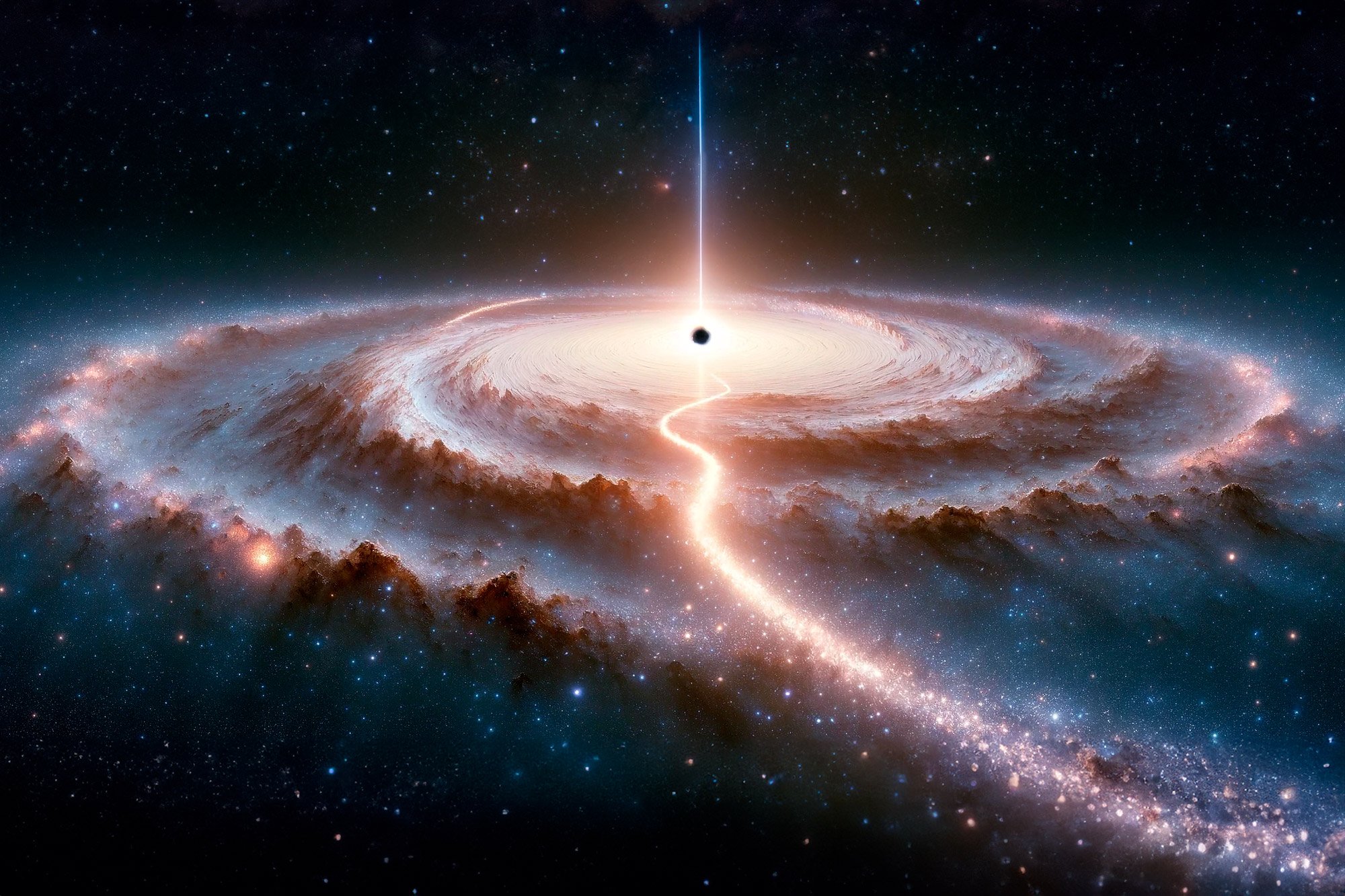
    Researchers have discovered an extragalactic star, S0-6, near the Milky Way’s central supermassive black hole. The star’s unique composition and 10 billion-year journey from a small, now-absorbed galaxy challenge our understanding of the galactic center’s star population and formation. Credit: SciTechDaily.com

    A new study reveals that the star S0-6, located near the Milky Way’s central black hole, originated from an external galaxy, reshaping our understanding of star migration and formation in our galaxy.

    A star near the supermassive black hole at the center of the Milky Way Galaxy originated outside of the Galaxy according to a new study. This is the first time a star of extragalactic origin has been found in the vicinity of the supermassive black hole.

    Origin of Stars near Sagittarius A*

    Many stars are observed near the supermassive black hole known as Sagittarius A* at the center of our Galaxy. But the black hole’s intense gravity makes the surrounding environment too harsh for stars to form near the black hole. All the observed stars must have formed somewhere else and migrated towards the black hole. This raises the question, where did the stars form.
    Milky Way Galaxy Central Region
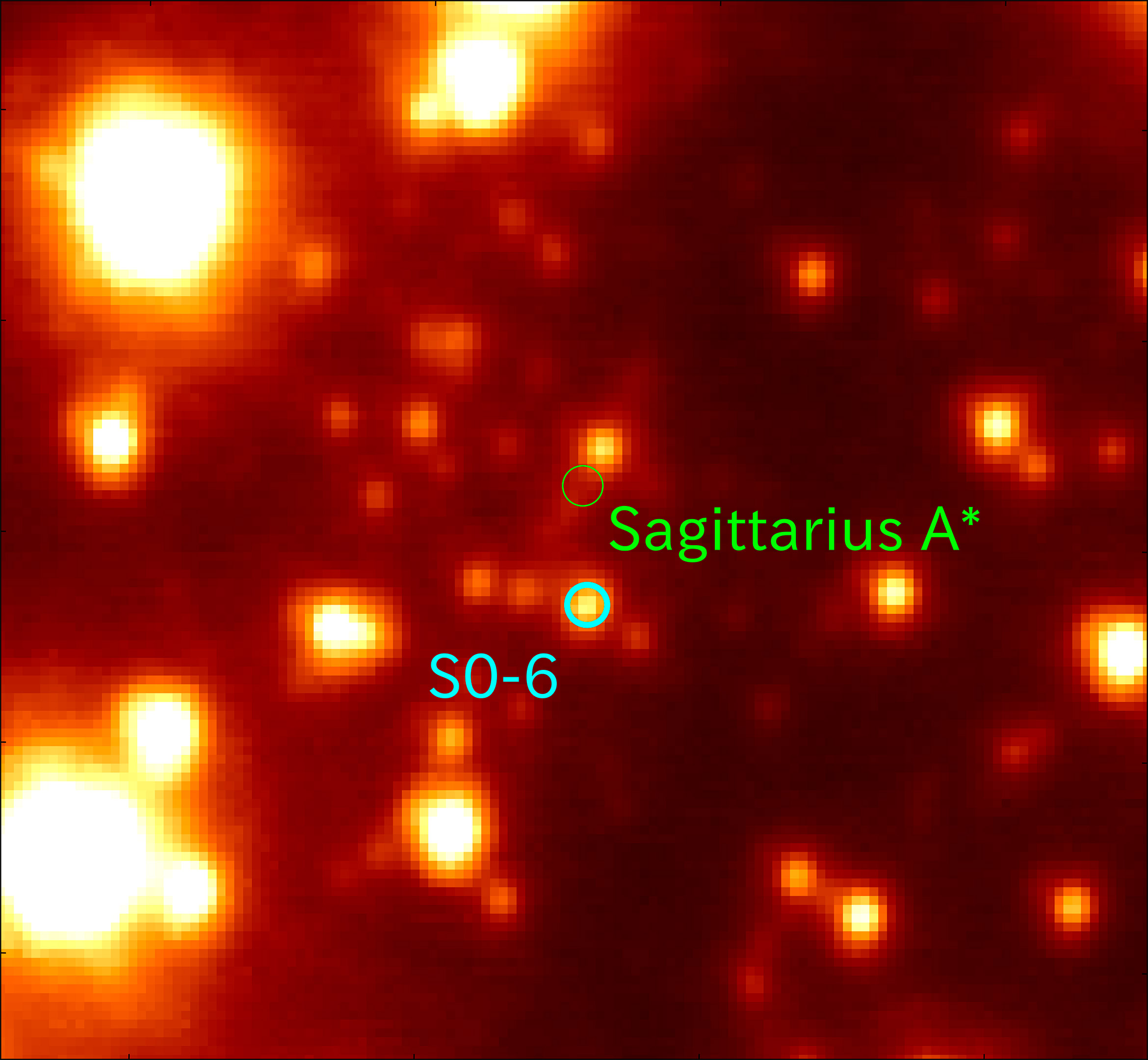
    The central region of the Milky Way galaxy as captured by the Subaru Telescope. The image shows many stars in a field of view about 0.4 light-years across. The star S0-6 (blue circle), the subject of this study, is located about 0.04 light-years from the supermassive black hole Sagittarius A* (Sgr A*, green circle). Credit: Miyagi University of Education/NAOJ

    Research Findings on Star S0-6

    Research by an international team led by Shogo Nishiyama at Miyagi University of Education indicates the some of the stars may have come from farther away than previously thought, from completely outside of the Milky Way. The team used the Subaru Telescope over the course of eight years to observe the star S0-6 located only 0.04 light-years away from Sagittarius A*. They determined that S0-6 is about 10 billion years old and has a chemical composition similar to stars found in small galaxies outside the Milky Way, such as the Small Magellanic Cloud and the Sagittarius dwarf galaxy.

    S0-6’s Galactic Journey

    The most likely theory to explain the composition of S0-6 is that it was born in a now-extinct small galaxy orbiting the Milky Way that was absorbed. This is the first observational evidence suggesting that some of the stars in the vicinity of Sagittaius A* formed outside of the Galaxy. Over its 10 billion year life, S0-6 must have travelled more than 50,000 light-years from outside of the Milky Way to reach the vicinity of Sagittarius A*. Almost certainly S0-6 traveled much more than 50,000 light-years, slowly spiraling down to the center rather than making a straight shot.

    Unanswered Questions and Future Research

    There are still many questions according to Nishiyama, “Did S0-6 really originate outside the Milky Way galaxy? Does it have any companions, or did it travel alone? With further investigation, we hope to unravel the mysteries of stars near the supermassive black hole.”

    Reference: “Origin of an orbiting star around the galactic supermassive black hole” by Shogo Nishiyama, Tomohiro Kara, Brian Thorsbro, Hiromi Saida, Yohsuke Takamori, Masaaki Takahashi, Takayuki Ohgami, Kohei Ichikawa and Rainer Schödel, 1 December 2023, Proceedings of the Japan Academy, Series B.
    DOI: 10.2183/pjab.100.007

    Never miss a breakthrough: Join the SciTechDaily newsletter.
    Follow us on Google and Google News.

    Astronomy Astrophysics Black Hole National Institutes of Natural Sciences Popular
    Share. Facebook Twitter Pinterest LinkedIn Email Reddit

    Related Articles

    Cosmic Alchemy – New Findings Demonstrate That Supermassive Black Holes Alter Galactic Chemistry

    Mysterious Cosmic Tadpole: A Strange Gas Cloud Dances With a Colossal Black Hole

    Ripples in the Fabric of Space and Time Offer New Clues to the Shape of Black Holes

    “Echo Mapping” Light Bursts From Supermassive Black Holes in Faraway Galaxies to Measure Vast Cosmic Distances

    Second Alignment Plane of Solar System Discovered After Accounting for Galactic Gravity

    Einstein’s Theory of General Relativity Tested Using Black Hole Shadow

    Galaxies Trapped in the Web of a Supermassive Black Hole – Cosmic “Spider’s Web” of Gas Extends Over 300 Times the Size of the Milky Way

    Event Horizon Telescope Reveals Turbulent Black Hole Evolution: Wobbling Shadow of the M87 Black Hole

    Cosmic X-Rays Reveal a Distinctive Signature of Black Hole Event Horizons

    Leave A Reply Cancel Reply

    • Facebook
    • Twitter
    • Pinterest
    • YouTube

    Don't Miss a Discovery

    Subscribe for the Latest in Science & Tech!

    Trending News

    Mezcal “Worm” in a Bottle Mystery: DNA Testing Reveals a Surprise

    New Research Reveals That Your Morning Coffee Activates an Ancient Longevity Switch

    This Is What Makes You Irresistible to Mosquitoes

    Shockingly Powerful Giant Octopuses Ruled the Seas 100 Million Years Ago

    Scientists Stunned by New Organic Molecules Found on Mars

    Rewriting Dinosaur Evolution: Scientists Unearth Remarkable 150-Million-Year-Old Stegosaur Skull

    Omega-3 Supplements Linked to Cognitive Decline in Surprising New Study

    First-of-Its-Kind Discovery: Homer’s Iliad Found Embedded in a 1,600-Year-Old Egyptian Mummy

    Follow SciTechDaily
    • Facebook
    • Twitter
    • YouTube
    • Pinterest
    • Newsletter
    • RSS
    SciTech News
    • Biology News
    • Chemistry News
    • Earth News
    • Health News
    • Physics News
    • Science News
    • Space News
    • Technology News
    Recent Posts
    • This Gene Tweak Turns Strawberries Into Healthier, Tastier Superfruit
    • This New Chip Could Make GPUs Far More Efficient
    • This Tiny World in the Outer Solar System Should Be Airless, but It Has an Atmosphere
    • NASA’s Webb Space Telescope Reveals a Dark Airless Super-Earth That Looks Like Mercury
    • These Simple Daily Habits Can Quickly Improve Blood Pressure and Heart Risk Factors
    Copyright © 1998 - 2026 SciTechDaily. All Rights Reserved.
    • Science News
    • About
    • Contact
    • Editorial Board
    • Privacy Policy
    • Terms of Use

    Type above and press Enter to search. Press Esc to cancel.