
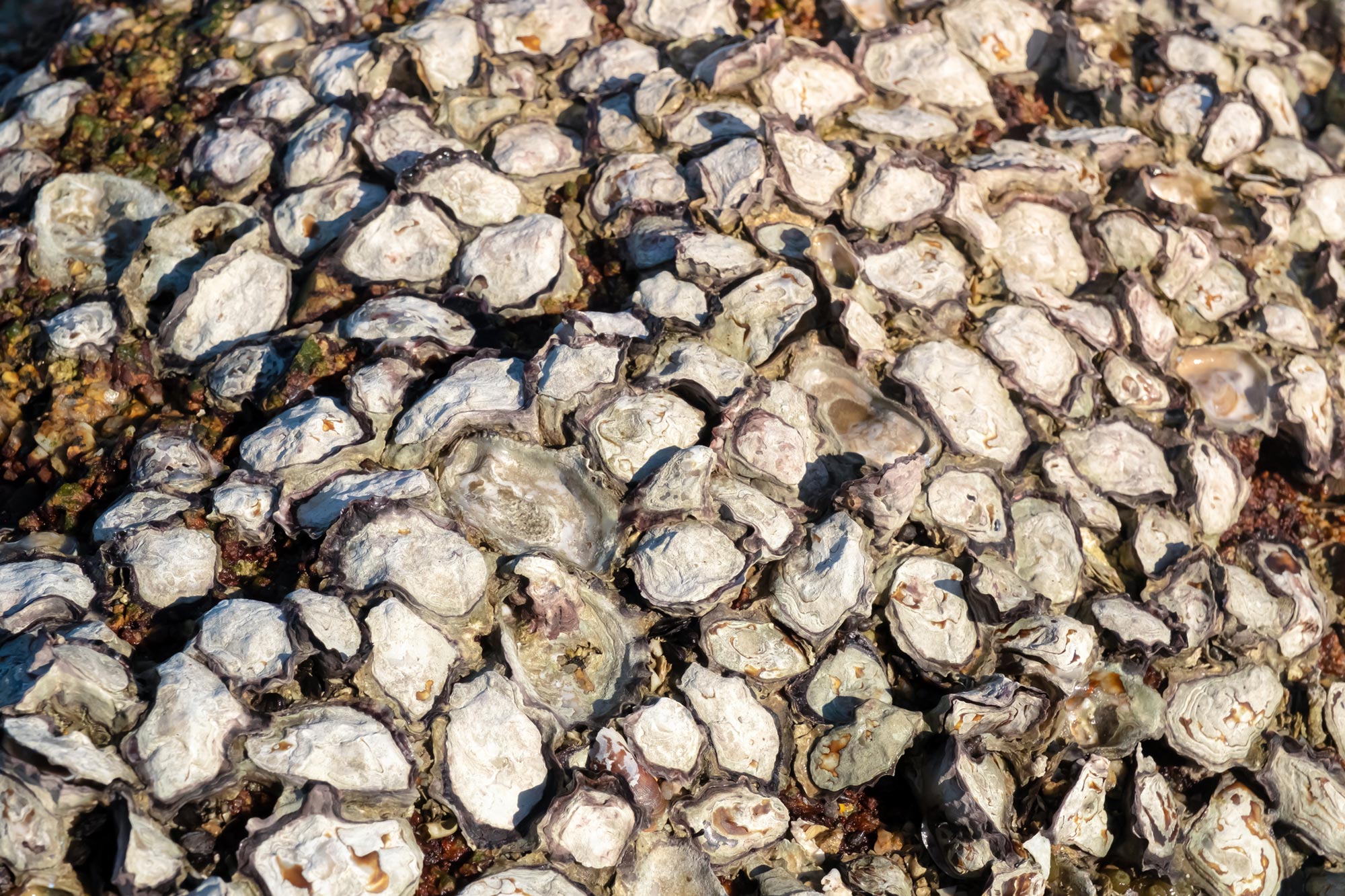
Scientists found that mimicking the geometry of natural oyster reefs can significantly improve the survival of young oysters in restoration efforts.
New research has identified how artificial habitats can be designed more effectively to restore oyster reefs, drawing on a detailed analysis of how natural reefs are structured.
A study published in the journal Nature reveals that the intricate shapes seen in natural oyster reefs are not accidental. Instead, their structure and spatial arrangement play a direct role in helping young oysters settle, survive, and avoid predators.
Natural reef structure shapes survival
Oysters function as “ecosystem engineers,” constructing reefs from both living organisms and the accumulated shells of previous generations, explains lead author Dr. Juan Esquivel-Muelbert of Macquarie University.
“But reefs aren’t just piles of shells or skeletons,” says Dr. Esquivel-Muelbert. “Reefs are finely tuned 3D systems. Their shape controls who lives, who dies, and how fast the reef grows.”
Mapping and replicating reef geometry
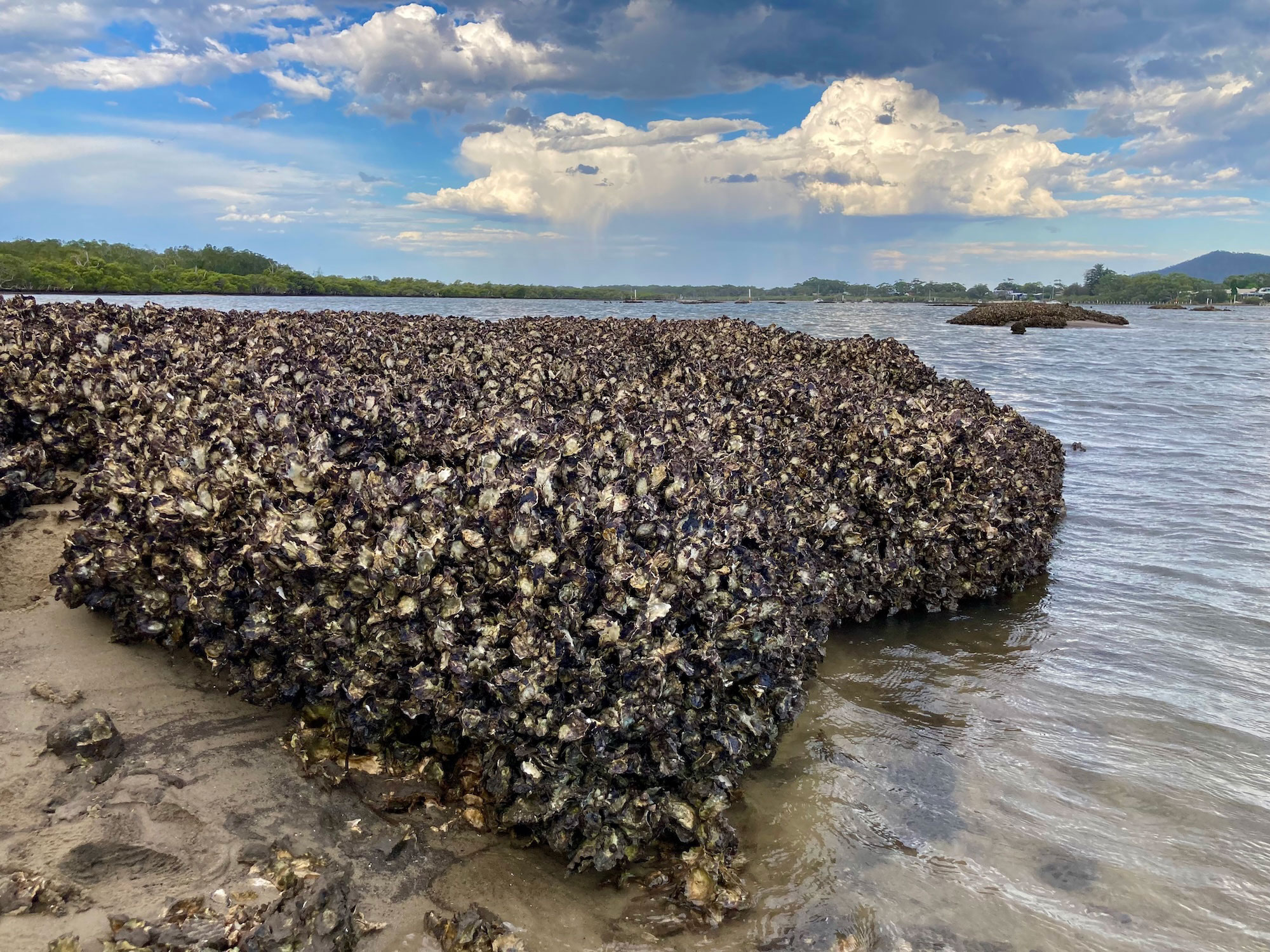
To understand how these structures function, Dr. Esquivel-Muelbert and collaborators from Macquarie University, the University of New South Wales, the University of Sydney, and the University of Hawai’i closely examined surviving Sydney rock oyster (Saccostrea glomerata) reefs. Using high-resolution 3D photogrammetry, they captured detailed measurements of the reefs’ complex geometry.
Based on these observations, the team created 16 types of concrete “tiles” designed to mimic different levels of structural complexity found in natural reefs. Each tile varied in the number and height of ridges to replicate specific geometric features.
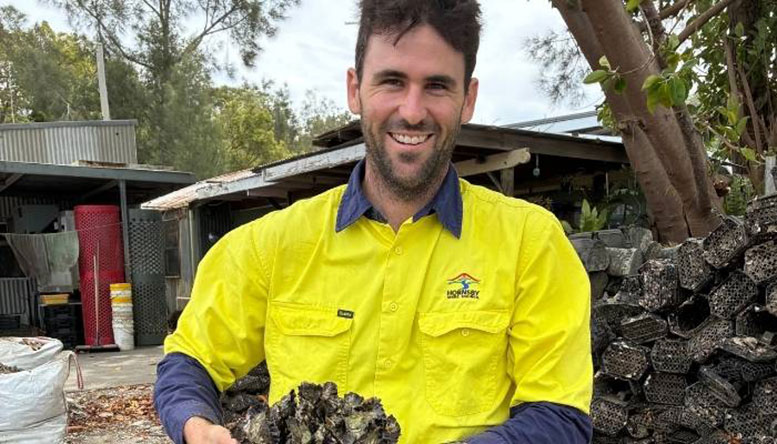
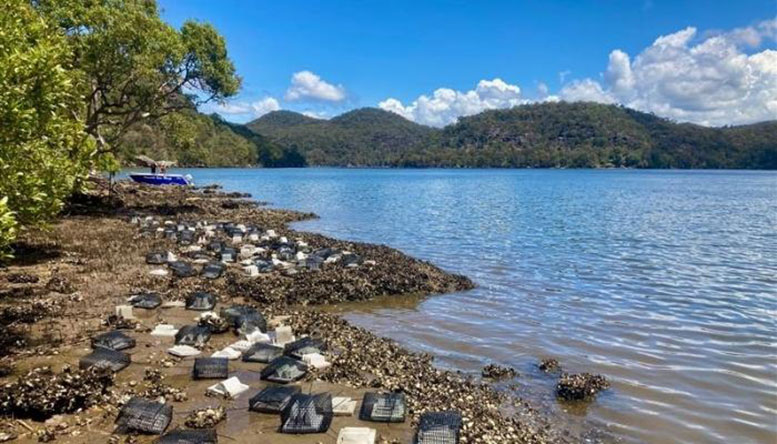
The researchers then placed multiple tiles in three estuaries in the greater Sydney region: Brisbane Water, the Hawkesbury River, and Port Hacking. Some of the tiles were protected with cages to limit predator access, while others were left exposed. All were positioned near existing oyster reefs to ensure a natural supply of oyster larvae.
Over time, the team tracked how well juvenile oysters settled, grew, and survived on each type of structure.
Specific designs maximize oyster survival
The results showed that the most effective designs were not the tallest or most complex structures. Instead, survival was highest in habitats that combined specific geometric features similar to those seen in natural reefs.
“Our experiment showed the optimal configuration for both establishment and long-term survival was one that provided multiple small spaces for baby oysters to grow in with minimal exposure to predators or harmful environmental stress,” says Dr. Esquivel-Muelbert.
“While total surface area is important, juvenile oysters are very small and highly susceptible to predators like fish and crabs and to overheating and drying out. That’s ultimately what you need to form a reef. There’s no point in having lots of oyster larvae turning up if they don’t survive.”
Implications for global reef restoration
The findings provide guidance for restoration projects that aim to rebuild oyster reefs and other marine habitats damaged or lost over time. According to the researchers, applying these design principles could improve the success of reef restoration efforts in regions around the world.
“An estimated 85 percent of the oyster reefs that were present along the coastline of Australia at the time of European settlement have been lost,” says senior author Professor Melanie Bishop, a coastal ecologist in Macquarie’s School of Natural Sciences.
“Not only were oysters harvested for food from the earliest days of colonization, but the reefs themselves were dredged and the shells crushed and burned to make lime for cement and mortar,” says Professor Bishop. “Many of Sydney’s early colonial buildings are held together with oyster shell.”
Oyster reefs play an important ecological role beyond supporting oyster populations. They create habitat for hundreds of species and help stabilize coastlines by reducing erosion.
“This work shows that there are universal architectural rules for reef persistence,” says Professor Joshua Madin of the Hawaiʻi Institute of Marine Biology (HIMB), co-senior author who collaborated on the design of the study. “Nature has already solved the design problem. Our job is to read that blueprint and scale it up to help reefs grow faster and survive longer.”
Reference: “The natural architecture of oyster reefs maximizes recruit survival” by Juan R. Esquivel-Muelbert, Luisa Fontoura, Kyle Zawada, Katherine Erickson, William Figueira, Joshua S. Madin and Melanie J. Bishop, 18 February 2026, Nature.
DOI: 10.1038/s41586-026-10103-8
This work was funded by a Hermon Slade Foundation grant (to M.J.B and J.R.E.M).
Never miss a breakthrough: Join the SciTechDaily newsletter.
Follow us on Google and Google News.
1 Comment
It seems sad that important scientific research like this are subjected to headwinds instead of the critical support they require.