

Researchers caution that carbon-capture tree plantations may degrade ecosystems and reduce biodiversity. Conservation of intact ecosystems is a better strategy.
The escalating climate crisis has spurred a surge in commercial tree-planting endeavors to counterbalance excessive carbon emissions. Yet, authors of a peer-reviewed opinion paper recently published in the journal Trends in Ecology and Evolution argue that these carbon-neutralizing plantations could pose risks to biodiversity and various ecosystem processes. The authors recommend focusing on the preservation and rejuvenation of undisturbed ecosystems instead.
“Despite the broad range of ecosystem functions and services provided by tropical ecosystems, society has reduced the value of these ecosystems to just one metric—carbon,” write the authors, led by Jesús Aguirre-Gutiérrez of the Environmental Change Institute at the University of Oxford. “Current and new policy should not promote ecosystem degradation via tree plantations with a narrow view on carbon capture.”
Tropical ecosystems, which include forests, grasslands, and savannahs, are attractive sites for tree plantations because their climate and physical features promote rapid tree growth (and rapid tree growth means rapid carbon capture). Although some tree plantations involve reforestation of degraded land, in many cases they involve afforestation—planting forests in undegraded and previously unforested regions such as grasslands.
The Hidden Cost of Monoculture Plantations
It’s often assumed that tree planting for carbon capture also benefits biodiversity and enhances socioeconomic benefits, but the authors argue that this is usually not the case. Tropical ecosystems are highly biodiverse, and they provide multiple ecosystem services, such as maintaining water quality, soil health, and pollination. In comparison, carbon-capture plantations are usually monocultures and are dominated globally by just five tree species—teak, mahogany, cedar, silk oak, and black wattle—that are grown for timber, pulp, or agroforestry.
Although these plantations might be economically valuable, they usually support a lower level of biodiversity. For example, in the Brazilian Cerrado savannah, a 40% increase in woody cover reduced the diversity of plants and ants by approximately 30%. These plantations can also directly degrade ecosystems by reducing stream flow, depleting groundwater, and acidifying soils.
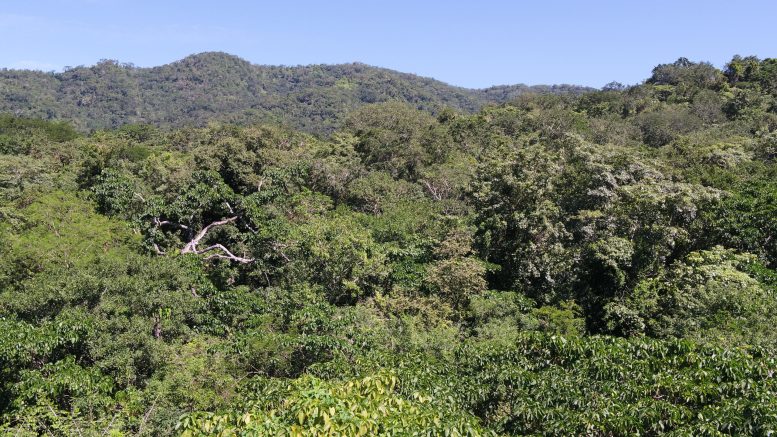
The authors argue that even ambitious commitments to carbon-capture plantations will be limited in their ability to capture carbon. “The current trend of carbon-focused tree planting is taking us along the path of large-scale biotic and functional homogenization for little carbon gain,” the authors write. “An area equivalent to the total summed area of USA, UK, China, and Russia would have to be forested to sequester one year of emissions.”
The Overlooked Value of Grasslands and Savannahs
And tropical grasslands and savannahs are already carbon sinks. When intact, tropical grasslands and savannahs store large quantities of carbon below ground. In contrast to carbon-capture tree plantations, which predominantly store carbon above ground, these below-ground carbon sinks—which would be lost if afforested—are less susceptible to disturbances such as drought and fire.
The authors say that there are considerable financial incentives for private companies to offset their carbon emissions by investing in carbon capture and that the boom in carbon-capture plantations is being driven by money, not ecology. Compared to parameters such as biodiversity and ecosystem services, carbon is easy to measure and monetize. But overemphasizing the benefits of tree planting for carbon capture “can disincentive the protection of intact ecosystems and can lead to negative trade-offs between carbon, biodiversity, and ecosystem function,” the authors write.
Instead of focusing on commercial tree planting, the authors say we should prioritize conserving intact ecosystems. “An overarching view on maintaining original ecosystem functioning and maximizing as many ecosystem services as possible should be prioritized above the ongoing economic focus on carbon capture projects,” they write.
Reference: “Valuing the functionality of tropical ecosystems beyond carbon” by Jesús Aguirre-Gutiérrez, Nicola Stevens and Erika Berenguer, 3 October 2023, Trends in Ecology & Evolution.
DOI: 10.1016/j.tree.2023.08.012
This research was supported by the Natural Environment Research Council, the University of Oxford, and the Trapnell Fund.
Never miss a breakthrough: Join the SciTechDaily newsletter.
Follow us on Google and Google News.
2 Comments
The article title implies that planting trees increases CO2 in the atmosphere. This is incorrect, at least over a number of years. The article in fact argues for planting appropriate species and preserving existing natural forests.
“The road to Hell is paved with good intentions” — and its many variants, is applicable here.