

A tiny fossil vertebra tucked away for decades has rewritten the history of a charismatic lizard. Long thought to be a modern invasive species, tegus were actually ancient residents of North America during a prehistoric heatwave millions of years ago.
A team of scientists cracked the mystery using cutting-edge AI and fossil imaging, revealing a new species that swam to ancient Georgia — and vanished just as suddenly. This discovery could signal a future where AI uncovers secrets long buried in museum drawers.
A Fossil Mystery That Took 20 Years to Solve
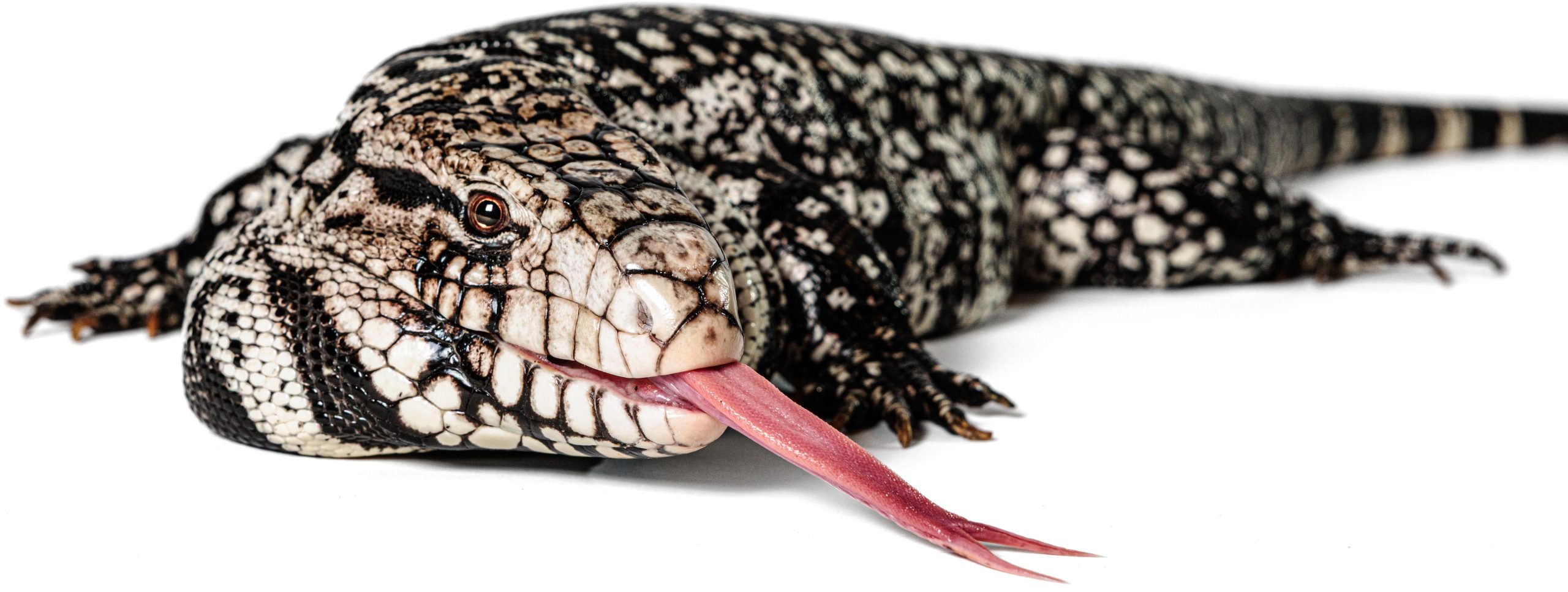
The tegu, a striking lizard originally from South America, became popular in the 1990s pet trade and later infamous for its impact on Florida’s wildlife. After spreading across ecosystems and disrupting native species, it earned a spot on the invasive species list. But a surprising new discovery suggests tegus are not new arrivals after all. According to researchers at the Florida Museum of Natural History, these reptiles were actually living in the region millions of years ago.
The revelation comes from a tiny but powerful clue: a fossilized vertebra just half an inch wide. The bone was unearthed in the early 2000s but remained a mystery for two decades. Jason Bourque, now a fossil preparator in the museum’s vertebrate paleontology division, first encountered the fossil fresh out of graduate school.
“We have all these mystery boxes of fossil bones, so I was digging through, and I kept coming across this one vertebra,” Bourque said. “I could not figure out what it was. I put it away for a while. Then I’d come back and say: Is it a lizard? Is it a snake? In the back of my mind for years and years, it just sat there.”
A Clay Mine, a Deadline, and a Forgotten Fossil
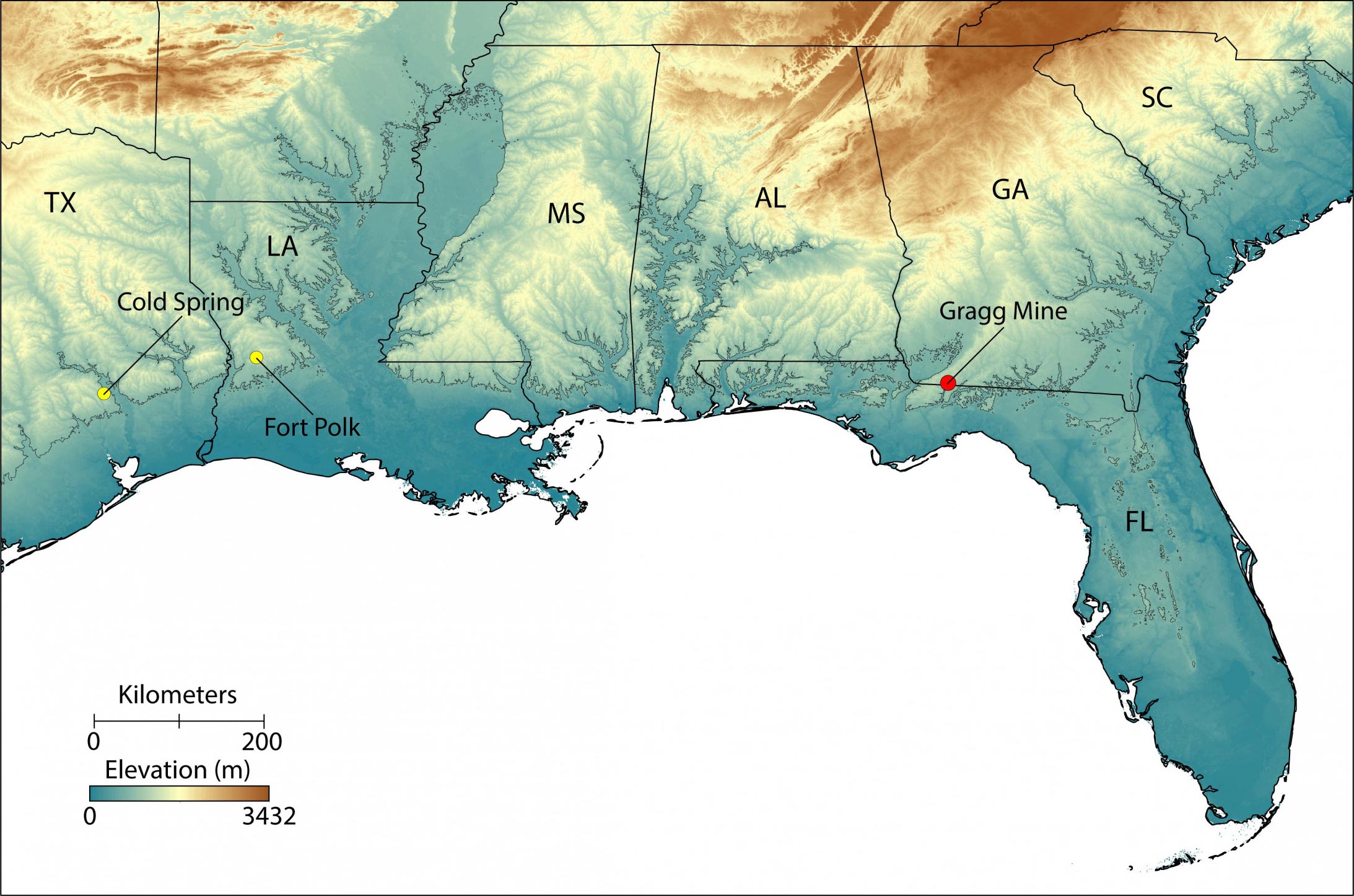
The vertebra had been found in a fuller’s earth clay mine just north of the Florida border, after a tipoff from the local work crew prompted a visit from the museum’s paleontologists. There was just one catch: The mine was slated to close, and its quarry, along with any exposed fossils, would soon be filled in. Working against a deadline, the scientists excavated as many fossils as they could and brought them back to the museum, where the vertebra sat in storage, its identity unresolved.
Years later, Bourque stumbled across an image of tegu vertebrae while looking through studies for a new research paper. “I saw the tegu, and I just knew right away that’s what this fossil was,” Bourque said.
Tegus: Popular Pets Turned Ecological Threats
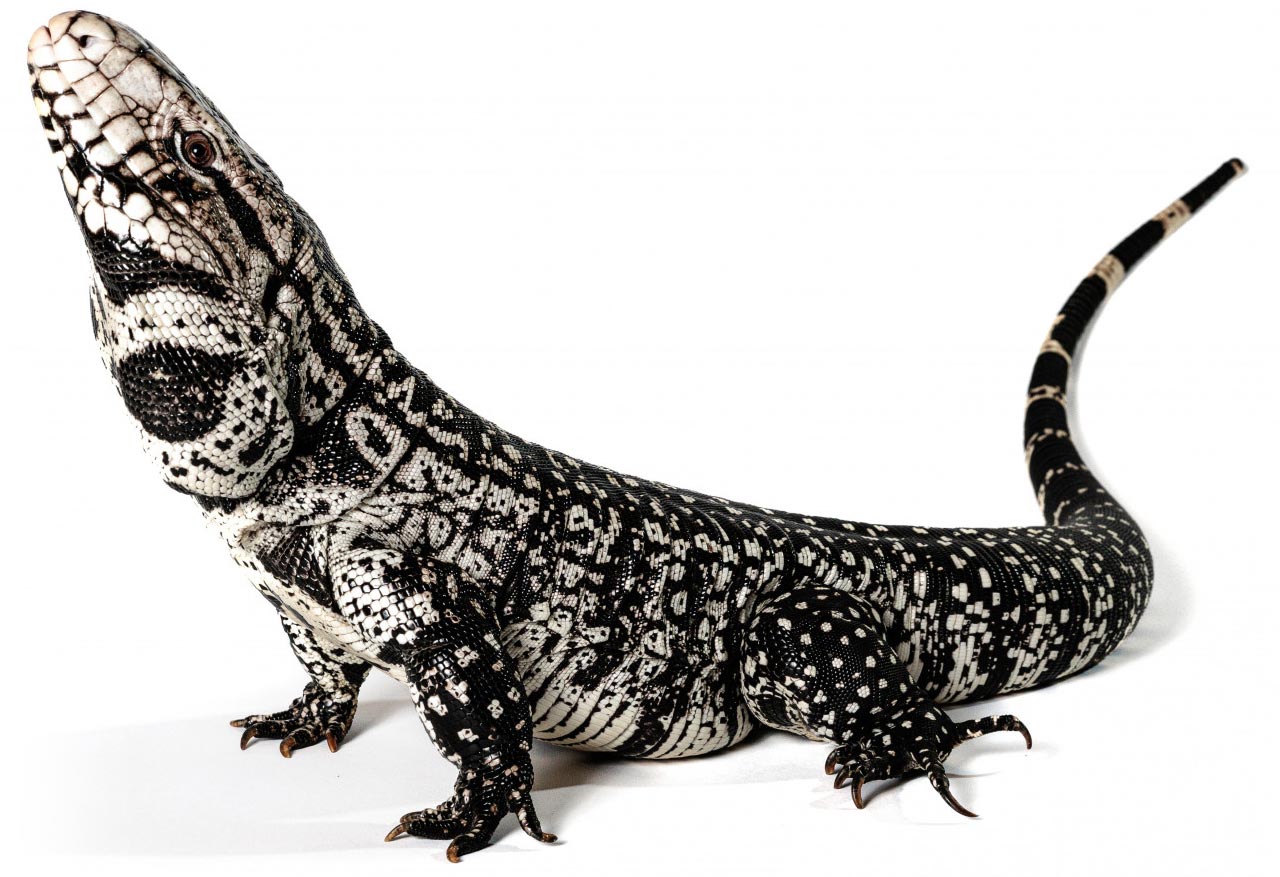
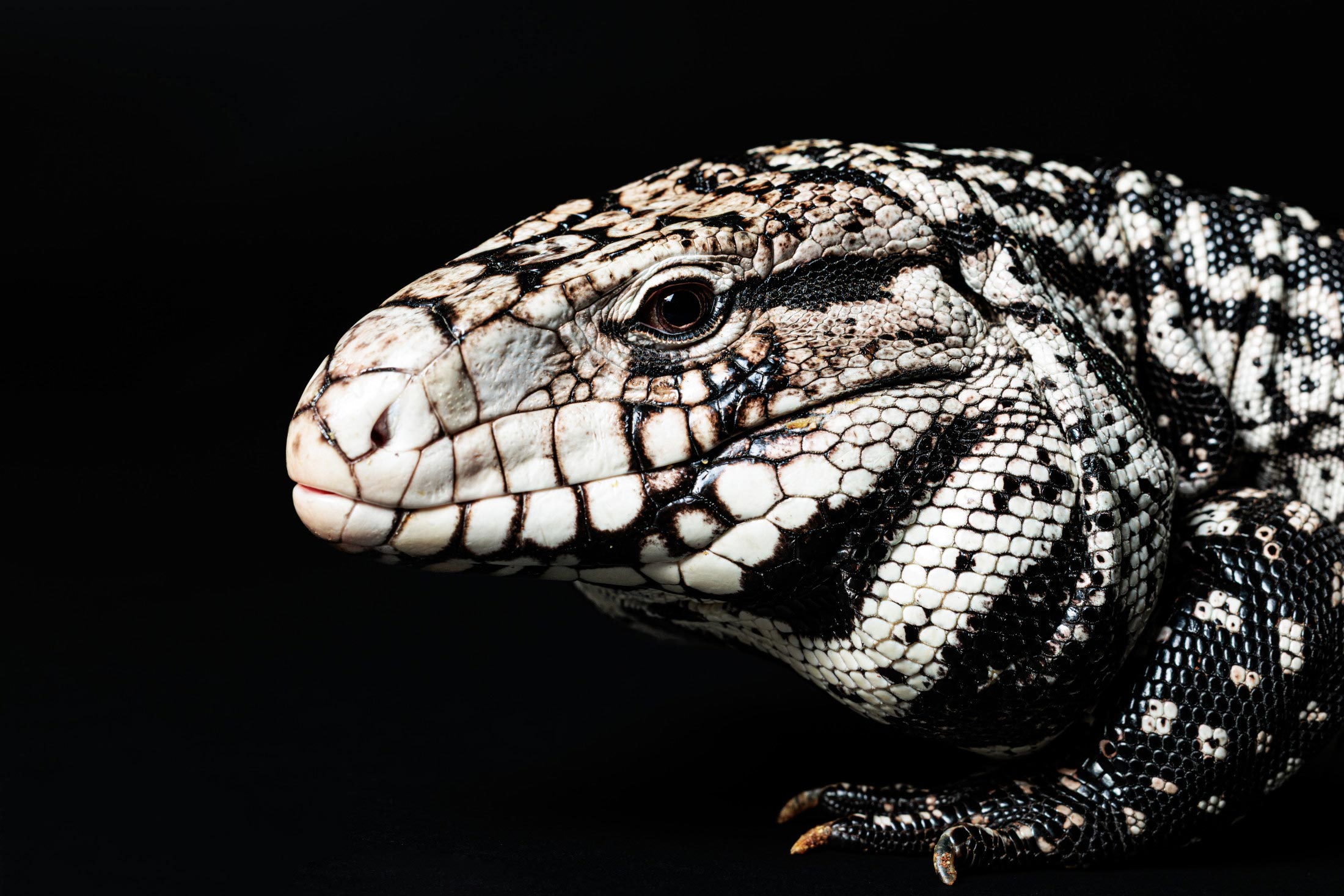
Today, tegus are of particular interest to Florida’s wildlife biologists and conservationists. Their bold patterns and docile attitudes make them attractive pets, but that often changes once they reach nearly 5 feet in length and weigh 10 pounds. Exotic pets have a knack for slipping free, or being released, into the wild, where they can take a heavy toll on native ecosystems. This is the case with modern tegus in Florida.
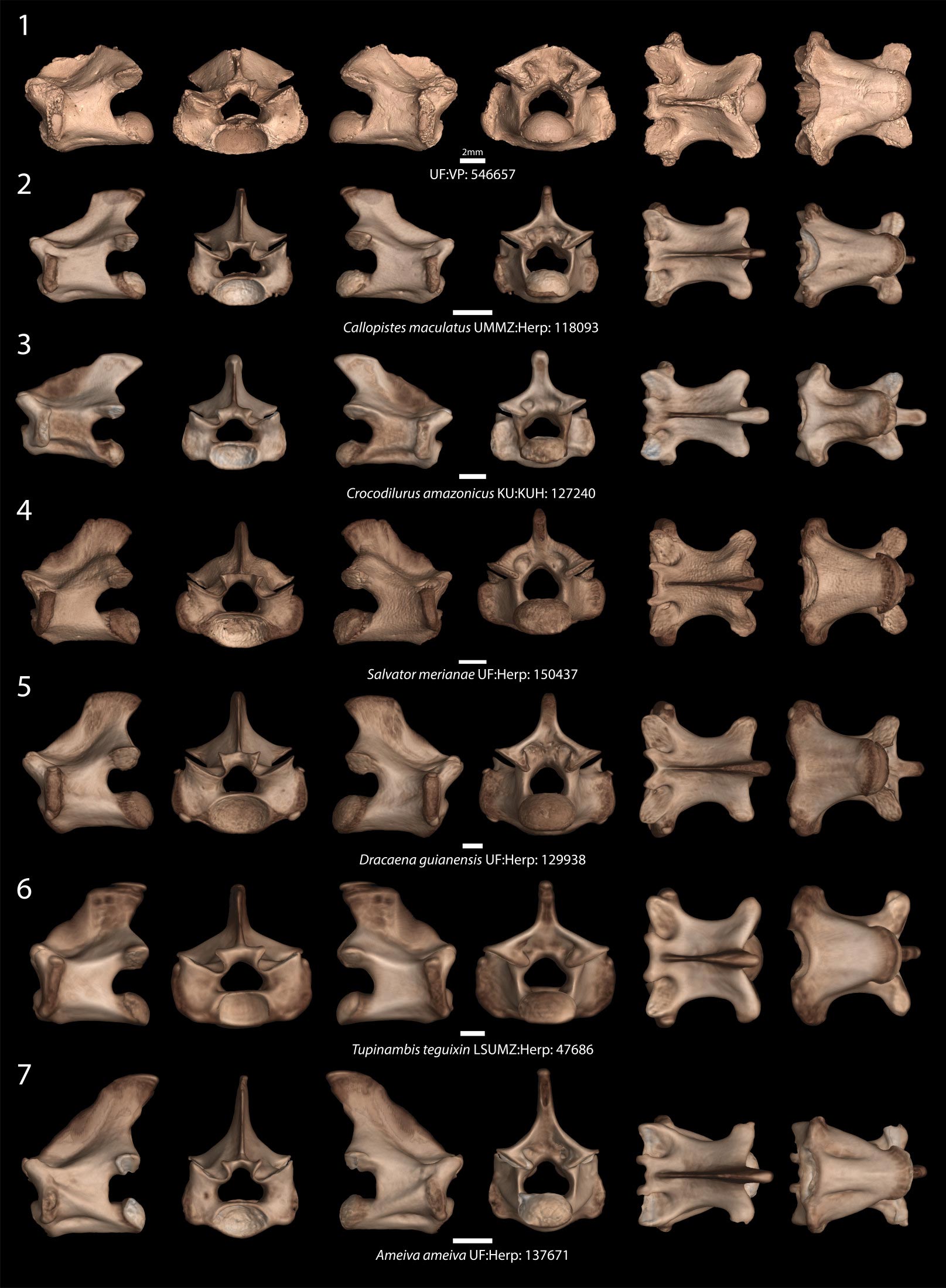
But until this point, there was no record of prehistoric tegus in North America. Bourque needed evidence to back up his revelation. Paleontologists typically work with multiple bones to identify an animal, but Bourque just had a single vertebra. He recruited his colleague, Edward Stanley, director of the museum’s digital imaging laboratory, who saw an opportunity to try out a new, machine learning technique — one that doesn’t rely on a paleontologist’s decades of specialized knowledge.
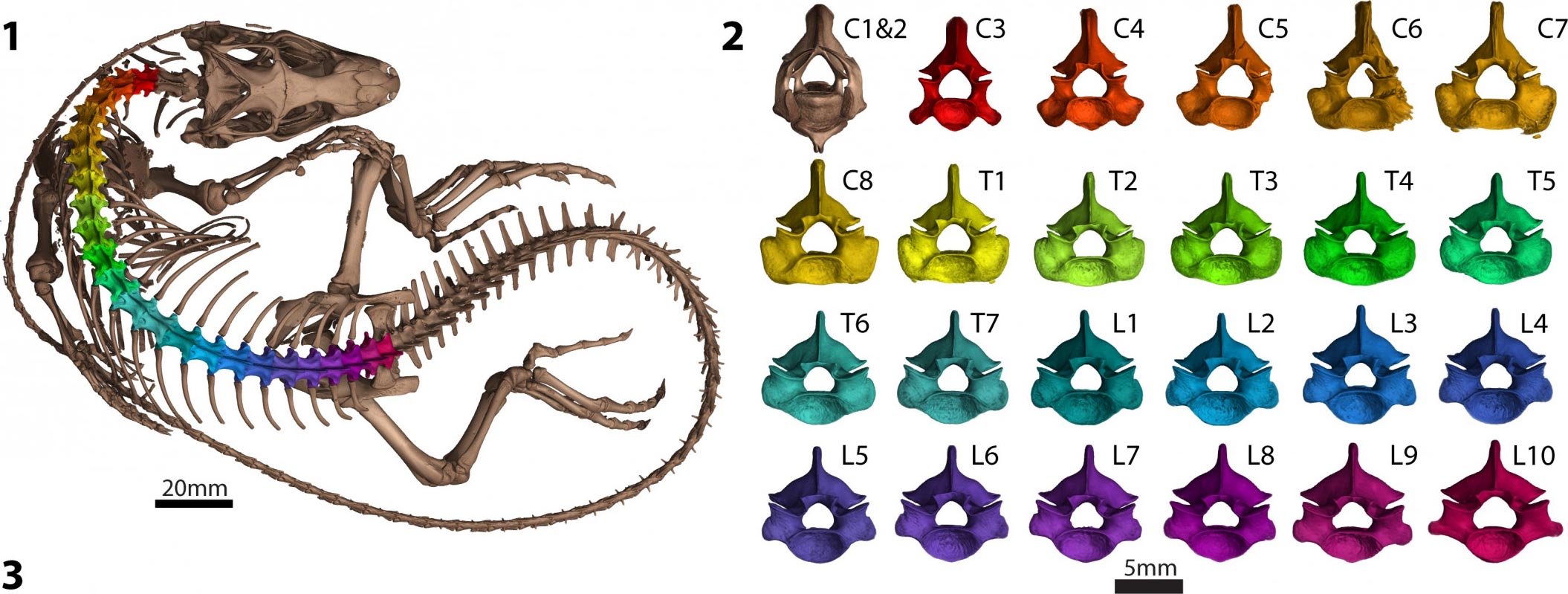
With a CT scan of the unidentified fossil, Stanley carefully measured and landmarked each bump, hole and furrow of the fossil. Next, he needed vertebrae from other tegus and related lizards for comparison. Fortunately, the team had access to an abundance of specimens thanks to the museum’s openVertebrate (oVert) project, a free, online collection of thousands of 3D images of vertebrates. Instead of measuring these images by hand, Stanley used a technique developed by Arthur Porto, the museum’s curator of artificial intelligence for natural history and biodiversity, to automatically recognize and fit the corresponding landmarks onto more than 100 vertebrae images from the database. By comparing the data of all their shapes, he determined the fossil matched the other tegus and pinpointed its original position to the middle of the lizard’s spinal column.
A Fossil from a Time of Ancient Warmth
While the fossil was unmistakably a tegu vertebra, it wasn’t an exact match with any of the specimens in the database. This meant the team had uncovered a new species, which they named Wautaugategu formidus. Wautauga is the name of a forest near the mine where the fossil was discovered. Although the word’s origin is unclear, it is thought to mean “land of the beyond,” which Bourque and Stanley found fitting for the long-extinct species, that, despite having ancestral ties to South America, ended up in present-day Georgia.
“Formidus,” a Latin word meaning “warm,” alludes to the reason these lizards likely wound up in the southeastern United States in the first place. The fossil is from the Middle Miocene Climatic Optimum, a particularly warm period in Earth’s geologic history. At the time, sea levels were significantly higher than today, and with most of Florida underwater, the historic coastline would have been near the site of the fossil bed. Tegus are terrestrial lizards, but they are strong swimmers. The warm climate may have tempted them to travel from South America into present-day Georgia, but the region did not remain hospitable for long.
Why the Tegus Didn’t Last
“We don’t have any record of these lizards before that event, and we don’t have any records of them after that event. It seems they were here just for a blip, during that really warm period,” Bourque said.
The tegus would likely have struggled and ultimately disappeared as global temperatures cooled. Like other egg-laying animals, their reproduction is highly dependent on temperature, and the cold may have limited their ability to produce or hatch eggs.
What the Future Holds for Fossil Hunting
Finding more tegu fossils may help demystify the prehistoric lizard’s brief stint in North America. “I’m ready to go up to the Panhandle and try to find more fossil sites along the ancient coastal ridge near the Florida-Georgia border,” Bourque said.
Stanley, meanwhile, hopes the next find won’t languish in storage. The combination of 3D modeling and artificial intelligence to identify fossils without relying on decades of specialized knowledge could dramatically speed up the process. With open access to data worldwide, it could even lead to a global database for fossil identification.
“There are boxes full, shelves full, of fossils that are unsorted because it requires a huge amount of expertise to identify these things, and nobody has time to look through them comprehensively,” Stanley said. “This is a first step towards some of that automation, and it’s very exciting see where it goes from here.”
Reference: “A tegu-like lizard (Teiidae, Tupinambinae) from the Middle Miocene Climatic Optimum of the southeastern United States” by Jason R. Bourque and Edward L. Stanley, 17 April 2025, Journal of Paleontology.
DOI: 10.1017/jpa.2024.89
Funding for the study was provided in part by the Florida Museum of Natural History.
Never miss a breakthrough: Join the SciTechDaily newsletter.
Follow us on Google and Google News.