
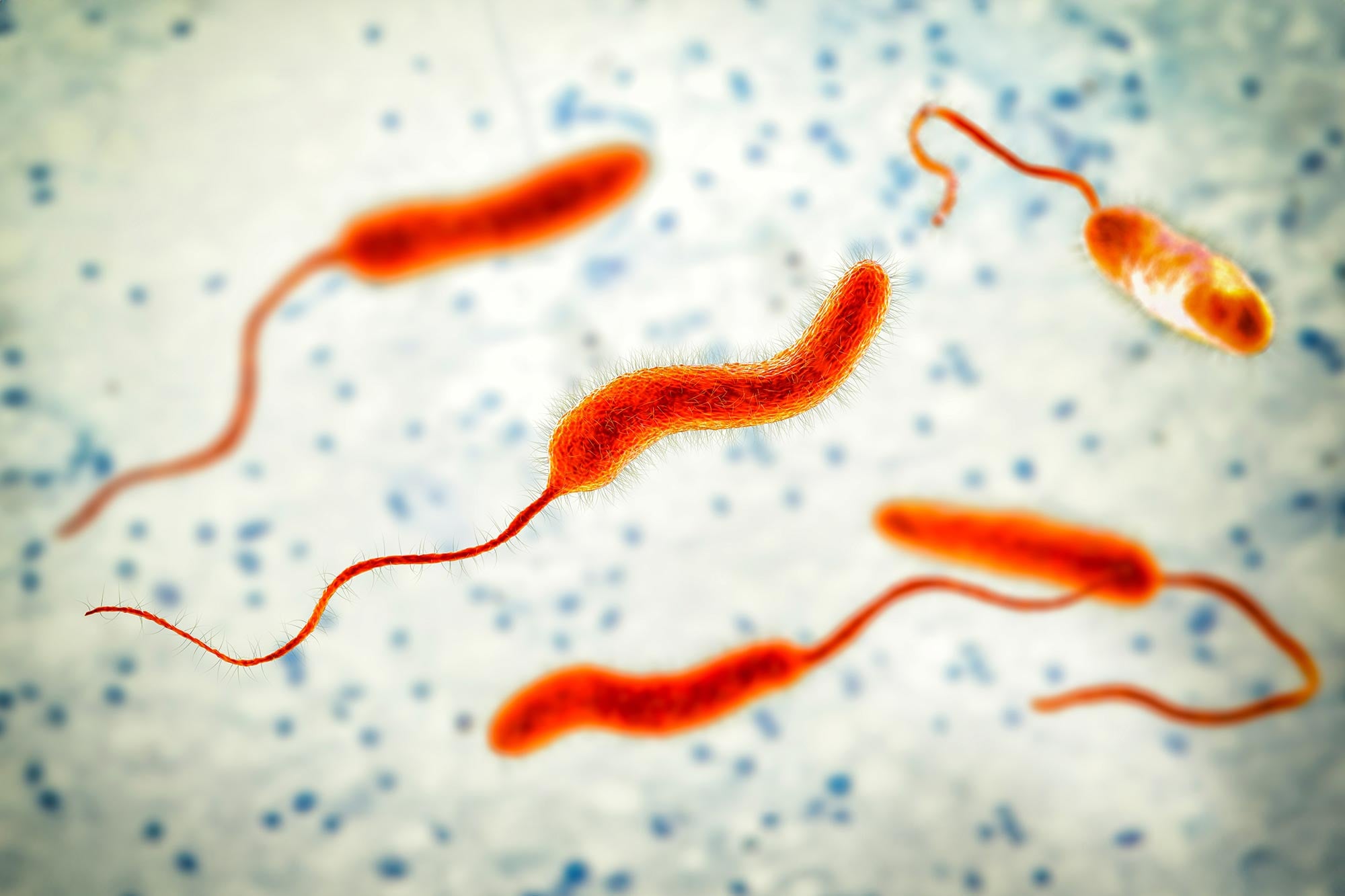
A long-term genomic study reveals that cholera bacteria are engaged in a dynamic evolutionary struggle with viruses that infect them, influencing both disease severity and global spread.
Cholera-causing bacteria are engaged in a constant evolutionary struggle with a virus that infects them, according to a new genomic study.
Researchers from the Wellcome Sanger Institute, icddr,b (International Centre for Diarrhoeal Disease Research, Bangladesh), the Post Graduate Institute of Medical Education & Research (PGIMER), and their collaborators found that in the Ganges Delta, cholera bacteria frequently gain and lose protective features. These defenses help them survive attacks from a virus called bacteriophage ICP1.
The study, published in Nature, shows that keeping these antiviral defenses comes with a trade-off. Bacteria that maintain them tend to cause less severe illness in humans and are less likely to spread beyond their region.
Rethinking the Global Source of Cholera
By examining how cholera behaves across South Asia, the research challenges the long-standing view that the Ganges Delta is the primary global source of the disease. Instead, it points to a more complex regional pattern.
A better understanding of how different strains evolve and spread could support early warning systems. These systems could help identify high-risk strains before they escalate, allowing for faster public health responses.
The findings may also inform future treatments, including the possibility of using bacteriophages themselves to help control cholera infections.
Cholera is a severe diarrheal disease that can become fatal within hours if untreated. It is caused by the bacterium Vibrio cholerae (V. cholerae), which spreads through contaminated food and water. The world is currently experiencing the seventh cholera pandemic, which began in 1961. Each year, there are an estimated 1.3 to 4 million cases and up to 143,000 deaths globally. This pandemic is driven by the V. cholerae strain 7PET O1, which originated in the Bay of Bengal near Bangladesh and India. The Ganges Delta has long been considered its global source.
Mapping Cholera’s True Origins
For this study, scientists analyzed bacterial samples from Bangladesh and North India, building the most detailed dataset of cholera in the region to date. It includes more than 2,300 genomes collected over about 20 years.
Their results show that the broader Ganges Basin, rather than the Ganges Delta alone, has been the main global source of cholera during this period.
Tracking how the bacteria spread revealed another surprise. Cholera does not simply follow river systems. Instead, it tends to remain within national borders, suggesting that human movement and population density play a larger role than environmental water flow.
The researchers also observed that V. cholerae strain 7PET O1 in Bangladesh repeatedly gains and loses genetic features known as defense systems. These systems act like protective armor against bacteriophage ICP1.
Bacteriophages, or phages, are viruses that infect bacteria. They rely on bacterial cells to reproduce, are generally harmless to humans, and can quickly destroy their bacterial hosts. They are also commonly found in the human gut microbiome.
Analysis of two decades of data showed that cholera bacteria are constantly adapting to resist ICP1. At the same time, the virus evolves its own countermeasures to bypass those defenses and continue infecting the bacteria.
Implications for Treatment and Prevention
Previous research has shown that ICP1 in the gut is linked to milder disease because the virus kills cholera bacteria. This study expands on that idea by showing an ongoing evolutionary contest between the two. As the bacteria invest in defenses, their ability to spread globally appears to decline.
Understanding this interaction could lead to new treatment approaches or control strategies for cholera.
The findings also suggest that studying the natural ecology of cholera could improve early warning systems. These systems could flag strains that have lost key defenses, making them more dangerous and more likely to spread widely.
Toward Smarter Public Health Strategies
Identifying high-risk strains early could allow health officials to respond more effectively. Possible actions include updating treatment guidelines, distributing vaccines, and improving water sanitation in targeted areas.
By taking a broader ecological view of cholera and its spread, researchers believe it may be possible to limit the global impact of this disease.
Dr. Amber Barton, co-first author at the Wellcome Sanger Institute, said: “Our research uncovered the evolutionary struggle between cholera bacteria in Bangladesh, and the bacteriophage that preys on them. Specifically, the discovery of rapid loss and gain of V. cholerae’s protective defenses and their impact on disease severity is key to understanding the factors involved in the spread of this bacterium. Without the defenses, the bacteria are more dangerous to humans, and tracking this in real time, through genomics, can help us identify when the strains pose the highest risk and intervene early. Additionally, future research into cholera and microbiome interactions in other regions of the world could reveal other phages that prey on the bacteria, which may help develop new treatments in the future.”
Dr. Firdausi Qadri, co-senior author at the icddr,b in Bangladesh, said: “By creating the most comprehensive genetic database of cholera bacteria samples across Bangladesh and North India, our study has shown that our understanding of the global source of cholera needs updating and refinement to consider a region that spans Bangladesh and India. We can also see that cholera spread does not follow the rivers and waterways. This suggests that, despite cholera being a water-borne pathogen, the role of human travel and population density are bigger factors in cholera transmission than the surrounding environment. Understanding this can help inform public health interventions to help stop the spread of infections.”
Professor Nick Thomson, co-senior author at the Wellcome Sanger Institute, said: “The world is in its seventh global pandemic of cholera, with the bacteria evolving and adapting to treatments and the world around it. By taking an ecological view of cholera across whole regions of the world using genomics, we have been able to dispel previous inaccuracies about the global spread of the pandemic and provide a clearer picture of the factors and threats these bacteria face. This can help inform public health strategies and future treatments to hopefully end this pandemic and protect the many thousands of people impacted.”
Reference: “Evolution of pandemic cholera at its global source” by Amber Barton, Mokibul Hassan Afrad, Alyce Taylor-Brown, Nisha Singh, Chetan Thakur, Taufiqul Islam, Sadia Isfat Ara Rahman, Marjahan Akhtar, Yasmin Ara Begum, Taufiqur Rahman Bhuiyan, Ashraful Islam Khan, Neelam Taneja, Nicholas R. Thomson and Firdausi Qadri, 1 April 2026, Nature.
DOI: 10.1038/s41586-026-10340-x
Funding: Wellcome Trust, Bill and Melinda Gates Foundation
Never miss a breakthrough: Join the SciTechDaily newsletter.
Follow us on Google and Google News.