
Close Menu
    Facebook X (Twitter) Instagram
    SciTechDaily
    • Biology
    • Chemistry
    • Earth
    • Health
    • Physics
    • Science
    • Space
    • Technology
    Facebook X (Twitter) Pinterest YouTube RSS
    SciTechDaily
    Home»Biology»Breakthrough Study Reveals Why Damaged Nerves Struggle To Heal
    Biology

    Breakthrough Study Reveals Why Damaged Nerves Struggle To Heal

    By The Mount Sinai Hospital / Mount Sinai School of MedicineApril 6, 20263 Comments4 Mins Read
    Facebook Twitter Pinterest Telegram LinkedIn WhatsApp Email Reddit
    Share
    Facebook Twitter LinkedIn Pinterest Telegram Email Reddit
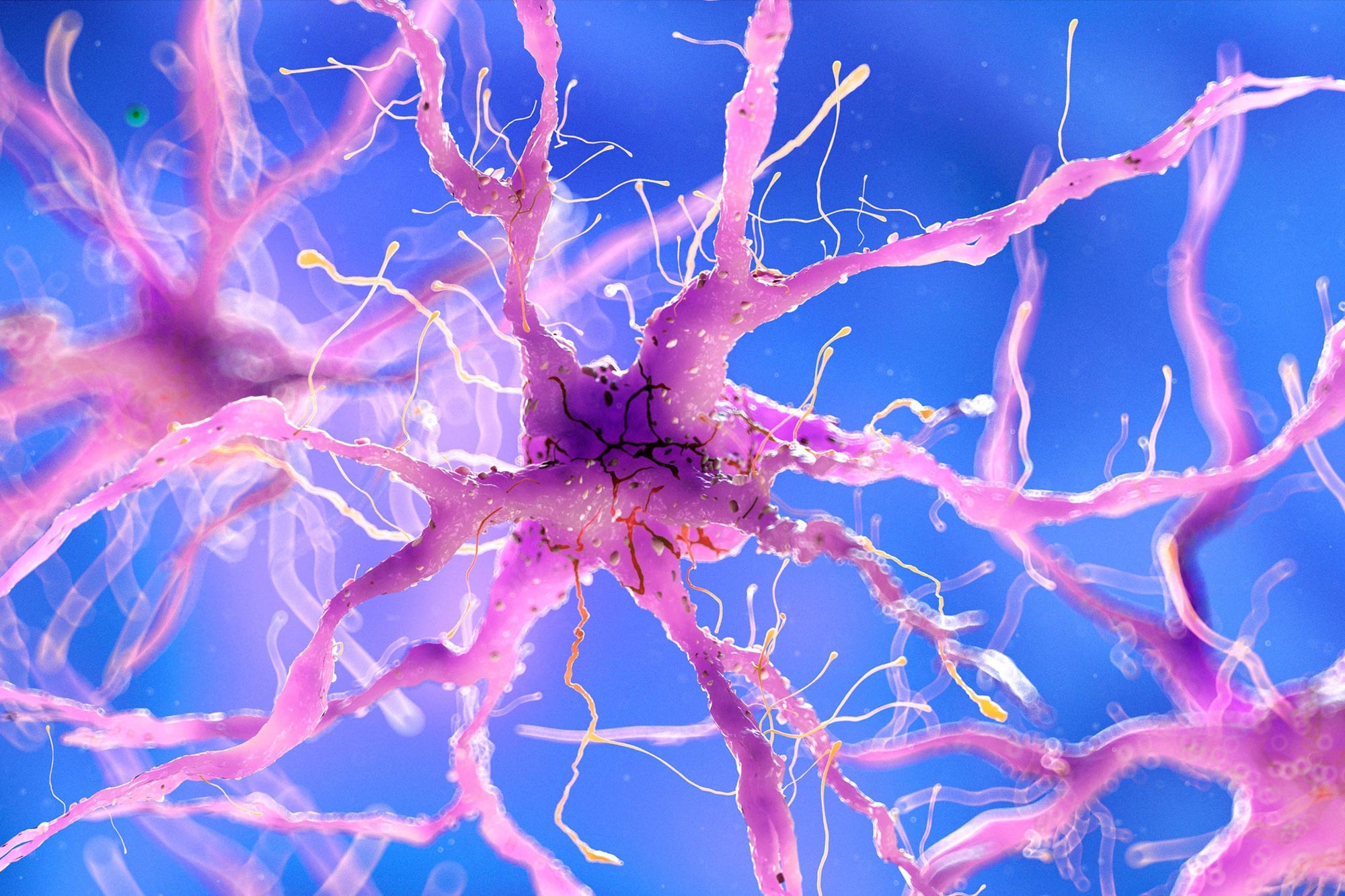
    Nerve Damage Illustration
    Researchers have identified a molecular pathway that appears to limit how effectively neurons repair themselves after injury. By targeting a protein that shifts cells toward stress management instead of regrowth, scientists observed improved nerve regeneration and functional recovery in experimental models. Credit: Stock

    A newly identified molecular mechanism reveals how neurons weigh survival against repair after injury.

    Scientists at the Icahn School of Medicine at Mount Sinai have identified a molecular switch in neurons that limits the regrowth of damaged axons. Their study, published in Nature, suggests that blocking a protein known as the aryl hydrocarbon receptor (AHR) could promote nerve regeneration and help restore function after injuries to peripheral nerves or the spinal cord.

    Axons are long fibers that transmit signals between nerve cells, or neurons, throughout the central and peripheral nervous systems. These structures are essential for communication within the body. When axons are damaged, recovery depends on the neuron’s ability to regrow them.

    In adult mammals, this ability is very limited. As a result, injuries to nerves or the spinal cord often lead to lasting or permanent loss of movement or sensation. Researchers have spent years trying to understand why this repair process is so constrained.

    A Molecular Brake on Regeneration

    The study found that AHR plays a central role in controlling how neurons respond to injury.

    “When neurons are injured, they must deal with stress while also trying to regrow their axons,” said Hongyan Zou, MD, PhD, Professor of Neurosurgery, and Neuroscience, at the Icahn School of Medicine at Mount Sinai and the study’s senior author. “We discovered that AHR functions like a brake that shifts neurons toward managing stress rather than rebuilding damaged connections.”

    Axonal Regeneration, a Balancing Act Graphic
    Axonal regeneration: A balancing act. Following injury, neurons must navigate the trade-off between stress coping and regenerative growth. The transcription factor AhR acts as a molecular sensor, integrating environmental cues, metabolic signaling and protein homeostasis to control this critical switch. Credit: L Armstrong-Davies

    Experiments showed that active AHR signaling slows axon regrowth. When researchers removed AHR or blocked it with drugs, damaged axons regenerated more effectively. In mouse models of peripheral nerve and spinal cord injury, inhibiting AHR also improved both movement and sensory recovery.

    Balancing Survival and Growth

    Further analysis revealed why this happens. After injury, AHR helps neurons maintain protein quality through a process called proteostasis. This response protects cells under stress but limits the production of new proteins needed for repair.

    When AHR is turned off, neurons shift priorities. They increase protein production and activate pathways that support axon growth. The team also found that this regenerative response depends on another factor, HIF-1α, which controls genes involved in metabolism and tissue repair.

    “This discovery shows that neurons use AHR to balance survival and regeneration,” Dr. Zou explained. “By releasing this brake, we can push neurons into a state that favors repair.”

    A Dual Role for an Environmental Sensor

    AHR was first identified as a receptor that detects environmental toxins, known as xenobiotics. The new findings show it also has an important internal role, helping neurons integrate environmental signals with their ability to regenerate after injury.

    This research is an early step toward potential therapies. Several drugs that block AHR are already in clinical trials for other conditions, raising the possibility that they could be tested for nerve and spinal cord injuries.

    However, more work is needed before this approach can be used in patients. Future studies will explore how well AHR inhibitors work across different types of neural damage, determine optimal timing and dosage, and examine their effects on other cells after injury.

    The Mount Sinai team plans to test both AHR-blocking drugs and gene therapy approaches aimed at reducing AHR activity in neurons. The goal is to see whether these strategies can further enhance axon regrowth and improve recovery after spinal cord injury, stroke, and other neurological disorders.

    Reference: “AhR inhibition promotes axon regeneration via a stress–growth switch” by Dalia Halawani, Yiqun Wang, Jiaxi Li, Daniel Halperin, Haofei Ni, Molly Estill, Aarthi Ramakrishnan, Li Shen, Arthur Sefiani, Cédric G. Geoffroy, Roland H. Friedel and Hongyan Zou, 1 April 2026, Nature.
    DOI: 10.1038/s41586-026-10295-z

    Never miss a breakthrough: Join the SciTechDaily newsletter.
    Follow us on Google and Google News.

    Icahn School of Medicine at Mount Sinai Molecular Biology Nerve Cells Neurology
    Share. Facebook Twitter Pinterest LinkedIn Email Reddit

    Related Articles

    Scientists Discover Gene Critical for a Healthy Brain

    Scientists Discover a Gene for Brain Size

    Yale Neurologists Discover the Source of Diabetic Neuropathy Pain

    Alzheimer’s Spreads Throughout the Brain by Jumping From Neuron to Neuron

    Researchers Use fMRI to Study How Humor Activates Kids’ Brain Regions

    Neuroscientists Decode Correlation Between Sound and Brain Activity

    Mother’s Nurturing Results in Larger Hippocampus in Children

    Scientists Create Stem-Cell-Derived Neurons from Alzheimer’s Disease

    Molecular Motor Dynein Exhibits Strut Like Movement

    3 Comments

    1. BARBARA MURGUIA on April 7, 2026 1:37 pm

      Please find a cure for ALPS
      Thank you

      Reply
    2. kamir bouchareb st on April 7, 2026 2:17 pm

      thanks

      Reply
    3. Elisabeth on April 7, 2026 10:58 pm

      Thank you

      Reply
    Leave A Reply Cancel Reply

    • Facebook
    • Twitter
    • Pinterest
    • YouTube

    Don't Miss a Discovery

    Subscribe for the Latest in Science & Tech!

    Trending News

    Popular Vitamin B3 Supplements May Help Cancer Cells Survive, Scientists Warn

    Scientists Discover Strange Property of Rice and Turn It Into a Smart Material

    NASA Artemis II Skips Burn As Astronaut Captures Stunning View of Earth

    NASA’s Artemis II: Humans Just Left Earth Orbit for the First Time Since 1972

    What Causes Chronic Pain? Scientists Identify Key Culprit in the Brain

    Semaglutide Shows Surprising Mental Health Benefits in Massive 100,000-Person Study

    This Liquid Snapped Instead of Flowing and Scientists Were Shocked

    Breakthrough Alzheimer’s Drug Rewires the Brain Instead of Just Clearing Plaques

    Follow SciTechDaily
    • Facebook
    • Twitter
    • YouTube
    • Pinterest
    • Newsletter
    • RSS
    SciTech News
    • Biology News
    • Chemistry News
    • Earth News
    • Health News
    • Physics News
    • Science News
    • Space News
    • Technology News
    Recent Posts
    • Stanford Scientists Discover Hidden Brain Circuit That Fuels Chronic Pain
    • Johns Hopkins Scientists Develop Nasal DNA Vaccine for Tuberculosis
    • New Study Reveals Why Ozempic Works Better for Some People Than Others
    • Scientists Uncover the Secret “Glue” That Helps Soil Hold Water
    • Climate Change Is Altering a Key Greenhouse Gas in a Way Scientists Didn’t Expect
    Copyright © 1998 - 2026 SciTechDaily. All Rights Reserved.
    • Science News
    • About
    • Contact
    • Editorial Board
    • Privacy Policy
    • Terms of Use

    Type above and press Enter to search. Press Esc to cancel.