
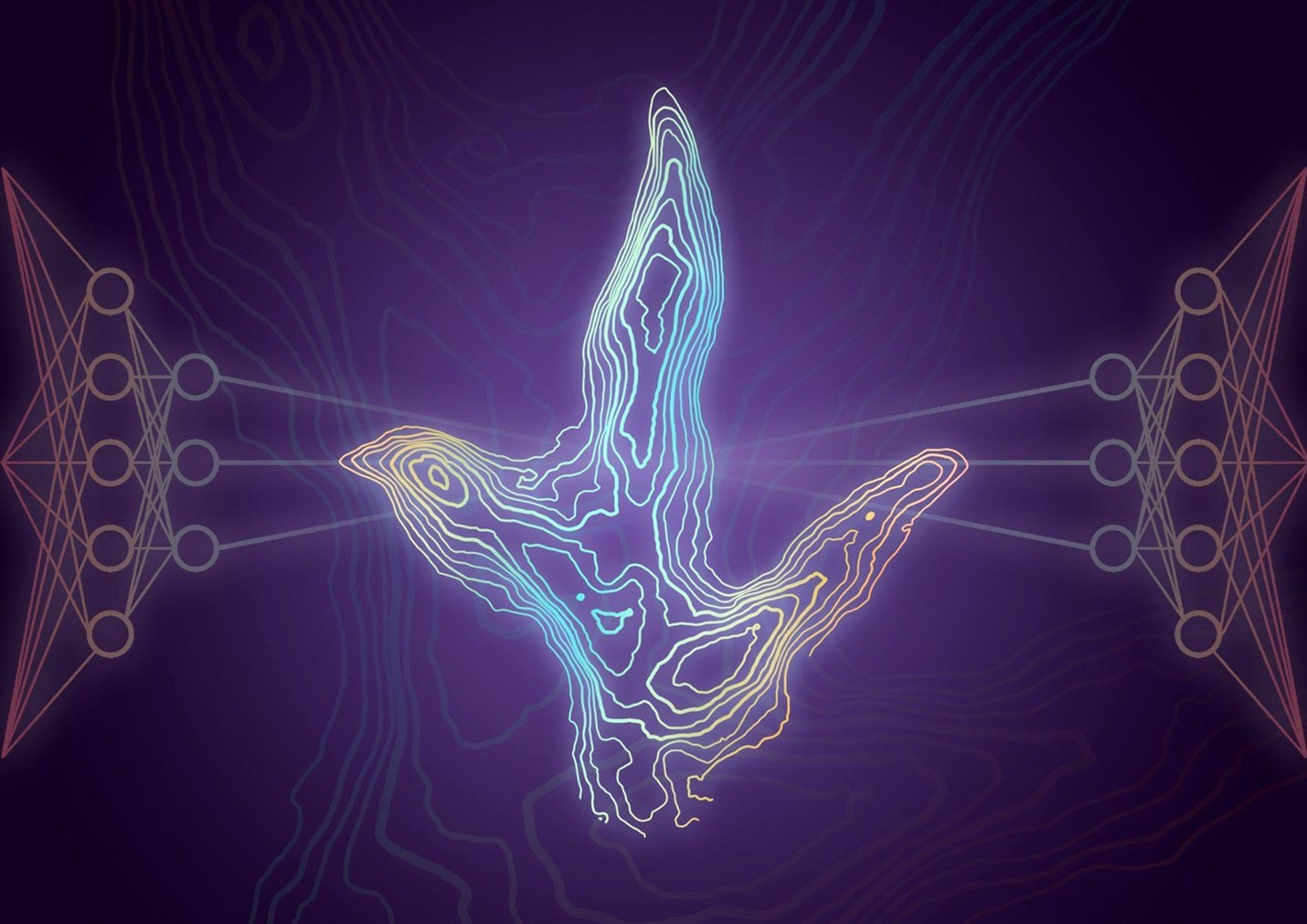
A new AI app lets users identify dinosaur footprints by uploading a photo, solving puzzles that have stumped scientists for decades.
Even more surprising, it may have uncovered evidence that birds—or bird-like dinosaurs—appeared far earlier than anyone expected.
AI Brings New Life to Ancient Dinosaur Footprints
A new artificial intelligence (AI) app is offering a powerful new way to identify dinosaur footprints that were left behind millions of years ago, according to a recent study. The technology is designed to help both scientists and the public better understand fossilized tracks that have long puzzled researchers.
For generations, paleontologists have examined ancient footprints and debated what kind of animals made them. Some tracks may belong to meat-eating predators, others to plant-eating giants, and some have even raised the possibility of early bird relatives. Until now, those questions were often difficult to answer with confidence.
A Smartphone Tool for Fossil Sleuths
The new app, called DinoTracker, allows users to upload a photo or sketch of a dinosaur footprint directly from a mobile phone. Within moments, the app analyzes the image and offers an informed assessment of which type of dinosaur may have created the track. This opens the door for professionals and enthusiasts alike to take part in fossil investigation.
Fossilised dinosaur footprints provide valuable clues about prehistoric life, revealing how dinosaurs moved, behaved, and interacted with their environments. However, past studies have shown that interpreting these tracks is notoriously challenging due to erosion, deformation, and incomplete preservation.
How AI Learns to Read Footprints
Traditional approaches required scientists to manually build databases that linked specific footprints to specific dinosaurs. Experts note that this process could unintentionally introduce bias, especially when interpretations were uncertain or disputed.
To overcome this limitation, researchers from the Helmholtz-Zentrum research centre in Berlin, working with the University of Edinburgh, developed advanced algorithms that allow computers to teach themselves how dinosaur footprints vary in shape.
The AI system was trained using nearly 2,000 real fossil footprints, along with millions of simulated versions that recreated natural distortions such as compression and shifting edges. By exposing the model to this wide range of possibilities, the researchers aimed to make its predictions more robust.
The system learned to focus on eight major footprint characteristics. These included how widely the toes spread, where the heel was positioned, how much surface area contacted the ground, and how weight was distributed across different parts of the foot.
Once these patterns were recognized, the AI could compare new footprints to known fossils and estimate which dinosaur was most likely responsible.
Accuracy Rivals Human Experts
When tested, the algorithm agreed with expert classifications about 90 percent of the time, even in cases involving controversial or difficult-to-interpret species. This level of accuracy suggests the system could serve as a reliable support tool for paleontological research.
One of the most striking findings came from footprints dated to more than 200 million years ago. The AI detected strong similarities between some dinosaur tracks and the foot structures of both extinct and modern birds.
According to the research team, this could mean that birds originated tens of millions of years earlier than previously believed. Another possibility is that some early dinosaurs had feet that closely resembled bird feet purely by coincidence.
New Clues From Scotland’s Ancient Shores
The AI also shed light on mysterious footprints discovered on the Isle of Skye in Scotland. These tracks were formed on the muddy edge of a lagoon around 170 million years ago and have puzzled scientists for years.
The analysis suggests they may have been left by some of the oldest known relatives of duck-billed dinosaurs, making them among the earliest examples of this group found anywhere in the world.
Expanding Access to Paleontology
Beyond individual discoveries, the researchers say the technology opens up new ways to study how dinosaurs lived and moved across the planet. It also allows anyone with curiosity and a camera to participate in the scientific process.
Dr. Gregor Hartmann of Helmholtz-Zentrum research centre, said: “Our method provides an unbiased way to recognize variation in footprints and test hypotheses about their makers. It’s an excellent tool for research, education, and even fieldwork.”
Professor Steve Brusatte, Personal Chair of Palaeontology and Evolution, School of GeoSciences, said: “This study is an exciting contribution for paleontology and an objective, data-driven way to classify dinosaur footprints – something that has stumped experts for over a century.
“It opens up exciting new possibilities for understanding how these incredible animals lived and moved, and when major groups like birds first evolved. This computer network might have identified the world’s oldest birds, which I think is a fantastic and fruitful use for AI.”
Reference: “Identifying variation in dinosaur footprints and classifying problematic specimens via unbiased unsupervised machine learning” by Gregor Hartmann, Tone Blakesley, Paige E. dePolo and Stephen L. Brusatte, 26 January 2026, Proceedings of the National Academy of Sciences.
DOI: 10.1073/pnas.2527222122
The study was published in PNAS and received funding from the innovations pool of the BMBF-Project: Data-X, the Helmholtz project ROCK-IT, the Helmholtz-AI project NorMImag, the National Geographic Society, and the Leverhulme Trust.
Never miss a breakthrough: Join the SciTechDaily newsletter.
Follow us on Google and Google News.