
Close Menu
    Facebook X (Twitter) Instagram
    SciTechDaily
    • Biology
    • Chemistry
    • Earth
    • Health
    • Physics
    • Science
    • Space
    • Technology
    Facebook X (Twitter) Pinterest YouTube RSS
    SciTechDaily
    Home»Science»Newly Discovered Toothless, Two-Fingered Dinosaur’s Lost Digits Point to Spread of Parrot-Like Species
    Science

    Newly Discovered Toothless, Two-Fingered Dinosaur’s Lost Digits Point to Spread of Parrot-Like Species

    By University of EdinburghOctober 6, 2020No Comments3 Mins Read
    Facebook Twitter Pinterest Telegram LinkedIn WhatsApp Email Reddit
    Share
    Facebook Twitter LinkedIn Pinterest Telegram Email Reddit
    Three Oksoko Avarsan Dinosaurs
    Three Oksoko avarsan dinosaurs. Credit: Michael W. Skrepnick

    A newly discovered species of toothless, two-fingered dinosaur has shed light on how a group of parrot-like animals thrived more than 68 million years ago.

    The unusual species had one less finger on each forearm than its close relatives, suggesting an adaptability which enabled the animals to spread during the Late Cretaceous Period, researchers say.

    Multiple complete skeletons of the new species were unearthed in the Gobi Desert in Mongolia by a University of Edinburgh-led team.

    Remains of Three Dinosaurs
    Remains of three dinosaurs preserved resting together. Credit: Gregory Funston

    Named Oksoko avarsan, the feathered, omnivorous creatures grew to around two meters long and had only two functional digits on each forearm. The animals had a large, toothless beak similar to the type seen in species of parrot today.

    The remarkably well-preserved fossils provided the first evidence of digit loss in the three-fingered family of dinosaurs known as oviraptors.

    The discovery that they could evolve forelimb adaptations suggests the group could alter their diets and lifestyles, and enabled them to diversify and multiply, the team says.

    Researchers studied the reduction in size, and eventual loss, of a third finger across the oviraptors’ evolutionary history. The group’s arms and hands changed drastically in tandem with migrations to new geographic areas — specifically to what is now North America and the Gobi Desert.
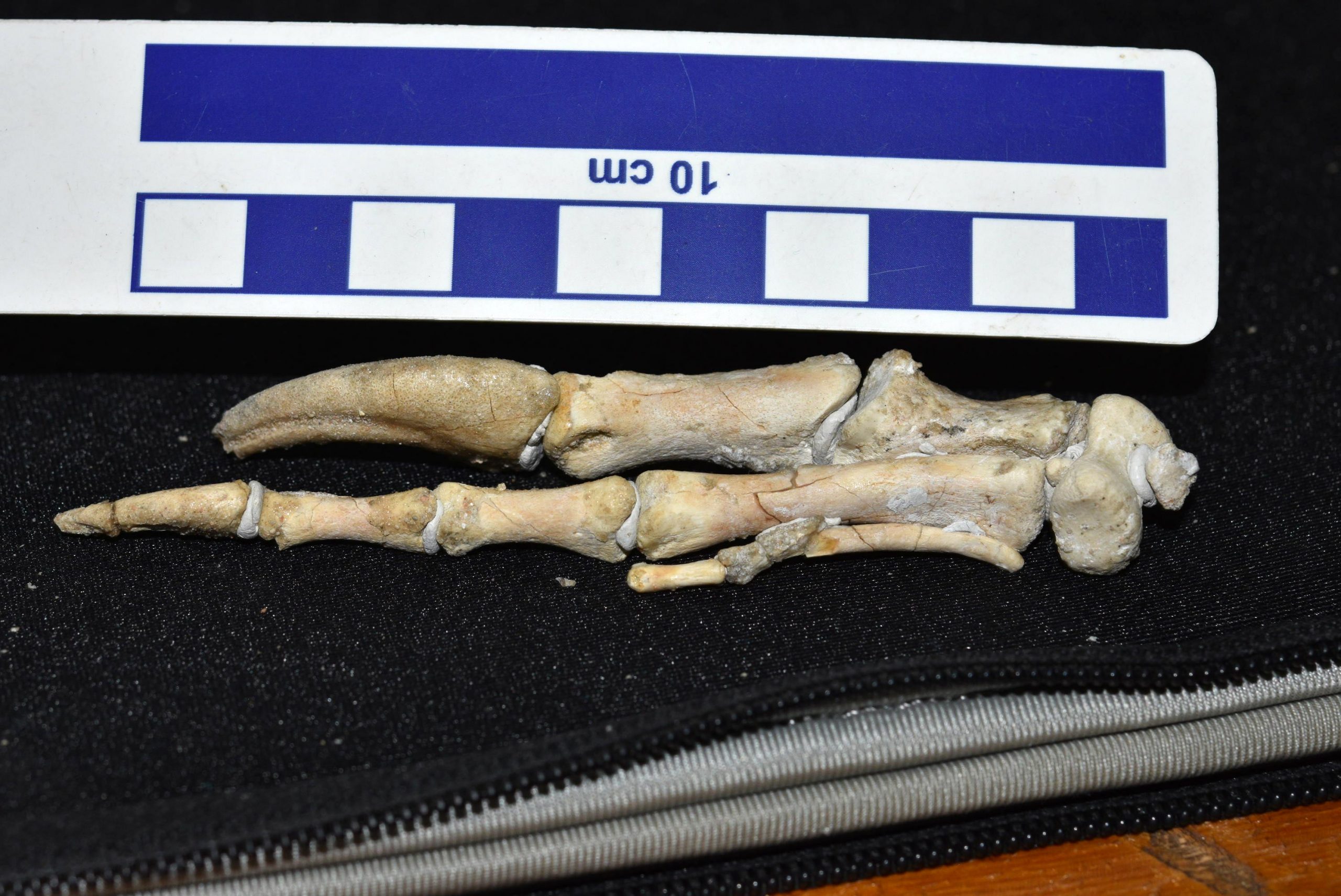
    Oksoko Avarsan Two Fingered Hand
    Fossil of Oksoko avarsan’s two-fingered hand. Credit: Gregory Funston

    The team also discovered that Oksoko avarsan — like many other prehistoric species — were social as juveniles. The fossil remains of four young dinosaurs were preserved resting together.

    The study, published in the journal Royal Society Open Science, was funded by The Royal Society and the Natural Sciences and Engineering Council of Canada. It also involved researchers from the University of Alberta and Philip J. Currie Dinosaur Museum in Canada, Hokkaido University in Japan, and the Mongolian Academy of Sciences.

    Dr. Gregory Funston, of the University of Edinburgh’s School of GeoSciences, who led the study, said: “Oksoko avarsan is interesting because the skeletons are very complete and the way they were preserved resting together shows that juveniles roamed together in groups. But more importantly, its two-fingered hand prompted us to look at the way the hand and forelimb changed throughout the evolution of oviraptors–which hadn’t been studied before. This revealed some unexpected trends that are a key piece in the puzzle of why oviraptors were so diverse before the extinction that killed the dinosaurs.”

    Reference: “A new two-fingered dinosaur sheds light on the radiation of Oviraptorosauria” by Gregory F. Funston, Tsogtbaatar Chinzorig, Khishigjav Tsogtbaatar, Yoshitsugu Kobayashi, Corwin Sullivan and Philip J. Currie, 7 October 2020, Royal Society Open Science.
    DOI: 10.1098/rsos.201184

    Never miss a breakthrough: Join the SciTechDaily newsletter.
    Follow us on Google and Google News.

    Dinosaurs Evolution Paleontology Popular University of Edinburgh
    Share. Facebook Twitter Pinterest LinkedIn Email Reddit

    Related Articles

    Landmark Study: Dinosaurs Were in Their Prime When Asteroid Hit Earth

    Brawn Before Brains: Mammals Bulked Up To Survive Post-Dinosaur World

    Dinosaur Embryo Discovery Helps Crack Baby Tyrannosaur Mystery

    Jurassic Park Got It Wrong: Research Indicates Raptors Didn’t Hunt in Packs

    New Dinosaur Discovered in New Mexico Is One of the Last Known Surviving Raptors

    50 Newly Identified Footprints Show Stegosaurs Left Their Mark on Scottish Isle of Skye

    One-of-a-Kind Dinosaur Specimen Discovered in China Offers View Into Dinosaur-Bird Evolution

    It Seems There Were Too Many Meat-Eating Dinosaurs – This May Be the Explanation

    Zhenyuanlong Suni – The Newly Discovered Feathered Cousin of the Velociraptor

    Leave A Reply Cancel Reply

    • Facebook
    • Twitter
    • Pinterest
    • YouTube

    Don't Miss a Discovery

    Subscribe for the Latest in Science & Tech!

    Trending News

    Scientists Uncover Potential Brain Risks of Popular Fish Oil Supplements

    Scientists Discover a Surprising Way To Make Bread Healthier and More Nutritious

    After 60 Years, Scientists Uncover Unexpected Brain Effects of Popular Diabetes Drug Metformin

    New Research Uncovers Hidden Side Effects of Popular Weight-Loss Drugs

    Scientists Rethink Extreme Warming After Surprising Ocean Discovery

    Landmark Study Links Never Marrying to Significantly Higher Cancer Risk

    Researchers Discover Unknown Beetle Species Just Steps From Their Lab

    Largest-Ever Study Finds Medicinal Cannabis Ineffective for Anxiety, Depression, PTSD

    Follow SciTechDaily
    • Facebook
    • Twitter
    • YouTube
    • Pinterest
    • Newsletter
    • RSS
    SciTech News
    • Biology News
    • Chemistry News
    • Earth News
    • Health News
    • Physics News
    • Science News
    • Space News
    • Technology News
    Recent Posts
    • Not Just Alzheimer’s: Scientists Uncover Clues to a Second, Overlooked Disorder
    • Scientists Uncover Dangerous Connection Between Serotonin and Heart Valve Disease
    • Scientists Discover a “Protector” Protein That Could Help Reverse Hair Loss
    • Powerful Lasers Reveal How Matter Becomes Plasma in Trillionths of a Second
    • A Simpler Path to Super-Resolution: Scientists Reinvent Microscopy
    Copyright © 1998 - 2026 SciTechDaily. All Rights Reserved.
    • Science News
    • About
    • Contact
    • Editorial Board
    • Privacy Policy
    • Terms of Use

    Type above and press Enter to search. Press Esc to cancel.