
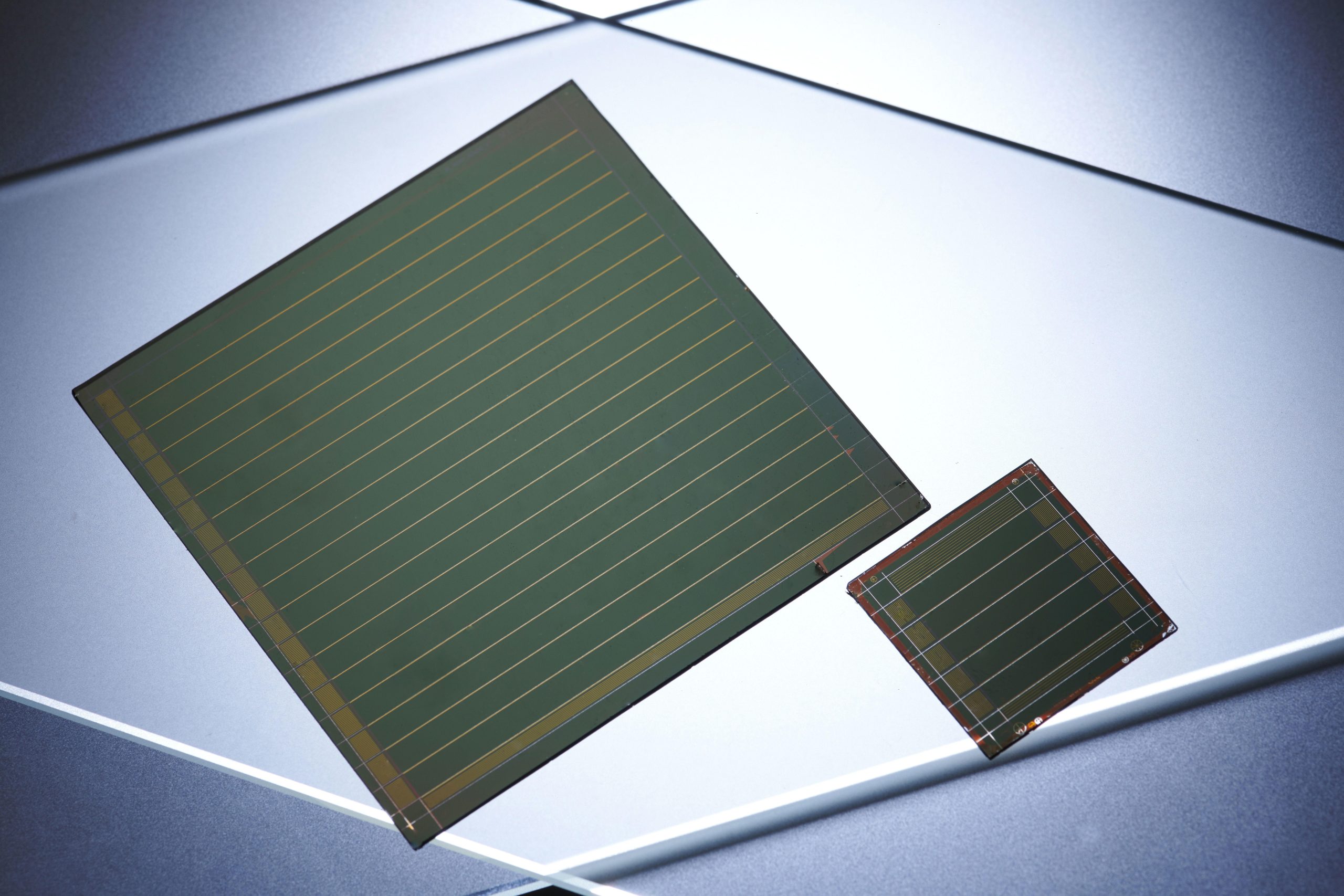
Artificial intelligence techniques assist scientists in enhancing manufacturing procedures for highly efficient solar cells, serving as a blueprint for various other research fields.
Perovskite tandem solar cells represent an advanced hybrid technology, merging a perovskite solar cell with a traditional solar cell, often made of silicon. This innovative approach stands at the forefront of solar technology, offering an impressive efficiency rate exceeding 33 percent, significantly surpassing that of standard silicon solar cells.
Moreover, they use inexpensive raw materials and are easily manufactured. To achieve this level of efficiency, an extremely thin high-grade perovskite layer, whose thickness is only a fraction of that of human hair, has to be produced.
“Manufacturing these high-grade, multi-crystalline thin layers without any deficiencies or holes using low-cost and scalable methods is one of the biggest challenges,” says tenure-track professor Ulrich W. Paetzold who conducts research at the Institute of Microstructure Technology and the Light Technology Institute of KIT.
Even under apparently perfect lab conditions, there may be unknown factors that cause variations in semiconductor layer quality: “This drawback eventually prevents a quick start of industrial-scale production of these highly efficient solar cells, which are needed so badly for the energy turnaround,” explains Paetzold.
AI Finds Hidden Signs of Effective Coating
To find the factors that influence coating, an interdisciplinary team consisting of the perovskite solar cell experts of KIT has joined forces with specialists for Machine Learning and Explainable Artificial Intelligence (XAI) of Helmholtz Imaging and Helmholtz AI at the DKFZ in Heidelberg.
The researchers developed AI methods that train and analyze neural networks using a huge dataset. This dataset includes video recordings that show the photoluminescence of the thin perovskite layers during the manufacturing process. Photoluminescence refers to the radiant emission of the semiconductor layers that have been excited by an external light source.
“Since even experts could not see anything particular on the thin layers, the idea was born to train an AI system for Machine Learning (Deep Learning) to detect hidden signs of good or poor coating from the millions of data items on the videos,” Lukas Klein and Sebastian Ziegler from Helmholtz Imaging at the DKFZ explain.
To filter and analyze the widely scattered indications output by the Deep Learning AI system, the researchers subsequently relied on methods of Explainable Artificial Intelligence.
“A Blueprint for Follow-Up Research”
The researchers found out experimentally that the photoluminescence varies during production and that this phenomenon has an influence on the coating quality.
“Key to our work was the targeted use of XAI methods to see which factors have to be changed to obtain a high-grade solar cell,” Klein and Ziegler said. This is not the usual approach. In most cases, XAI is only used as a kind of guardrail to avoid mistakes when building AI models.
“This is a change of paradigm: Gaining highly relevant insights in materials science in such a systematic way is a totally new experience.”
It was indeed the conclusion drawn from the photoluminescence variation that enabled the researchers to take the next step. After the neural networks had been trained accordingly, the AI was able to predict whether each solar cell would achieve a low or a high level of efficiency based on which variation of light emission occurred at what point in the manufacturing process.
“These are extremely exciting results,” emphasizes Ulrich W. Paetzold. “Thanks to the combined use of AI, we have a solid clue and know which parameters need to be changed in the first place to improve production. Now we are able to conduct our experiments in a more targeted way and are no longer forced to look blindfolded for the needle in a haystack. This is a blueprint for follow-up research that also applies to many other aspects of energy research and materials science.”
Reference: “Discovering Process Dynamics for Scalable Perovskite Solar Cell Manufacturing with Explainable AI” by Lukas Klein, Sebastian Ziegler, Felix Laufer, Charlotte Debus, Markus Götz, Klaus Maier-Hein, Ulrich W. Paetzold, Fabian Isensee and Paul F. Jäger, 30 October 2023, Advanced Materials.
DOI: 10.1002/adma.202307160
Never miss a breakthrough: Join the SciTechDaily newsletter.
Follow us on Google and Google News.
1 Comment
I find this very exciting, a 33% or better efficiency for a solar panel is unheard of. I’ll keep my fingers crossed that this manufacturing process will reach the public at an affordable price point,so the panels can be implemented in a cost-effective manner and can finally make fossil fuels a thing of the past. I just hope that we’ll implement this change before my grandchildren have to put on filter masks to venture outside.