
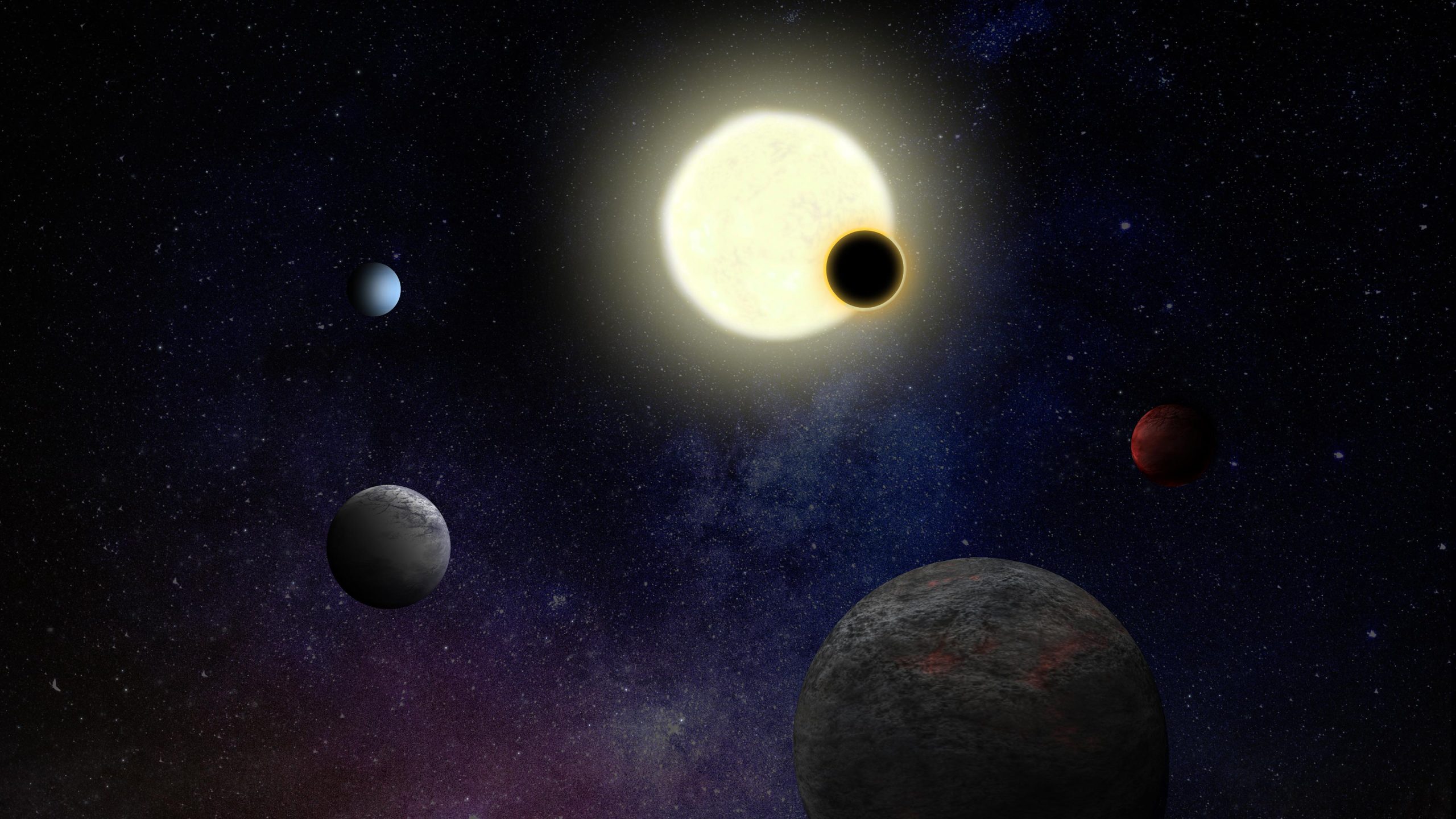
ESA’s 2029 Ariel mission will probe 1,000 exoplanets’ chemistry and atmospheres. Built by Airbus and an international consortium, Ariel will operate from L2 and mark the first mission dedicated to linking exoplanets to their stellar environments.
ESA and Airbus have signed a contract to move forward with the design and construction of the Atmospheric Remote-sensing Infrared Exoplanet Large-survey, Ariel, planned for launch in 2029.
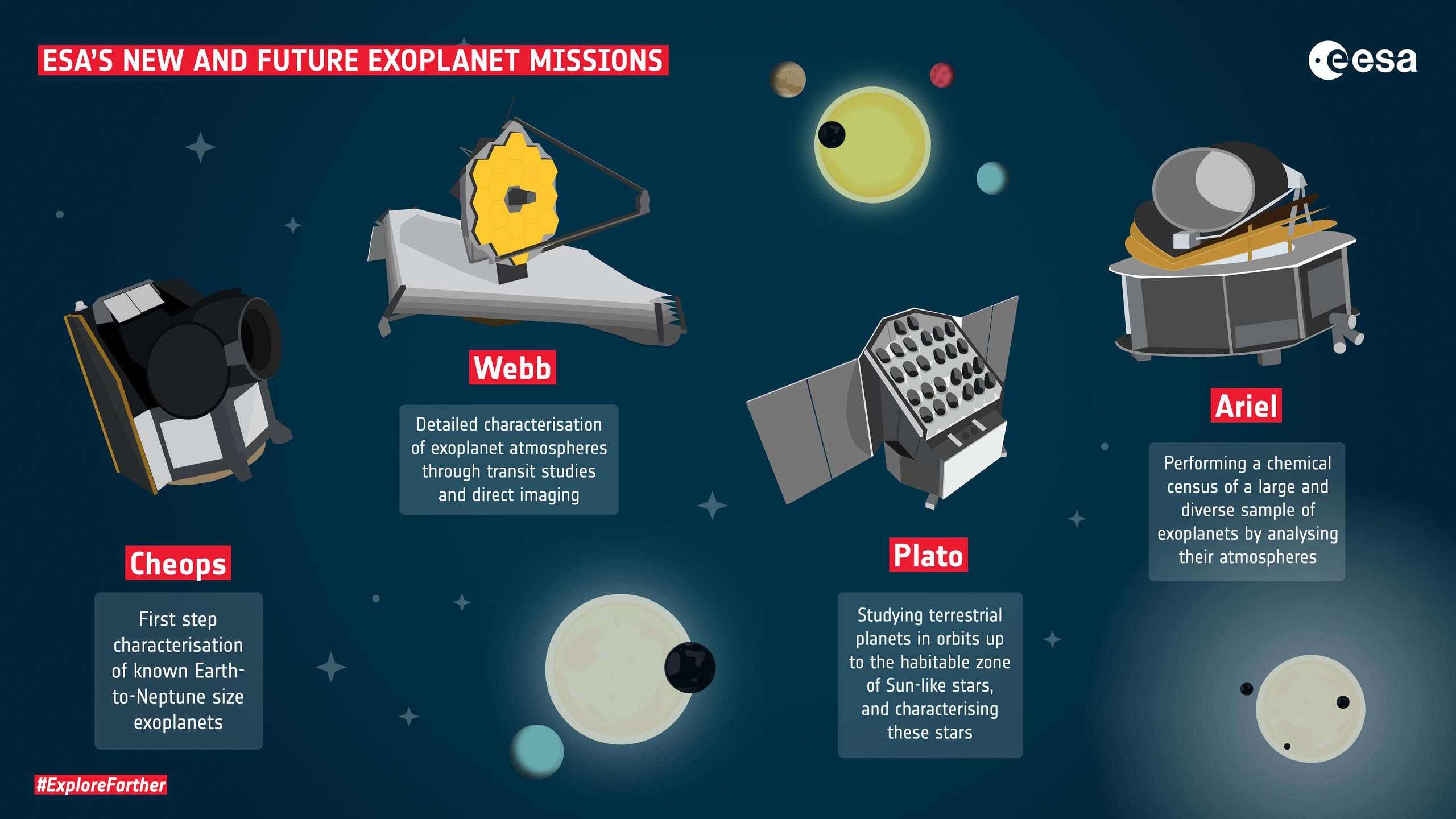
Ariel is the third in a trio of dedicated exoplanet missions conceived by ESA focusing on various aspects of this rapidly evolving subject area. It will follow Cheops, which launched in 2019, and Plato, scheduled for launch in 2026.
Ariel will study the composition of exoplanets, how they formed, and how they evolve, by surveying a diverse sample of about 1000 extrasolar planets, simultaneously in visible and infrared wavelengths.
It is the first mission dedicated to measuring the chemical composition and thermal structures of exoplanets, linking them to the host star’s environment. This will fill a significant gap in our knowledge of how the planet’s chemistry is linked to the environment where it formed, or if and how the type of host star drives the physics and chemistry of the planet’s evolution.
Linking Exoplanet Studies to the Solar System and Life
Observations of these worlds will give insights into the early stages of planetary and atmospheric formation, and their subsequent evolution, in turn contributing to the understanding of our own Solar System. They could help us find out whether there is life elsewhere in our Universe and if there is another planet like Earth.
“With this milestone for the Ariel mission we celebrate the continuation of the outstanding relationship with our industry partners to keep Europe at the forefront of excellence in the field of exoplanet research well into the next decade and beyond,” says Günther Hasinger, ESA’s Director of Science.
The contract was celebrated between the two parties with a small ceremony at ESA headquarters in Paris on 6 December.
“It is an exciting phase in a mission to move forward with a chosen design and assign a prime contractor,” adds Jean-Christophe Salvignol, ESA’s Ariel Project Manager.
Airbus will lead the European industrial consortium building the satellite and provide expertise and support to ESA for the development of the payload module. The Toulouse facility in France will be the main site for designing, manufacturing, and integrating the spacecraft elements, while Airbus Stevenage in the UK will lead the engineering of the avionics, radio frequency communication, and electrical design of the platform.
“Airbus has extensive experience of leading ground-breaking science missions, including Juice, Gaia, Solar Orbiter, Lisa Pathfinder, and Cheops, on which we are building for ESA’s latest science mission, Ariel,” said Jean-Marc Nasr, head of Space Systems at Airbus.
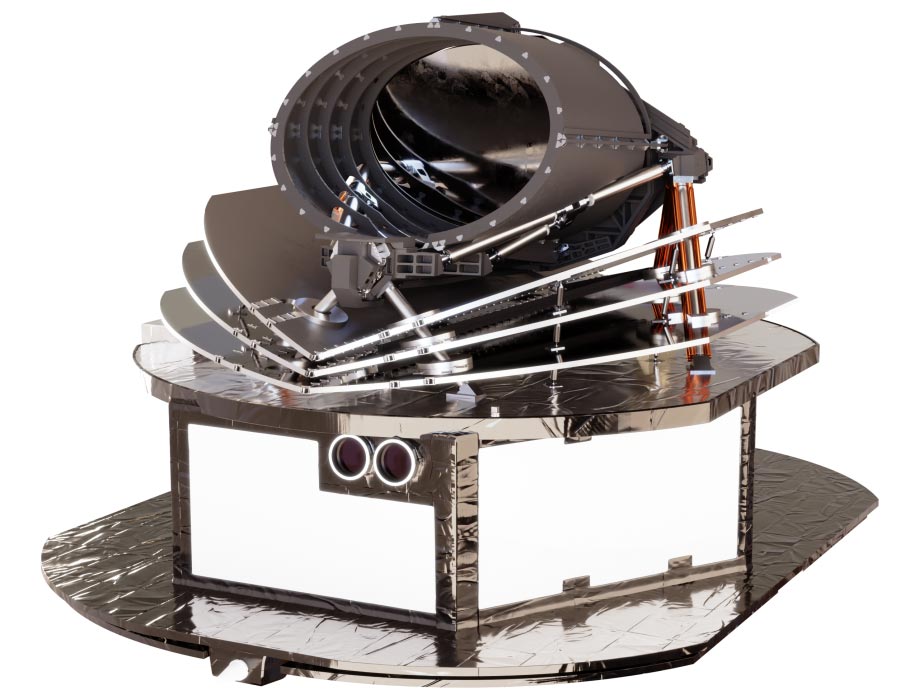
The mission’s payload module, which includes a one-meter-class cryogenic telescope and associated science instruments, is provided by the Ariel Mission Consortium. The consortium comprises more than 50 institutes from 17 European countries. NASA also contributes to the payload.
Ariel Launch on Ariane 6 to L2 Orbit
The spacecraft is anticipated to launch on ESA’s new Ariane 6, together with the Comet Interceptor mission. It will operate from the second Lagrange point (L2), 1.5 million kilometers directly ‘behind’ Earth as viewed from the Sun, on an initial four-year mission. Thanks to its very stable thermal and mechanical design, the spacecraft will be able to carry out long-term observations of the same exoplanet system for a duration of between 10 hours and up to 3 days.
“Launch may still seem a long way ahead for Ariel, but we are firmly on the road to a wonderful science mission, which will further broaden our understanding of solar system science well beyond the boundaries of our own planetary neighborhood,” says Theresa Lueftinger, ESA Ariel Project Scientist.
Ariel was selected in 2018 as the fourth medium-class science mission in ESA’s Cosmic Vision plan.
Never miss a breakthrough: Join the SciTechDaily newsletter.
Follow us on Google and Google News.