
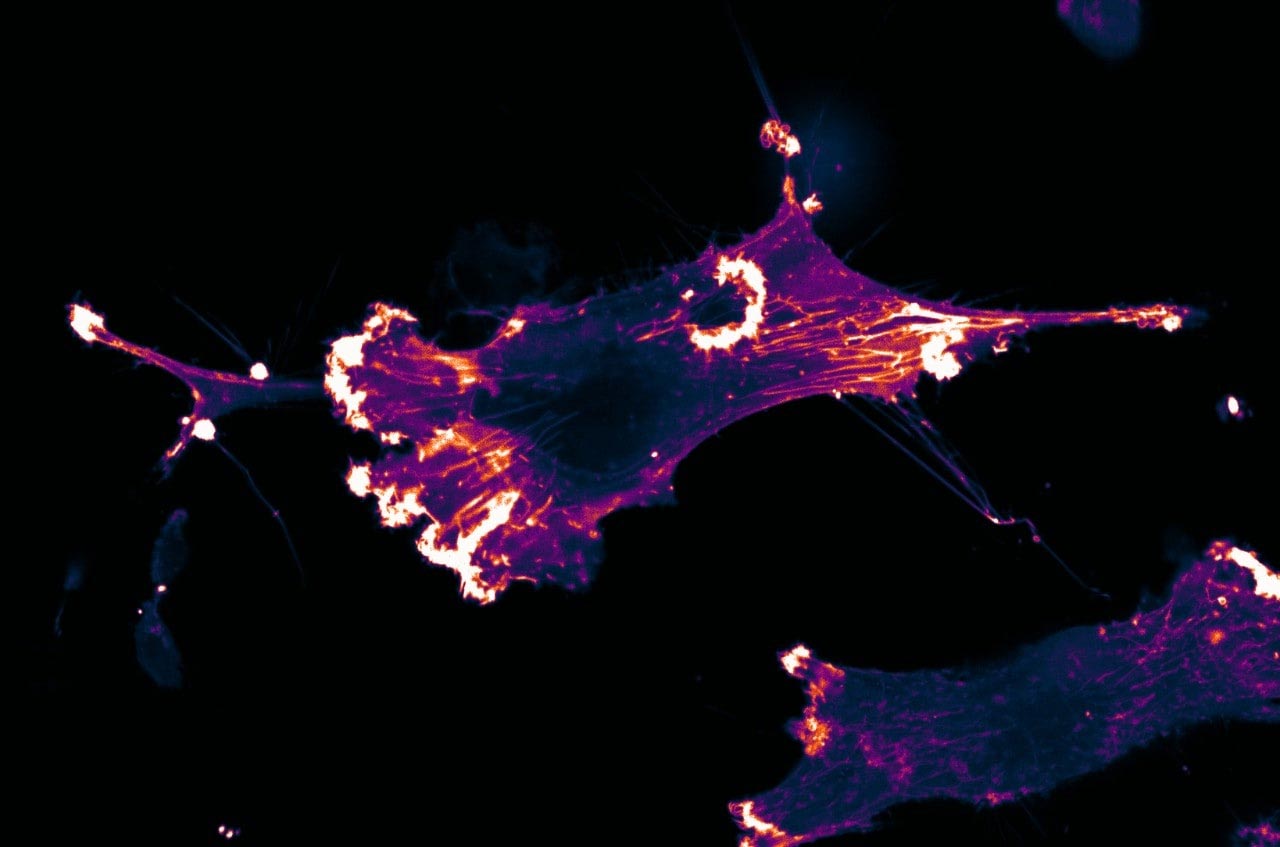
Researchers have identified a cell communication pathway that controls cell growth and survival, and the finding could eventually help to develop treatments for diseases such as cancer and diabetes.
Effective communication, crucial to human relationships, is also essential for the destruction of cancer cells within the body.
In the body’s cells, communication involves the transmission of molecular or chemical signals. Just as a faulty antenna results in a garbled TV image, if these molecular signals are distorted, information is lost, and the outcomes can be catastrophic.
Biology and Mathematics
Researchers from the Charles Perkins Centre, University of Sydney and Monash University’s Biomedicine Discovery Institute have recently identified a cell communication pathway that controls cell growth and survival. The finding could eventually help to develop treatments for diseases such as cancer and diabetes.
Central to the discovery was a powerful combination of cell biology (conducted by PhD students Alison Kearney and Dr. Dougall Norris under the supervision of Dr. James Burchfield and Professor David James, University of Sydney) and mathematical modeling (conducted by Milad Ghomlaghi under the supervision of Dr. Lan Nguyen, Monash University).
“We were able to see the molecules involved in communication, and therefore, see when and where they are needed in the cell, and what happens when things go wrong,” Dr. Burchfield said.
Dr. Nguyen described the discovery as a “powerful regulator of the insulin signaling network.”
A cancer cell (blue) reacts to removal of the insulin-control mechanism. This causes critical changes in cell behavior (the red, fire-like response towards the end of the video).
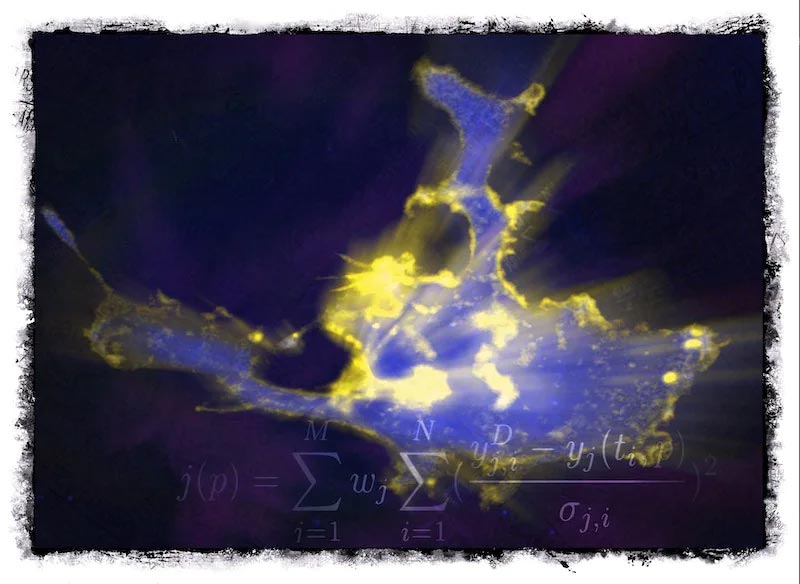
Mathematical modeling researchers used this information to predict how the molecules interact.
These predictions were then tested with further microscopic experiments. When repeated over and over, an understanding of this highly complex system was gleaned.
The findings were published in the journal eLife on July 13, 2021.
Insulin Moderation Signal Found
Insulin is a potent signal for growth that increases in the body following a meal to promote the storage of sugar in muscle and fat cells. If the insulin signal is inadequate, diseases like diabetes can develop. Conversely, if the signal cannot be adequately switched off, cancer can develop. Understanding where these signaling processes can go wrong is therefore crucial for understanding disease development and designing new treatments.
“We have discovered a new part of cell communication that is responsible for preventing the insulin signal from overactivating,” Dr. Burchfield said.
“The mechanism can be compared to a thermostat in a heater or oven that prevents things from getting too hot. If cells were to lose this mechanism, the growth signal is no longer controlled, and tumors could develop.
“There is still a lot we can learn about this sensitive signal system: some anti-cancer drugs may even impair the cell mechanism, ironically leading to increased tumor growth and drug resistance. Identifying these mechanisms and understanding how they work will aid the development of better cancer therapies.”
Further studies will explore this mechanism in relation to cancer drug resistance, and how this can be leveraged to improve treatment regimes.
Reference: “Akt phosphorylates insulin receptor substrate to limit PI3K-mediated PIP3 synthesis” by Alison L Kearney, Dougall M Norris, Milad Ghomlaghi, Martin Kin Lok Wong, Sean J Humphrey, Luke Carroll, Guang Yang, Kristen C Cooke, Pengyi Yang, Thomas A Geddes, Sungyoung Shin, Daniel J Fazakerley, Lan K Nguyen, David E James and James G Burchfield, 13 July 2021, eLife.
DOI: 10.7554/eLife.66942
This work was funded by Australian Research Council (ARC) project grant number DP180103482 awarded to DEJ and JGB, and National Health and Medical. Research Council (NHMRC) project grant number GNT1120201 awarded to DEJ.
Never miss a breakthrough: Join the SciTechDaily newsletter.
Follow us on Google and Google News.