
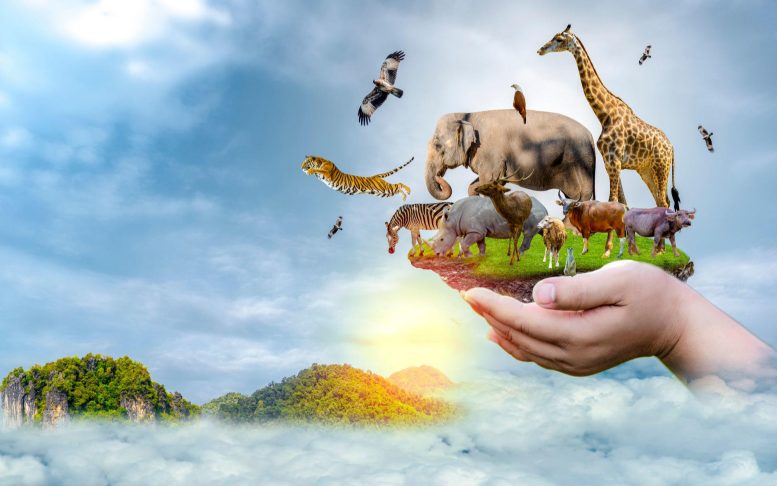
Cryobanking offers a promising conservation strategy, preserving genetic material to prevent extinctions and enabling future species restoration efforts.
Amidst the dire biodiversity crisis, underscored by a staggering 69% drop in global animal populations since 1970, experts are turning to an innovative solution to help avert species extinction. Analogous to how egg-freezing offers humans the option to delay fertility, the technique of cryo-freezing animal genetic samples might be pivotal in halting the decline of various species.
A recent paper published in the journal Zoo Biology, highlights the profound promise of cryobanks, or living cell banks, in addressing global conservation challenges.
These living cell banks preserve genetic materials from animals, such as DNA, embryos, semen, and live tissue, at ultra-low temperatures. These cells can be cultured and used for various applications, including genetic analysis, assisted reproductive techniques, ensuring genetic diversity in animal populations, and even potentially reintroducing species back into their natural habitats.
For the study, researchers analyzed the contents of the Frozen Zoo at the San Diego Wildlife Alliance (SDZWA) – the world’s largest and most diverse collection of living genetic samples – to develop a framework for the prioritization of species for future sampling. Researchers also used aggregated data from the world’s largest database of knowledge on species – the Species360 Zoological Information Management System (ZIMS) – to identify opportunities for future genetic sample collection.
A Lifeline for Threatened and Extinct-in-the-Wild Species
The study shows that 965 different species, including 5% of amphibians, birds, mammals, and reptiles listed as threatened on the IUCN Red List are currently stored in the SDZWA Frozen Zoo and that further sampling from zoos and aquariums could significantly increase that representation to 16.6%, by providing access to an additional 707 threatened species.
Additionally, genetic samples of 50% of the species currently listed as extinct in the wild are already represented within the SDZWA Frozen Zoo, but sampling from the zoological community can increase this number to 91% – potentially providing a critical lifeline for these species on the brink of extinction.
Lead study author, Dr. Andrew Mooney, Dublin Zoo and Trinity College Dublin’s School of Natural Sciences, emphasizes the significance of the study, saying.
“This study not only highlights the incredible work done by the San Diego Zoo Wildlife Alliance to date, but also the collective potential of the global zoo and aquarium community in further contributing to global cryobanking initiatives and conservation priorities. As wildlife populations continue to decline around the globe, there has never been a more critical time to collect and preserve genetic samples from threatened species. Cryobanked samples provide unparalleled conservation opportunities, however, we must make a concerted effort to work together and collect samples now, before it is too late.”
Yvonne Buckley, Professor of Zoology in Trinity’s School of Natural Sciences, says:
“We are in a biodiversity extinction crisis with over a million species likely to be threatened with extinction over the coming decades. While our first priority is to prevent species from declining in the wild, cryobanking provides a means to safeguard crucial genetic diversity and reintroduce it back into populations to increase their adaptability and resilience.”
Co-author Johanna Staerk, Species360 Conservation Science Alliance, says:
“This study highlights the immense potential of cryobanking in safeguarding endangered species as well as the role of zoos and aquariums in conservation. Given how difficult it is to obtain genetic samples from wild species, zoos and aquariums provide the ideal resource from which to collect genetic samples to ensure the future survival of species.”
Urgent Need for a Global Cryobanking Network
Oliver A. Ryder, Kleberg Endowed Director of Conservation Genetics, San Diego Zoo Wildlife Alliance, says:
“Over forty years of cryobanking viable cells in the Frozen Zoo has produced a substantive and impactful resource for genomics-based biodiversity discovery and demonstrated possibilities for cellular-based genetic rescue. Urgently needed are expanded efforts in nations across the globe to establish a distributed network of biobanks to make cell-based genetic resources available in an equitable manner and provide future generations with conservation options.”
Marlys Houck, Curator of the Frozen Zoo, San Diego Zoo Wildlife Alliance, and co-author on the study remarked:
“Dr. Kurt Benirschke started the Frozen Zoo in 1975 and hundreds of samples continue to be added each year. Due to his foresight, we have cell lines from species and individuals banked decades ago, some that had not reproduced. Their genetic diversity is not represented in current populations but is available for future genetic rescue through the samples in the Frozen Zoo.”
In addition to the framework suggesting which species need to be prioritized for genetic sampling, the study authors also encourage the formation of a global cryobanking database, facilitating collaborative efforts in preserving genetic diversity.
The study was the result of a workshop held at the IUCN Conservation Planning Specialist Group (CPSG) meeting in 2016 held by Species360 Conservation Science Alliance in collaboration with Oliver Ryder from the Frozen Zoo.
The Role of Cryobanking in Saving Species from Extinction – A Case Study
The powerful role of cryobanking in conservation is exemplified through ongoing efforts to save the now functionally extinct northern white rhino. With only two surviving females, scientists are working to save the subspecies from disappearing forever through assisted reproductive techniques using samples from the Frozen Zoo.
While the example of the northern white rhino is an eleventh-hour attempt to save the subspecies, study authors stress the importance of proactively prioritizing species and establishing a global cryobanking database to ensure conservation actions can be taken much sooner.
Cryobanking may be the only lifeline to save species on the brink of extinction, such as the northern white rhino and the vaquita, due to the availability of living cell cultures for these species. Regrettably, these possibilities will never be realized for the recently extinct Yangtze River dolphin and the Christmas Island pipistrelle – for which no living biological samples exist.
However, sampling opportunities still exist for most species. Considering that 71% of species listed as ‘least concern’ on the IUCN Red List of Threatened Species are at risk of extinction due to the impacts of climate change, the storage of genetic samples taken now could help conserve those species in the future.
Reference: “Maximizing the potential for living cell banks to contribute to global conservation priorities” by Andrew Mooney, Oliver A. Ryder, Marlys L. Houck, Johanna Staerk, Dalia A. Conde and Yvonne M. Buckley, 7 June 2023, Zoo Biology.
DOI: 10.1002/zoo.21787
The study was funded by the Irish Fulbright Commission, the Irish Research Council, and Species360.
Never miss a breakthrough: Join the SciTechDaily newsletter.
Follow us on Google and Google News.