
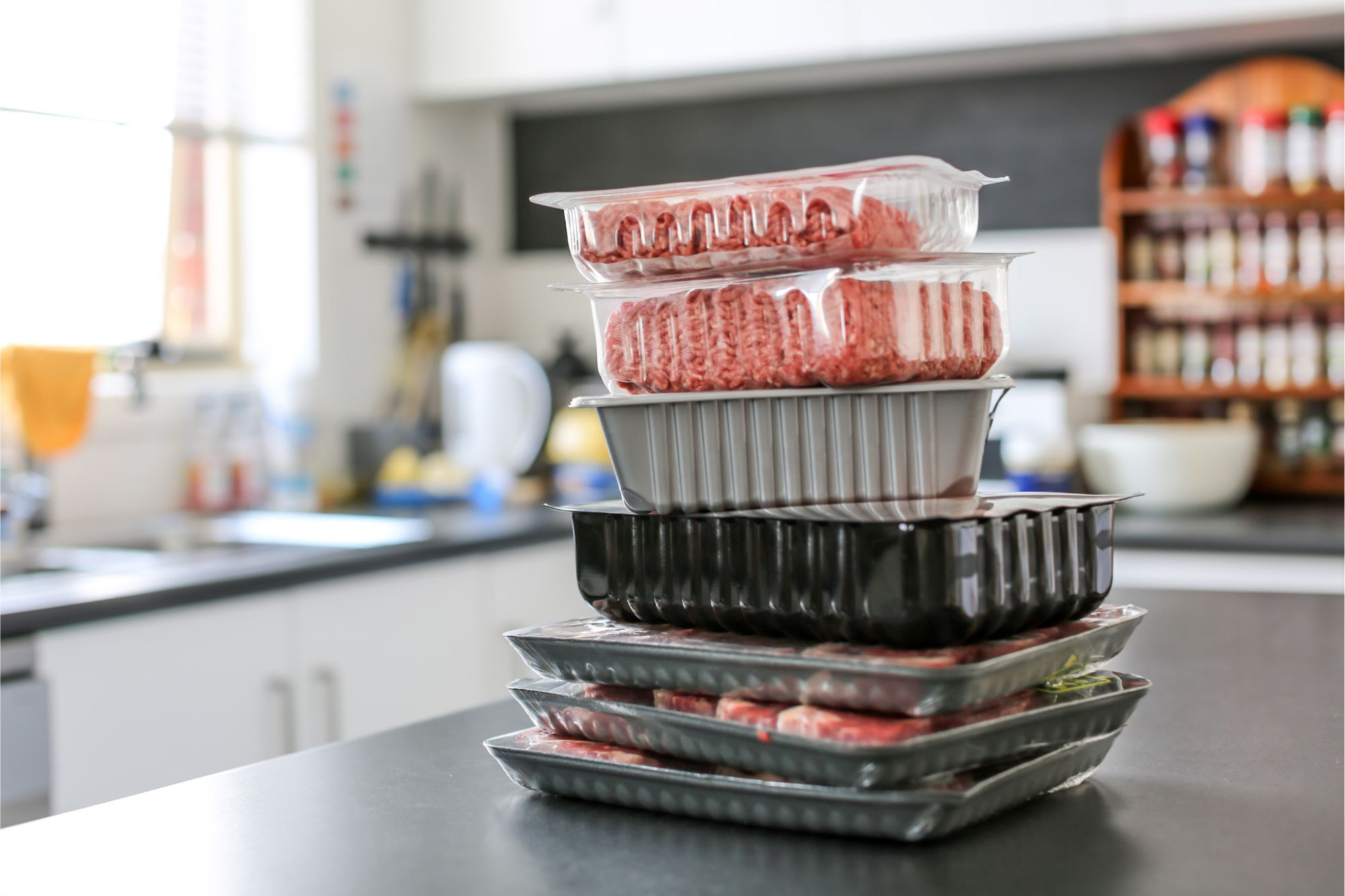
Researchers identified as many as 9,936 distinct chemicals in a single plastic food packaging product.
Plastic is a very complex material that can contain many different chemicals, some of which can be harmful. This is also true for plastic food packaging.
“We found as many as 9936 different chemicals in a single plastic product used as food packaging,” said Martin Wagner, a professor at the Norwegian University of Science and Technology (NTNU’s) Department of Biology.
Wagner has been working with chemicals in plastic products for several years. He is part of a research group at NTNU that has now published its findings in the Environmental Science & Technology journal. PhD candidates Molly McPartland and Sarah Stevens from NTNU are the lead authors of both studies.
Interfering with hormones and metabolism
In one study, the researchers looked at 36 different plastic products that are used to package food. These products came from five countries; the United States, the United Kingdom, South Korea, Germany, and Norway.
“In most of these plastic products, we found chemicals that can affect the secretion of hormones and metabolism,” Wagner said.
These functions are absolutely vital. Hormones are the body’s messengers. They are secreted from various different glands and enable the different organs to communicate with each other. Metabolism is sum of the various processes that enable the body to use nutrients to provide the body with energy and substances it needs to function.
Affects body signals
In the second study, researchers looked at different combinations of plastic chemicals to see the possible effect they have on G-protein-coupled receptors. These receptors play an important role in the transmission of signals in the body.
“We identified 11 chemical combinations from plastic products that affect these signal receptors,” says Associate Professor Wagner.
The researchers have found new ways in which these chemical mixtures can affect the transmission of signals in the body.
Absorbed by the body
“These and previous findings show that plastic exposes us to toxic chemicals. They support the theory that we need to redesign plastic to make it safer,” Wagner said.
Previously, it was uncertain whether the chemicals could be released into the environment under normal conditions, or whether they remain bound in the plastic. However, a few years ago, another research group proved that most plastic products leach chemicals when submerged in water.
Wagner was also part of this research group. During the study, they found chemicals that can affect fertility in humans.
Because plastic contains so many different chemicals, researchers still can only identify a few of them at a time. This means we still know very little about the effects that most of these chemicals have.
References:
“Plastic Food Packaging from Five Countries Contains Endocrine- and Metabolism-Disrupting Chemicals” by Sarah Stevens, Molly McPartland, Zdenka Bartosova, Hanna Sofie Skåland, Johannes Völker and Martin Wagner, 5 March 2024, Environmental Science & Technology.
DOI: 10.1021/acs.est.3c08250
“Beyond the Nucleus: Plastic Chemicals Activate G Protein-Coupled Receptors” by Molly McPartland, Sarah Stevens, Zdenka Bartosova, Ingrid Gisnås Vardeberg, Johannes Völker and Martin Wagner, 5 March 2024, Environmental Science & Technology.
DOI: 10.1021/acs.est.3c08392
The study was funded by the European Union’s Horizon 2020 research and innovation program.
Never miss a breakthrough: Join the SciTechDaily newsletter.
Follow us on Google and Google News.
1 Comment
As a now eighty year old lay victim of then (1981, forty-three years and counting) previously undiagnosed food allergies aggravated with FDA approved food poisoning I can’t authoritatively address the issue of endocrine and metabolic disrupters in plastics. However, I can comment on them as allergy (acidic blood) aggravating food additives, namely soy (allergen/phytoestrogen/hexane), MSG (neurotoxic), propylene glycol (PG; gout/pseudogout) and TBHQ (neurological/neuromuscular and vision). Consuming foods from plastic containers much of the time with no obvious ill effects, I find it difficult to believe that plastic packaging is anywhere near as toxic as some of the officially approved food additives, especially in the US where food safety is a decades old fraud.