
Close Menu
    Facebook X (Twitter) Instagram
    SciTechDaily
    • Biology
    • Chemistry
    • Earth
    • Health
    • Physics
    • Science
    • Space
    • Technology
    Facebook X (Twitter) Pinterest YouTube RSS
    SciTechDaily
    Home»Technology»An Attractive Cheap Organic Material for New Generation of Batteries
    Technology

    An Attractive Cheap Organic Material for New Generation of Batteries

    By Skolkovo Institute of Science and Technology (Skoltech)May 28, 2021No Comments3 Mins Read
    Facebook Twitter Pinterest Telegram LinkedIn WhatsApp Email Reddit
    Share
    Facebook Twitter LinkedIn Pinterest Telegram Email Reddit
    Applied Energy Materials Volume 4 Issue 5
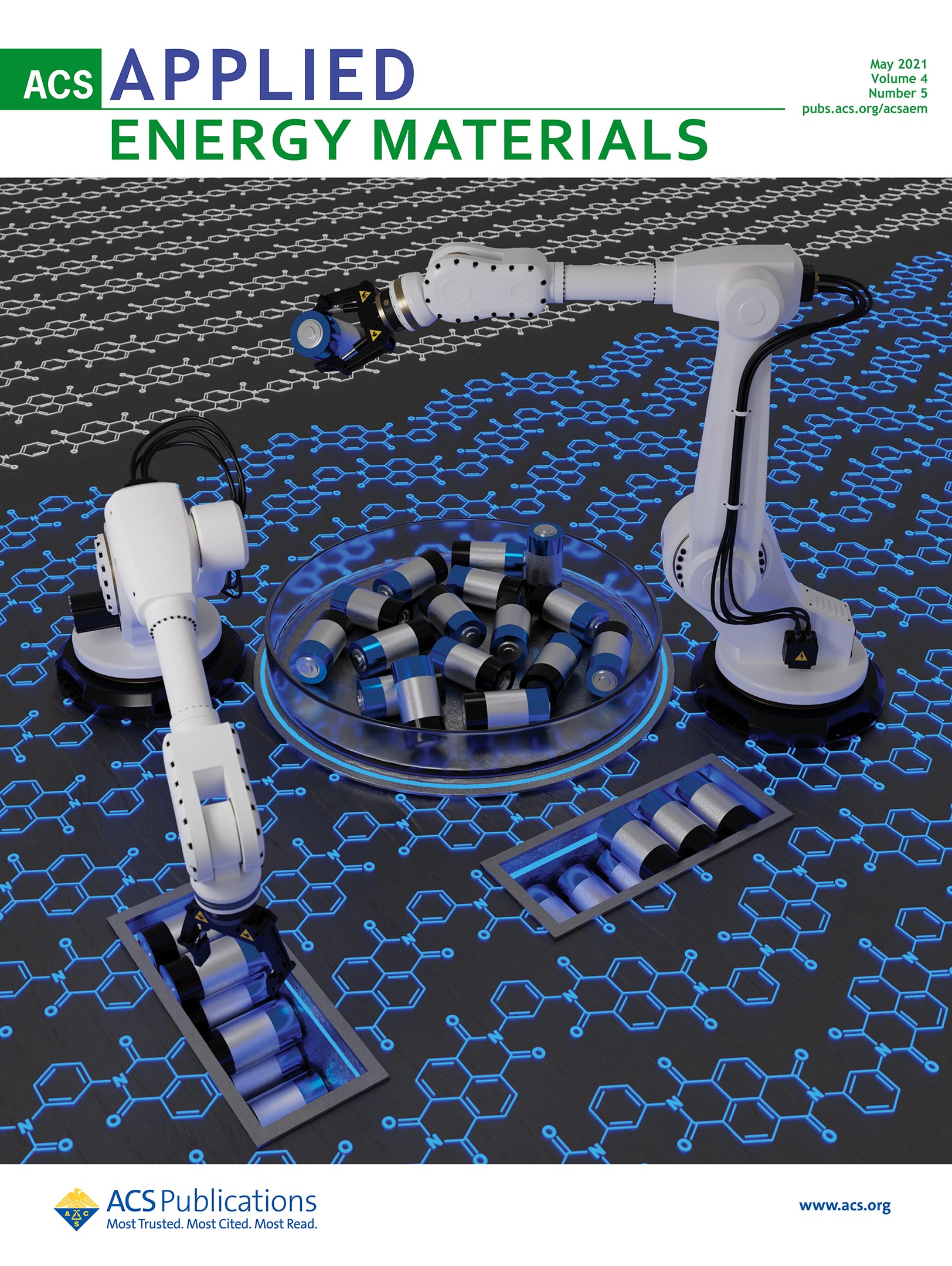
    Cover of ACS Applied Energy Materials Volume 4 Issue 5. Credit: ACS Applied Energy Materials

    A new polyimide material designed by Skoltech offers faster, longer-lasting organic battery power thanks to its unique molecular structure and high surface area.

    A new report by Skoltech scientists and their colleagues describes an organic material for the new generation of energy storage devices, which structure follows an elegant molecular design principle. It has recently been published in ACS Applied Energy Materials and made the cover of the journal.

    While the modern world relies on energy storage devices more and more heavily, it is becoming increasingly important to implement sustainable battery technologies that are friendlier to the environment, are easy to dispose, rely on abundant elements only, and are cheap. Organic batteries are desirable candidates for such purposes. However, organic cathode materials that store a lot of energy per mass unit can be charged quickly, are durable, and can be easily produced on a large scale at the same time, remain underdeveloped.

    Simple Polyimide Offers Big Energy Potential

    To address this problem, researchers from Skoltech proposed a simple redox-active polyimide. It was synthesized by heating a mixture of an aromatic dianhydride and meta-phenylenediamine, both easily accessible reagents. The material showed promising features in various types of energy storage devices, such as lithium-, sodium- and potassium-based batteries. It had high specific capacities (up to ~140 mAh/g), relatively high redox potentials, as well as decent cycling stability (up to 1000 cycles), and abilities to charge quickly (<1 min).

    The new material’s energy and power outputs were superior compared to its previously known isomer, which is derived from para-phenylenediamine. With the help of collaborators from the Institute of Problems of Chemical Physics of the Russian Academy of Sciences, it was shown that there were two reasons for the better performance of the new polyimide. Firstly, it had smaller particles and a much higher specific surface area, which enabled easier diffusion of the charge carriers. Secondly, the spatial arrangement of the neighbor imide units in the polymer allowed a more energetically favorable binding of metal ions, which increased the redox potentials.

    “This work is interesting not just because another organic cathode material was researched,” says Roman Kapaev, a Skoltech PhD student who designed this study, “What we propose is a new molecular design principle for battery polyimides, which is using aromatic molecules with amino groups in meta positions as building blocks. For a long time, scientists have paid little attention to this structural motif, and used para-phenylenediamine or similar structures instead. Our results are a good hint for understanding how the battery polyimides should be designed on a molecular level, and it might lead to cathode materials with even better characteristics.”

    Reference: “m-Phenylenediamine as a Building Block for Polyimide Battery Cathode Materials” by Roman R. Kapaev, Alexey G. Scherbakov, Alexander F. Shestakov, Keith J. Stevenson and Pavel A. Troshin, 3 March 2021, ACS Applied Energy Materials.
    DOI: 10.1021/acsaem.1c00092

    Never miss a breakthrough: Join the SciTechDaily newsletter.
    Follow us on Google and Google News.

    Electrical Engineering Energy Materials Science Skoltech
    Share. Facebook Twitter Pinterest LinkedIn Email Reddit

    Related Articles

    Future of High Efficiency Perovskite Solar Cells Shines a Little Brighter

    Biofuel Cell: Wearable Device Turns the Touch of a Finger Into a Source of Power

    Highly Efficient Solar Energy Collectors Grown From Microscopic Seeds

    Researchers Watch Solid-State Batteries Charge and Discharge Using X-ray Tomography

    Invisible Solar Panels: How Tomorrow’s Windows Will Generate Electricity

    Supercapacitors Challenge Batteries: Powerful Graphene Hybrid Material for Highly Efficient Energy Storage

    New Efficiency Record Set by Novel Multi-Material Solar Cells

    New Material Can Store Solar Energy During the Day and Release it Later as Heat

    Nanosheet-Flower Structure Boosts Energy Storage

    Leave A Reply Cancel Reply

    • Facebook
    • Twitter
    • Pinterest
    • YouTube

    Don't Miss a Discovery

    Subscribe for the Latest in Science & Tech!

    Trending News

    New Pill Lowers Stubborn Blood Pressure and Protects the Kidneys

    Humans May Have Hidden Regenerative Powers, New Study Suggests

    Scientists Just Solved the Mystery of Why Crabs Walk Sideways

    Doctors Are Surprised by What This Vaccine Is Doing to the Heart

    This Popular Supplement May Boost Your Brain, Not Just Your Muscles

    Scientists Say This Simple Supplement May Actually Reverse Heart Disease

    Warming Oceans Could Trigger a Dangerous Methane Surge

    This Simple Movement Could Be Secretly Cleaning Your Brain

    Follow SciTechDaily
    • Facebook
    • Twitter
    • YouTube
    • Pinterest
    • Newsletter
    • RSS
    SciTech News
    • Biology News
    • Chemistry News
    • Earth News
    • Health News
    • Physics News
    • Science News
    • Space News
    • Technology News
    Recent Posts
    • AI Learns To Work Backward and Reveal Hidden Forces in Nature
    • Scientists Warn of Rising Male Childlessness As Global Fertility Changes
    • New Discovery Challenges Decades-Old Theory of DNA Damage and Aging
    • Scientists Just Rewrote Biology: “Hidden” Mechanism Could Transform Diabetes Treatment
    • Scientists Solve 320-Million-Year Mystery of Reptile Skin Armor
    Copyright © 1998 - 2026 SciTechDaily. All Rights Reserved.
    • Science News
    • About
    • Contact
    • Editorial Board
    • Privacy Policy
    • Terms of Use

    Type above and press Enter to search. Press Esc to cancel.