
Close Menu
    Facebook X (Twitter) Instagram
    SciTechDaily
    • Biology
    • Chemistry
    • Earth
    • Health
    • Physics
    • Science
    • Space
    • Technology
    Facebook X (Twitter) Pinterest YouTube RSS
    SciTechDaily
    Home»Science»Analysis of Ancient Bone Tools Shows Neanderthals Were Quite Sophisticated
    Science

    Analysis of Ancient Bone Tools Shows Neanderthals Were Quite Sophisticated

    By University of California - DavisMay 10, 2020No Comments3 Mins Read
    Facebook Twitter Pinterest Telegram LinkedIn WhatsApp Email Reddit
    Share
    Facebook Twitter LinkedIn Pinterest Telegram Email Reddit
    Neanderthal Bone Tools
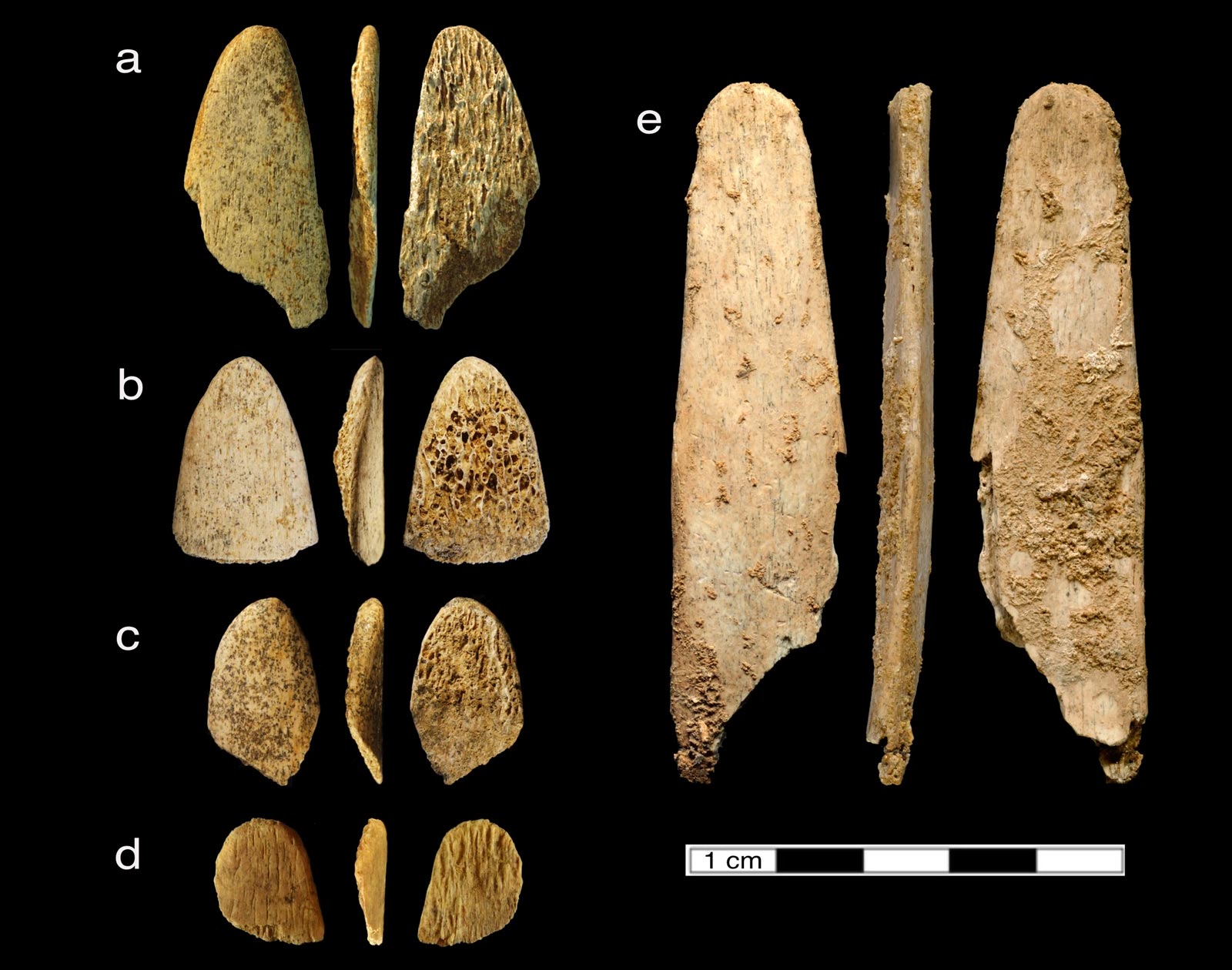
    Evidence continues to mount that the Neanderthals, who lived in Europe and Asia until about 40,000 years ago, were more sophisticated people than once thought. A new study from UC Davis shows that Neanderthals chose to use bones from specific animals to make a tool for a specific purpose: working hides into leather. Credit: Naomi Martisius, UC Davis

    Evidence continues to mount that the Neanderthals, who lived in Europe and Asia until about 40,000 years ago, were more sophisticated people than once thought. A new study from UC Davis shows that Neanderthals chose to use bones from specific animals to make a tool for specific purpose: working hides into leather.

    Naomi Martisius, research associate in the Department of Anthropology, studied Neanderthal tools from sites in southern France for her doctoral research. The Neanderthals left behind a tool called a lissoir, a piece of animal rib with a smoothed tip used to rub animal hides to make them into leather. These lissoirs are often worn so smooth that it’s impossible to tell which animal they came from just by looking at them.

    Martisius and colleagues used highly sensitive mass spectrometry to look at residues of collagen protein from the bones. The method is called ZooMS, or Zooarchaeology by Mass Spectrometry. The technique breaks up samples into fragments that can be identified by their mass-to-charge ratio and used to reconstruct the original molecule.

    Normally, this method would involve drilling a sample from the bone. To avoid damaging the precious specimens, Martisius and colleagues were able to lift samples from the plastic containers in which the bones had been stored and recover enough material to perform an analysis.

    Favoring bovine ribs over deer

    The results show that the bones used to make lissoirs mostly came from animals in the cattle family, such as bison or aurochs (a wild relative of modern cattle that is now extinct). But other animal bones from the same deposit show that reindeer were much more common and frequently hunted for food. So the Neanderthals were choosing to use only ribs from certain types of animals to make these tools.

    “I think this shows that Neanderthals really knew what they were doing,” Martisius said. “They were deliberately picking up these larger ribs when they happened to come across these animals while hunting and they may have even kept these rib tools for a long time, like we would with a favorite wrench or screwdriver.”

    Bovine ribs are bigger and more rigid than deer ribs, making them better suited for the hard work of rubbing skins without wearing them out or breaking them.

    “Neanderthals knew that for a specific task, they needed a very particular tool. They found what worked best and sought it out when it was available,” Martisius said.

    The results were published on May 8, 2020, in Scientific Reports. Coauthors on the study are Teresa Steele, professor of anthropology, and Mark Grote at UC Davis; Frido Welker, University of Copenhagen; Tamara Dogandžić, Virginie Sinet-Mathiot and Shannon McPherron, Max Planck Institute for Evolutionary Anthropology, Leipzig; William Rendu, Université de Bordeaux, France; Arndt Wilcke, Fraunhofer Institute for Cell Therapy and Immunology, Leipzig; and Marie Soressi, Leiden University, The Netherlands. The work was partly supported by the NSF.

    Reference: “Non-destructive ZooMS identification reveals strategic bone tool raw material selection by Neandertals” by Naomi L. Martisius, Frido Welker, Tamara Dogandžić, Mark N. Grote, William Rendu, Virginie Sinet-Mathiot, Arndt Wilcke, Shannon J. P. McPherron, Marie Soressi and Teresa E. Steele, 8 May 2020, Scientific Reports.
    DOI: 10.1038/s41598-020-64358-w

    Never miss a breakthrough: Join the SciTechDaily newsletter.
    Follow us on Google and Google News.

    Archaeology Neanderthals Popular UC Davis
    Share. Facebook Twitter Pinterest LinkedIn Email Reddit

    Related Articles

    Oldest Modern Human Genome Reconstructed Using DNA From 45,000-Year-Old Skull

    Archaeologists Discover Neanderthals and Homo sapiens Used Identical Nubian Technology

    Cave Excavation Shows Neanderthals Were Marine Pioneers – Ate Crab, Mussels, Seals & Dolphins

    Earliest Interbreeding Between Ancient Human Populations Discovered – Evolutionary Puzzle Solved

    Unraveling the Mystery of Neanderthal Death Rites – Discovery at ‘Flower Burial’ Site Offers “Unparalleled Opportunity”

    What Caused Neanderthal Extinction and Were Our Human Ancestors to Blame?

    Researchers Find the Last Neanderthal Necklace – Here’s What It Was Made From

    New Evidence Shows Humans Mastered Fire Earlier Than Thought

    European Cave Paintings Older Than Previously Thought, Might Have Been Painted by Neanderthals

    Leave A Reply Cancel Reply

    • Facebook
    • Twitter
    • Pinterest
    • YouTube

    Don't Miss a Discovery

    Subscribe for the Latest in Science & Tech!

    Trending News

    The Universe Is Expanding Too Fast and Scientists Can’t Explain Why

    “Like Liquid Metal”: Scientists Create Strange Shape-Shifting Material

    Early Warning Signals of Esophageal Cancer May Be Hiding in Plain Sight

    Common Blood Pressure Drug Shows Surprising Power Against Deadly Antibiotic-Resistant Superbug

    Scientists Uncover Dangerous Connection Between Serotonin and Heart Valve Disease

    Scientists Discover a “Protector” Protein That Could Help Reverse Hair Loss

    Bone-Strengthening Discovery Could Reverse Osteoporosis

    Scientists Uncover Hidden Trigger Behind Stem Cell Aging

    Follow SciTechDaily
    • Facebook
    • Twitter
    • YouTube
    • Pinterest
    • Newsletter
    • RSS
    SciTech News
    • Biology News
    • Chemistry News
    • Earth News
    • Health News
    • Physics News
    • Science News
    • Space News
    • Technology News
    Recent Posts
    • A Common Diabetes Drug May Hold the Key to Stopping HIV From Coming Back
    • Ancient “Syphilis-Like” Disease in Vietnam Challenges Key Scientific Assumptions
    • Drinking Alcohol To Cope in Your 20s Could Damage Your Brain for Life
    • Scientists Crack Alfalfa’s Chromosome Mystery After Decades of Debate
    • Ancient Ant-Plant Alliance Collapses As Predatory Wasps Move In
    Copyright © 1998 - 2026 SciTechDaily. All Rights Reserved.
    • Science News
    • About
    • Contact
    • Editorial Board
    • Privacy Policy
    • Terms of Use

    Type above and press Enter to search. Press Esc to cancel.