
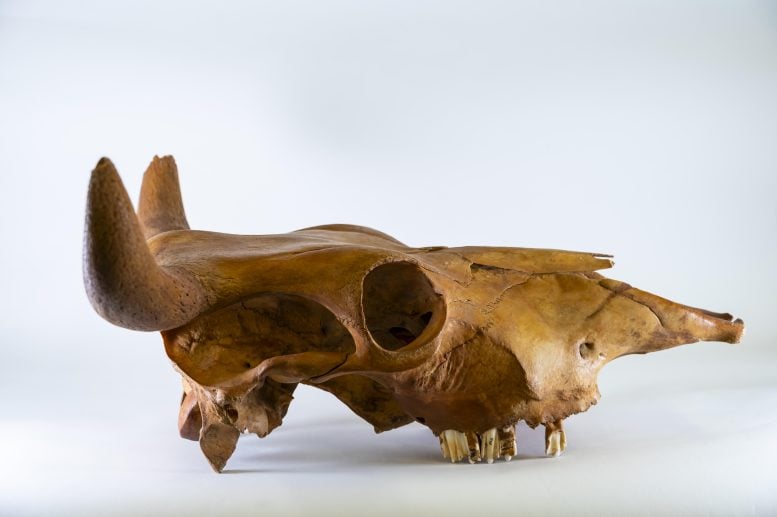
Ancient DNA reveals African cattle arrived in the Americas over a century earlier than previously thought, reshaping the history of early ranching.
While many associate cattle with iconic American imagery such as cowboys, cattle drives, and vast ranches, these animals were not native to the American continent. It was the Spanish who introduced cattle to America, transporting them from Europe via the Canary Islands.
Recent research examining ancient DNA from Spanish settlements in the Caribbean and Mexico suggests a revision to this narrative. The findings indicate that cattle were introduced from Africa during the early stages of colonization, a century before previously recorded accounts.
Records kept by Portuguese and Spanish colonists reference breeds from the Andalusian region of Spain but make no mention of transporting cattle from Africa. Some historians have interpreted this omission to mean that the first wave of colonists relied entirely on a small stock of European cattle initially shipped to the Caribbean Islands.
“Early studies concluded a few hundred animals were brought over in the early 16th century, which were then bred locally on Hispaniola. From there, the initial population was inferred to have spread across the Americas,” said lead author Nicolas Delsol, a postdoctoral associate at the Florida Museum of Natural History.
During his second expedition in 1493, Columbus brought the first cattle to the Caribbean, where they were used as farm animals and a source of food. These new transplants did so well that feral livestock became a nuisance on the Island of Hispaniola. The Spanish distributed cattle widely through the Caribbean, and by 1525, foreign livestock were being farmed in parts of Central and South America. The Portuguese meanwhile moved related breeds from mainland Europe and the Cape Verde Islands to modern-day Brazil.
But researchers have reason to suspect the version of events gleaned from historical records was incomplete. In 1518, Emperor Charles V passed an edict making it legal to transport enslaved people directly from their homelands to the Americas, a practice which commenced less than three years later. In the ensuing decades, enslaved Africans would play a vital — and often unrecognized — role in the development of cattle ranching.
“The earliest ranchers in Mexico were nearly all of African ancestry,” Delsol said. “We know that people like the Fulani in West Africa formed herder societies in which they lived in what could be described as a symbiosis with cattle. Both these lines of evidence made us think there was a strong possibility that the Spanish brought cattle from the same region as the people they enslaved.”
Genetic Clues Indicate Hybridization
Previous genetic studies seem to support this idea. DNA from modern American cattle bears the signature of their European ancestry, but it also reveals a history of hybridization with breeds from Africa and Asia. Without archaeological data, however, it’s not possible to pinpoint exactly when these events took place.
The first records of African cattle in the Americas date back to the 1800s, when humped zebu from Senegal and n’dama cattle from Gambia were moved to areas with similar environments across the Atlantic. Beginning at roughly the same time and continuing into the 1900s, cattle domesticated in southeast Asia for thousands of years were also imported from India. Hybridization among these cattle led to common breeds that are still around today, such as the Senepol from the Virgin Islands and the American Brahman common in the tropics.
Do these records represent the first instance of cattle imported from regions other than Europe, or are they merely the continuation of a longstanding practice that had, until then, gone undocumented?
Searching for the Earliest African Cattle in the Americas
The only way to know for sure, Delsol said, would be to sequence ancient DNA from cows and bulls preserved during the colonial era. Researchers in only one other study had attempted to do, using 16th century bones from Jamaica, but their results were inconclusive.
Delsol gathered 21 bones from several archaeological sites. Seven were excavated in Puerto Real, a former ranching town in Hispaniola established in 1503 and abandoned decades later due to rampant piracy in the region. The remaining specimens correspond to 17th and 18th century sites in Central Mexico, including settlements and convents in a long arc from Mexico City to the Yucatan Peninsula.
After extracting DNA from bone material, he compared their genetic sequences with those of modern breeds around the world. As expected, most of the sequences shared a strong relationship with cattle from Europe, which was especially true for specimens from Puerto Real. Six of the bones from Mexico also had sequences common in African cattle but, crucially, also found in breeds present in southern Europe.
“To make things difficult, there are cattle in Spain similar to those in Africa due to centuries-long exchanges across the Strait of Gibraltar,” Delsol said.
The Earliest Known African Cattle in the Americas
But a tooth found in Mexico City stood out from the rest. Buried in the tooth’s mitochondria was a short sequence virtually unknown from anywhere other than Africa. The cow it came from likely lived in the late 1600s, pushing back the introduction of African cattle by more than a century.
When looked at over time, the bones also reveal a pattern of increasing genetic diversity. The oldest bones from Puerto Real and Xochimilco (a settlement south of Mexico City) all originated from European stock, whereas those from later sites in Mexico seem to have descended from animals more common in the Iberian Peninsula and Africa.
Taken together, the results suggest that Spanish settlers began importing cattle directly from West Africa as far back as the early 1600s.
Reference: “Ancient DNA confirms diverse origins of early post-Columbian cattle in the Americas” by Nicolas Delsol, Brian J. Stucky, Jessica A. Oswald, Charles R. Cobb, Kitty F. Emery and Robert Guralnick, 1 August 2023, Scientific Reports.
DOI: 10.1038/s41598-023-39518-3
“Cattle ranching profoundly shaped the landscape and social systems across the American continents,” Delsol said. “We’ve known about the diverse genetic ancestry of American cattle for a long time, and now we have a more complete chronology for their introduction.”
The study was funded by the National Science Foundation.
Never miss a breakthrough: Join the SciTechDaily newsletter.
Follow us on Google and Google News.
1 Comment
Every time I read your blog, I’m reminded of the beauty that exists outside of my comfort zone. Thank you for pushing me to dream bigger.