
Close Menu
    Facebook X (Twitter) Instagram
    SciTechDaily
    • Biology
    • Chemistry
    • Earth
    • Health
    • Physics
    • Science
    • Space
    • Technology
    Facebook X (Twitter) Pinterest YouTube RSS
    SciTechDaily
    Home»Earth»Ancient Lava Tubes Reveal Hidden Clues to Life Beyond Earth
    Earth

    Ancient Lava Tubes Reveal Hidden Clues to Life Beyond Earth

    By Cassidy Delamarter, University of South FloridaNovember 26, 20242 Comments3 Mins Read
    Facebook Twitter Pinterest Telegram LinkedIn WhatsApp Email Reddit
    Share
    Facebook Twitter LinkedIn Pinterest Telegram Email Reddit
    Accumulations of Gypsum in La Corona Lava Tube System
    Massive accumulations of gypsum and other sulfates in the La Corona lava tube system in Lanzarote, Spain. Credit: Bogdan Onac

    Lava tubes on Earth have been studied for signs of ancient microbial life, providing a model for searching for life in similar structures on Mars.

    A comprehensive study of lava tubes—caves formed by cooling lava after volcanic eruptions—has shed light on how Earth’s ancient environments could aid the search for life on Mars.

    Conducted by an international team of researchers led by Bogdan P. Onac, professor at the USF School of Geosciences, the study explores how these lava tubes could serve as valuable analogs for Martian caves, offering crucial insights for the quest to find extraterrestrial life.
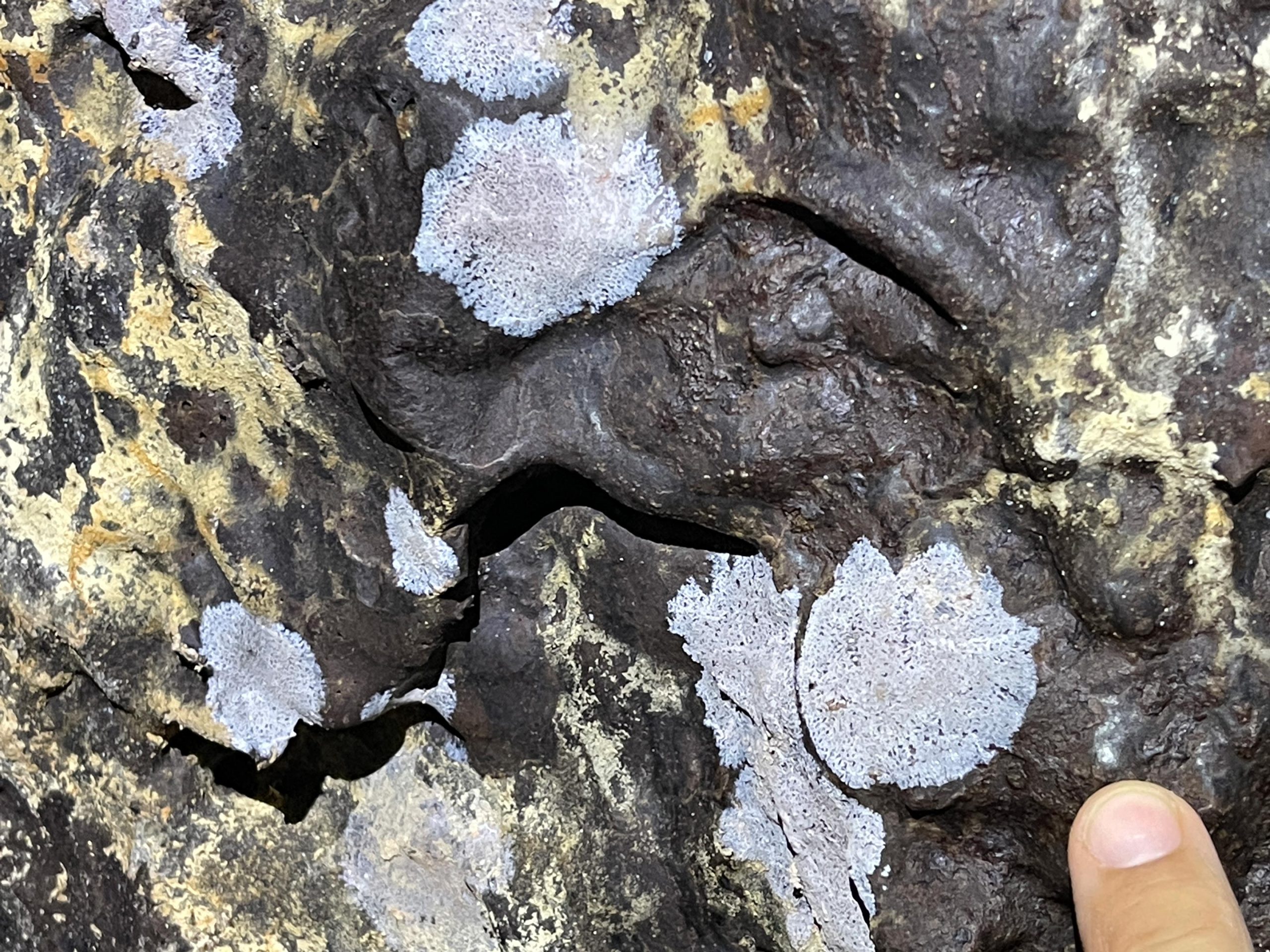
    White Microbial-Like Colonies on Lava Tube Substrate
    White microbial-like colonies can be seen on the lava tube substrate. Credit: Bogdan Onac

    Detailed Mineralogical Studies on Lanzarote

    In the study, published in Communications Earth & Environment, the team gathered mineral deposits from six lava tubes on the Spanish island of Lanzarote, just west of North Africa. Some of the tubes are so large they are used to host underground concerts.

    “While the lava tubes on Lanzarote were discovered several years ago, we are the first to complete such a detailed study of minerals and microorganisms,” Onac said.
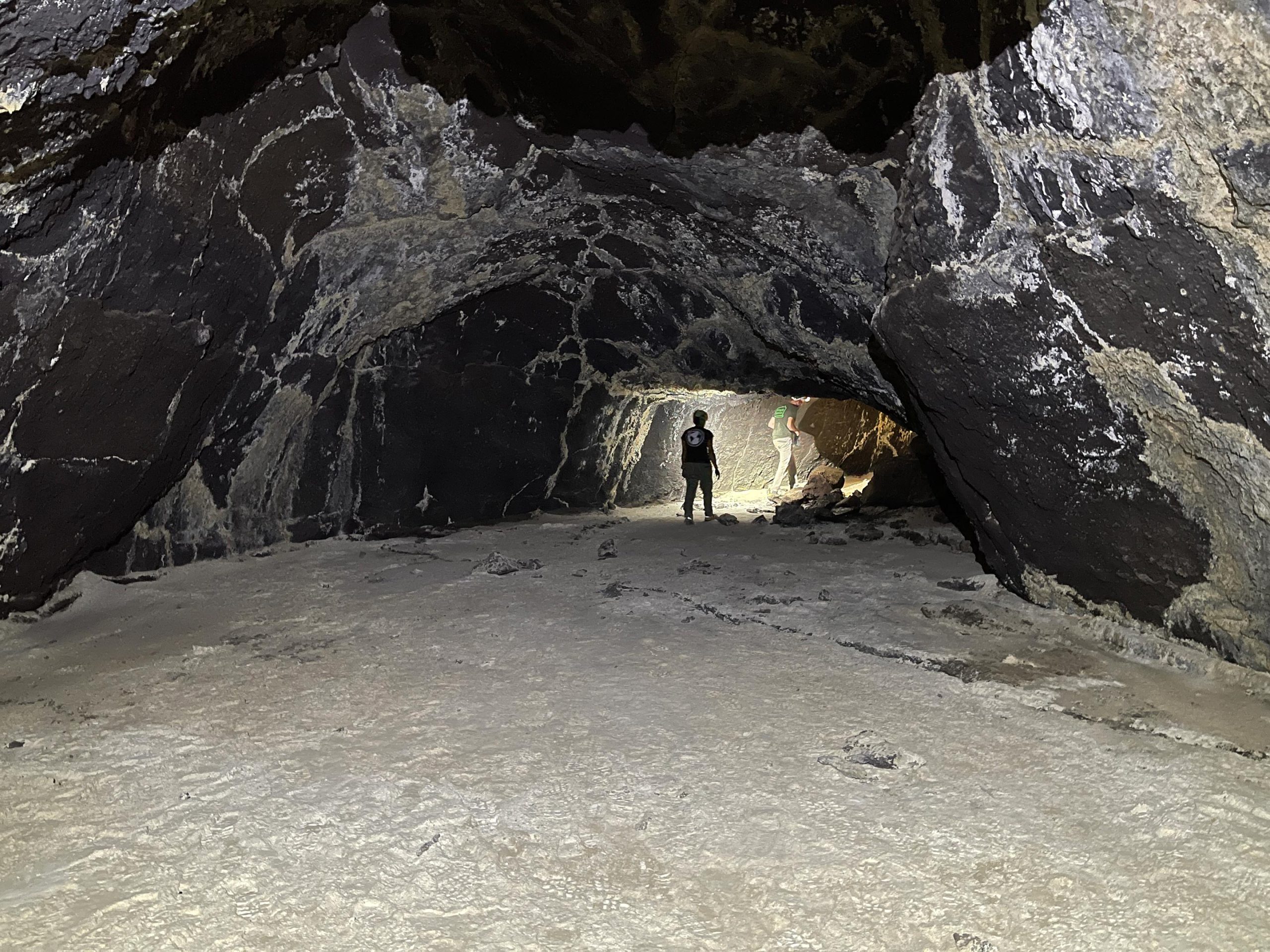
    Sulfate Deposits in the La Corona Lava Tube System
    Sulfate deposits in the La Corona lava tube system in Lanzarote, Spain. Credit: Bogdan Onac

    Onac and the team used a range of advanced molecular, isotopic, and mineralogical techniques to examine the deposits and create a comprehensive understanding of the minerals they held.

    They learned the volcanic rock in the lava tubes created a protective environment that helped shield the minerals and organic compounds from weathering, ultimately preserving the minerals as records of past ecosystems.
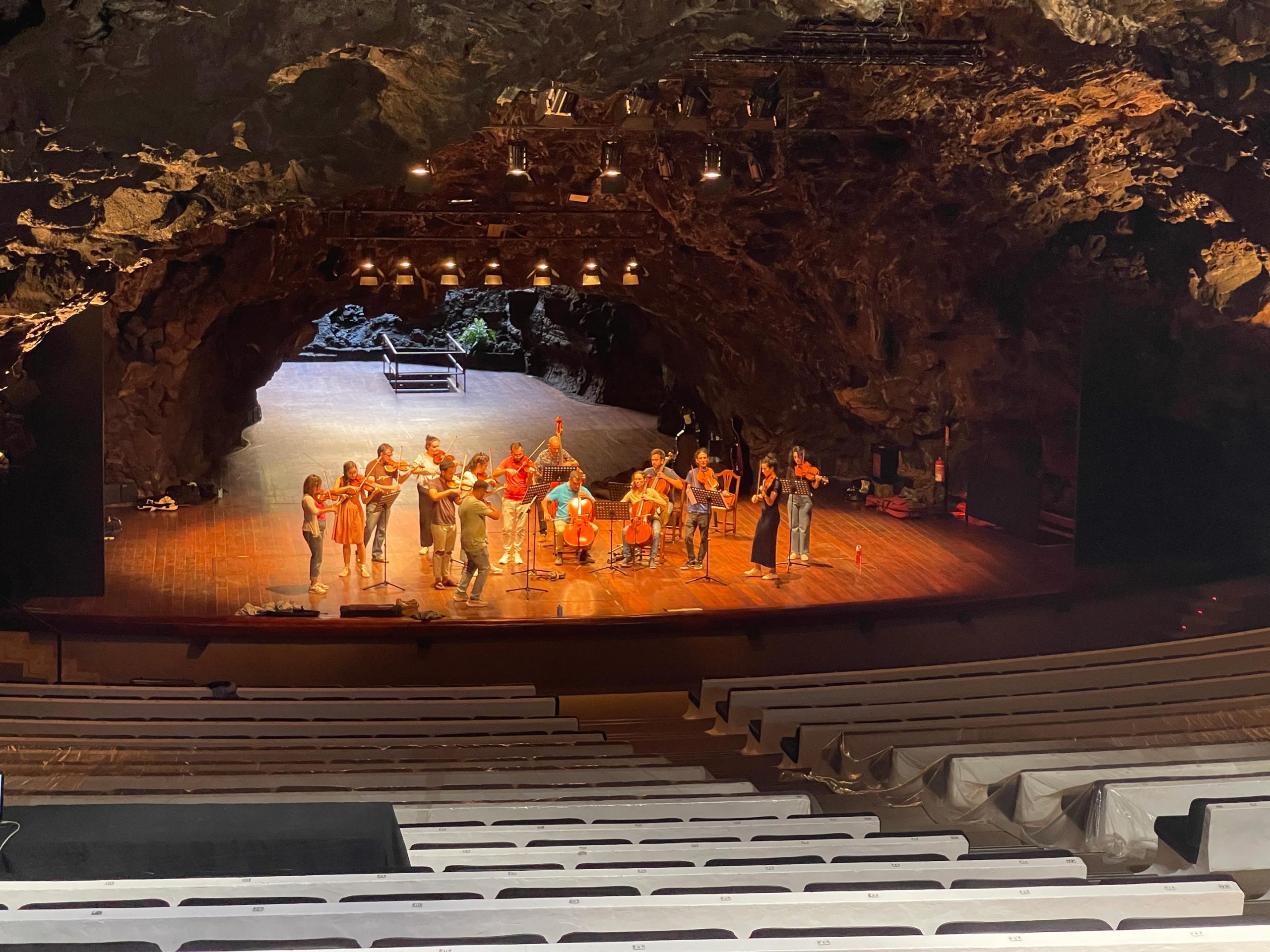
    Concert Hall in La Corona Lava Tube System
    The concert hall in Jameos del Agua, part of the La Corona lava tube system in Lanzarote, Spain. Credit: Bogdan Onac

    Implications for Astrobiology and Planetary Exploration

    The team found preserved biosignatures, including calcium and sodium sulfates. This discovery indicates microbial activity and microorganisms, such as bacteria, were once active in the caves.
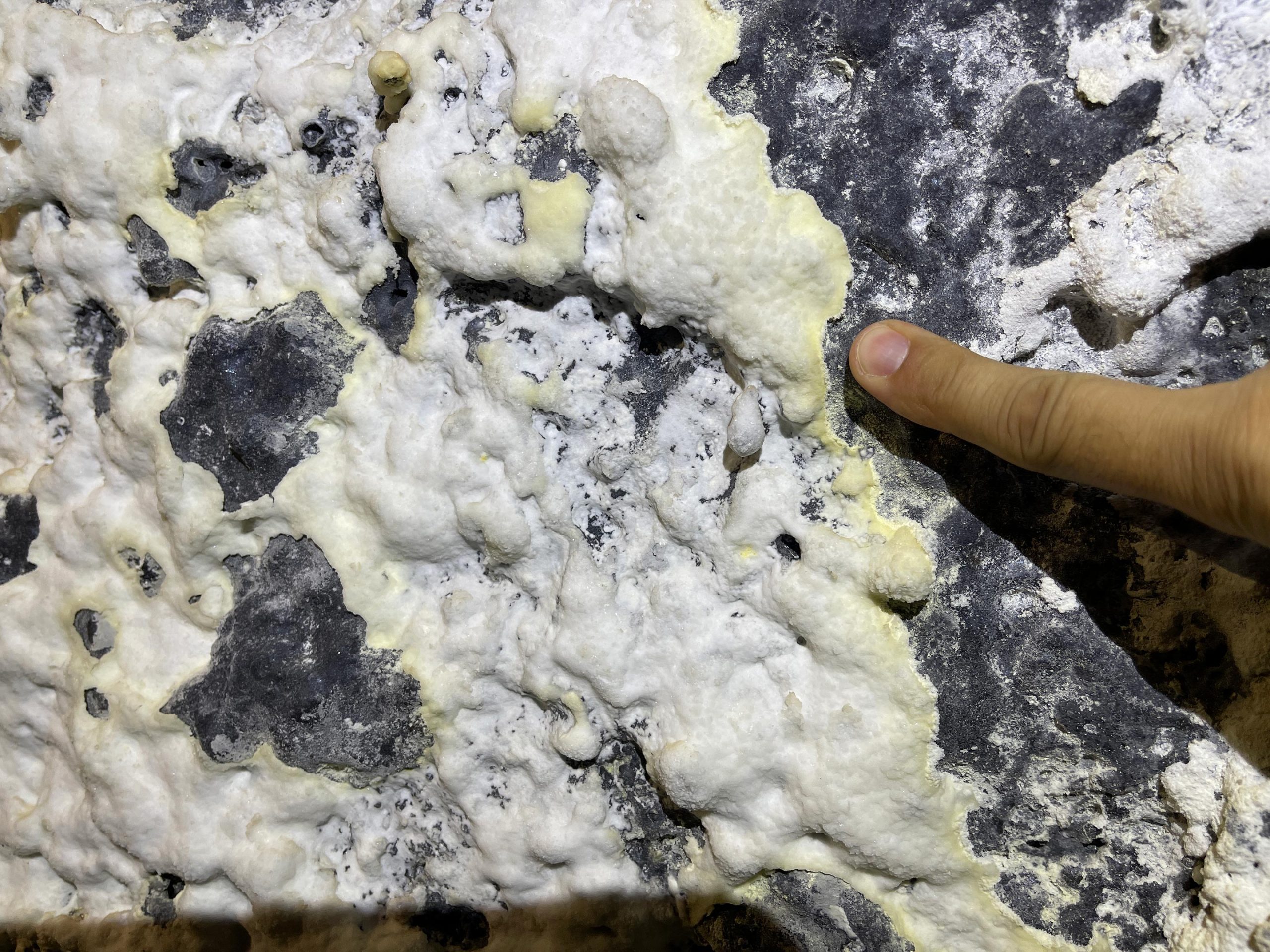
    Close-Up View of Gypsum Crusts in Lava Tube
    Close-up view of gypsum crusts in a lava tube in Lanzarote, Spain. Credit: Bogdan Onac

    “This study adds to our understanding of geological and environmental changes on Earth and highlights lava tubes as potential refuges for microbial life, holding significant implications for astrobiology, particularly in identifying biosignatures on Mars and other celestial bodies,” Onac said.
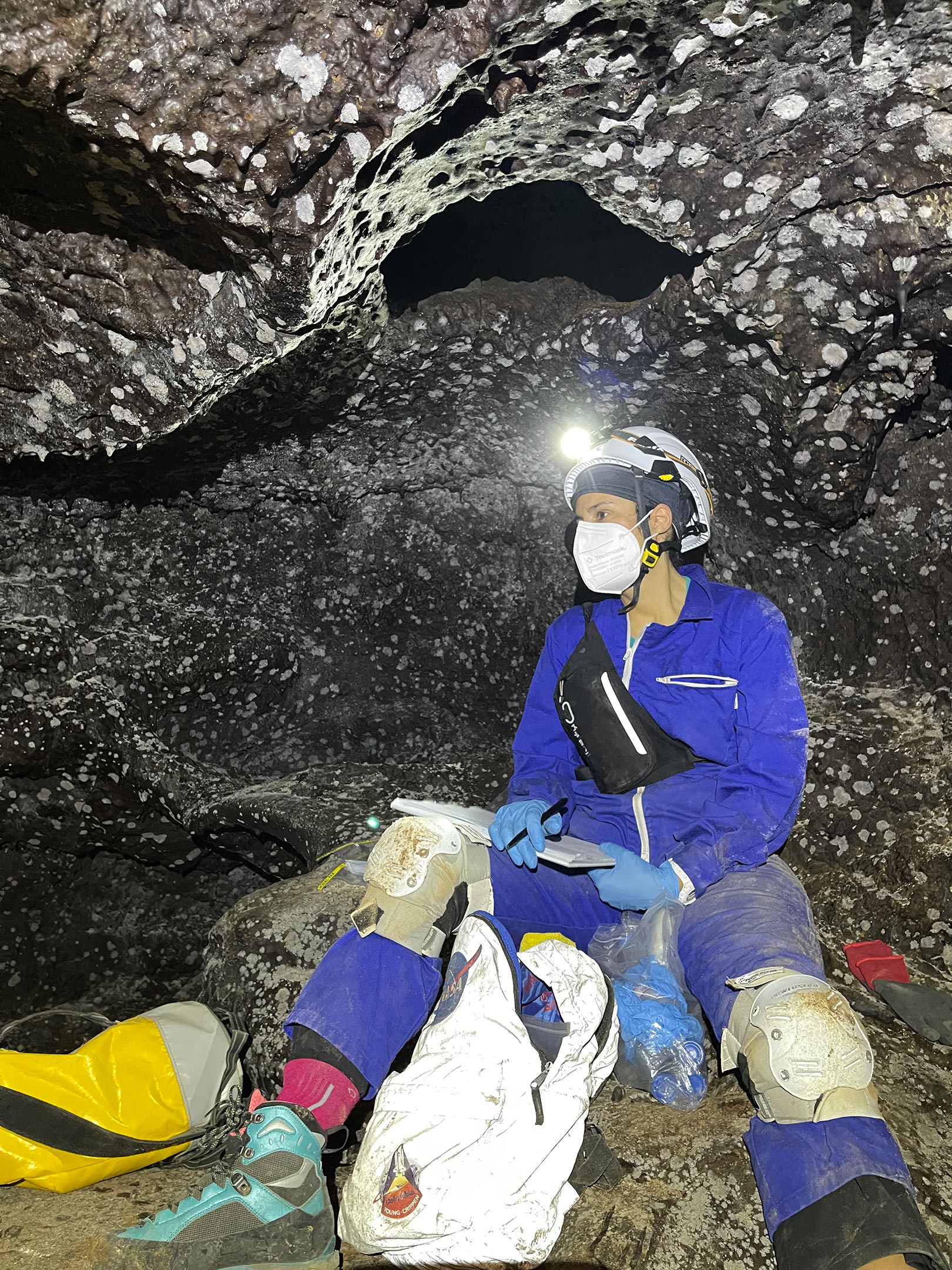
    Ana Z. Miller Collecting Samples in Lava Tube System
    Corresponding author Ana Z. Miller collects samples for microbiological investigations. Patches of colonies can be seen all over the lava tube. Credit: Bogdan Onac

    Future Research and Martian Analogues

    Given that Martian lava tubes are similarly shielded and likely contain sulfate-rich minerals, they may also hold signs of past microbial life, giving us clues about potential life beyond Earth.

    The findings may significantly impact the way scientists approach planetary exploration, particularly for upcoming missions aimed at studying the habitability of Mars.
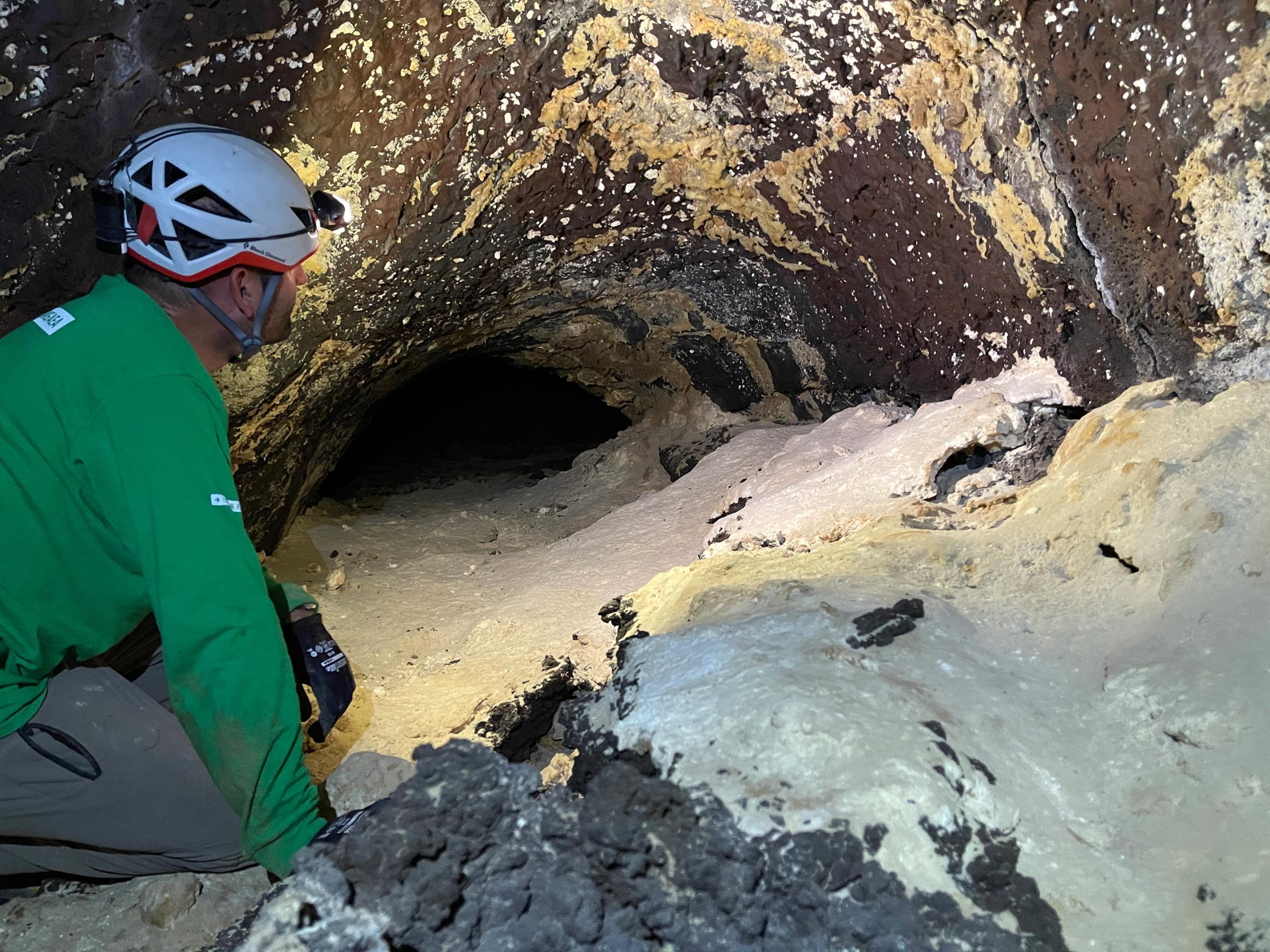
    Researcher in Lava Tube in Lanzarote Spain
    Organic-rich sulfate deposits can be seen in a lava tube from Lanzarote, Spain. Credit: Bogdan Onac

    The team will publish several additional studies on these lava tubes in the coming months, and they are also planning to examine newly formed lava tubes in Iceland.

    Reference: “Decoding organic compounds in lava tube sulfates to understand potential biomarkers in the Martian subsurface” by Vera Palma, José María De la Rosa, Bogdan Petroniu Onac, Francesco Sauro, Jesús Martínez-Frías, Ana Teresa Caldeira, José Antonio González-Pérez, Nicasio Tomás Jiménez-Morillo and Ana Zélia Miller, 28 September 2024, Communications Earth & Environment.
    DOI: 10.1038/s43247-024-01673-4

    Never miss a breakthrough: Join the SciTechDaily newsletter.
    Follow us on Google and Google News.

    Caves Habitable Lava Planets Popular University of South Florida
    Share. Facebook Twitter Pinterest LinkedIn Email Reddit

    Related Articles

    Doomsday Glacier “Holding On by Its Fingernails” – Spine-Chilling Retreat Could Raise Sea Levels by 10 Feet

    Bringing Magma From Deep Underground Up to Our Feet – Just Add CO2

    New Clues to Earth’s Formation From Ancient Helium Leaking From the Planet’s Core

    Confessions of a Former Fireball: How Earth Transformed Itself From a Fiery Ball to a Habitable Planet

    Scientists Reveal Superionic Secrets of Earth’s Inner Core

    Geological “Goldilocks Zone” for Metal Deposits Discovered at the Base of Earth’s Crust

    Researchers Tackle the Enigmatic “Spiders” From Mars

    When Volcanoes Go Metal: What Lava Flows Look Like on a Planet Made of Metal

    Luck Played a Major Role in Keeping Earth Fit for Life

    2 Comments

    1. David Dreyer , 9095216662 on November 29, 2024 10:15 pm

      I live in San Bernardino, california,.I have the same rocks & I discovered this stuff 6 months ago, unfortunatelywhat comes out of these sealed rocks can get in your bloodstream & eat flesh & go through your hair falicules, the proof is on my blood & skin. It attacks hands ,& feet first.If you want to learn something I’m pretty sure I can blow your mind( u guys r so wrong about what I print, but there is nobody for me to contact

      Reply
    2. Willis on December 1, 2024 8:33 am

      Lava tube/cave exploring is extremely hazardous to lungs. Most are full of decomposing volcanic rock in the form of micro dust. The dust looks like glass shards under a microscope. The dust collects on clothing and hair, exposing explorers and others to the hazard even after exiting the caves. Simple dust mask offer no protection.

      Reply
    Leave A Reply Cancel Reply

    • Facebook
    • Twitter
    • Pinterest
    • YouTube

    Don't Miss a Discovery

    Subscribe for the Latest in Science & Tech!

    Trending News

    The Universe Is Expanding Too Fast and Scientists Can’t Explain Why

    “Like Liquid Metal”: Scientists Create Strange Shape-Shifting Material

    Early Warning Signals of Esophageal Cancer May Be Hiding in Plain Sight

    Common Blood Pressure Drug Shows Surprising Power Against Deadly Antibiotic-Resistant Superbug

    Scientists Uncover Dangerous Connection Between Serotonin and Heart Valve Disease

    Scientists Discover a “Protector” Protein That Could Help Reverse Hair Loss

    Bone-Strengthening Discovery Could Reverse Osteoporosis

    Scientists Uncover Hidden Trigger Behind Stem Cell Aging

    Follow SciTechDaily
    • Facebook
    • Twitter
    • YouTube
    • Pinterest
    • Newsletter
    • RSS
    SciTech News
    • Biology News
    • Chemistry News
    • Earth News
    • Health News
    • Physics News
    • Science News
    • Space News
    • Technology News
    Recent Posts
    • Scientists Overcome Major Quantum Bottleneck, Potentially Transforming Teleportation and Computing
    • Quantum Physics’ Strangest Problem May Hold the Key to Time Itself
    • Scientists Create “Liquid Gears” That Spin Without Touching
    • The Simple Habit That Could Help Prevent Cancer
    • Forgotten Medicinal Plant Shows Promise in Fighting Dangerous Superbugs
    Copyright © 1998 - 2026 SciTechDaily. All Rights Reserved.
    • Science News
    • About
    • Contact
    • Editorial Board
    • Privacy Policy
    • Terms of Use

    Type above and press Enter to search. Press Esc to cancel.