
Close Menu
    Facebook X (Twitter) Instagram
    SciTechDaily
    • Biology
    • Chemistry
    • Earth
    • Health
    • Physics
    • Science
    • Space
    • Technology
    Facebook X (Twitter) Pinterest YouTube RSS
    SciTechDaily
    Home»Biology»Ancient Penis Worms Invented the “Hermit Crab” Lifestyle 500 Million Years Ago
    Biology

    Ancient Penis Worms Invented the “Hermit Crab” Lifestyle 500 Million Years Ago

    By Durham UniversityNovember 8, 2021No Comments3 Mins Read
    Facebook Twitter Pinterest Telegram LinkedIn WhatsApp Email Reddit
    Share
    Facebook Twitter LinkedIn Pinterest Telegram Email Reddit
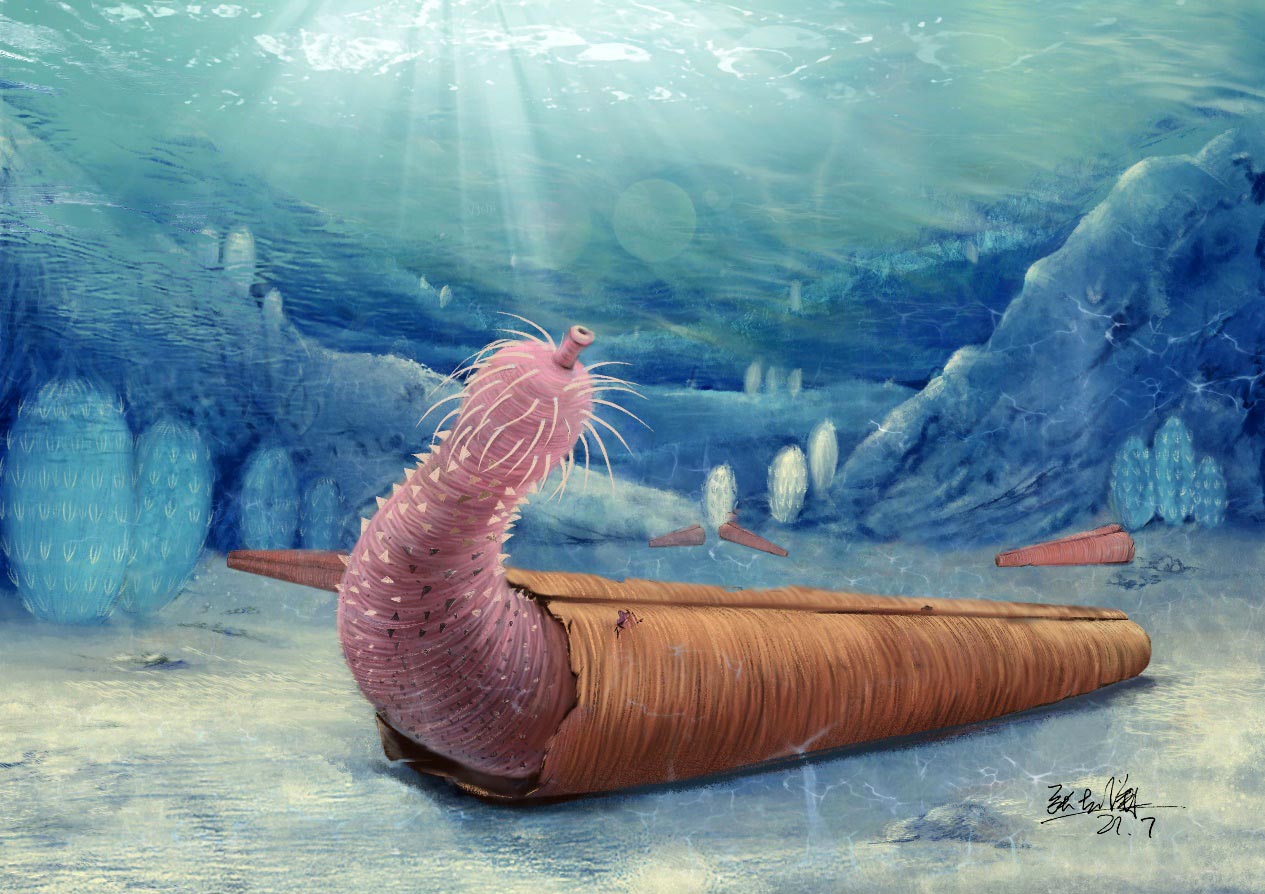
    Penis Worm Eximipriapulus
    The penis worm Eximipriapulus inhabiting a hyolith shell. Credit: Prof Zhang Xiguang, Yunnan University

    Fossils reveal that penis worms adopted hermit-like behavior 500 million years ago, using hyolith shells as protection from predators.

    A new study by researchers from Durham University and Yunnan University reveals that penis worms (Priapulida) invented the ‘hermit’ lifestyle, some 500 million years ago, at the rise of the earliest animal ecosystems in the Cambrian period.

    Hermit crabs are well known for employing snail shells as shelters against predators, but researchers have now found that penis worms invented the ‘hermit’ lifestyle hundreds of millions of years before hermit crabs first evolved.

    Researchers studied collections of the Guanshan fossil deposits – famous because they preserve soft tissue (such as the bodies of worms) alongside the shelly material that makes up the conventional fossil record.
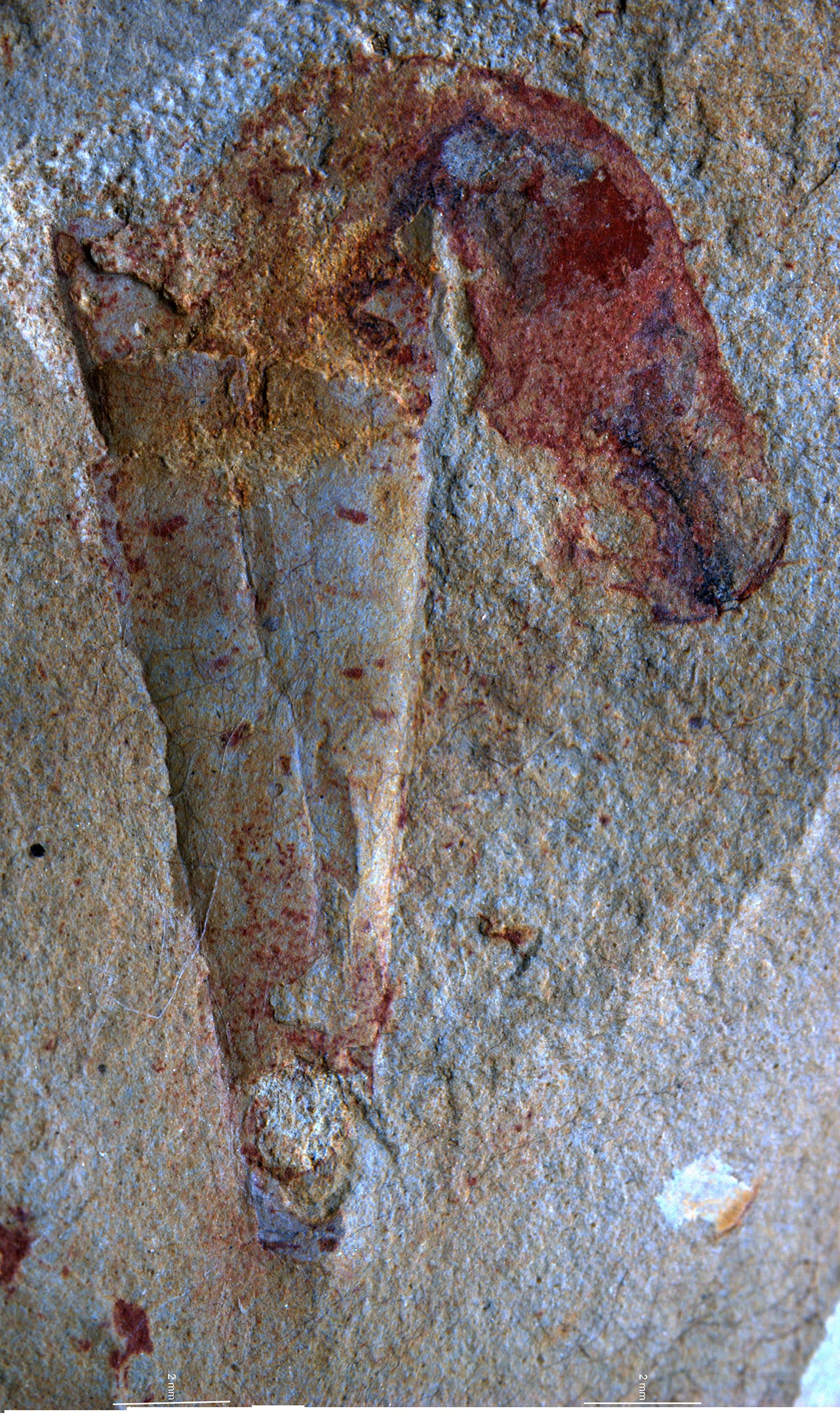
    Penis Worm Fossil 1
    Credit: Prof Zhang Xiguang, Yunnan University
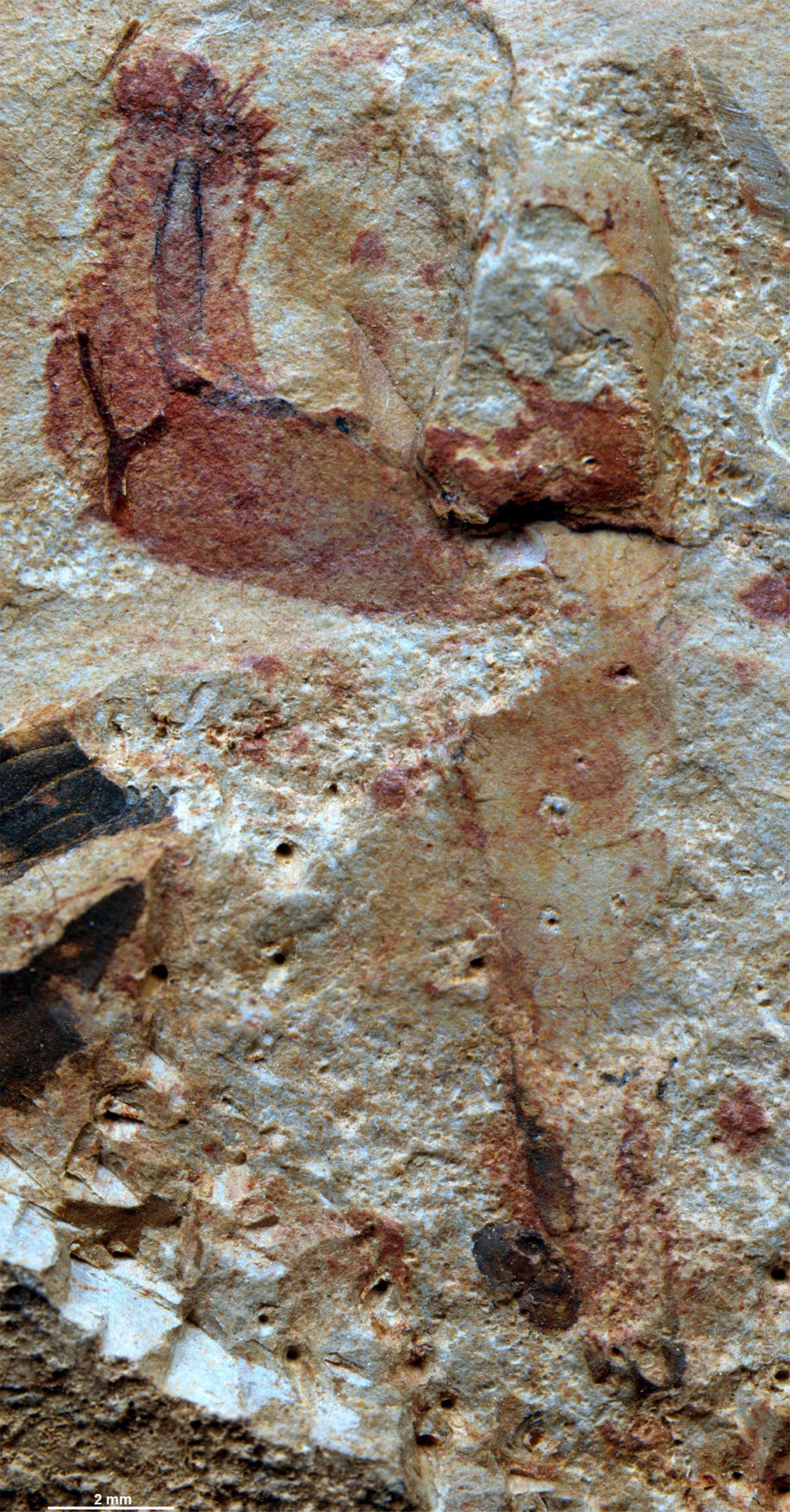
    Penis Worm Fossil 2
    Credit: Prof Zhang Xiguang, Yunnan University

    Four specimens of the penis worm Eximipriapulus were found inside conical shells of hyoliths, a long-extinct fossil group.

    “The worms are always sitting snugly within these same types of shells, in the same position and orientation,” explains Dr. Martin Smith, co-author of the study.

    The researchers established that Cambrian predators were plentiful and aggressive, forcing the penis worms to take permanent shelter in empty shells.

    Dr. Smith expands: “The only explanation that made sense was that these shells were their homes – something that came as a real surprise. Not long before these organisms existed, there was nothing alive more complex than seaweeds or jellyfish: so it’s mind-boggling that we start to see the complex and dangerous ecologies usually associated with much younger geological periods so soon after the first complex animals arrive on the scene.”
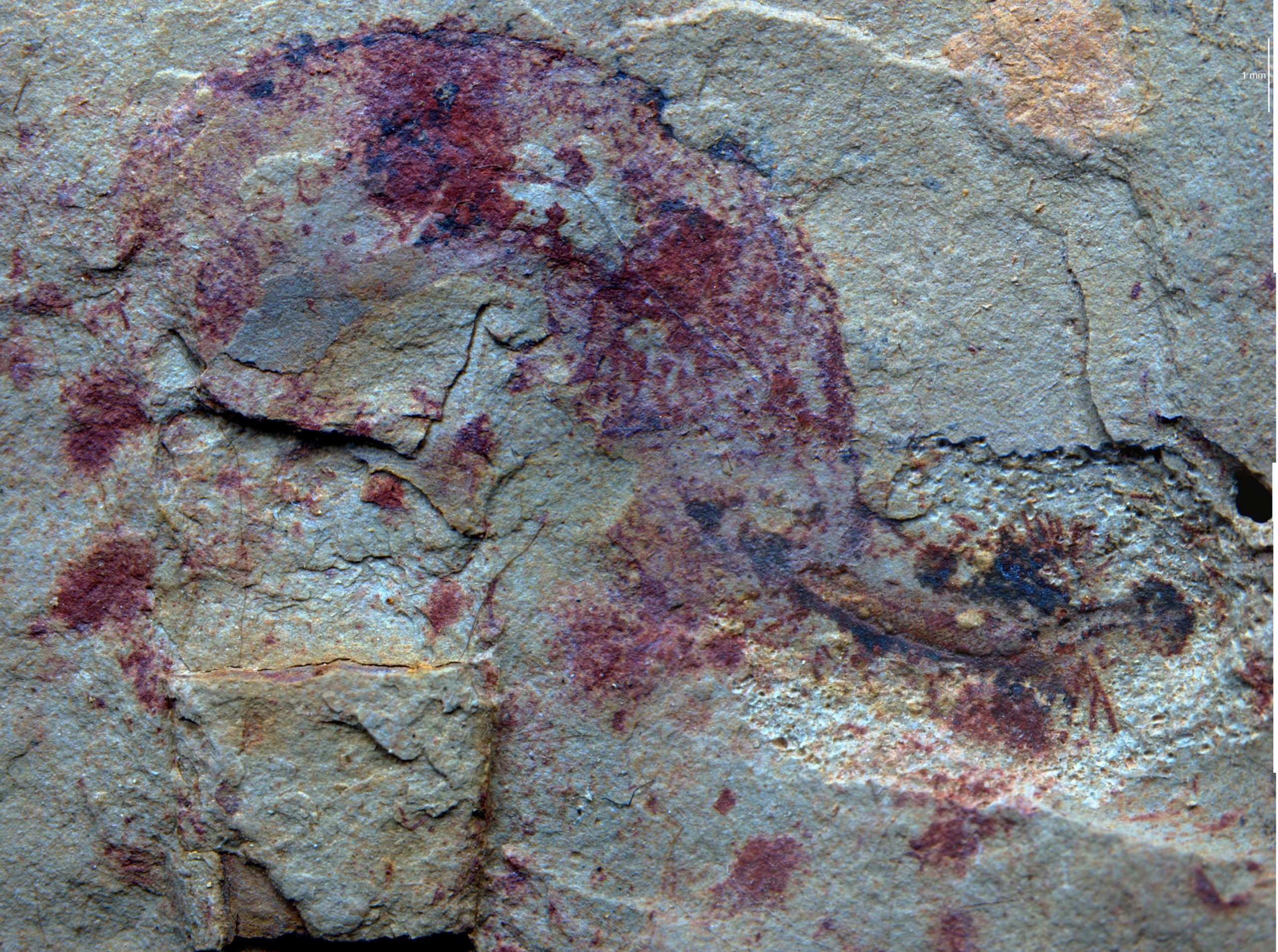
    Penis Worm Fossil 3
    Credit: Prof Zhang Xiguang, Yunnan University

    The research indicates the key role of predators in shaping ecology and behavior in the very early stages of animal evolution.

    The study findings will be published in the journal Current Biology.

    A “hermiting” lifestyle has never been documented or observed in living or fossil penis worms; nor has it been directly observed in any organism living earlier than the ‘Mesozoic Marine Revolution’ in the age of dinosaurs.

    The fact that it evolved independently in the immediate aftermath of the “Cambrian explosion,” which marked the rapid rise of modern animal body plans, highlights the remarkable speed and flexibility of the evolutionary process.

    Reference: “A ‘hermit’ shell-dwelling lifestyle in a Cambrian priapulan worm” by Xiao-yu Yang, Martin R. Smith, Jie Yang, Wei Li, Qing-hao Guo, Chun-li Li, Yu Wang and Xi-guang Zhang, 8 November 2021, Current Biology.
    DOI: 10.1016/j.cub.2021.10.003

    Never miss a breakthrough: Join the SciTechDaily newsletter.
    Follow us on Google and Google News.

    Durham University Marine Biology Paleontology Popular
    Share. Facebook Twitter Pinterest LinkedIn Email Reddit

    Related Articles

    Mysterious Megalodon: No One Actually Knows What the Gigantic Shark Really Looked Like

    Massive Predator: School Lesson Gone Wrong Leads to New, Bigger Megalodon Size Estimate

    Fossilized Fish Larvae Discovery Challenges Long-Accepted Theory of Vertebrate Origin

    Evolution in Action Revealed by Stunning New Starfish-Like Fossil

    Prehistoric Shark Hid Its Largest, Sharpest Teeth

    Unexpected Discovery of a 410-Million-Year-Old Fossil Forces Rethink of Shark Evolution

    Solved: Mystery That’s Been Puzzling Scientists Since 1852 – Bizarre Giraffe-Necked Reptile Hunted Underwater

    “The Thing” – Analysis of Mysterious Giant Egg, the First Ever Found in Antarctica

    Ancient Sea-Worm Mystery Solved by Student After 50 Years in “Wastebasket”

    Leave A Reply Cancel Reply

    • Facebook
    • Twitter
    • Pinterest
    • YouTube

    Don't Miss a Discovery

    Subscribe for the Latest in Science & Tech!

    Trending News

    New Study Reveals Why Ozempic Works Better for Some People Than Others

    Climate Change Is Altering a Key Greenhouse Gas in a Way Scientists Didn’t Expect

    New Study Suggests Gravitational Waves May Have Created Dark Matter

    Scientists Discover Why the Brain Gets Stuck in Schizophrenia

    Scientists Engineer “Tumor-Eating” Bacteria That Devour Cancer From Within

    Even “Failed” Diets May Deliver Long-Term Health Gains, Study Finds

    NIH Scientists Discover Powerful New Opioid That Relieves Pain Without Dangerous Side Effects

    Collapsing Plasma May Hold the Key to Cosmic Magnetism

    Follow SciTechDaily
    • Facebook
    • Twitter
    • YouTube
    • Pinterest
    • Newsletter
    • RSS
    SciTech News
    • Biology News
    • Chemistry News
    • Earth News
    • Health News
    • Physics News
    • Science News
    • Space News
    • Technology News
    Recent Posts
    • The Surprising Reason You Might Want To Sleep Without a Pillow
    • Household Cats Could Hold the Secret to Fighting Breast Cancer
    • Scientists Say This Natural Hormone Reverses Obesity by Targeting the Brain
    • This 15,000-Year-Old Discovery Changes What We Know About Early Human Creativity
    • 35-Million-Year-Old Mystery: Strange Arachnid Discovered Preserved in Amber
    Copyright © 1998 - 2026 SciTechDaily. All Rights Reserved.
    • Science News
    • About
    • Contact
    • Editorial Board
    • Privacy Policy
    • Terms of Use

    Type above and press Enter to search. Press Esc to cancel.