
Close Menu
    Facebook X (Twitter) Instagram
    SciTechDaily
    • Biology
    • Chemistry
    • Earth
    • Health
    • Physics
    • Science
    • Space
    • Technology
    Facebook X (Twitter) Pinterest YouTube RSS
    SciTechDaily
    Home»Earth»Antarctica: Southern Ocean Cools at the Surface but Warms Up at Depth
    Earth

    Antarctica: Southern Ocean Cools at the Surface but Warms Up at Depth

    By CNRSFebruary 13, 20213 Comments2 Mins Read
    Facebook Twitter Pinterest Telegram LinkedIn WhatsApp Email Reddit
    Share
    Facebook Twitter LinkedIn Pinterest Telegram Email Reddit
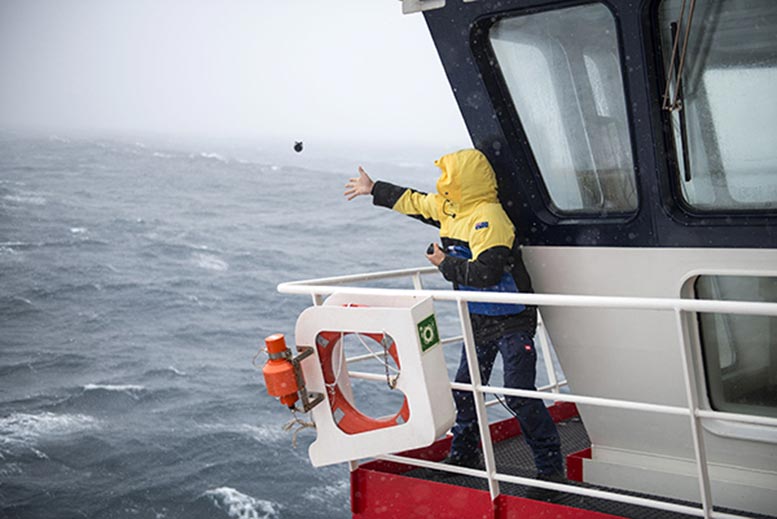
    French Antarctic Resupply Vessel
    A scientist on the French Antarctic resupply vessel L’Astrolabe drops an XBT probe to measure the temperature of the ocean, to a depth of 800 meters. Credit: © Sebastien Chastenet/OMP/IPEV

    Southern Ocean is warming rapidly below the surface, raising concerns about Antarctic ice melt.

    Scientists from the CNRS, CNES, IRD, Sorbonne Université, l’Université Toulouse III – Paul Sabatier and their Australian colleagues*, with the support of the IPEV, have provided a comprehensive analysis on the evolution of Southern Ocean temperatures over the last 25 years. The research team has concluded that the slight cooling observed at the surface hides a rapid and marked warming of the waters, to a depth of up to 800 meters (2,600 feet).

    The study points to major changes around the polar ice cap where temperatures are increasing by 0.04°C (0.07°F) per decade, which could have serious consequences for Antarctic ice. Warm water is also rising rapidly to the surface, at a rate of 39 meters (128 feet) per decade, i.e. between three and ten times more than previously estimated.

    Published in Nature Communications on January 21, 2021, these results were obtained thanks to unique data acquired over the past 25 years on board the French Antarctic resupply vessel L’Astrolabe. This is the longest series of temperature records in the Southern Ocean covering north to south.

    * The laboratories and institutions involved in this study are the Laboratoire d’océanographie et du climat : expérimentations et approches numériques (CNRS/IRD/MNHN/ Sorbonne Université), part of the l’Institut Pierre Simon Laplace; le Laboratoire d’études en géophysique et océanographie spatiales (CNRS/CNES/IRD/Université Toulouse III – Paul Sabatier) and the Commonwealth Scientific and Industrial Research Organisation (CSIRO; Australia). The SURVOSTRAL observation programme was funded by IPEV and the CNRS.

    Reference: “Southern Ocean in-situ temperature trends over 25 years emerge from interannual variability” by Matthis Auger, Rosemary Morrow, Elodie Kestenare, Jean-Baptiste Sallée and Rebecca Cowley, 21 January 2021, Nature Communications.
    DOI: 10.1038/s41467-020-20781-1

    Never miss a breakthrough: Join the SciTechDaily newsletter.
    Follow us on Google and Google News.

    Antarctica Climate Change CNRS Oceanography
    Share. Facebook Twitter Pinterest LinkedIn Email Reddit

    Related Articles

    Intense Atmospheric Rivers Help Create Massive Holes in Antarctic Sea Ice

    Melting Glaciers Cool the Southern Ocean – Might Explain the Recent Antarctic Cooling and Sea Ice Expansion

    Research Shows Antarctic Sea Ice Melt Translates to Weather Change in Tropics

    The Antarctica Factor: Model Uncertainties Reveal Upcoming Sea Level Risk

    Alarming Discovery in Antarctica Serves as Warning Signal for Sea-Level Rise

    Antarctica’s Thinning Ice Shelves Causing More Ice to Flow Into Sea

    Analyzing the Risk of Catastrophic Antarctic Ice Shelf Collapse From Surface Melting

    Upside-Down “Rivers” of Warm Ocean Water Attacking Antarctic Ice Shelves [Video]

    New Research Shows Southern Ocean as a Powerful Influence on Climate Change

    3 Comments

    1. Clyde Spencer on February 14, 2021 6:42 am

      “The research team has concluded that the slight cooling observed at the surface hides a rapid and marked warming of the waters, to a depth of up to 800 meters.”

      OK, where is the heat coming from that isn’t heating the surface? It is only the surface that receives sunlight and can conduct heat from a presumably warming atmosphere. The linked article suggests that the cooling surface is the result of cold Winter water, which implies that that Winters may be getting colder.

      Reply
    2. Poncho on February 15, 2021 11:15 am

      And other articles confirm sea ice expansion and further overall cooling?! Again, cant seem to agree with yourselves, let alone anybody else! Wth?

      Reply
    3. surfing nz on April 5, 2021 12:01 am

      I loved your blog and thanks for publishing this about Antarctica southern ocean cools at the surface but warms up at depth! I am really happy to come across this exceptionally well written content. Thanks for sharing and look for more in future!! Keep doing this inspirational work and share with us.If possible visit this website Aotearoasurf.co.nz to gain more idea or tips on the same.

      Reply
    Leave A Reply Cancel Reply

    • Facebook
    • Twitter
    • Pinterest
    • YouTube

    Don't Miss a Discovery

    Subscribe for the Latest in Science & Tech!

    Trending News

    Why Popular Diabetes Drugs Like Ozempic Don’t Work for Everyone: The “Genetic Glitch”

    Scientists Stunned After Finding Plant Thought Extinct for 60 Years

    Scientists Discover Tiny New Spider That Hunts Prey 6x Its Size

    Natural Component From Licorice Shows Promise for Treating Inflammatory Bowel Disease

    Scientists Warn: Popular Sweetener Linked to Dangerous Metabolic Effects

    Monster Storms on Jupiter Unleash Lightning Beyond Anything on Earth

    Scientists Create “Liquid Gears” That Spin Without Touching

    The Simple Habit That Could Help Prevent Cancer

    Follow SciTechDaily
    • Facebook
    • Twitter
    • YouTube
    • Pinterest
    • Newsletter
    • RSS
    SciTech News
    • Biology News
    • Chemistry News
    • Earth News
    • Health News
    • Physics News
    • Science News
    • Space News
    • Technology News
    Recent Posts
    • Hidden Ocean Currents Revealed in Stunning Detail by AI
    • Trees Emit Tiny Lightning Flashes During Storms and Scientists Finally Prove It
    • Forget Chemicals. This Plant Removes Microplastics From Water
    • Breakthrough Crystal Lets Scientists “Write” Nanoscale Patterns With Light
    • Pomegranate Compound Could Help Protect Against Heart Disease
    Copyright © 1998 - 2026 SciTechDaily. All Rights Reserved.
    • Science News
    • About
    • Contact
    • Editorial Board
    • Privacy Policy
    • Terms of Use

    Type above and press Enter to search. Press Esc to cancel.