

Fire helped early humans preserve meat and deter predators, offering a survival advantage long before regular cooking.
Researchers at Tel Aviv University have put forward a new hypothesis: For early humans, fire fulfilled two critical functions: it helped protect large game from predators and scavengers eager to seize the valuable meat, and it enabled the preservation of that meat through smoking and drying, preventing spoilage and allowing for long-term consumption.
Did prehistoric humans understand that smoking meat could preserve it and extend its shelf life? Scholars from the Alkow Department of Archaeology and Ancient Near Eastern Cultures at Tel Aviv University believe they did.
Their recent study offers a new take on a long-standing question in prehistoric research: What motivated early humans to start using fire? According to the authors, fire was not initially used for cooking, but rather to smoke and dry meat from large animals, helping it last longer and remain safe from scavengers and decay.
This idea supports a larger theory, also developed by the team, which interprets many events in human prehistory through reliance on calories from large animals. Over time, the size of these animals declined, shaping human adaptation strategies. The study was led by Dr. Miki Ben-Dor and Professor Ran Barkai of Tel Aviv University and was published in Frontiers in Nutrition.

Re-examining early fire evidence
Prof. Barkai explains: “The origins of fire use is a ‘burning’ topic among prehistory researchers around the world. It is generally agreed that by 400,000 years ago, fire use was common in domestic contexts—most likely for roasting meat, and perhaps also for lighting and heating. But there is controversy regarding the preceding million years, and various hypotheses have been put forward to explain why early humans began using fire. In this study, we sought to explore a new perspective on the issue.”
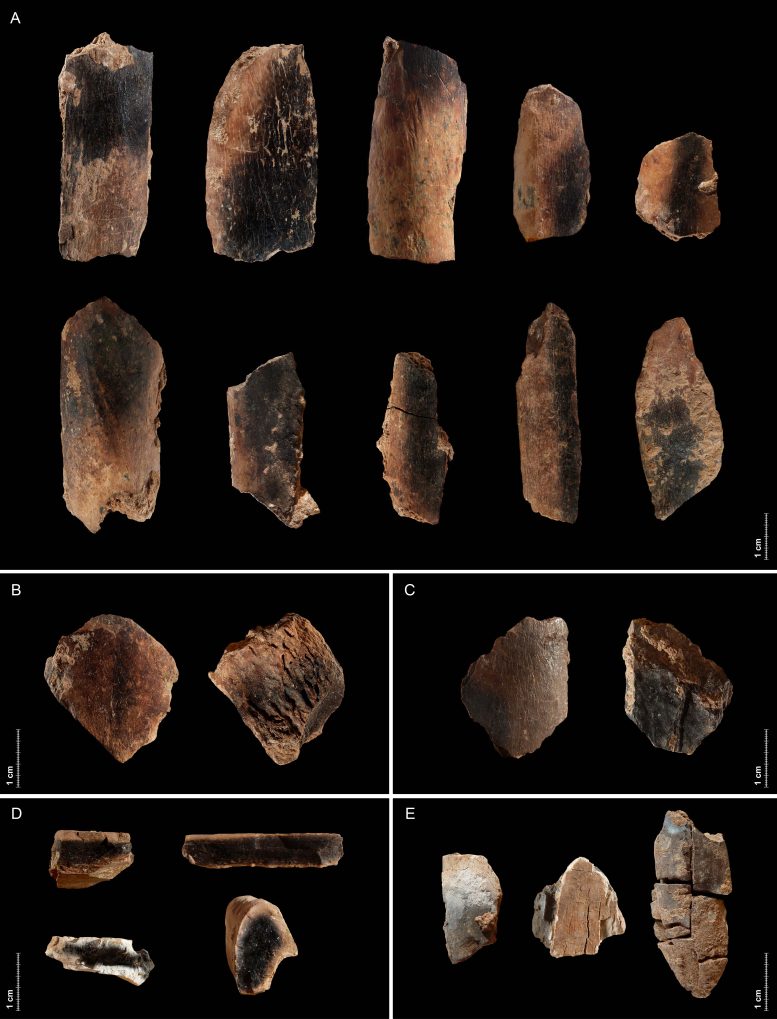
Dr. Ben-Dor adds: “For early humans, fire use was not a given, and at most archaeological sites dated earlier than 400,000 years ago, there is no evidence of the use of fire. Nevertheless, at a number of early sites there are clear signs that fire was used, but without burnt bones or evidence of meat roasting. We understand that early humans at that time—mostly Homo erectus—did not use fire regularly, but only occasionally, in specific places and for special purposes. The process of gathering fuel, igniting a fire, and maintaining it over time required significant effort, and they needed a compelling, energy-efficient motive to do so. We have proposed a new hypothesis regarding that motive.”
Comparing ancient sites and hunter-gatherer behavior
The researchers examined existing literature on all known prehistoric sites dated between 1.8 million and 800,000 years ago where there is evidence of fire use. They identified nine such sites around the world, including Gesher Benot Ya’aqov and Evron Quarry in Israel, six sites in Africa, and one in Spain. They also drew on ethnographic studies of present-day hunter-gatherer societies to compare their behaviors with those likely found in ancient environments.
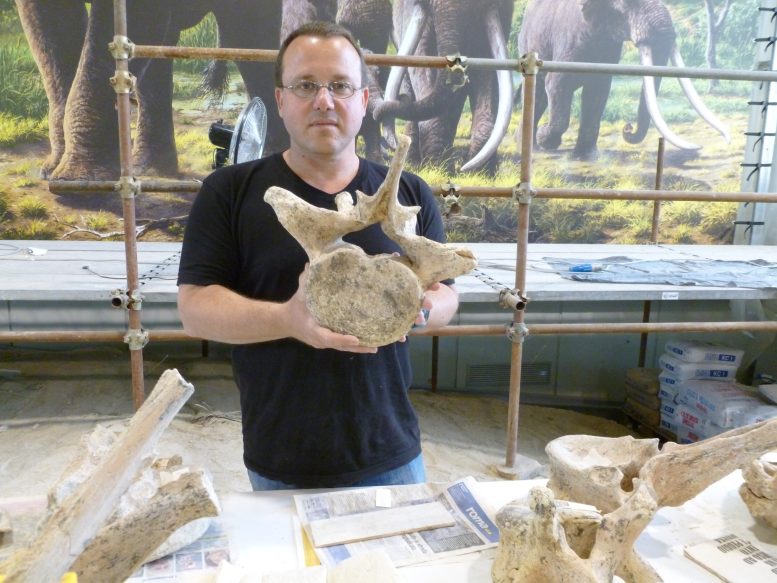
Dr. Ben-Dor: “We examined what the nine ancient sites had in common, and found that all contained large quantities of bones from large animals—mostly elephants, but also hippopotamuses, rhinoceroses, and others. From previous studies, we know that these animals were extremely important to early human diets and provided most of the necessary calories. The meat and fat of a single elephant, for example, contain millions of calories, enough to feed a group of 20–30 people for a month or more. A hunted elephant or hippopotamus was thus a real treasure—a kind of meat and fat ‘bank’ that needed to be protected and preserved for many days, since it was coveted not only by predators but also by bacteria.”
Fire’s dual purpose in early human survival
An analysis of the findings and calculations of the significant energetic advantage of preserving meat and fat led the researchers to a new conclusion, never before proposed: fire served two vital purposes for early humans—first, to guard the large game from other predators and scavengers seeking to seize the ‘treasure,’ and second, to preserve the meat through smoking and drying, preventing spoilage and making it edible for a long period of time.
Prof. Barkai concludes: “In this study, we propose a new understanding of the factors that motivated early humans to begin using fire: the need to safeguard large hunted animals from other predators, and to preserve the vast quantity of meat over time. It is likely that once fire was produced for these purposes, it was also occasionally used for cooking—at zero marginal energetic cost. Such use may explain evidence of fish roasting from around 800,000 years ago at Gesher Benot Ya’aqov. The approach we propose fits well into a global theory we have been developing in recent years, which explains major prehistoric phenomena as adaptations to the hunting and consumption of large animals, followed by their gradual disappearance and the resulting need to derive adequate energy from the exploitation of smaller animals.”
Reference: “A bioenergetic approach favors the preservation and protection of prey, not cooking, as the drivers of early fire” by Miki Ben-Dor and Ran Barkai, 11 April 2025, Frontiers in Nutrition.
DOI: 10.3389/fnut.2025.1585182
Never miss a breakthrough: Join the SciTechDaily newsletter.
Follow us on Google and Google News.