
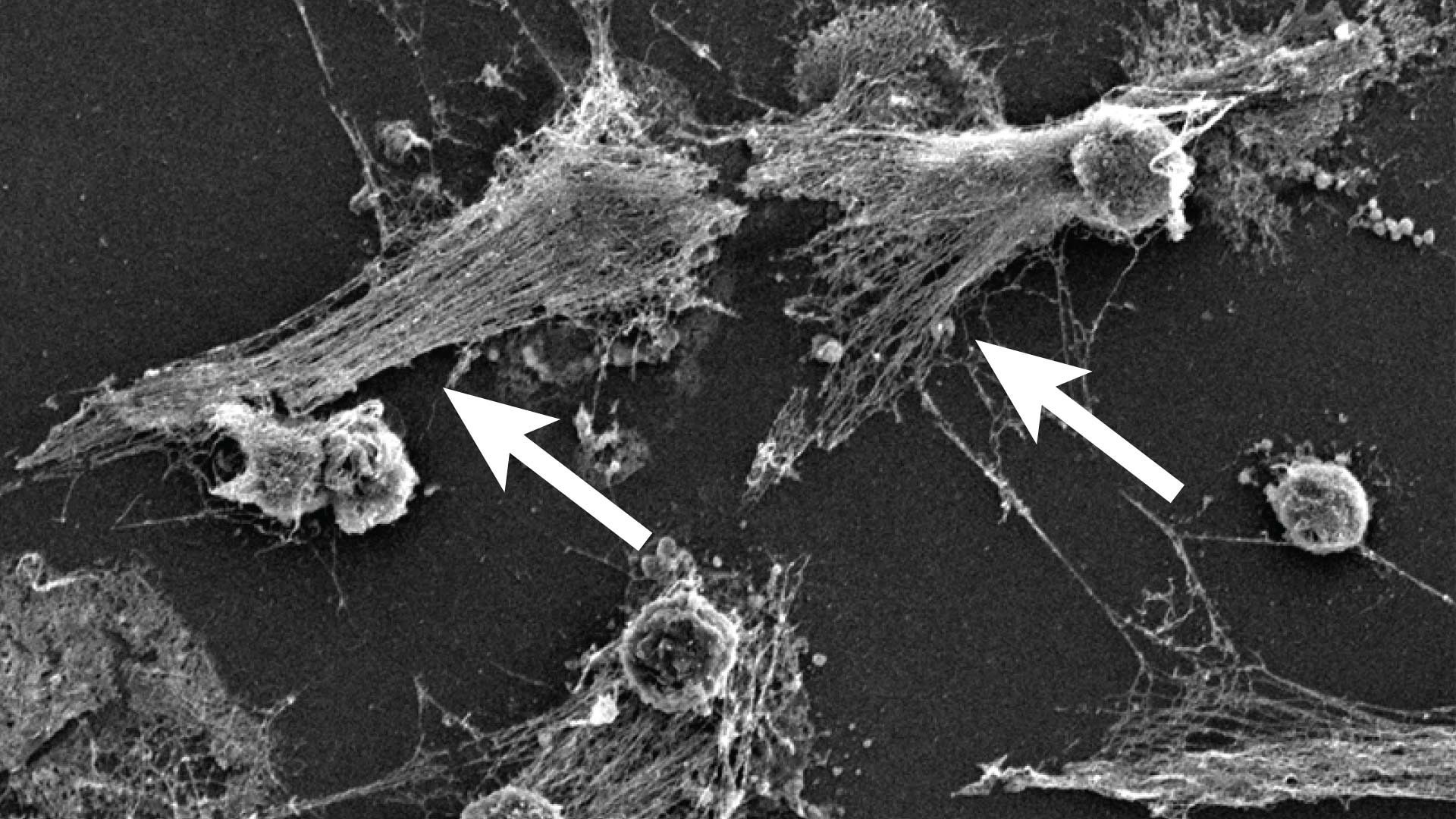
New publication links neutrophil infiltration in the lungs of patients to COVID-19 symptoms.
In the urgent battle to treat COVID-19 patients, a group of eleven international medical research organizations is investigating whether overactive immune cells that produce Neutrophil Extracellular Traps (NETs) cause the most severe cases. The consortium, called the NETwork, includes Cold Spring Harbor Laboratory, the Feinstein Institutes for Medical Research, and the Research Institute of the McGill University Health Centre (RI-MUHC).
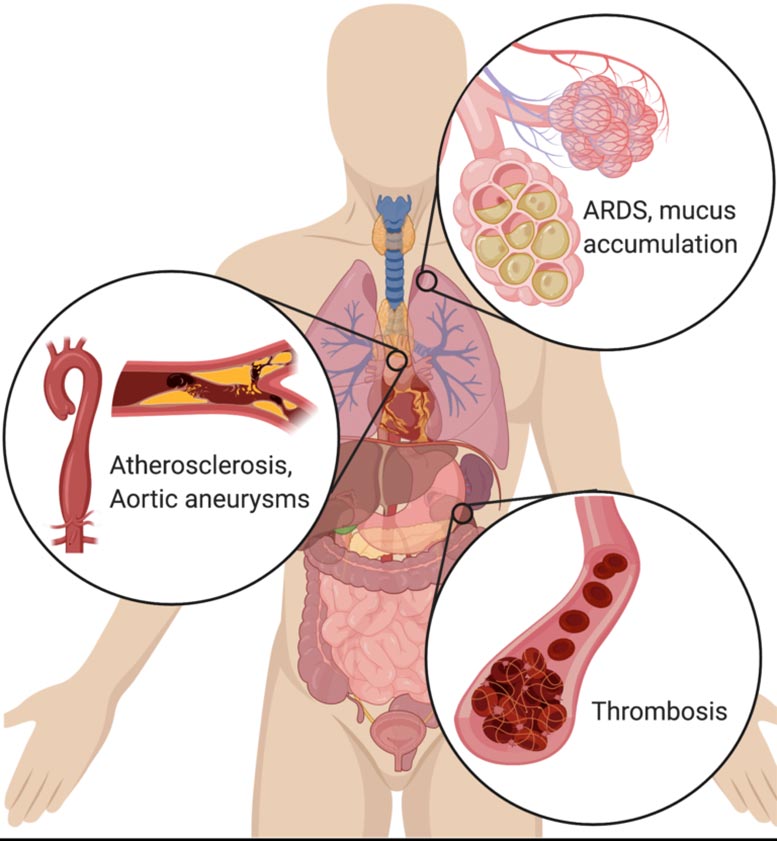
A paper published today (April 16, 2020) in the Journal of Experimental Medicine describes that patients with severe COVID-19 infection develop Acute Respiratory Distress Syndrome (ARDS), pulmonary inflammation, thick mucus secretions in the airways, extensive lung damage, and blood clots. This late stage of the disease is difficult to manage. In the worst cases, patients require invasive mechanical ventilation, and still, a large number of patients die. The NETwork suggests that the severity of COVID-19 may result from overactive white blood cells known as the neutrophils. Part of the body’s immune system, neutrophils detect bacteria and can expel their DNA to attack the bacteria with a gauzy web of DNA laced with toxic enzymes, called a NET. These NETs can ensnare and digest the unwanted pathogen but in cases of ARDS, they damage the lungs and other organs.
“Given the clear similarities between the clinical presentation of severe COVID-19 and other known diseases driven by NETs, such as ARDS, we propose that excess NETs may play a major role in the disease,” said Betsy Barnes, Ph.D., lead and co-corresponding author of the paper and professor at the Feinstein Institutes. “As samples from patients become available, it will be important to determine whether the presence of NETs associates with disease severity and/or particular clinical characteristics of COVID-19.”
“NETs were identified in 2004, but many scientists have never heard of them. Most of the researchers in the NETwork have worked on NETs in other diseases, and when we started hearing about the symptoms of the COVID-19 patients, it sounded familiar,” said Cold Spring Harbor Laboratory cancer biologist Mikala Egeblad, Ph.D., who coalesced the NETwork research group around COVID-19 and is senior and corresponding author of the paper.
Jonathan Spicer, M.D., Ph.D., a clinician scientist at the RI-MUHC and Assistant Professor of Surgery at McGill University is a thoracic surgeon who has witnessed the devastating effects of COVID-19 infection at the bedside. “We see in these patients severe lung damage known as ARDS, another serious problem caused by excess NETs and seen in cases of severe influenza,” he said. “In addition, their airways are often clogged with thick mucus and unlike most severe lung infections, these patients tend to form small clots throughout their body at much higher rates than normal. NETs have also been found in the blood of patients with sepsis or cancer, where they can facilitate the formation of such blood clots.”
Researchers at the eleven NETwork institutions are now pursuing studies into whether NETs are a common feature in COVID-19 cases. If their findings show that excess NETs cause the severe symptoms of COVID-19, then a new avenue of treatments may be deployed to help COVID-19 patients. Current treatments used in other NET and neutrophil-driven diseases — like cystic fibrosis, gout, and rheumatoid arthritis — might dampen the activity of NETs in COVID-19 patients, reducing the need for invasive mechanical ventilation.
Reference: “Targeting potential drivers of COVID-19: Neutrophil extracellular traps” by Betsy J. Barnes, Jose M. Adrover, Amelia Baxter-Stoltzfus, Alain Borczuk, Jonathan Cools-Lartigue, James M. Crawford, Juliane Daßler-Plenker, Philippe Guerci, Caroline Huynh, Jason S. Knight, Massimo Loda, Mark R. Looney, Florencia McAllister, Roni Rayes, Stephane Renaud, Simon Rousseau, Steven Salvatore, Robert E. Schwartz, Jonathan D. Spicer, Christian C. Yost, Andrew Weber, Yu Zuo and Mikala Egeblad, 16 April 2020, Journal of Experimental Medicine.
DOI: 10.1084/jem.20200652
The following research institutes comprise the NETwork: Cold Spring Harbor Laboratory, the Feinstein Institutes for Medical Research, McGill University Health Centre, Weill Cornell Medicine, Donald and Barbara Zucker School of Medicine at Hofstra/Northwell, Centre Hospitalier Universitaire de Nancy, University of Michigan, University of California, San Francisco, University of Texas MD Anderson Cancer Center, University of Utah School of Medicine, and Northwell Health.
Never miss a breakthrough: Join the SciTechDaily newsletter.
Follow us on Google and Google News.